
“Titanium carbon fiber” is a useful commercial phrase and a weak engineering specification. The current Mayvoci draft is right to start with that distinction: before comparing power, spin, damping or durability, the buyer must know what the titanium-related part actually is. fileciteturn16file0
The V2 version makes that principle practical. Instead of asking “Is titanium carbon better than T700?”, the buyer first classifies the construction, then separates the physical fact from any measured result and finally decides whether the extra material and process complexity is commercially justified.
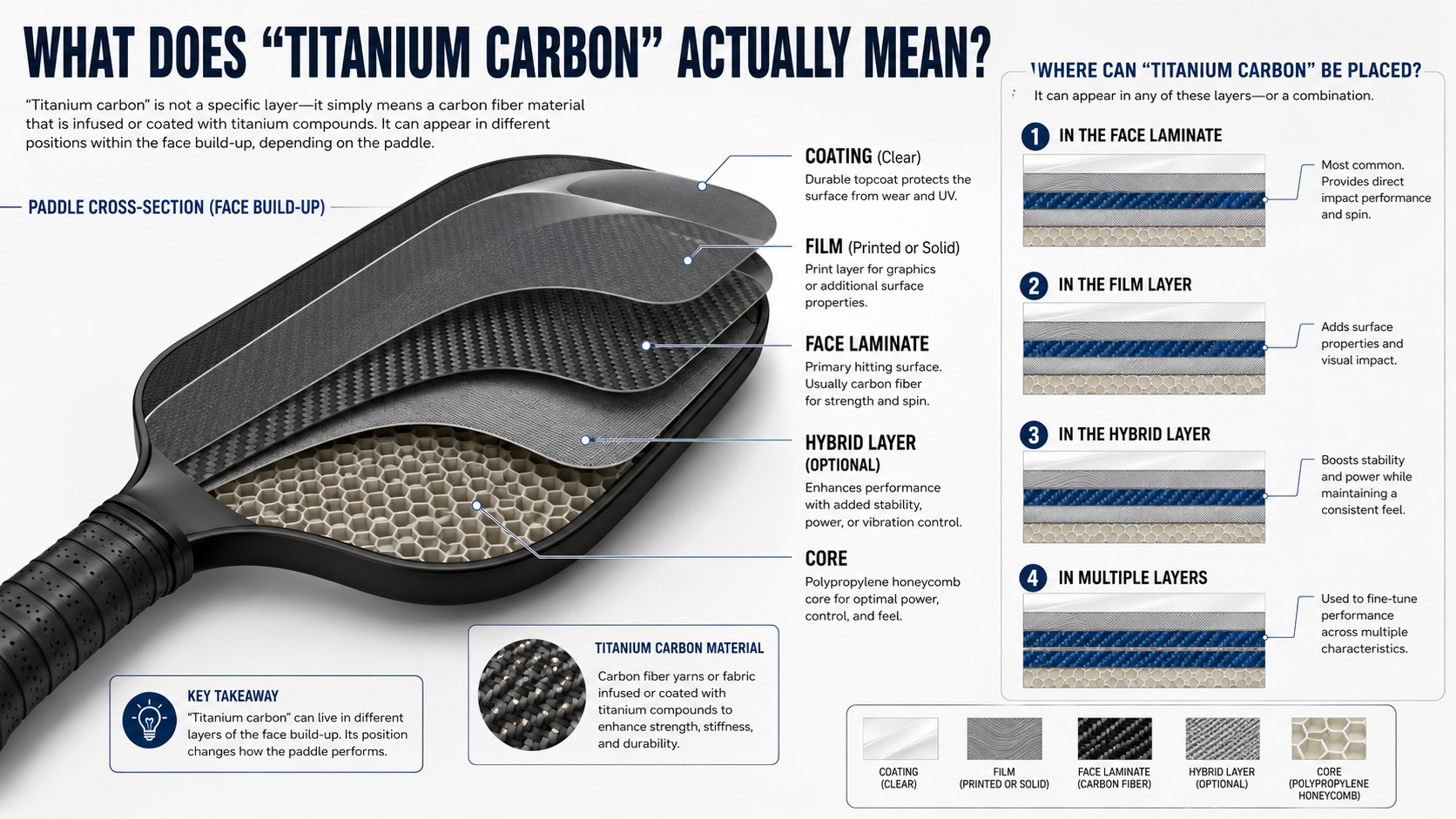
Classify the Construction Before Discussing Performance
“Titanium carbon” can be used in marketing for visually similar products that are physically different. The phrase may describe a film, coating, hybrid layer, metallic-effect treatment or a proprietary supplier construction. If the supplier cannot define the layer form and position, the product is not ready for a controlled OEM specification.
This is a specification taxonomy, not a claim that all five constructions exist in every supplier’s product line.
| Commercial Phrase | What It Could Physically Mean | What the Buyer Must Verify | Safe Claim Level |
|---|---|---|---|
| “Titanium-colored carbon” | Visual / metallic appearance only | Does it actually contain a titanium-related material? | Appearance fact only |
| Metallic film + carbon | Film laminated above or within a carbon stack | Film supplier, thickness, position, adhesive / resin compatibility | Defined construction fact |
| Titanium-containing coating | Surface treatment or coating | Composition, application route, wear and surface role | Defined coating fact + separate test |
| Hybrid structural laminate | A titanium-related layer combined with reinforcement | Layer order, areal mass / thickness, bonding and process window | Structural construction fact |
| Proprietary trade name | Brand or supplier naming system | BOM, upstream documentation and exact physical definition | Do not infer composition from name |
A useful RFQ should therefore request the supplier/material description, layer position, thickness or areal weight where applicable, bonding method, surface process and approved alternative. That information is more valuable than a general promise of “titanium technology.”
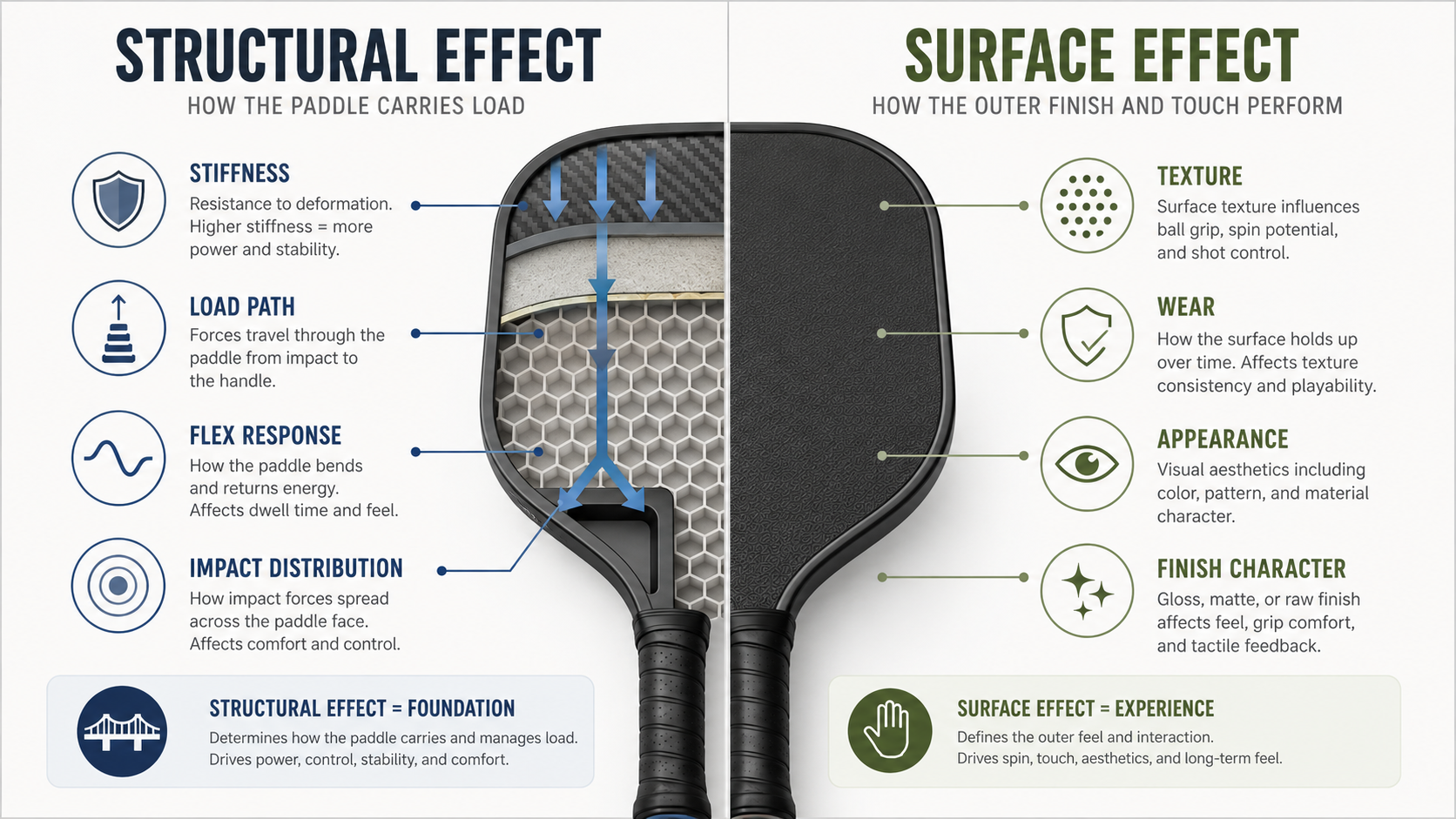
Separate Structural Effects From Surface Effects
A structural layer participates in load transfer and can influence laminate stiffness, damage behavior, mass and bonding. A surface treatment may influence appearance, texture, abrasion or the interaction between the ball and the final face. These are different jobs.
If a supplier claims improved spin, ask what changed at the playing surface. If it claims a different impact feel, ask whether the titanium-related component is actually structural. If the titanium-related element is decorative and buried under another resin or coating layer, it is especially weak to attribute spin directly to “titanium.”
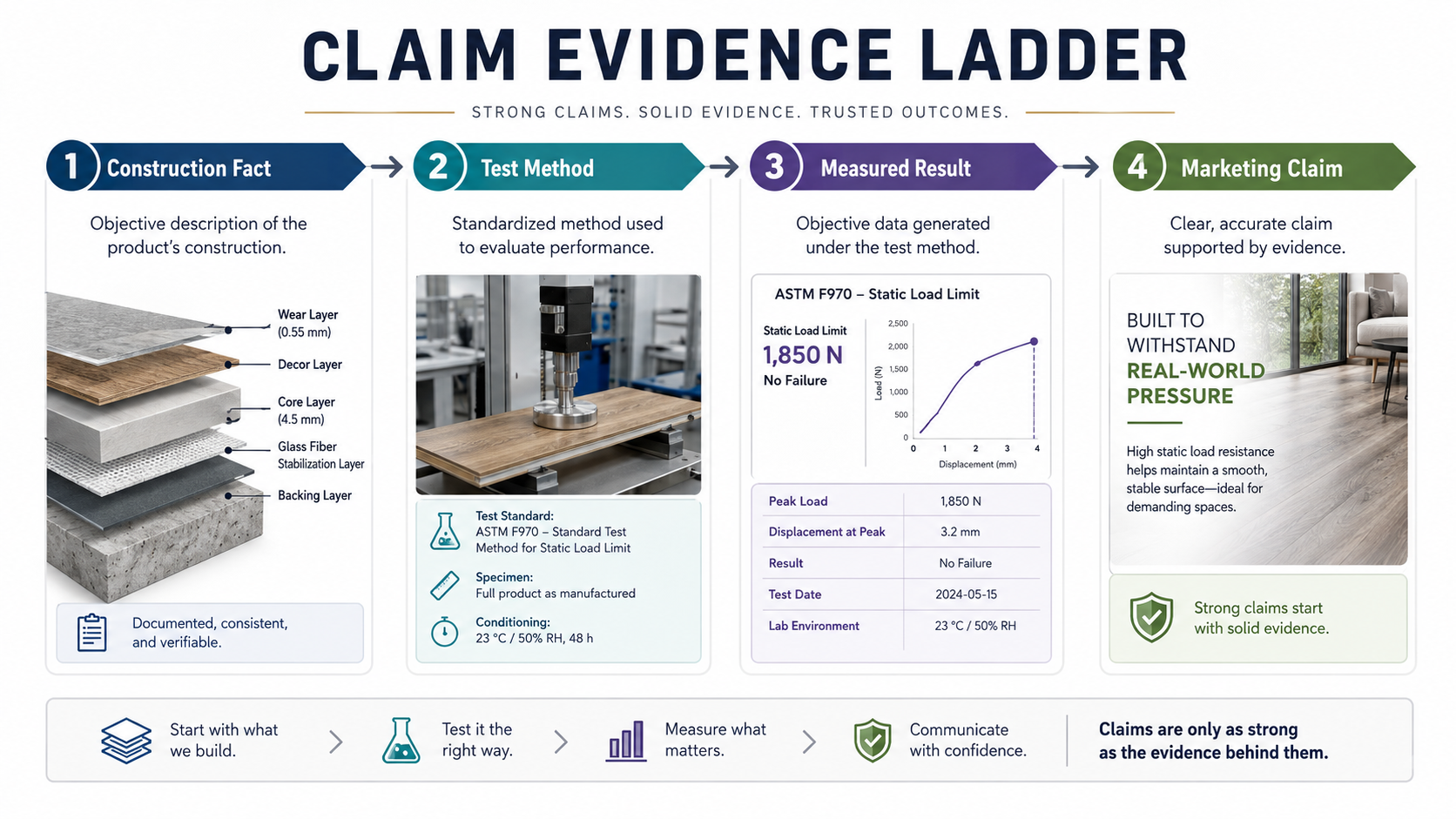
Use a Three-Level Evidence Ladder
Do not jump from a material name directly to a player-performance claim.
| Evidence Level | Example | What It Can Support |
|---|---|---|
| Level 1 · Construction fact | A documented titanium-containing film is present at a defined layer position | “Contains a defined titanium-related layer” |
| Level 2 · Measured result | Controlled A/B samples measured under one documented method | “Prototype B produced X result under Y method” |
| Level 3 · Product claim | Construction fact + repeatable result + production control | A restrained commercial positioning statement |
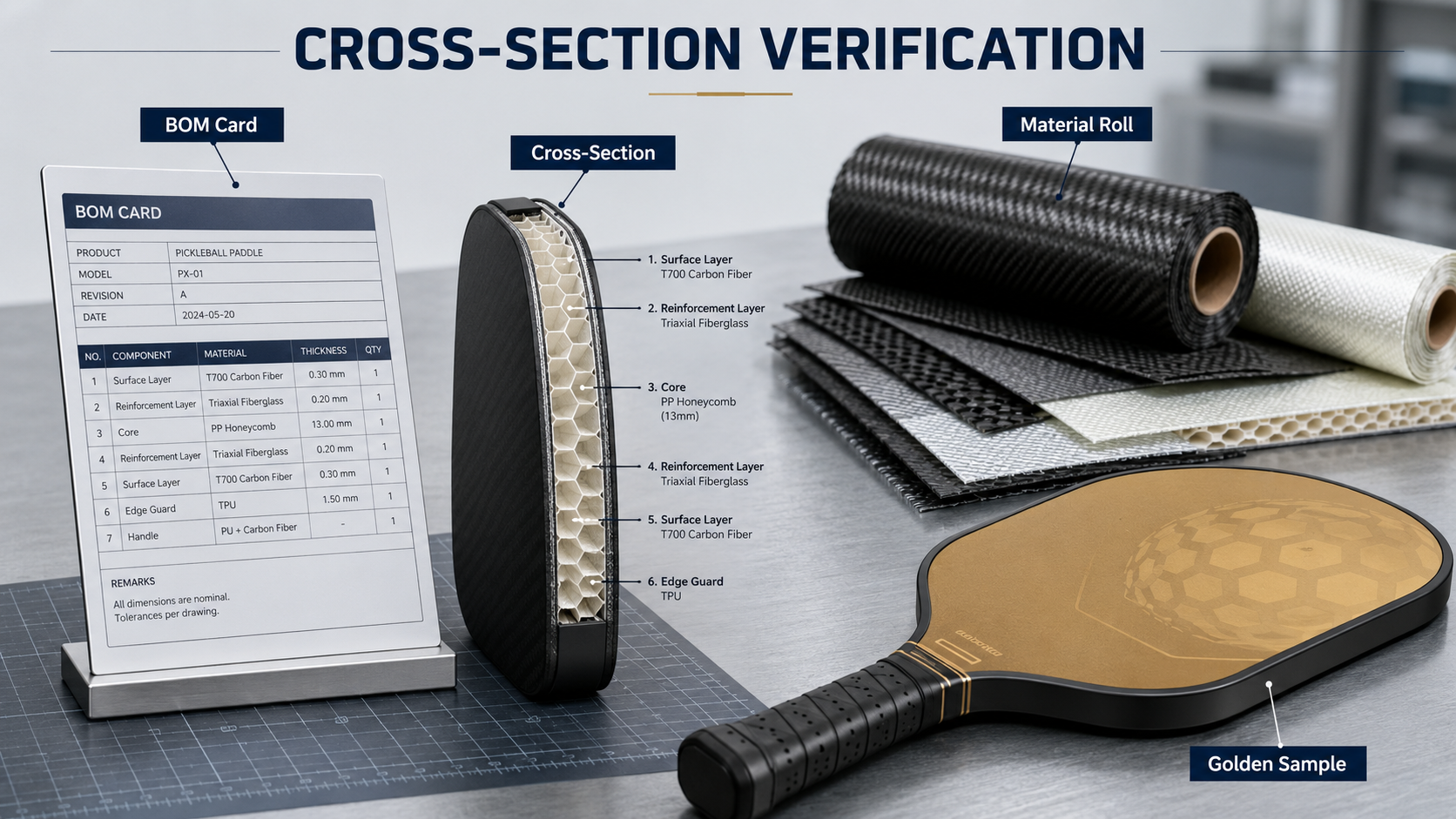
Cross-sections are useful for checking layer order, bond lines and whether the approved prototype resembles production. A cross-section does not prove chemical composition by itself. When the material story is central to the product, upstream material documentation should support the physical sample.
Prototype It as a Controlled Construction, Not a Buzzword
Keep mold, core, thickness, perimeter architecture, grip and target mass distribution as constant as practical. If the titanium-carbon sample requires multiple changes, document the project as a construction comparison rather than pretending that one material alone caused every difference.
Evaluate multiple units. Record static weight, balance, dimensions, surface condition and the relevant mechanical or playing proxies. If the claim includes durability or spin retention, repeat the comparison after a defined conditioning period.
Evaluate Manufacturing and Supply-Chain Risk
A novel face layer can introduce new interfaces, new reject modes and new sourcing constraints. Review bonding, trimming, cure/forming compatibility, cosmetic consistency, MOQ, storage, lead time, approved substitutes and supplier continuity.
The commercial question is not only whether a prototype is interesting. It is whether the construction can be produced repeatedly at the intended volume and cost without silently changing the material story.
Write a Defensible OEM and Marketing Specification
A strong specification says what the layer is, where it is, how it is controlled and which changes require approval. A strong product page then separates “what the paddle contains” from “what was measured” and from “what the player may perceive.”
Editorial rule
If the physical construction cannot be described without the marketing phrase “titanium carbon,” the specification is not mature enough for a performance claim.
Mayvoci First-Party Evidence to Add Before “Authority” Positioning
These are evidence tasks, not claims. Do not publish them as “our process” until the real photo, record or test exists.
Material proof
Capture: Real supplier label, material sample and production-intent face stack
Record: supplier code, layer position, version and date
After evidence exists: “The approved titanium-related layer is defined in the BOM rather than only by a marketing name.”
Cross-section comparison
Capture: Golden Sample + pilot-production cross-sections
Record: layer order, bond line and sample version
After evidence exists: “Production sections are compared with the approved reference when the construction changes.”
A/B prototype set
Capture: Same geometry with controlled face-construction change
Record: sample count, weight/balance, surface and test method
After evidence exists: Publish only the differences actually measured.
Durability evidence
Capture: New vs conditioned samples and visible interface inspection
Record: conditioning method, sample state, failure observations
After evidence exists: State durability observations only after the method and samples are documented.
Frequently Asked Questions
Is titanium carbon a standardized paddle material?
No single standardized physical construction is implied by the phrase. Define the actual layer or material system.
Does titanium carbon automatically create more spin?
No. Spin depends on the finished surface, ball interaction, condition and test method.
What is the strongest buyer question?
Ask: “What exactly is the titanium-related material, where is it in the stack, and which document controls it?”
Can a cross-section prove the material chemistry?
Not by itself. It can verify layer order and physical presence; chemistry may need upstream documentation or specific analysis.
How should the product be marketed?
State the construction fact separately from any measured performance result.
The End about Mayvoci
1)Design:Over 100 paddle designs and photography service to assist start-up.
2)Professional:Focus on various of paddles manufacturing for 6 years
3)Quality:Strict quality management system to provide safety and satisfaction for customers
4)Amazon:Flexible comprehensive solution to make sure each Amazon seller is well cared.
5)Excellent Team:Experienced paddle experts & dynamic sales team give you 5-star service

If you work on this topic from the brand, sourcing, engineering or manufacturing side, I’d be interested in your experience: When a new material name appears in the market, what evidence do you want first: BOM definition, supplier data, cross-section or controlled testing?