When players choose a pickleball paddle, one of the most common questions is:
Should I choose a 14mm or 16mm pickleball paddle?
The common answer is usually simple:
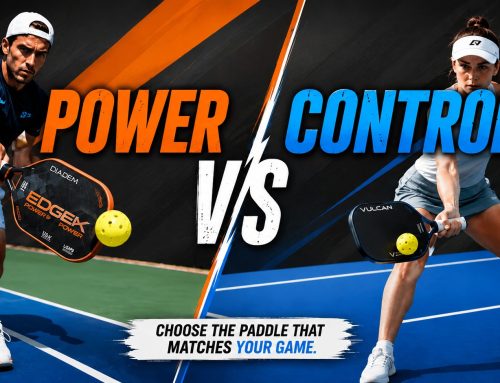
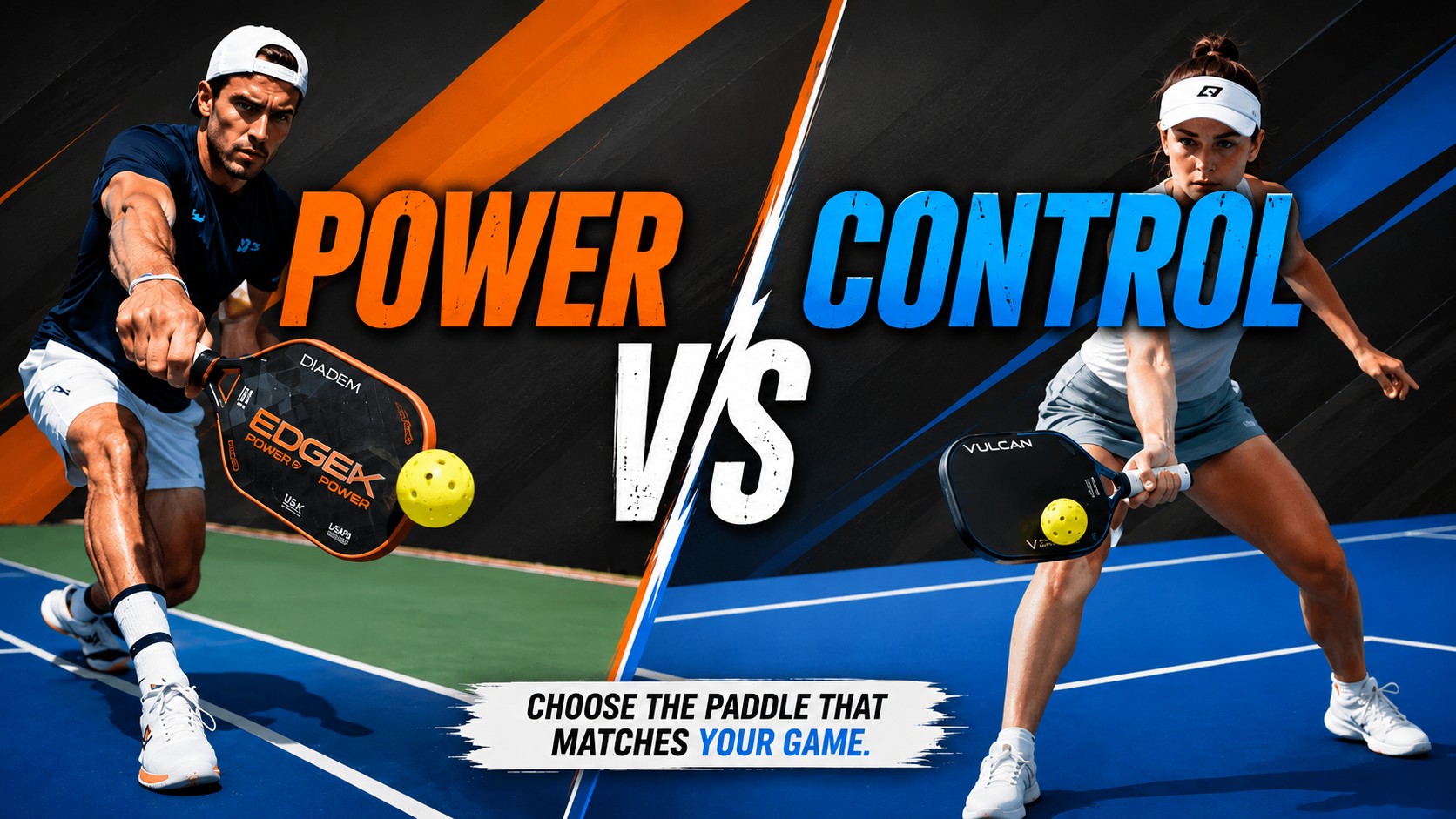
14mm pickleball paddles are for power, and 16mm pickleball paddles are for control.
This answer is not completely wrong, but it is too simple.
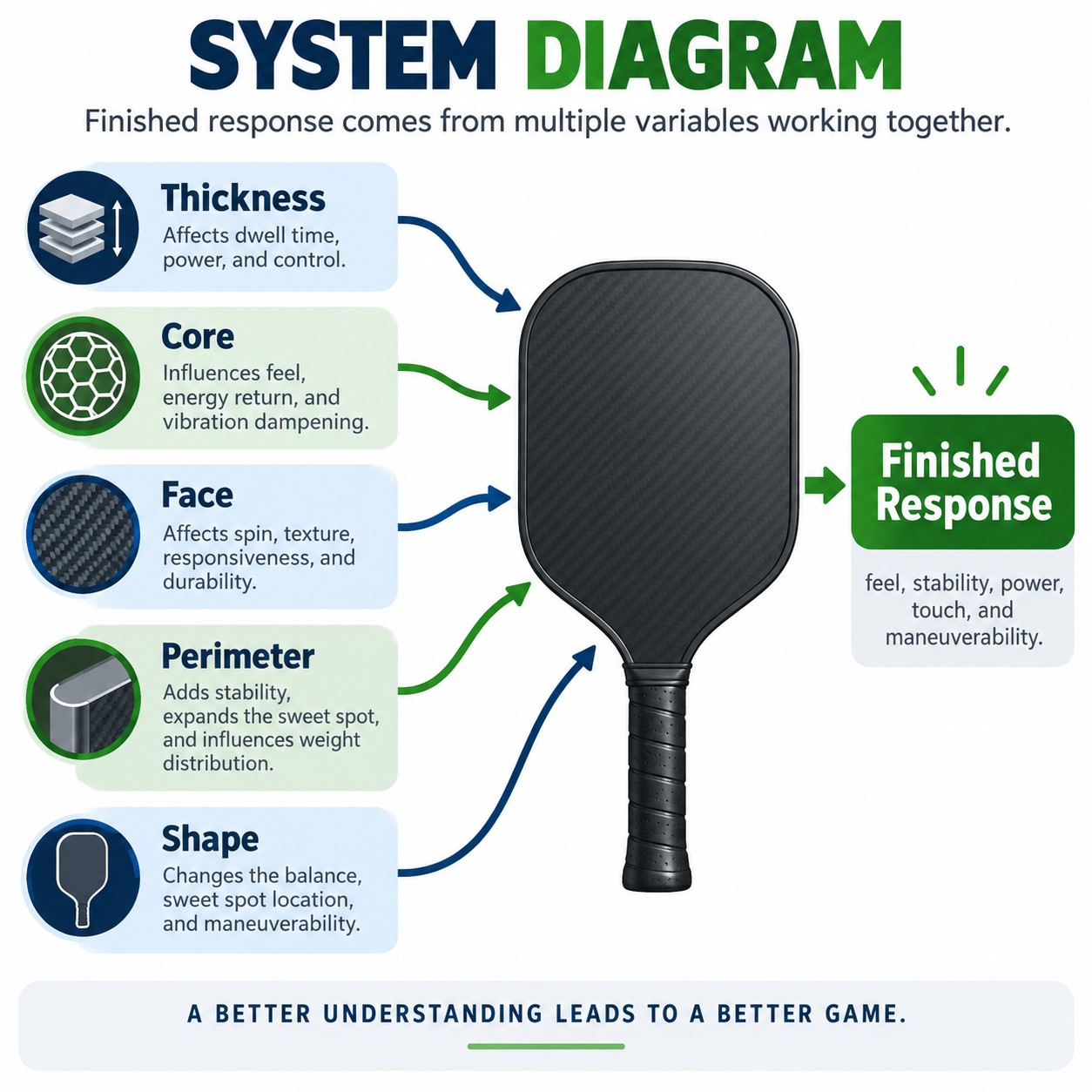
Modern pickleball paddle performance is no longer decided by thickness alone. Core material, carbon fiber surface, foam edge design, thermoformed construction, paddle shape, swing weight, surface texture, and overall balance all affect how a paddle performs on court.
In other words:
Paddle thickness affects the feel, but the complete paddle structure decides the performance.
For players, brands, wholesalers, and private label buyers, understanding pickleball paddle thickness is important. A well-designed 14mm paddle can still feel stable and controlled, while a well-designed 16mm paddle can still generate strong power.
This guide explains the real difference between 14mm and 16mm pickleball paddles, including feel, sweet spot, forgiveness, power, and product design considerations for OEM pickleball paddle projects.

What Does Pickleball Paddle Thickness Mean?
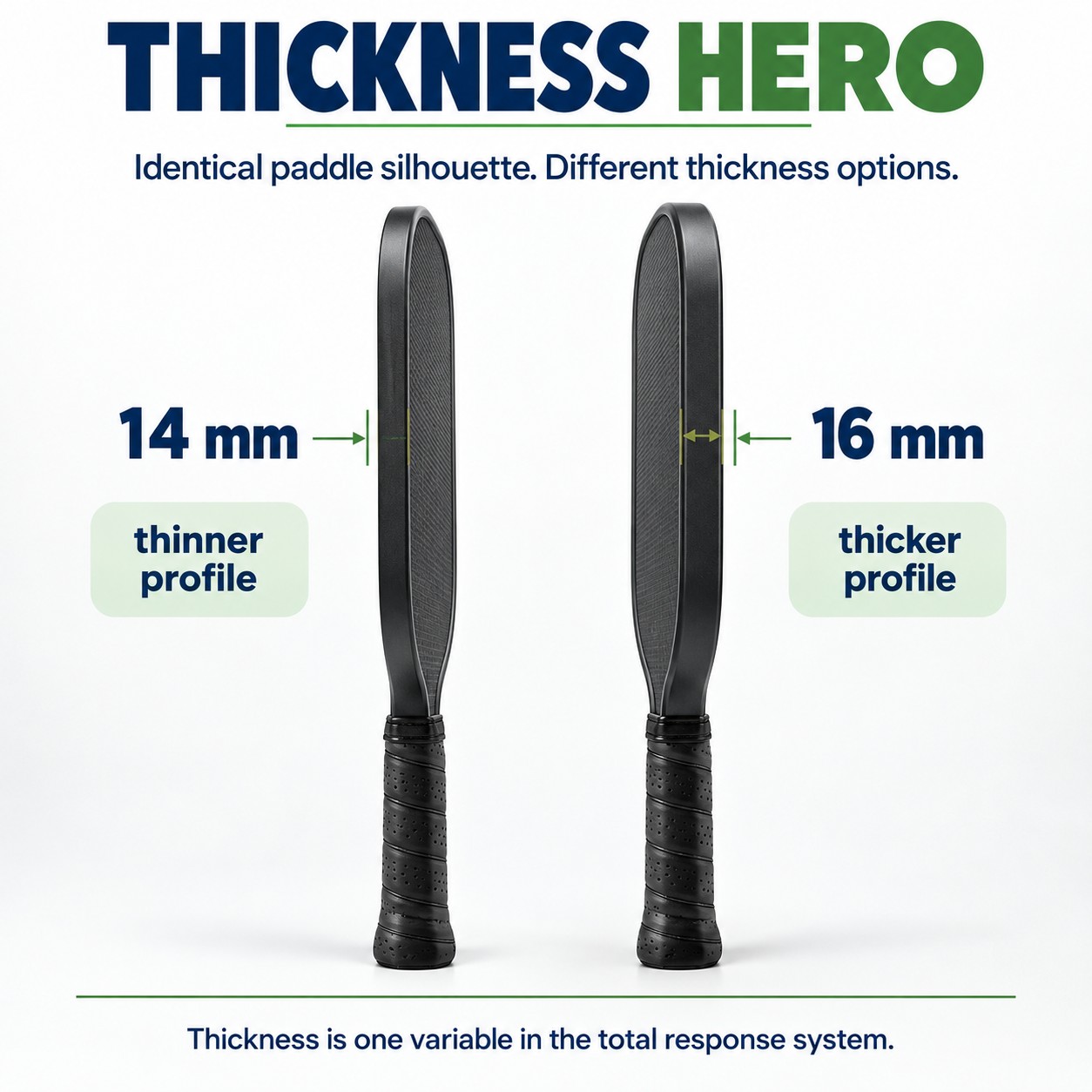
Pickleball paddle thickness usually refers to the thickness of the paddle core. The most common core thickness options are:
- 14mm pickleball paddle
- 16mm pickleball paddle
Some paddles may also use 13mm, 15mm, or other custom thicknesses, but 14mm and 16mm are the most common options in today’s market.
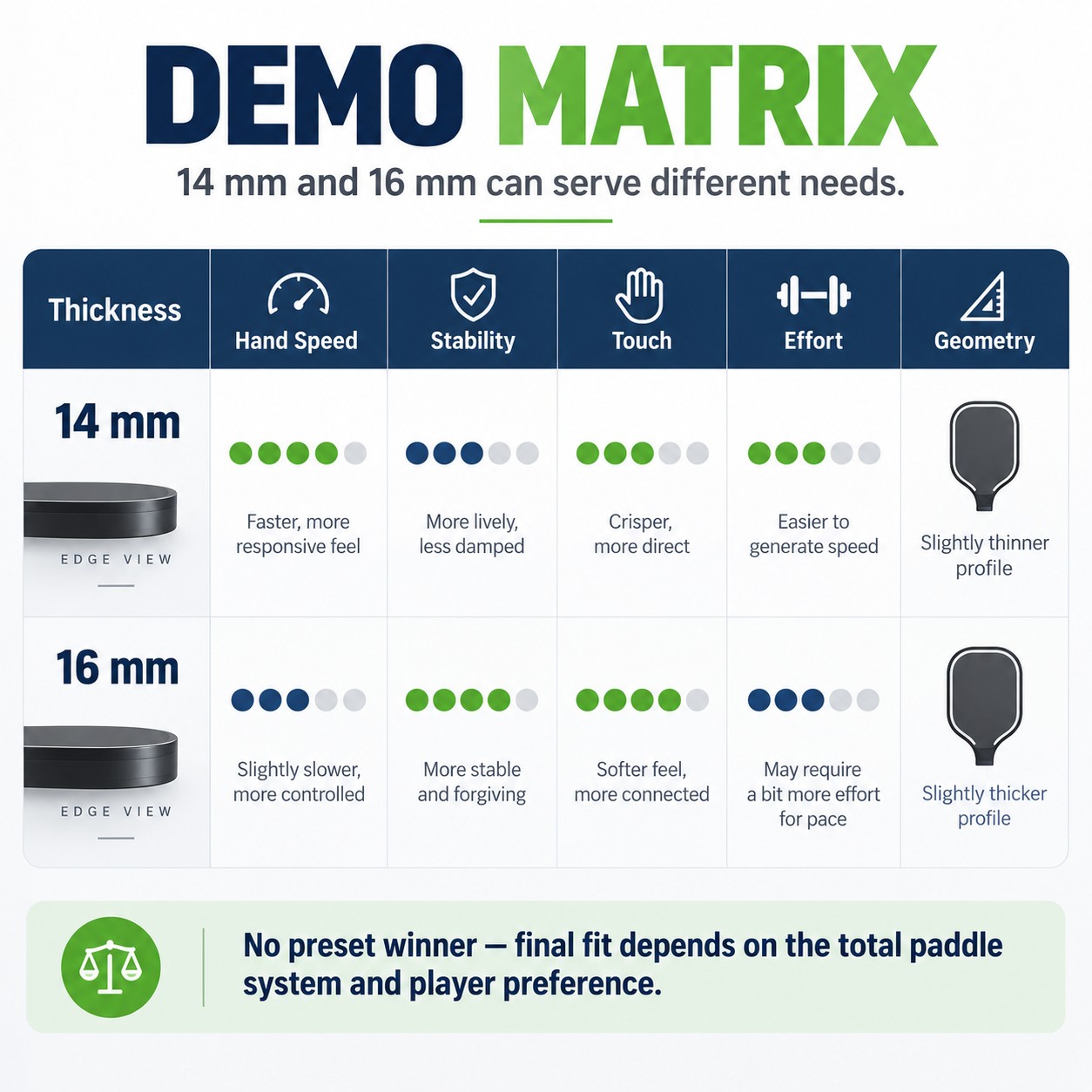
A thinner paddle usually feels faster and more responsive. A thicker paddle usually feels more stable and forgiving.
However, thickness is only one part of the paddle design. The final playing experience also depends on the material, construction, balance, and target player level.
14mm Pickleball Paddle: Fast, Crisp, And Responsive
A 14mm pickleball paddle is usually thinner and more responsive. Because the core is thinner, the ball often leaves the paddle face faster. This gives players a crisp and direct hitting feel.
14mm paddles are often preferred by players who want:
- Faster hand speed
- Quicker reaction at the kitchen line
- Crisp ball feedback
- More direct contact feel
- Better maneuverability
- Fast counterattacks and quick exchanges
For aggressive players who like fast hands, counters, and speed-up shots, a 14mm paddle can feel very lively.
However, a 14mm paddle may also have a smaller sweet spot compared with a thicker paddle. Off-center hits can feel less stable if the paddle structure is not well designed.
This is why a high-quality 14mm carbon fiber pickleball paddle should still consider core material, carbon fiber layup, edge structure, and weight distribution.
16mm Pickleball Paddle: Stable, Forgiving, And Comfortable
A 16mm pickleball paddle is usually thicker and more stable. The thicker core can increase dwell time, which means the ball feels like it stays on the paddle face for a slightly longer moment.
16mm paddles are often preferred by players who want:
- Larger sweet spot
- Better forgiveness
- More stable blocking
- Better shock absorption
- Softer touch
- More confidence on resets and defensive shots
A 16mm paddle is often a good option for control-focused players, all-court players, and players who want more stability during fast rallies.
But this does not mean a 16mm paddle has no power.
With the right structure, a 16mm thermoformed pickleball paddle with T700 carbon fiber surface, foam edge, and higher swing weight can still produce strong baseline power and heavy drives.
14mm vs 16mm Pickleball Paddle: Is It Really Power vs Control?
The simple comparison is:
- 14mm paddle = more power
- 16mm paddle = more control
But this is only a basic explanation.
A more accurate comparison is:
- 14mm paddles usually feel faster, crisper, and more responsive
- 16mm paddles usually feel more stable, more forgiving, and more comfortable
Power and control are not only decided by thickness.
For example, a 16mm paddle with thermoformed construction can deliver excellent power. A 14mm paddle with a softer core and balanced weight distribution can still offer good control.
The real difference is not just power versus control. The real difference is feel, stability, forgiveness, sweet spot, and swing response.
Paddle Feel: The First Difference Players Notice
Paddle feel is one of the most important parts of pickleball paddle performance.
Feel includes:
- How the paddle responds at impact
- Whether the feedback is crisp or soft
- Whether the paddle feels fast or stable
- Whether off-center hits feel solid or weak
- Whether the paddle absorbs vibration well
A 14mm paddle often feels more direct. When the ball is hit cleanly, the feedback can be sharp and fast. This is useful for players who like quick reactions and fast hand battles.
A 16mm paddle usually feels more solid and comfortable. The thicker core can help absorb impact and provide a more stable contact feeling.
For OEM and private label pickleball paddle buyers, feel is not only a technical detail. It is part of product positioning.
A brand targeting aggressive intermediate players may prefer a faster 14mm paddle. A brand targeting control-focused or all-court players may prefer a more forgiving 16mm paddle.
Sweet Spot: Why Thickness Matters, But Does Not Decide Everything
The sweet spot is the area of the paddle that gives the best response when hitting the ball.
Many players think the sweet spot is only the center of the paddle. In reality, a good sweet spot means the paddle can still perform well when the ball is not hit perfectly in the center.
A larger sweet spot helps players with:
- Off-center hits
- Defensive blocks
- Fast exchanges
- Resets under pressure
- More consistent ball control
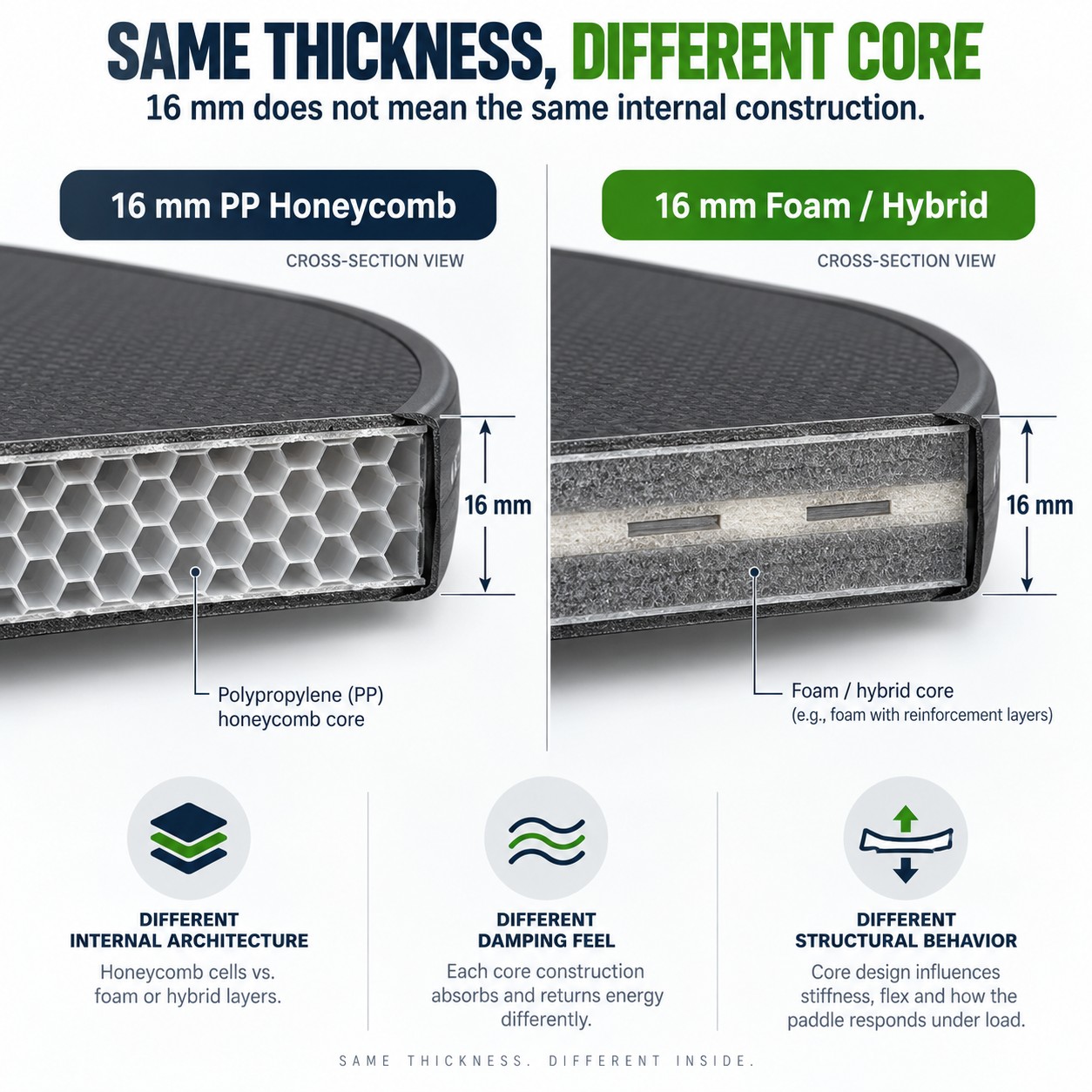
A 16mm pickleball paddle often has an advantage in sweet spot size because the thicker core can improve structural stability. When combined with foam edge construction or foam core design, the paddle can feel more stable across a larger hitting area.
However, thickness alone does not guarantee a large sweet spot.
Sweet spot performance is also affected by:
- Paddle shape
- Core material
- Carbon fiber layup
- Foam edge design
- Twist weight
- Overall balance
A well-designed 14mm paddle can still have a strong usable sweet spot. A poorly designed 16mm paddle may still feel unstable or dull.
Forgiveness: The Hidden Factor Behind Consistency
Forgiveness is one of the most important factors in pickleball paddle design.
A forgiving pickleball paddle can still perform well when the player does not hit the ball perfectly.
Forgiveness helps with:
- Blocking hard shots
- Resetting under pressure
- Handling off-center contact
- Reducing paddle twisting
- Keeping the ball lower
- Improving consistency in long rallies
Many players think they need more power, but what they really need is more stability and forgiveness.
If a player often loses points because the paddle twists, blocks fly too high, or resets are unstable, the problem may not be lack of power. It may be lack of forgiveness.
This is where 16mm paddles, foam edge construction, and higher twist weight can help.
Forgiveness is not only for beginners. Advanced players also need forgiveness during high-speed rallies, defensive shots, and pressure points.
Power Is Not Only About Paddle Thickness
Power in pickleball is not just one thing. There are different types of power.
Quick-Response Power
Quick-response power is the fast pop players feel during counters, blocks, and short-swing attacks.
14mm paddles often feel strong in this area because the ball leaves the paddle face quickly. This can help players react faster during net exchanges.
Full-Swing Power
Full-swing power is the heavier pace created from serves, returns, drives, and baseline attacks.
This type of power depends on more than thickness. It is affected by:
- Swing weight
- Paddle stability
- Carbon fiber surface
- Thermoformed construction
- Foam edge structure
- Overall balance
A 16mm thermoformed pickleball paddle with T700 carbon fiber and foam edge can still deliver strong power from the baseline.
So the better question is not “Which thickness has more power?”
The better question is:
What kind of power does the target player need?
Key Structures That Affect Pickleball Paddle Performance
Modern pickleball paddle performance comes from complete structural design. Thickness is only one factor.
T700 Carbon Fiber Surface
T700 carbon fiber is often used in high-performance pickleball paddles. It offers a good balance of stiffness, durability, and surface response.
A T700 carbon fiber pickleball paddle can provide a more precise feel and stable hitting experience.
Foam Edge Or Foam Core Structure
Foam structures can improve stability, enlarge the sweet spot, and reduce vibration.
Foam edge construction is especially useful for improving forgiveness and paddle consistency across the face.
Thermoformed Construction
Thermoformed pickleball paddles are designed with integrated structure and stronger bonding. This can improve power transfer, durability, and overall stability.
Thermoformed construction is commonly used in premium pickleball paddle lines.
Textured Spin Surface
A textured carbon fiber or raw carbon surface can increase friction between the ball and paddle face.
This helps players generate more spin on drives, slices, drops, and controlled shots.
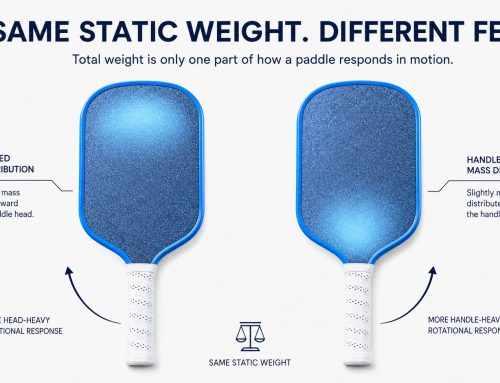
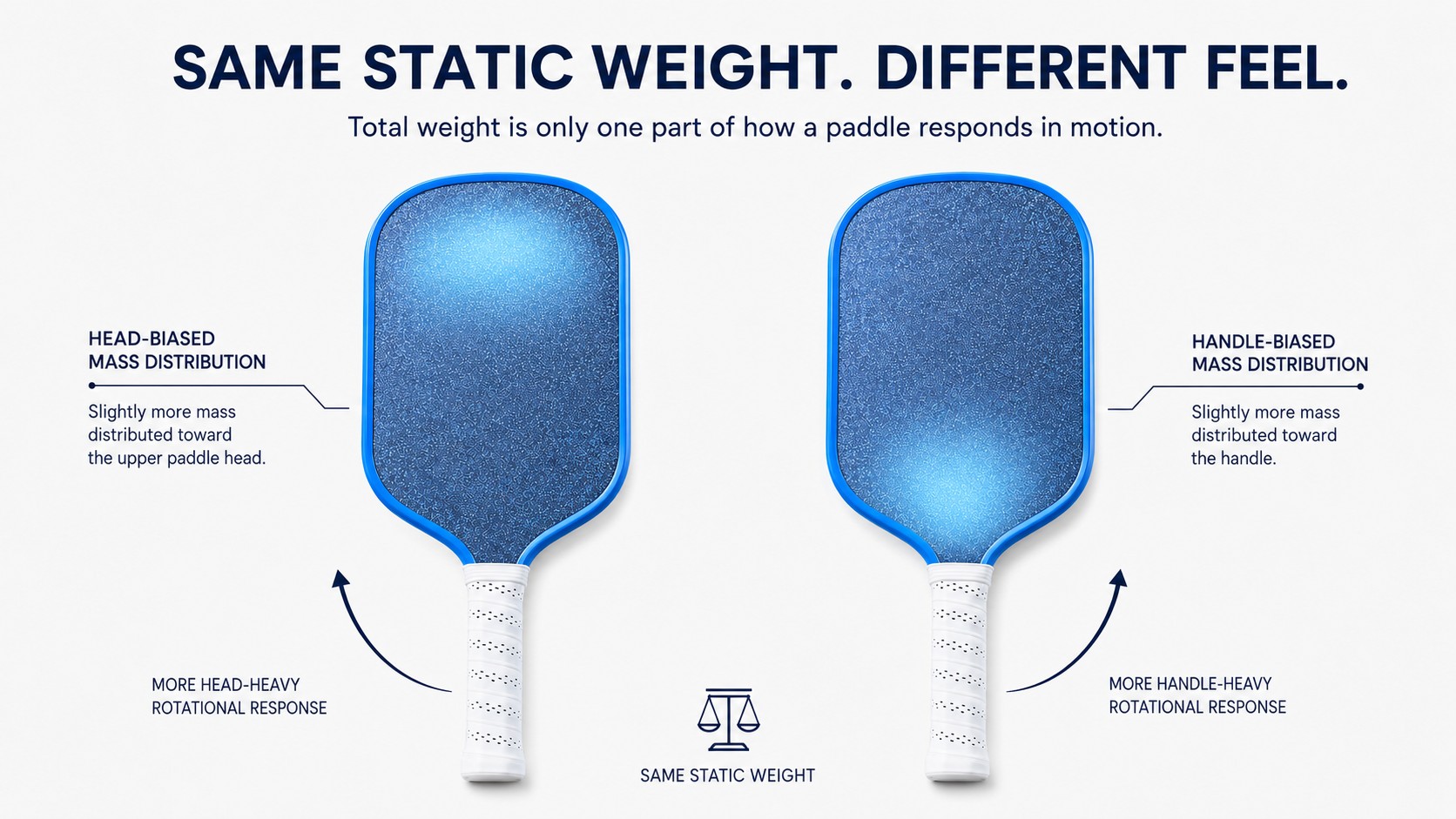
Swing Weight
Swing weight affects how heavy the paddle feels during motion.
A lower swing weight can make the paddle faster in hand battles. A higher swing weight can add more stability and power, especially from the baseline.
Paddle Shape
Paddle shape also changes performance. Standard, elongated, wide body, and hybrid shapes all affect reach, sweet spot, balance, and maneuverability.
The same 16mm core can feel very different in different paddle shapes.

How Brands Can Plan 14mm And 16mm Pickleball Paddle Lines
For brands, wholesalers, and private label buyers, 14mm and 16mm paddles should not be treated as one simple choice.
They can be used to build different product lines for different players.
14mm Paddle Series
A 14mm paddle series may be suitable for:
- Fast hand players
- Aggressive net play
- Quick counters
- Lightweight paddle designs
- Crisp feedback products
- Speed-focused paddle lines
16mm Paddle Series
A 16mm paddle series may be suitable for:
- Control-focused players
- All-court players
- Players who want a larger sweet spot
- Defensive and reset-focused play
- Premium foam core paddle lines
- Stability-focused product lines
Premium Paddle Series
For premium pickleball paddle products, brands may consider:
- 16mm core thickness
- T700 carbon fiber surface
- Thermoformed construction
- Foam edge structure
- Textured spin surface
- Custom grip and packaging
Custom Brand Series
For private label and OEM pickleball paddle projects, brands can develop both 14mm and 16mm models to cover different market needs.
This helps create a more complete product line instead of relying on only one paddle structure.
How To Choose Between 14mm And 16mm Pickleball Paddles
Instead of choosing only by thickness, players and brands should consider the playing problem the paddle needs to solve.
Choose a 14mm pickleball paddle if the target player wants:
- Faster hand speed
- Crisp hitting feedback
- Quick counters
- Lightweight feel
- Faster ball release
Choose a 16mm pickleball paddle if the target player wants:
- Larger sweet spot
- Better forgiveness
- More stable blocking
- Better touch and resets
- More comfortable feel
Choose a thermoformed carbon fiber paddle if the target player wants:
- Stronger power transfer
- Premium structure
- Better stability
- Higher durability
- Professional-level performance
Choose a foam edge or foam core paddle if the target player wants:
- More forgiveness
- Larger sweet spot
- Better shock absorption
- Improved stability on off-center hits

Conclusion: Thickness Is Only The Starting Point
The difference between 14mm and 16mm pickleball paddles is not simply power versus control.
A 14mm pickleball paddle usually feels faster, crisper, and more responsive. A 16mm pickleball paddle usually feels more stable, more forgiving, and more comfortable.
But the final paddle performance depends on much more than thickness.
Carbon fiber material, core structure, foam edge design, thermoformed construction, surface texture, swing weight, paddle shape, and balance all work together to create the final playing experience.
For players, the best paddle is not always the one with the most power or the most control. It is the paddle that fits their playing style and solves their most common problems.
For brands and wholesale buyers, the best pickleball paddle product line should not be built around thickness alone. It should be designed around target players, product positioning, material structure, and real on-court performance.
HYM supports OEM and ODM pickleball paddle projects with 14mm and 16mm core options, T700 carbon fiber surface, foam core structure, thermoformed construction, textured spin surface, custom logo, private label packaging, and wholesale production support.
Whether you are developing a fast-response paddle, a control-focused paddle, or a premium professional paddle series, the right structure design matters more than a single thickness number.
FAQ: Pickleball Paddle Thickness
Q: Is a 14mm pickleball paddle better than a 16mm paddle?
A: Not always. A 14mm pickleball paddle usually feels faster and crisper, while a 16mm paddle usually feels more stable and forgiving. The better choice depends on playing style, paddle structure, and target player needs.
Q: Does a 14mm pickleball paddle have more power?
A: A 14mm paddle often has faster ball release and quick-response power. However, full-swing power also depends on swing weight, carbon fiber material, thermoformed construction, and overall paddle design.
Q: Is a 16mm pickleball paddle better for control?
A: A 16mm paddle usually offers better stability, larger sweet spot, and more forgiveness, which can help with control. But surface texture, core material, and paddle balance also affect control performance.
Q: What is the best pickleball paddle thickness for beginners?
A: Many beginners prefer 16mm paddles because they usually provide more forgiveness, better shock absorption, and a larger sweet spot. This can make the paddle easier to use.
Q: What is the best pickleball paddle thickness for advanced players?
A: Advanced players may choose either 14mm or 16mm depending on their playing style. Fast hand players may prefer 14mm, while all-court or control-focused players may prefer 16mm.
Q: Does paddle thickness affect the sweet spot?
A: Yes. A thicker paddle can help improve stability and sweet spot size, especially when combined with foam edge or foam core design. However, sweet spot also depends on paddle shape, layup, balance, and twist weight.
Q: What is a thermoformed pickleball paddle?
A: A thermoformed pickleball paddle uses heat and pressure to create a stronger integrated structure. It can improve durability, stability, and power transfer, especially in premium paddle designs.
Q: Can HYM customize 14mm and 16mm pickleball paddles?
A: Yes. HYM supports OEM and ODM pickleball paddle customization, including 14mm and 16mm core options, T700 carbon fiber surface, foam core structure, thermoformed construction, textured spin surface, custom logo, private label packaging, and wholesale production.
The End about Mayvoci
1)Design:Over 100 paddle designs and photography service to assist start-up.
2)Professional:Focus on various of paddles manufacturing for 6 years
3)Quality:Strict quality management system to provide safety and satisfaction for customers
4)Amazon:Flexible comprehensive solution to make sure each Amazon seller is well cared.
5)Excellent Team:Experienced paddle experts & dynamic sales team give you 5-star service