
“PP honeycomb core” is not a complete specification. It describes a material family and geometry, but it does not tell a paddle brand the cell size, sheet density, wall consistency, polymer source, flatness, surface condition or how the core will bond to the face laminate.
For OEM development, those details matter because the honeycomb is not only a lightweight spacer. It supports the face, transfers load through the sandwich structure and creates an interface that must survive repeated impact.
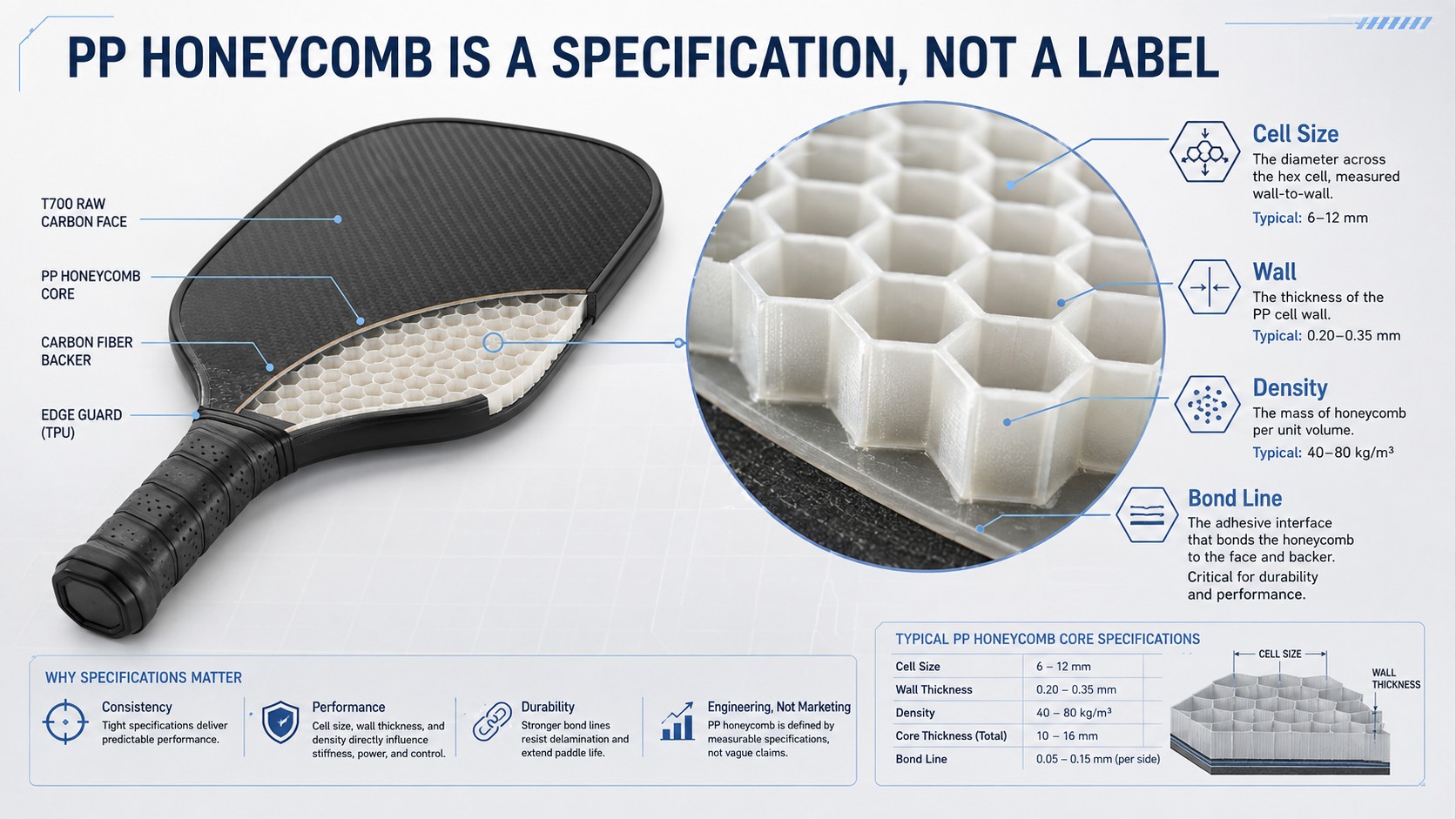
PP Honeycomb Is a Controlled Material System—not a Generic Sheet
Polypropylene honeycomb uses thin polymer walls arranged into repeating cells. The honeycomb creates thickness and structural depth at much lower mass than a solid PP sheet.
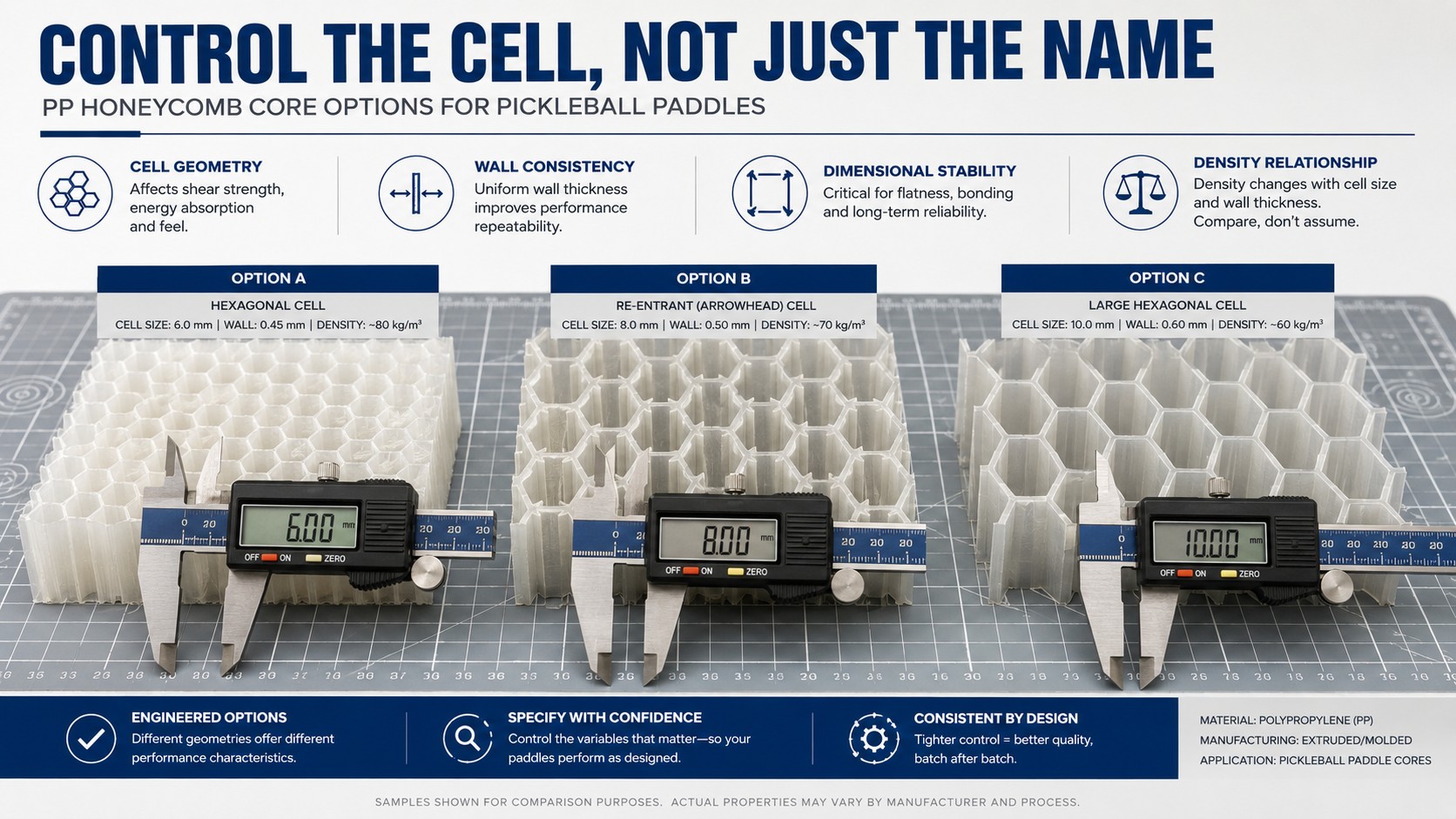
The label “polypropylene” does not guarantee that two sheets are equivalent. Resin formulation, forming method, cell geometry and production quality can differ.
Cell size changes the number and spacing of support walls beneath the face. Smaller cells create more frequent support points, while larger cells create a different balance of wall material, void area and local support.
That does not mean smaller is universally better. The useful choice depends on wall thickness, sheet density, face laminate, core thickness, adhesive and target weight.
Honeycomb quality is not only the nominal cell width. Bent walls, irregular welds, local collapse, non-uniform cell shape or damaged sheet edges can create local differences beneath the face.
Incoming inspection should look for obvious deformation and compare samples across the sheet, not only at one corner.
Core density influences how much mass the honeycomb contributes at a given thickness. A density change can shift finished paddle weight and may signal changes in wall thickness or material content.
For a controlled product, measure incoming sheet weight or density by an agreed method and define an acceptable range.
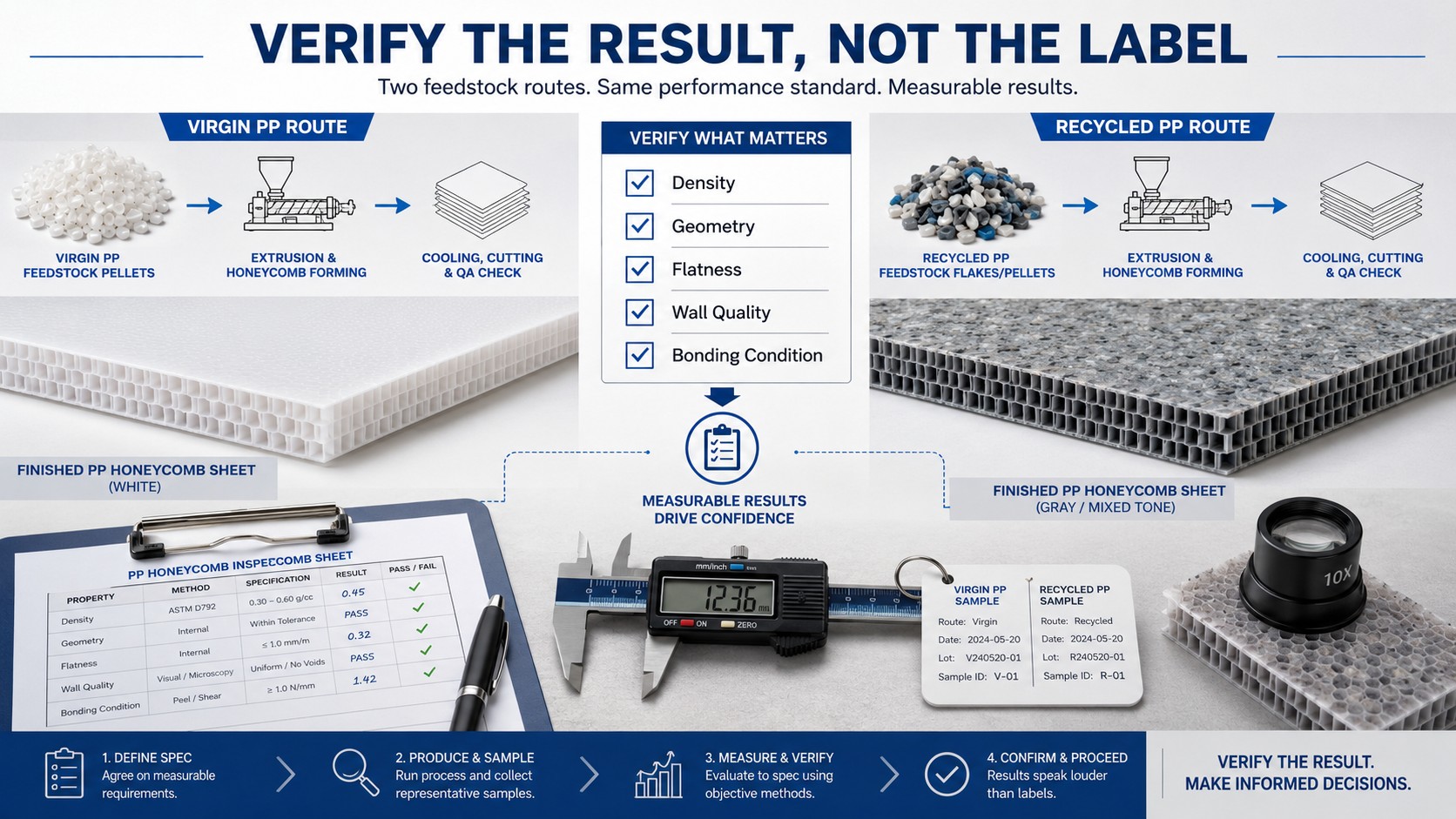
Virgin and recycled polypropylene can differ in processing history, contamination risk and feedstock consistency. However, “virgin” is not a guarantee that every honeycomb sheet is good, and “recycled” is not proof that a sheet is unsuitable.
If virgin PP is required, define it in the purchasing specification and still inspect the finished honeycomb. If recycled content is part of a sustainability or cost brief, define the acceptable source and verify that the sheet meets the same geometry, density, flatness and bonding requirements.
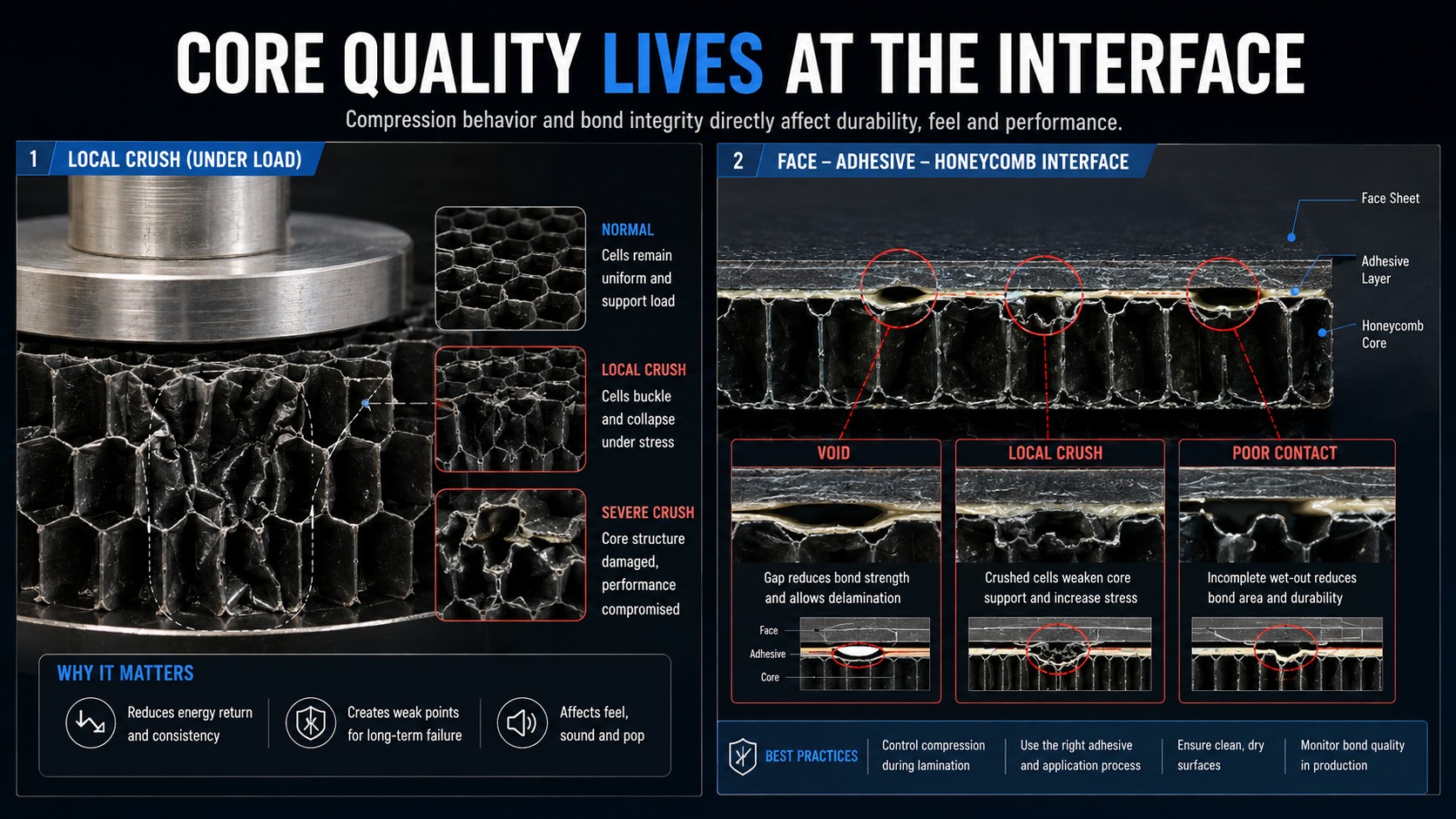
Flatness, Core Crush and Bonding Determine Structural Quality
A warped or locally uneven core makes it harder to create consistent contact between the face laminate and honeycomb. Adhesive thickness can vary, local voids can form, and pressure can be distributed unevenly.
Store core sheets correctly and inspect flatness before cutting or lamination.
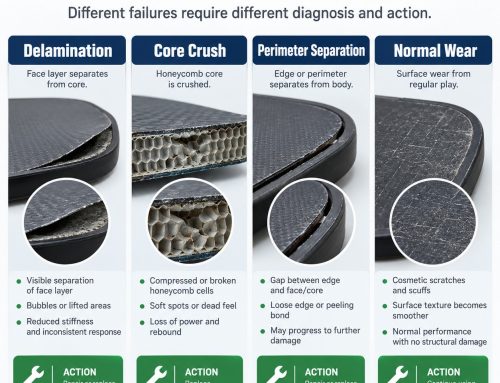
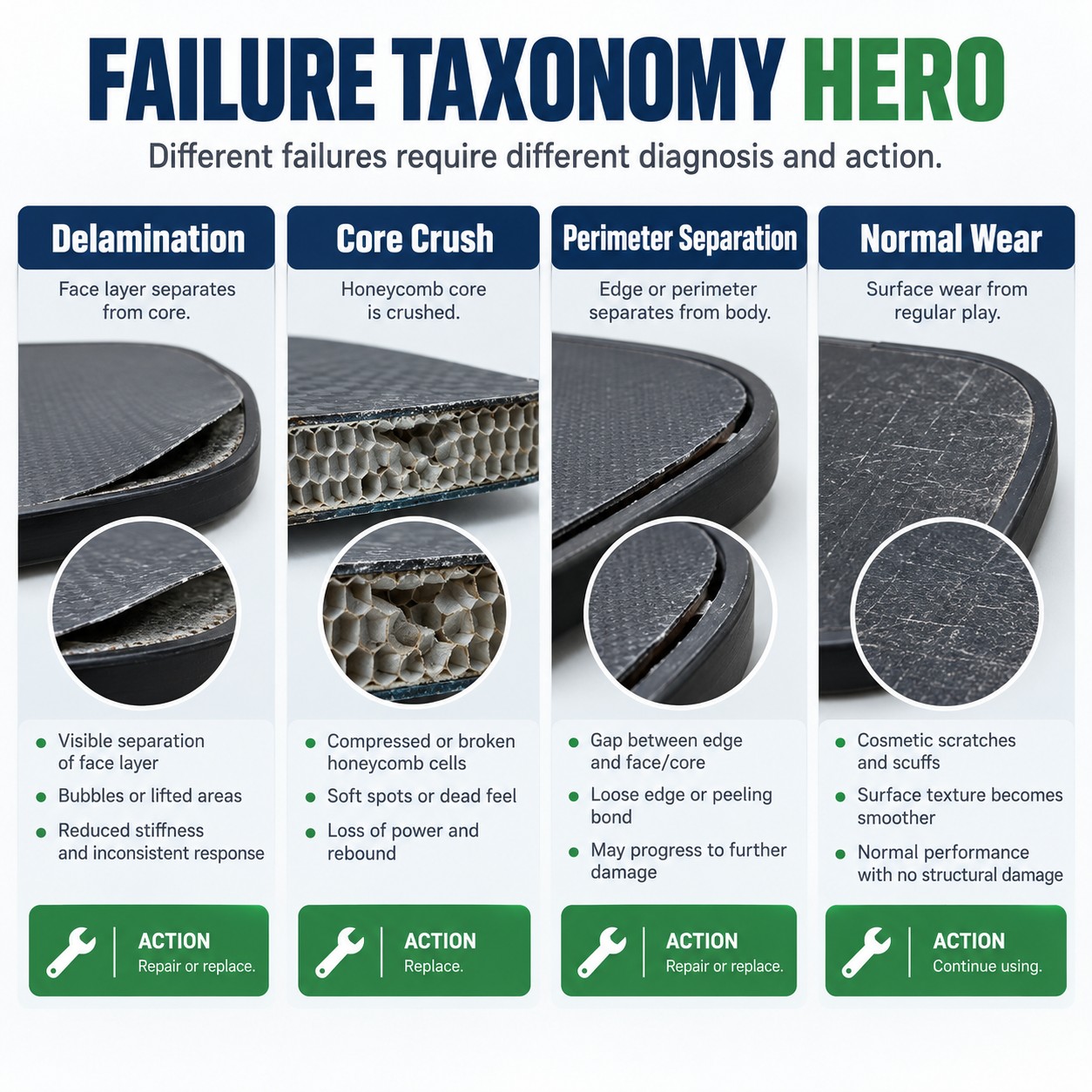
Honeycomb can be compressed locally during handling, pressing, trimming, impact or later use. A crushed area no longer supports the face in the same way as the surrounding structure.
When a paddle develops a soft spot or unusual sound, core crush is one possible internal cause—but it should not be diagnosed from sound alone.
A perfect honeycomb sheet can still produce a weak paddle if the interface is poor. Bonding depends on adhesive selection, coverage, viscosity, surface condition, pressure, cure and face architecture.
During development, cut retained samples and look for voids, incomplete contact, excessive adhesive pools, core damage or inconsistent face-to-core connection.
Incoming QC and the BOM Should Control the Hidden Core
- Supplier and material identification
- Core thickness
- Sheet dimensions
- Bulk density or weight-per-area method
- Cell geometry inspection
- Flatness
- Visible wall damage
- Lot number and retained sample
The important point is that the core is inspected as an engineered input rather than treated as an anonymous sheet.
A purchase specification should include enough information that the approved material cannot be silently replaced by another “PP honeycomb” that only shares the same color and thickness.
Record supplier or approved equivalent, material description, thickness, relevant density range, cell geometry, incoming acceptance criteria and change-control requirements.
PP Honeycomb Incoming QC Example
| Item | What to Check | Method Direction | Why It Matters |
|---|---|---|---|
| Thickness | Sheet and lot consistency | Defined caliper locations | Finished paddle thickness/process consistency |
| Bulk density / mass per area | Lot variation | Agreed weighing/volume method | Finished mass and structural consistency |
| Cell geometry | Wall shape, damage, irregular cells | Visual/macro reference | Local face support |
| Flatness | Warp/local distortion | Flat reference + defined acceptance method | Bond contact and pressure distribution |
| Surface condition | Contamination/damage | Visual inspection | Adhesion risk |
| Traceability | Supplier/lot/retained sample | Lot record | Root-cause analysis after production |
PP Honeycomb and Foam Need Different Engineering Logic
PP honeycomb and foam cores create different structural architectures. Do not make the comparison by saying one is “control” and the other is “power.” Compare density, support, bonding, fatigue, damping, process compatibility and product targets.
Connect Incoming Core Variation to Finished-Paddle Variation
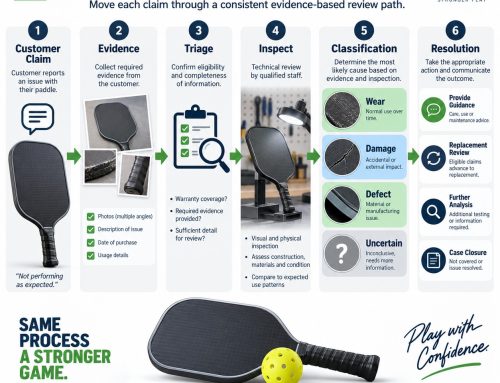
Incoming core data becomes more useful when it is connected to finished product measurements. If one lot produces a shift in static weight, acoustic response, local stiffness or failure rate, compare that lot’s core density, flatness and geometry with retained material from earlier production.
This creates traceability between a hidden internal component and the finished paddle. Without that link, teams often treat variation as random and compensate by sorting finished paddles rather than fixing the process.
If the core supplier, resin source, forming process or nominal density changes, do not assume the new sheet is equivalent because the cells look similar. Run the incoming checks, build controlled samples and compare them with the approved construction before releasing large-volume production.
Turn ‘PP Honeycomb’ Into a Purchasable Specification
Commercial paddle pages often treat polypropylene honeycomb as one generic material. Industrial honeycomb data sheets show why that is incomplete: material type, cell size, density, thickness and mechanical properties can be separate specification fields.
Those industrial values should not be copied into a paddle BOM unless the actual paddle material has been qualified. Their value here is methodological: they demonstrate that “PP honeycomb” is a material family that still requires defined purchasing and incoming-control variables.
For paddle development, the internal specification should identify the fields that materially affect assembly consistency and finished-paddle variation, while public marketing can remain simpler.
| Specification Layer | What to Record | Why It Matters | Evidence Type |
|---|---|---|---|
| Material identity | Supplier / grade / approved equivalent | Prevents silent substitution | Label + BOM |
| Cell geometry | Nominal cell size / visible condition | Defines cellular support architecture | Macro photo + incoming check |
| Density | Supplier specification + lot check if used | Connects incoming variation to mass/support | Data sheet + measurement |
| Thickness / flatness | Nominal + acceptance method | Affects assembly and bonding | Caliper / flat reference |
| Bonding surface | Cleanliness / skin / surface condition | Affects interface quality | Visual standard + process record |
What a Good PP Honeycomb Specification Should Achieve
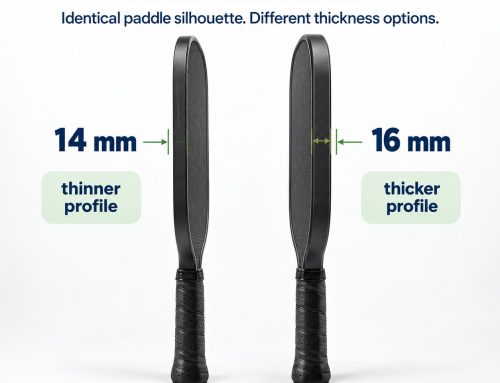
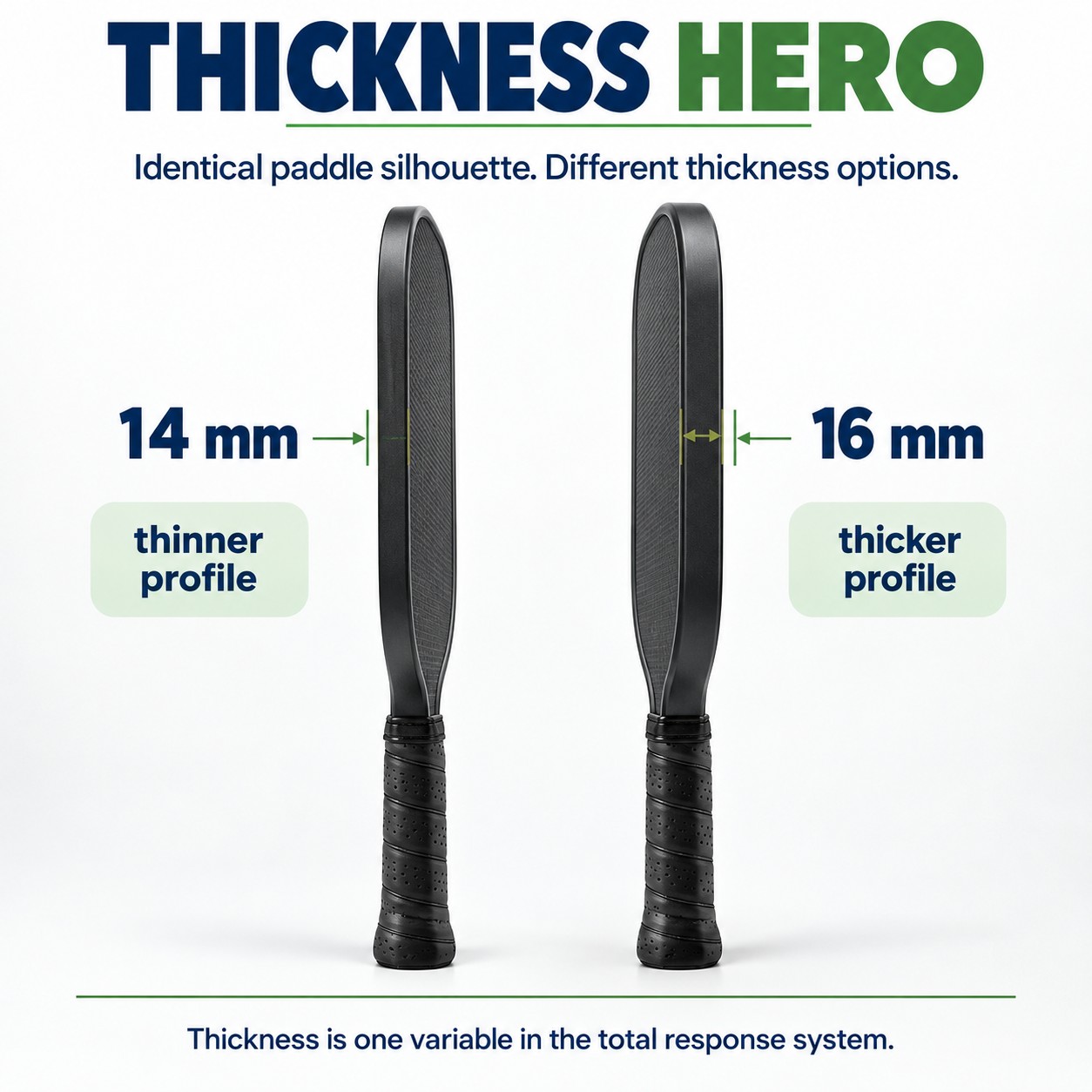
A brand should never approve “16 mm PP honeycomb” as the entire core specification. The geometry, material consistency and bond interface are what turn that label into a repeatable paddle.
FAQ
Is virgin PP always better than recycled PP?
No. Finished sheet geometry, density, flatness, wall quality and bonding still need to be controlled.
Does smaller honeycomb cell size always improve control?
No. Cell size is only one variable in a complete sandwich structure.
What causes core crush?
Local compression can occur during processing, handling or use. The exact cause should be investigated with physical evidence.
Should core sheets be inspected before lamination?
Yes. Thickness, density or mass, geometry, flatness and visible damage can be checked before the material becomes hidden inside a paddle.
Can two PP honeycomb paddles feel different?
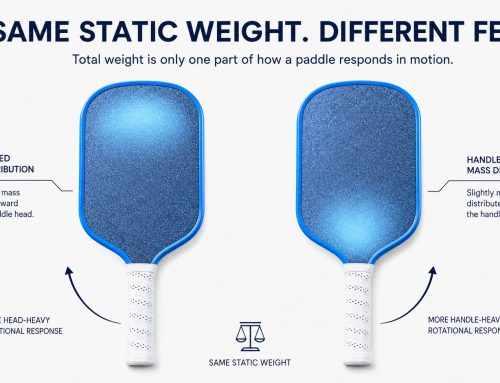
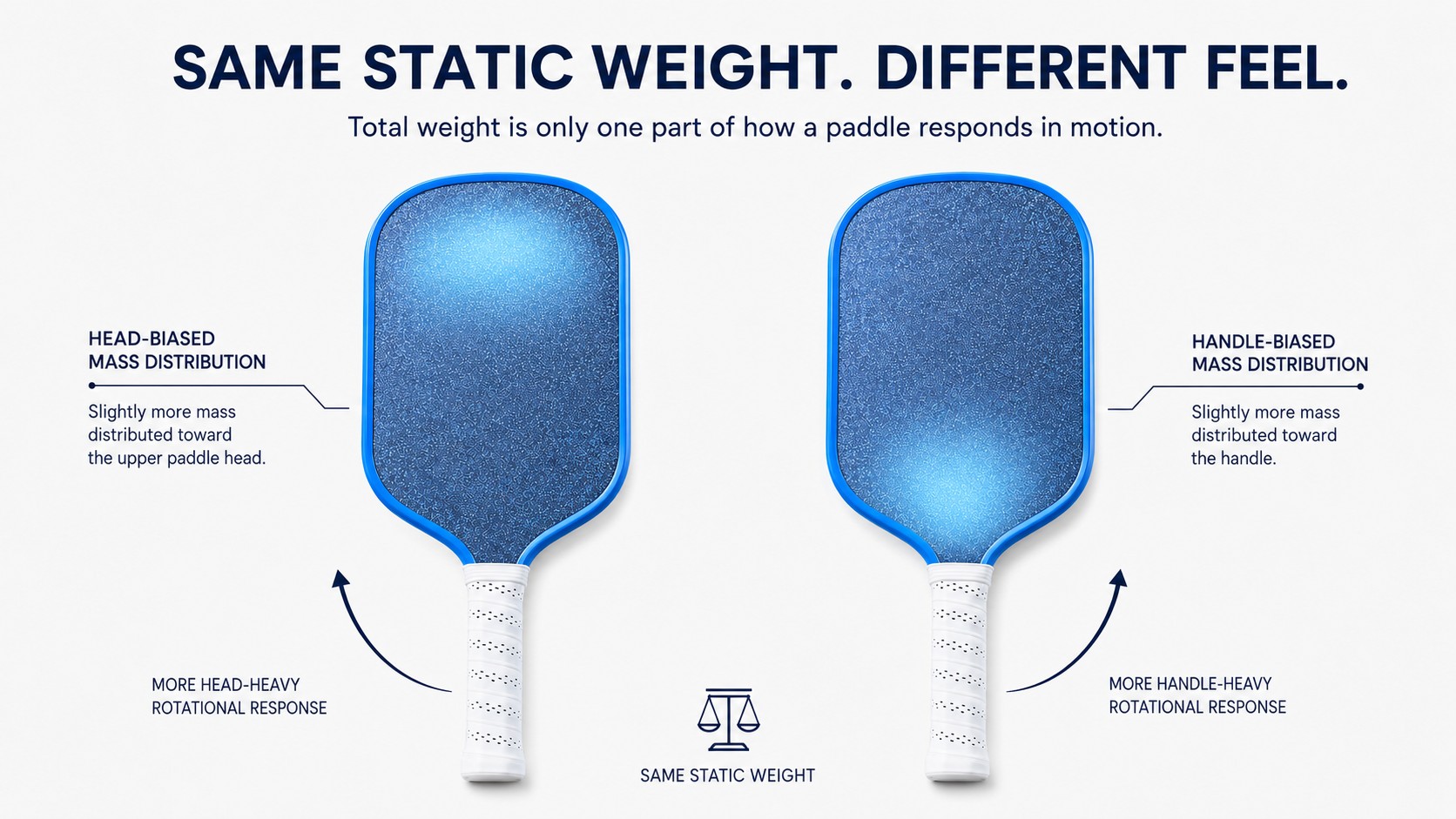
Yes. Face laminate, thickness, cell geometry, density, bonding, shape and mass distribution can all differ.
The End about Mayvoci
1)Design:Over 100 paddle designs and photography service to assist start-up.
2)Professional:Focus on various of paddles manufacturing for 6 years
3)Quality:Strict quality management system to provide safety and satisfaction for customers
4)Amazon:Flexible comprehensive solution to make sure each Amazon seller is well cared.
5)Excellent Team:Experienced paddle experts & dynamic sales team give you 5-star service

What’s the most frustrating core-related issue you’ve encountered in paddle development? Soft spots, delamination, or inconsistent weight? Share your experience below—let’s help the community build better QC processes! 👇