
Edge guard tape solves a simple problem: sacrificial protection against court and bag abrasion. The trade-off is that any added material changes the paddle slightly.
Tape adds mass near the perimeter, can trap dirt, may interact with finishes and may not be recommended for every model.
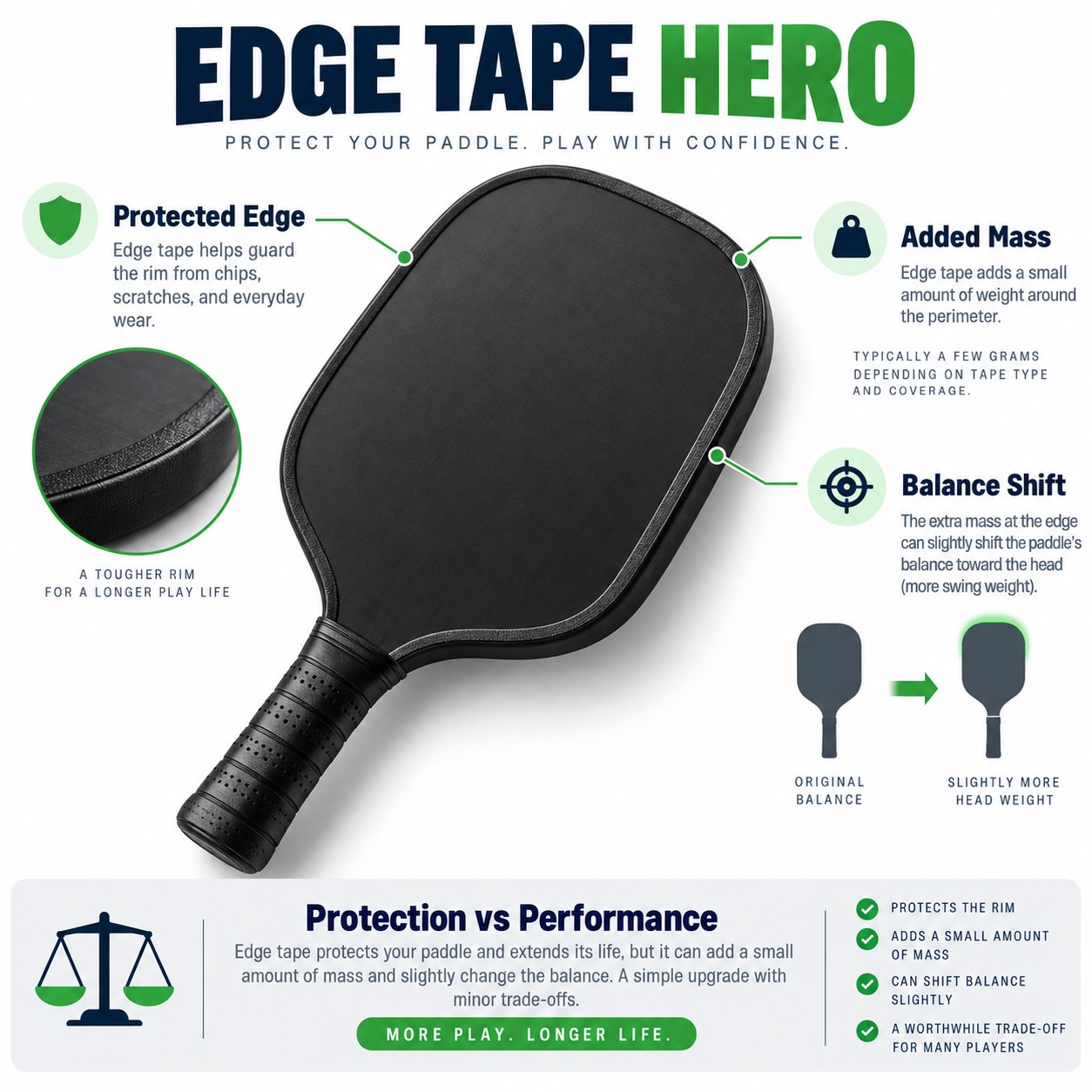
What Edge Tape Protects
What Tape Protects
Tape can reduce cosmetic scuffs and direct wear on an edge guard. It does not make the internal paddle impact-proof.
Weight and Swing
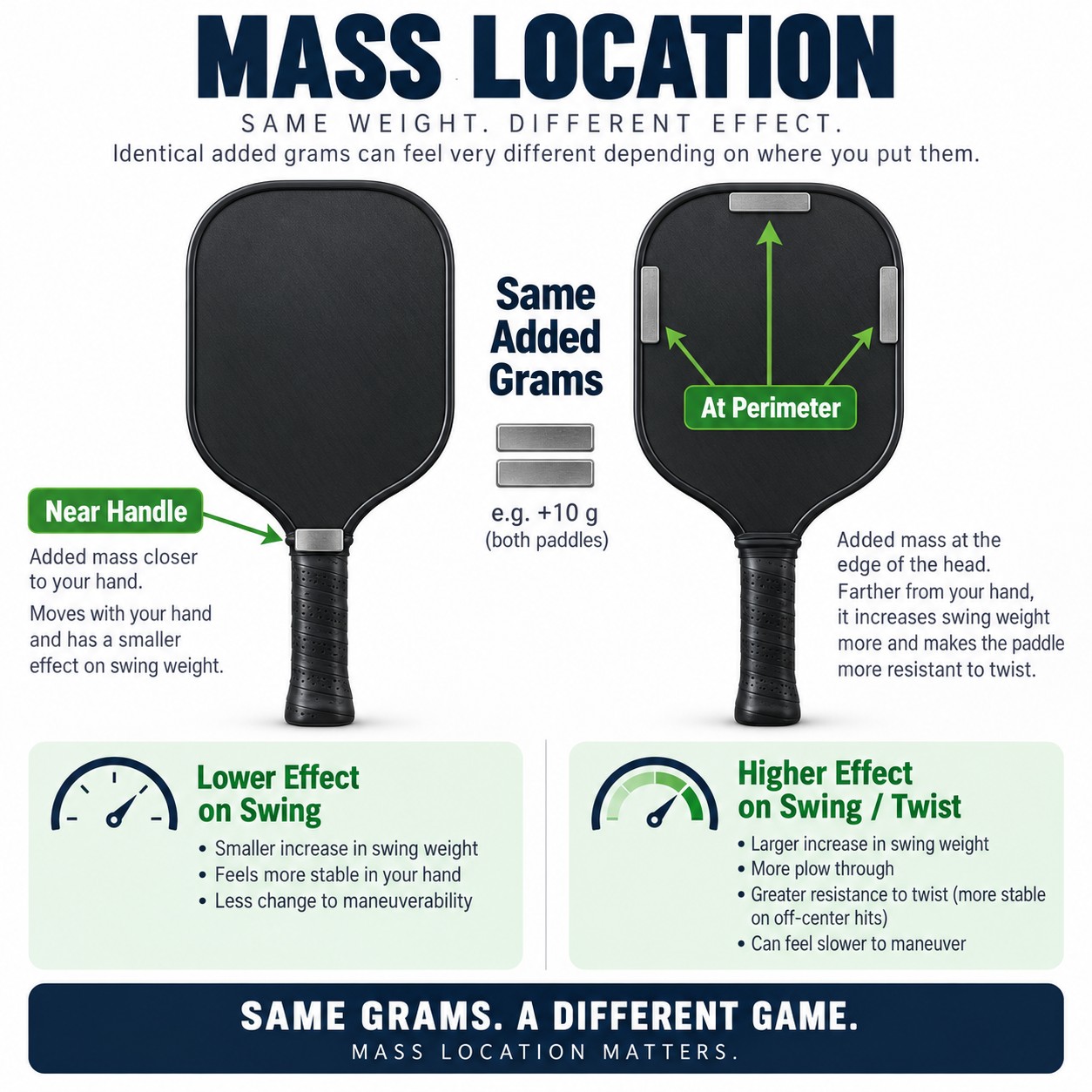
Tape adds static weight. Because it sits near the perimeter, the effect on swing and twist behavior can be larger than the same mass near the handle.
Balance and Placement
Tape concentrated near the top can shift balance more than a light full-perimeter strip. Installation pattern matters for players sensitive to hand speed.
Weight, Balance and Swing Effects
Adhesive and Finish
Some adhesives can leave residue or interact with coatings. Follow manufacturer guidance and replace dirty or lifting tape.
Surface and Warranty
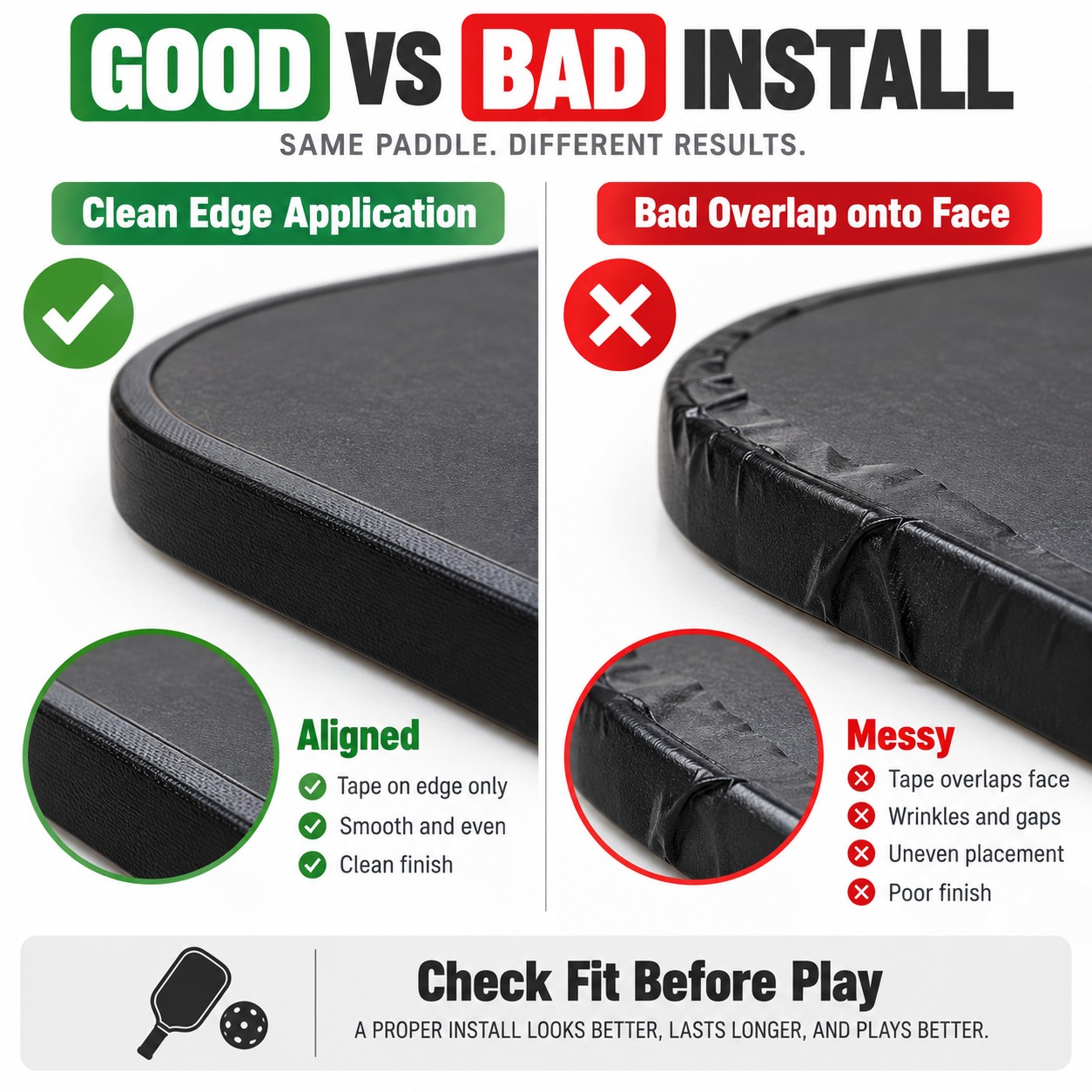
Do not extend tape onto the playable face or cover required markings. Check warranty guidance before using aggressive adhesives or modifications.
When It Makes Sense
Players who scrape the court frequently or value cosmetic protection can benefit. Some specialized paddles may explicitly discourage edge tape, so product-specific guidance matters.
Tape Weight Calculation
Weigh the paddle before and after installation on a scale accurate enough for paddle tuning. Record where the tape is placed.
Two tape setups with the same added grams can feel different if one concentrates mass at the top and the other spreads it down the sides.
Adhesive, Surface and Model-Specific Risks
Model-Specific Perimeter Systems
Some paddles use built-in weighting, special edge materials or surface transitions. Added tape can interfere with the intended system or simply be unnecessary.
This is why the manufacturer’s current care and customization guidance should be checked for the exact model.
Accessory Content Opportunity
For brands selling edge tape, publish weight per strip, adhesive guidance, compatible surfaces and installation diagrams. This is more useful than claiming generic protection.
Accessories earn trust when the technical limits are explained as clearly as the benefits.
Practical Editorial / Decision Notes
Weigh the paddle before and after installation if tuning matters, and record where the tape is placed. Equal added grams can feel different at the top, sides or near the handle.
Brands selling edge tape should publish strip weight, adhesive guidance and compatible surfaces instead of implying universal performance benefits.
Install and Document It Correctly
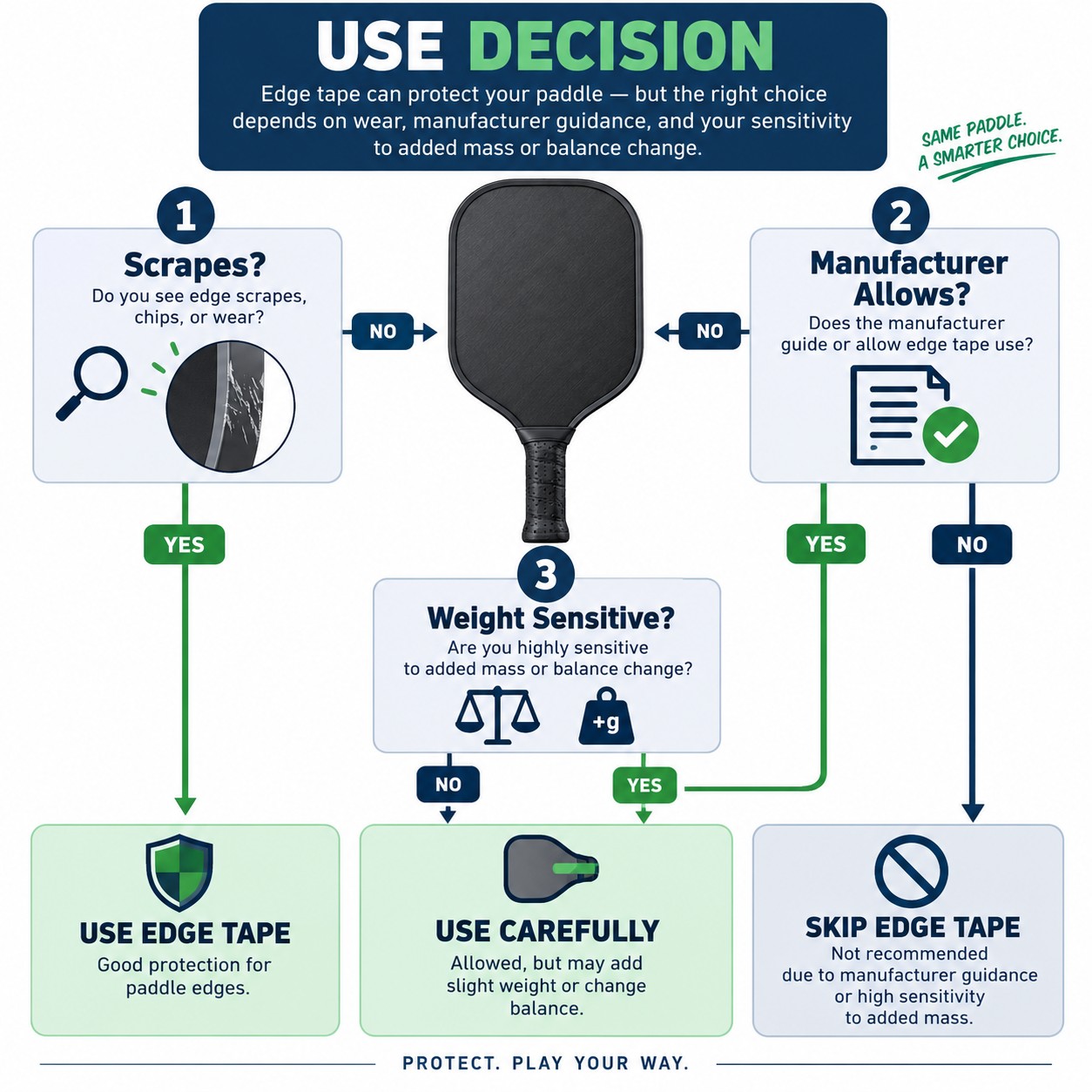
Edge Tape Decision Matrix
| Question | If Yes | If No |
|---|---|---|
| Frequent court scrapes? | Protection may help | May not be needed |
| Manufacturer permits it? | Continue | Do not apply blindly |
| Sensitive to added swing weight? | Use light / measure | Standard strip may be fine |
| Special perimeter system? | Check guidance | Normal edge more flexible |
Sources / Current-Update Notes
- Selkirk Boomstik — Example of why accessory advice must be model-specific; current Boomstik guidance includes specific customization cautions. Primary source
Accessory Weight Should Be Measured, Not Guessed
Edge tape is simple, but its mass is located at the perimeter where it can change swing and twist behavior more noticeably than the same grams near the hand. Players who tune paddles should record the before/after setup.
Brands selling tape should publish useful technical information such as strip weight, compatible surfaces and installation guidance. Model-specific perimeter systems may require different advice.
- Weigh the paddle before and after if performance matters.
- Keep adhesive off the playing surface and required markings.
- Check manufacturer guidance for specialized edge systems.
Frequently Asked Questions
Does edge tape change weight?
Yes.
Can it change swing weight?
Yes.
Does it prevent internal core damage?
No.
Can every paddle use it?
No; check the manufacturer’s guidance.
Should tape cover the face?
No.
Developing edge protection or tuning accessories?
Mayvoci can help specify accessory mass, fit and compatibility alongside the paddle rather than after launch.
The End about Mayvoci
1)Design:Over 100 paddle designs and photography service to assist start-up.
2)Professional:Focus on various of paddles manufacturing for 6 years
3)Quality:Strict quality management system to provide safety and satisfaction for customers
4)Amazon:Flexible comprehensive solution to make sure each Amazon seller is well cared.
5)Excellent Team:Experienced paddle experts & dynamic sales team give you 5-star service

If adding 3–5 grams of edge tape could help protect your paddle, would you accept the slight increase in swing weight?
Or would you rather keep the original feel, even if the edge wears faster?
I’m interested to hear how different players approach this trade-off.