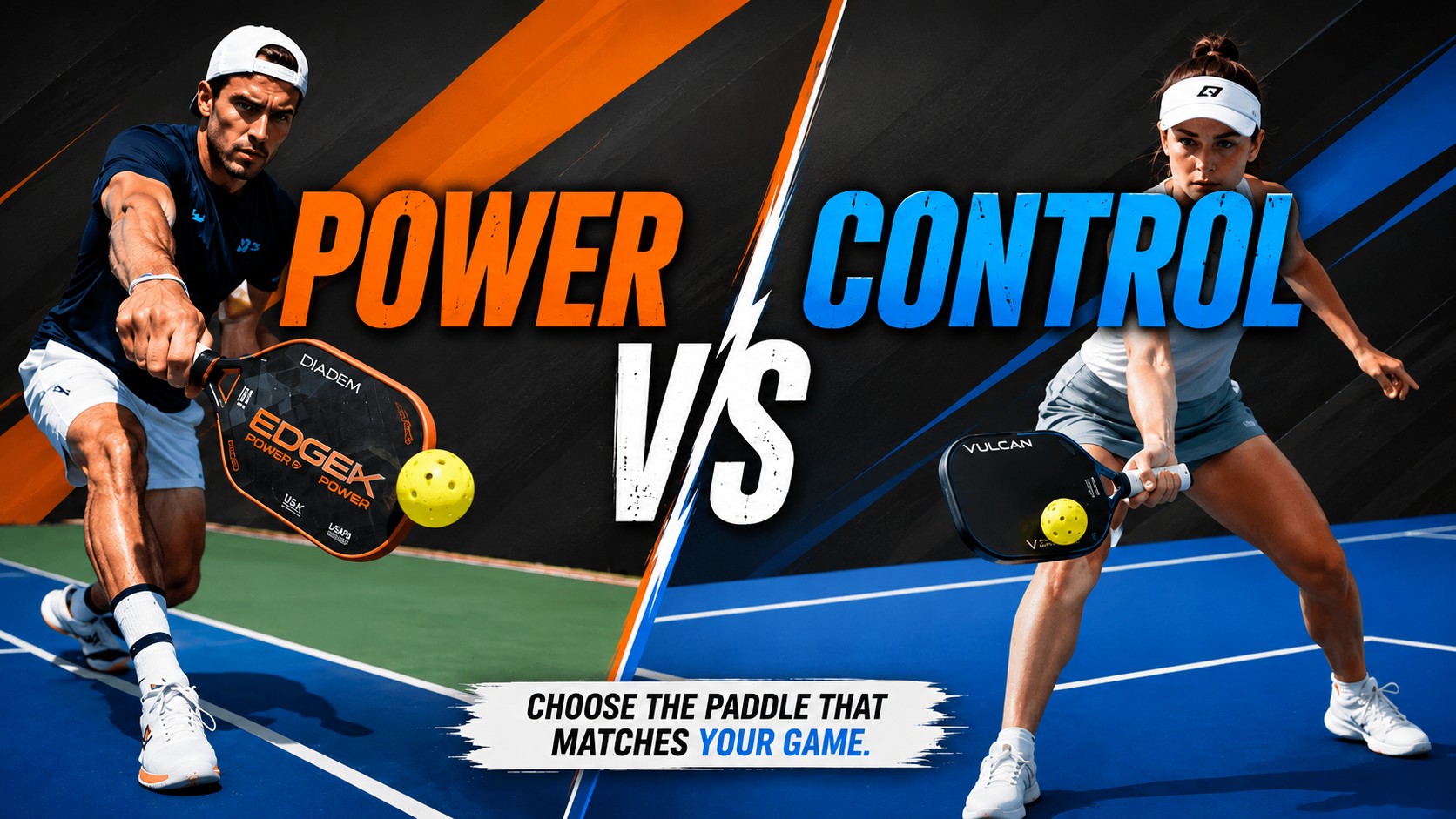
Spend a few minutes browsing pickleball forums, and you’ll see the same question appear again and again:
“Should I buy a power paddle or a control paddle?”
That’s a worthwhile discussion.
But another assumption often follows:
“Power paddles must cost more.”
It’s an understandable conclusion. Many flagship paddles marketed for explosive power carry premium price tags, while some control-oriented models seem more affordable.
The problem is that people are connecting two things that aren’t directly related.
A paddle’s playing style and its price are determined by different factors.
Power and control come from design choices.
Price comes from engineering, materials, manufacturing, and quality control.
Understanding that difference makes it much easier to choose the right paddle without overspending.
Why Many Players Think Power Paddles Cost More
The misconception isn’t completely random.
Many of today’s premium paddles happen to emphasize power.
Manufacturers naturally showcase their newest technologies through flagship models, and powerful paddles often receive the most marketing attention.
As a result, players begin to associate:
- Higher price = More power
But if you compare retail prices across different brands, you’ll quickly notice something interesting.
Premium control paddles often cost just as much as premium power paddles.
Likewise, there are affordable power paddles and affordable control paddles.
The price ranges overlap far more than most people realize.
In other words, “power” is not what you’re paying extra for.
What Actually Determines the Price of a Pickleball Paddle?
The biggest factors behind paddle pricing have very little to do with whether a paddle is designed for power or control.
Instead, manufacturers spend money on construction quality.
Some of the largest cost drivers include:
| Construction Feature | Impact on Price |
|---|---|
| Thermoformed construction | ⭐⭐⭐⭐⭐ |
| Foam-injected perimeter | ⭐⭐⭐⭐ |
| Carbon fiber grade | ⭐⭐⭐⭐ |
| Manufacturing precision | ⭐⭐⭐⭐ |
| Surface coating technology | ⭐⭐⭐ |
| Quality control standards | ⭐⭐⭐ |
| Paddle shape | ⭐ |
| Core thickness | ⭐ |
| Power or control tuning | ⭐ |
Notice what appears near the bottom of the list.
The decision to tune a paddle toward power or control adds relatively little manufacturing cost compared with advanced construction methods or premium materials.
What You’re Really Paying For
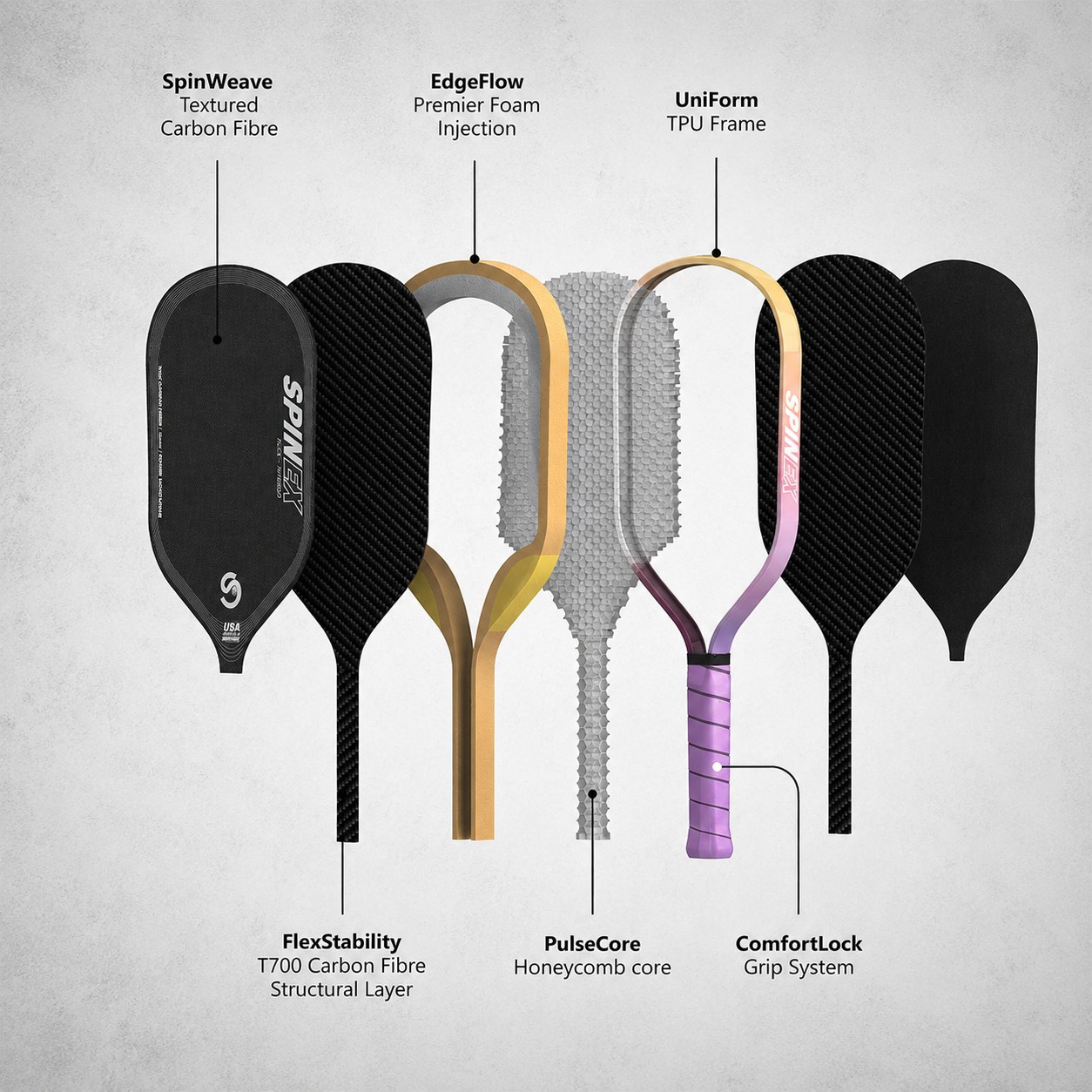
When you buy a premium paddle, your money usually goes toward better engineering—not simply more power.
For example, a higher-priced paddle may include:
- Thermoformed construction for greater structural integrity
- Foam-injected edges for improved stability and a larger sweet spot
- Higher-grade carbon fiber for consistent performance
- More precise manufacturing tolerances
- Better durability over hundreds of hours of play
These features improve the overall quality of the paddle regardless of whether it is marketed as a power or control model.
A premium control paddle can easily cost as much as a premium power paddle because both require the same level of manufacturing quality.
Power and Control Come From Design Choices
If construction quality doesn’t determine power, what does?
The answer lies in how the paddle is designed.
Manufacturers adjust performance through factors such as:
- Paddle shape
- Core thickness
- Weight distribution
- Balance point
- Face material
- Surface texture
For example:
An elongated paddle often generates greater leverage and power.
A wider paddle usually offers a larger sweet spot and improved forgiveness.
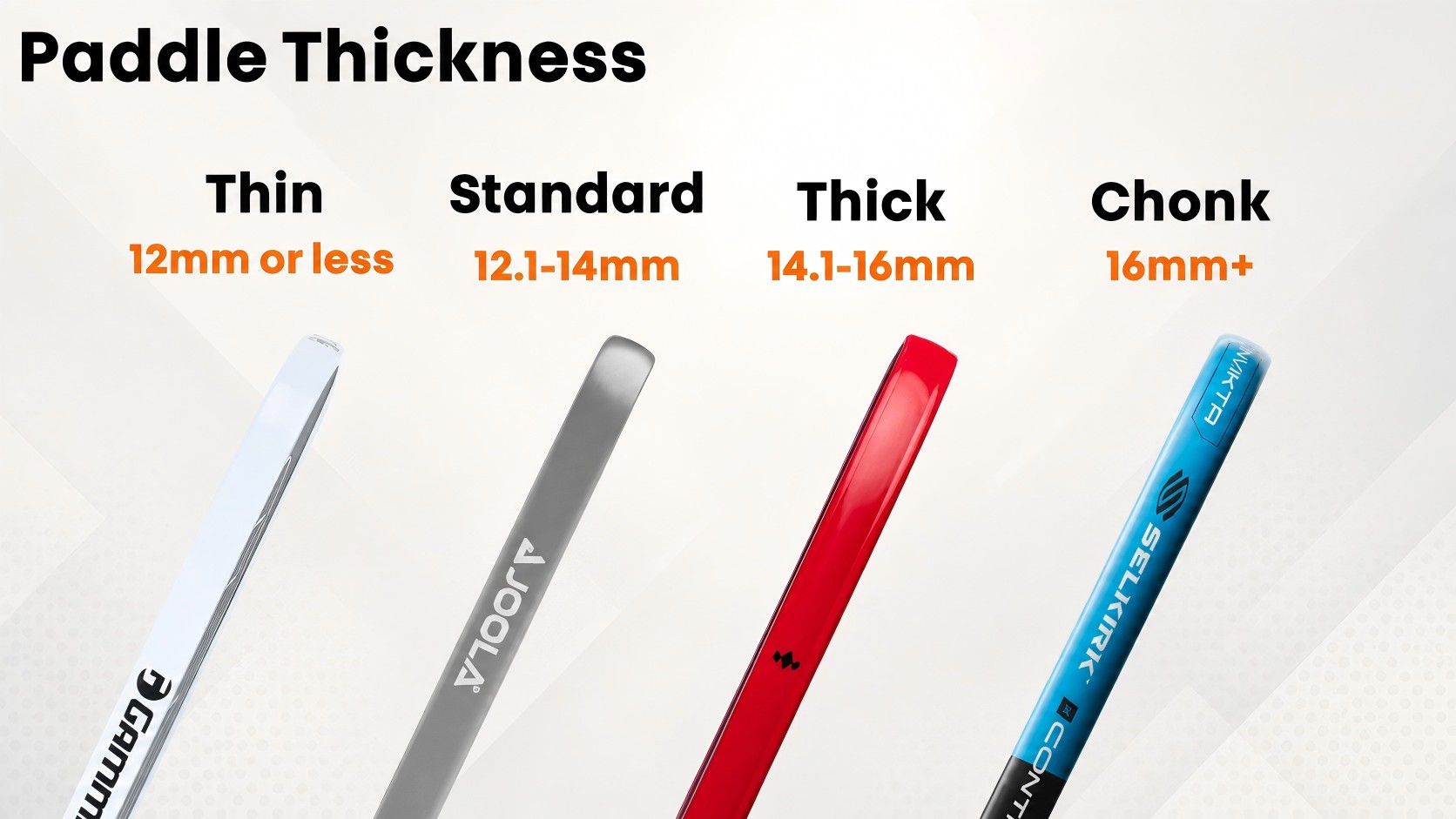
A thinner core may provide quicker ball speed.
A thicker core generally improves touch and control.
These are engineering decisions rather than expensive manufacturing upgrades.
Changing the recipe is very different from changing the quality of the ingredients.
Price Measures Engineering—Not Playing Style
One of the easiest mistakes is letting your budget decide your playing style.
Instead, separate the two decisions.
Step 1: Choose the paddle characteristics that fit your game.
Do you rely on:
- Fast drives?
- Aggressive serves?
- Put-away power?
Or do you prefer:
- Soft dinks?
- Kitchen resets?
- Precise placement?
Only after answering those questions should you consider your budget.
Your budget determines the level of construction quality—not whether you should play with a power or control paddle.
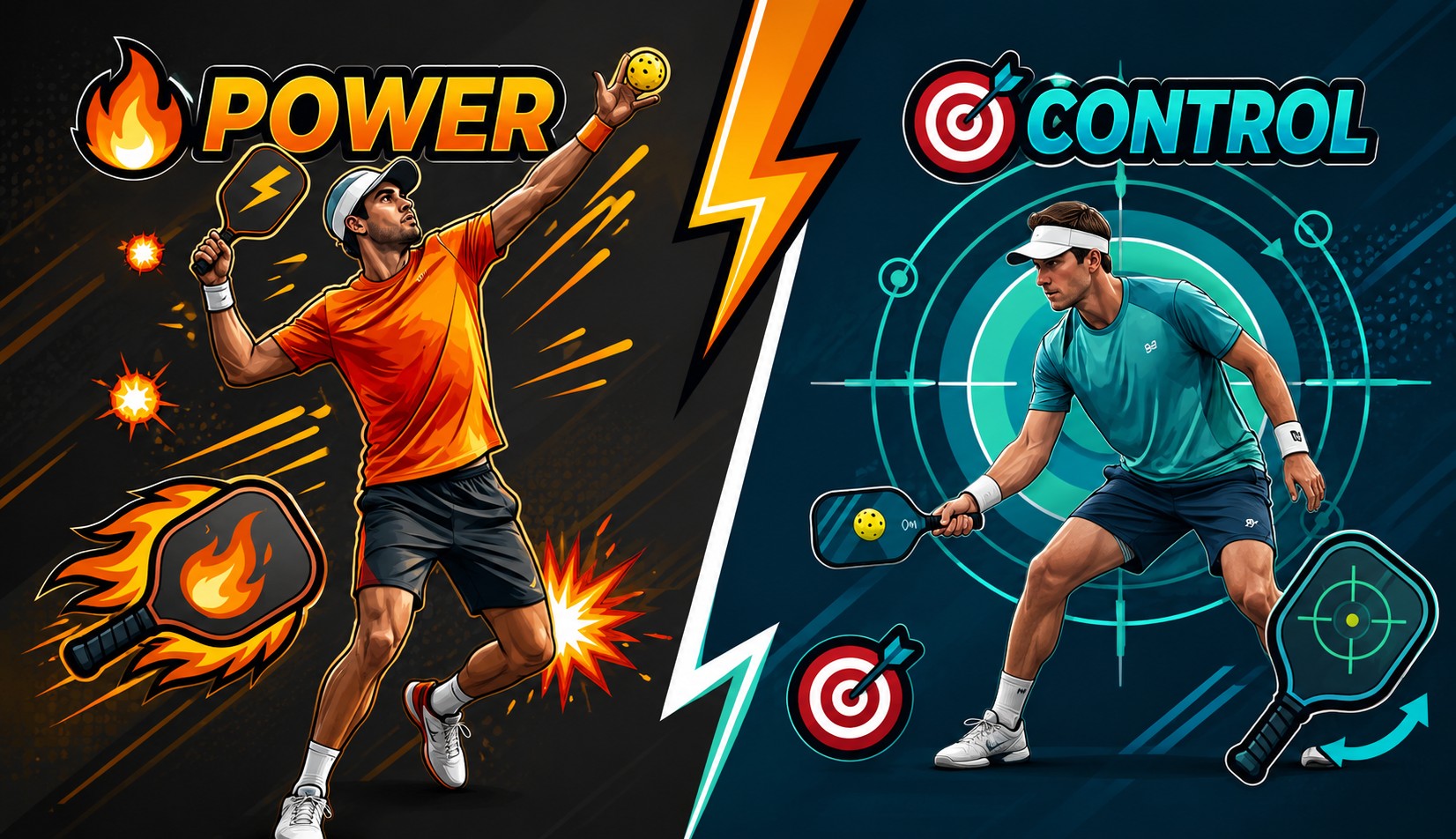
Should You Choose Power or Control?
Neither category is inherently better.
Each serves a different type of player.
A Power Paddle May Be Better If You:
- Like attacking from the baseline
- Finish points with aggressive drives
- Generate your own spin
- Prefer faster ball speed
- Have solid control already
A Control Paddle May Be Better If You:
- Spend a lot of time at the kitchen
- Prioritize resets and dinks
- Value consistency over raw speed
- Are still developing shot placement
- Prefer a softer feel
Many advanced players eventually look for something in between—a paddle that blends power with control rather than maximizing only one characteristic.
Can Budget Paddles Still Perform Well?
Absolutely.
A lower-priced paddle isn’t automatically a poor paddle.
Many mid-range paddles offer excellent performance for recreational players.
The difference is often found in areas like:
- Manufacturing consistency
- Long-term durability
- Sweet spot size
- Material quality
- Structural stability over time
If you only play occasionally, these differences may be less noticeable.
Competitive players who spend several hours on court every week are more likely to appreciate the benefits of premium construction.
Choosing the Right Paddle: Separate Performance From Price
When shopping for a paddle, think of two separate questions.
Question One
Which playing style matches your game?
Power?
Control?
Or a balanced combination?
Question Two
How much construction quality and durability do you want to invest in?
Once you separate those decisions, choosing a paddle becomes much easier.
You stop assuming that expensive automatically means powerful—or that affordable automatically means control-oriented.
Final Thoughts
Power and control describe how a paddle plays.
Price describes how a paddle is built.
Those are two very different conversations.
The next time you’re comparing paddles, don’t ask:
“Which one costs more?”
Instead ask:
“Which one fits my game?”
Then decide how much engineering, durability, and manufacturing quality you want behind that playing style.
Because in the end, price measures construction—not personality.
Comparison Table
| You’re Paying For… | Not Necessarily For… |
|---|---|
| Thermoformed construction | More power |
| Premium carbon fiber | Faster shots |
| Foam-injected perimeter | Better control |
| Manufacturing precision | Different playing style |
| Durability | Aggressive performance |
| Quality consistency | Harder hits |
FAQ
Are power pickleball paddles always more expensive?
No. Premium power and premium control paddles often occupy similar price ranges. Construction quality has a much greater influence on price than playing style.
Why are premium pickleball paddles more expensive?
Higher prices usually reflect advanced construction methods, premium materials, tighter manufacturing tolerances, and better durability rather than simply increased power.
Can an affordable paddle still generate power?
Yes. Paddle shape, weight distribution, and design have a significant impact on power. A lower-priced paddle can still deliver excellent ball speed if it suits your playing style.
Does thermoforming make a paddle more expensive?
Generally, yes. Thermoformed construction adds manufacturing complexity and is one of the key reasons premium paddles cost more.
Should beginners choose power or control?
Most beginners benefit from a balanced or control-oriented paddle that helps build consistency. As skills develop, many players explore paddles with more power while maintaining adequate control.
Call to Action
Choose a Paddle That Fits Your Game—Not Just Your Budget
Understanding the difference between playing characteristics and construction quality helps you make smarter equipment decisions.
At Mayvoci Sport, we work with brands around the world to develop pickleball paddles that combine thoughtful design, reliable manufacturing, and consistent performance through professional OEM and ODM solutions.
Explore more pickleball equipment guides to learn about paddle technology, materials, maintenance, and buying tips—or contact us to discuss your next OEM/ODM paddle project.
The End about Mayvoci
1)Design:Over 100 paddle designs and photography service to assist start-up.
2)Professional:Focus on various of paddles manufacturing for 6 years
3)Quality:Strict quality management system to provide safety and satisfaction for customers
4)Amazon:Flexible comprehensive solution to make sure each Amazon seller is well cared.
5)Excellent Team:Experienced paddle experts & dynamic sales team give you 5-star service