
The word “core” is often used as if it describes one variable. In reality, paddle cores have at least two separate dimensions: material and geometry.
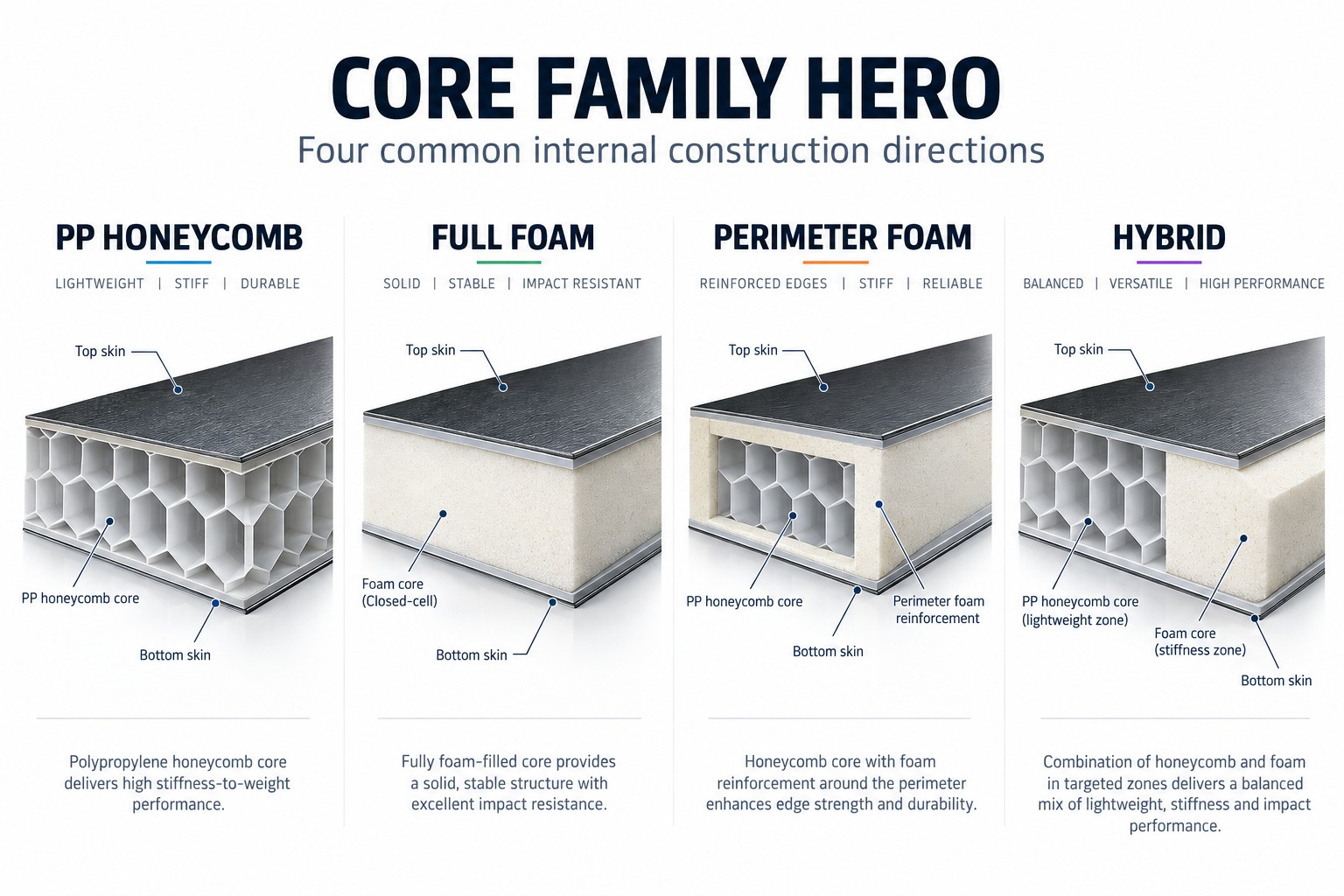
Polypropylene can be formed as honeycomb. Foam materials can be used as full structural cores, perimeter support, local reinforcement, damping elements or handle components. A hybrid construction may combine honeycomb and foam. Two paddles with the same “core material” can therefore have completely different internal architecture.
This page is a core-material hub. It explains the main categories, the questions each category raises, and where to go for deeper analysis.
What the Core Does
The core supports the faces, controls local deformation, transfers load, contributes to thickness and mass, and helps determine how the paddle changes after repeated impact.
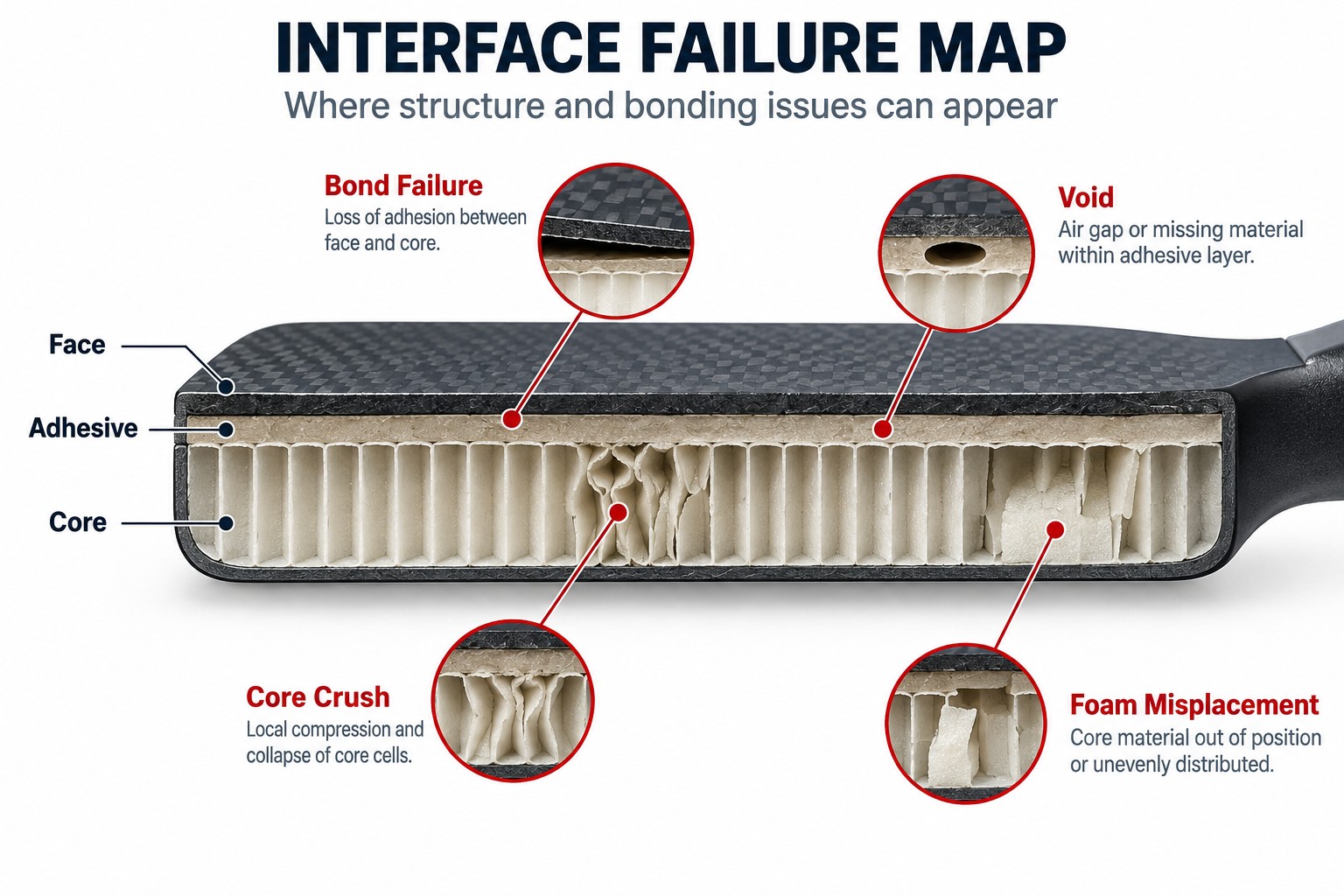
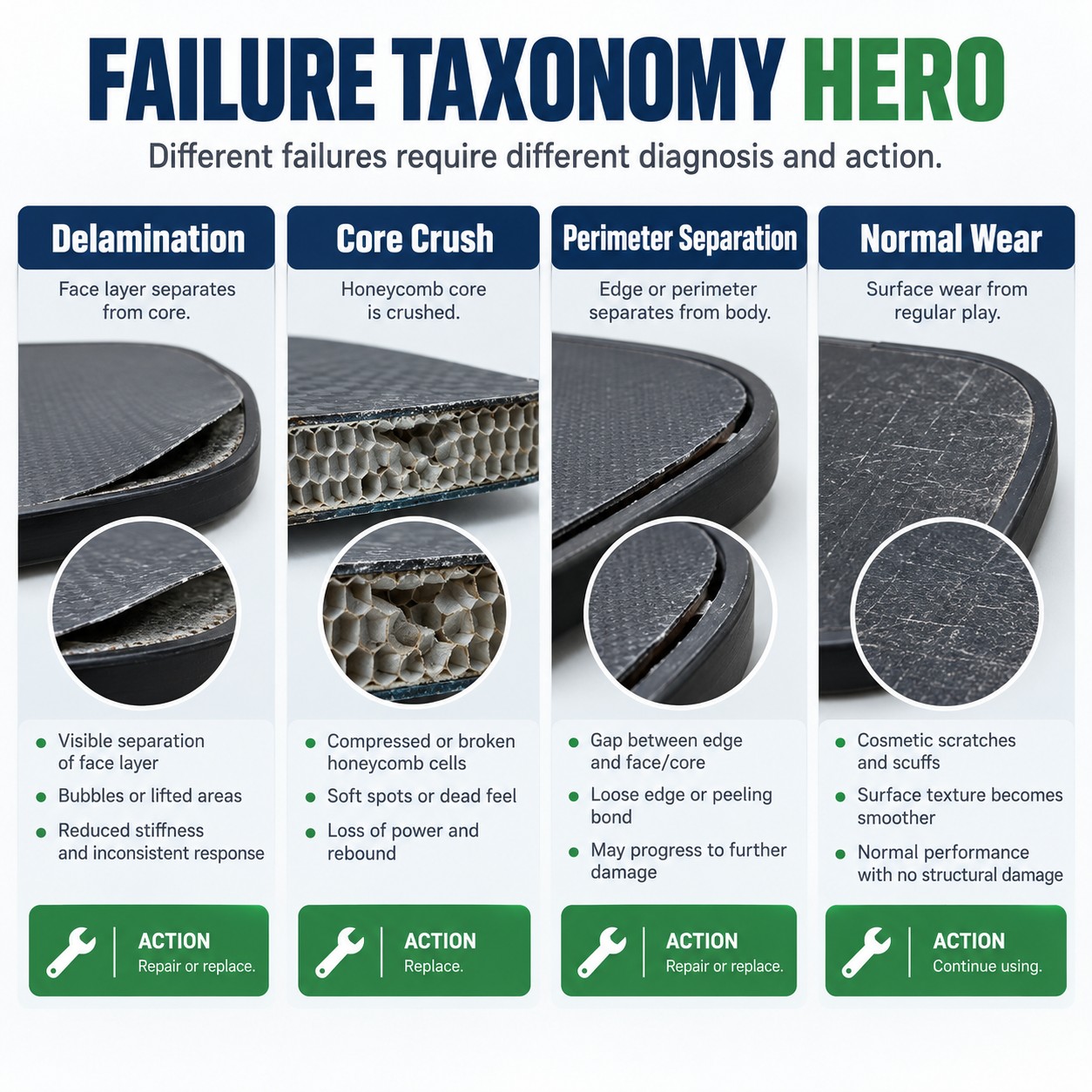
It also creates failure modes that may be invisible from outside: local crushing, debonding, voids, foam movement, incomplete support, and internal fatigue.
A core specification should therefore include both material properties and structural geometry.
Separate Material from Geometry
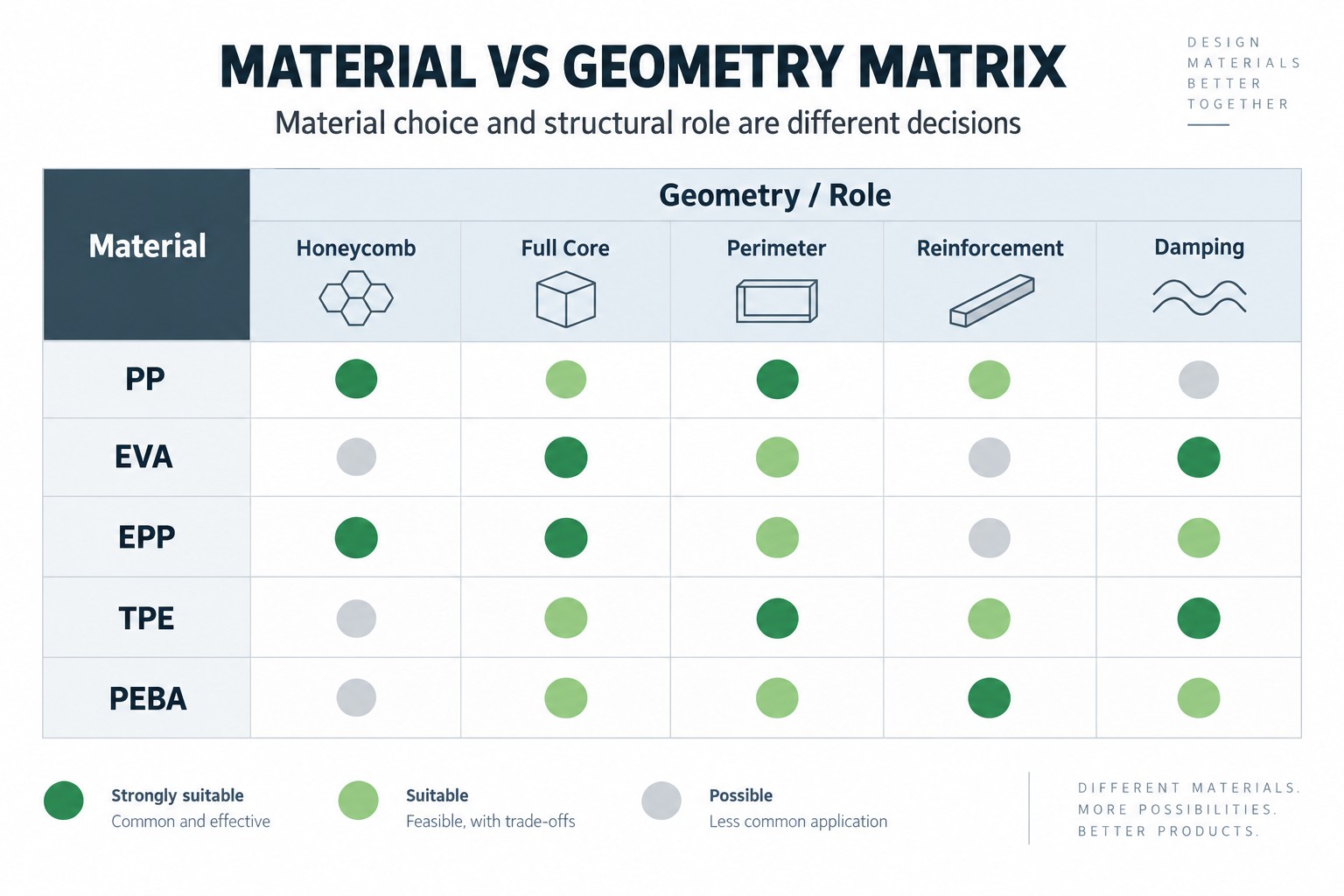
“PP,” “EVA,” “EPP” and “TPE” are material-family labels. “Honeycomb,” “full foam,” “perimeter foam” and “hybrid” describe geometry or construction role.
Mixing those categories causes confusion. A buyer may compare “PP honeycomb” with “EVA” as though both terms are equally complete. They are not.
Start by defining what physical shape the core has and what job each material performs.
PP Honeycomb
PP honeycomb remains a major paddle-core structure because it provides a lightweight cellular architecture.
The engineering variables include cell size, wall consistency, density, sheet thickness, flatness, crush resistance, material control and bonding condition.
The dedicated PP Honeycomb guide covers those variables in detail and should be used when qualifying a core supplier or writing incoming-inspection criteria.
Foam Families
EVA, EPP, TPE-based materials and PEBA can all appear in foam discussions, but the chemistry name alone does not define the application.
Developers should compare density, hardness, resilience, damping, compression behavior, bonding, processing temperature and fatigue.
The Foam Core Materials guide provides a more appropriate comparison than a simple “which foam is best?” ranking.
Full-Foam vs Foam-Reinforced Constructions
A paddle described as “foam core” may use foam throughout the primary core volume, or it may use foam only around a honeycomb perimeter or in selected areas.
These are different architectures with different manufacturing and failure questions.
Brands should request a cross-section or internal construction drawing so the phrase “foam core” is not ambiguous.
Hybrid Core Concepts
Hybrid designs combine materials or structures to target multiple jobs.
For example, a lightweight cellular region may be combined with foam support. A local reinforcement may be added to control edge behavior or support a handle transition.
Every additional interface creates another bonding and change-control requirement. Hybrid does not automatically mean superior; it means more variables must be controlled.
Thickness, Density and Support
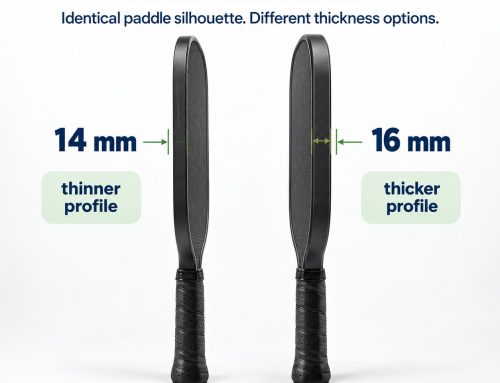
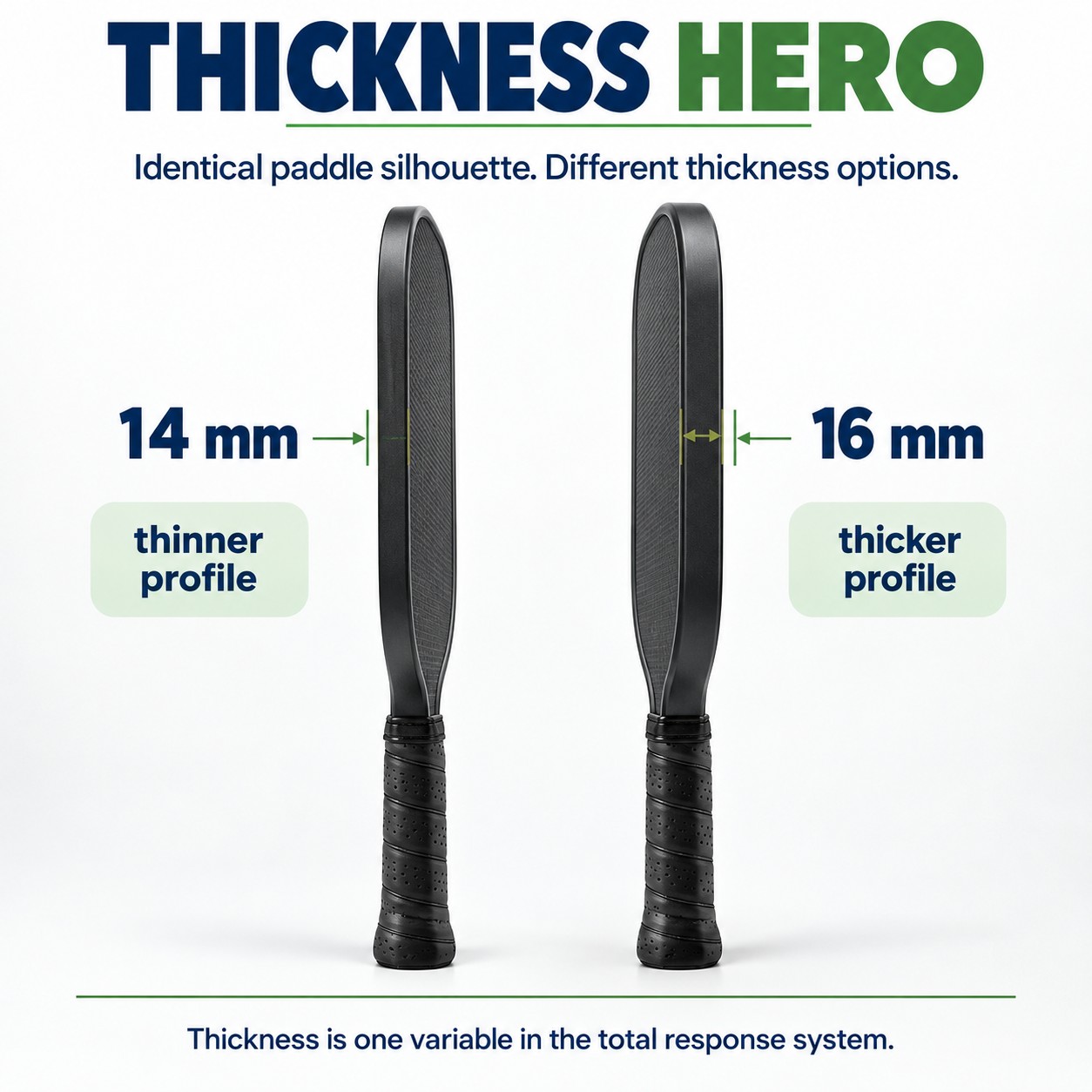
Core thickness influences total paddle geometry and changes how the face and core work together. Density affects mass and support, but density should not be interpreted without the material and geometry.
A higher-density foam, for example, is not directly comparable with a denser honeycomb sheet using the same logic.
Record measurable incoming specifications for each material family rather than relying on generic labels.
Bonding and Interface Quality
Many internal failures occur at interfaces rather than inside the headline material.
Face-to-core bond coverage, surface preparation, adhesive amount, cure, pressure and local support can determine durability.
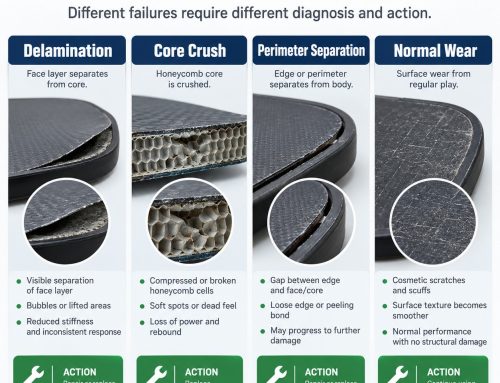
When diagnosing a failure, separate adhesive/interface failure, core crushing and face-laminate failure instead of calling every internal problem “delamination.”
How to Use This Hub
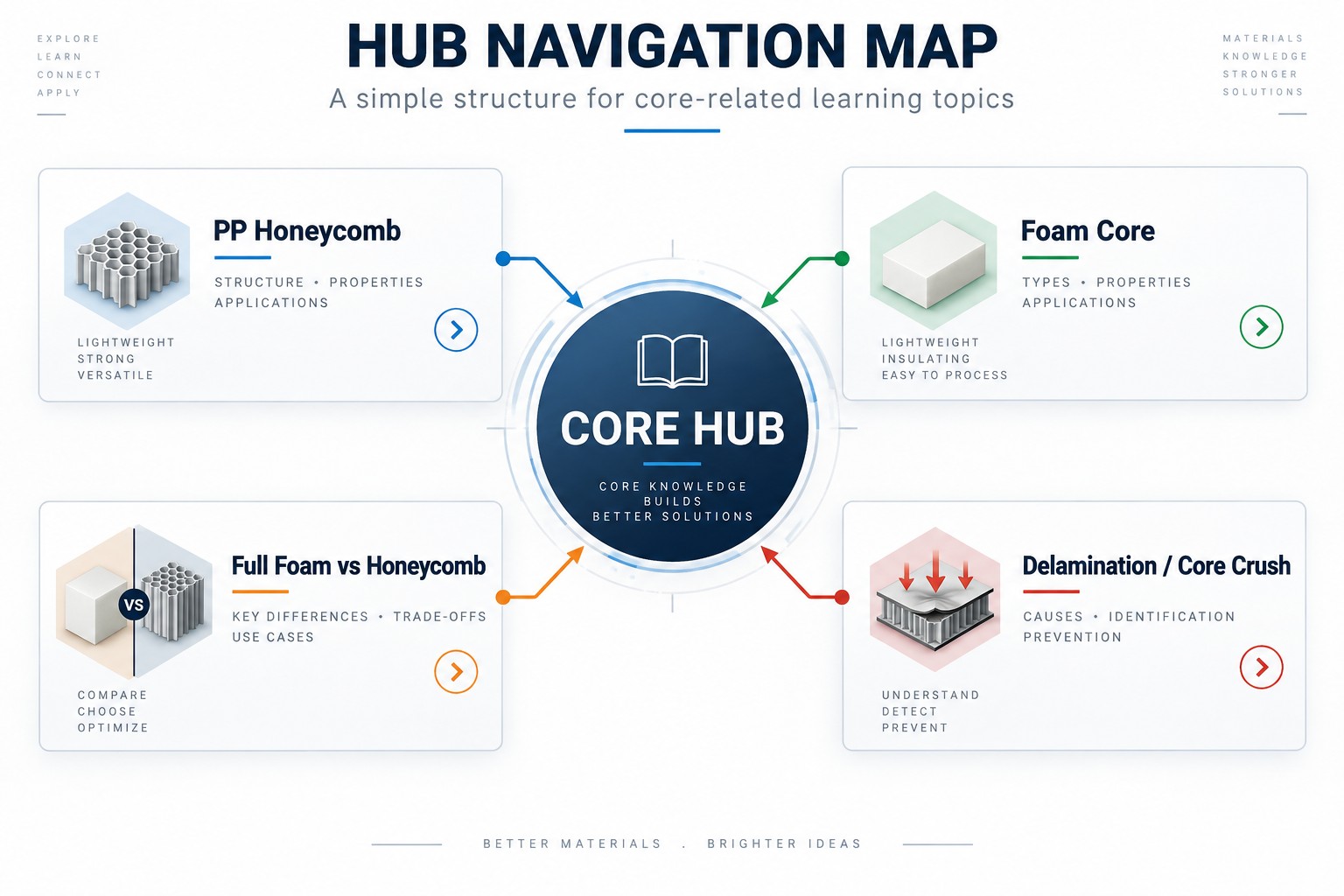
Use the PP Honeycomb guide for cell and sheet control. Use the Foam Core guide for EVA, EPP, TPE and PEBA comparison. Use the full-foam versus honeycomb article when the decision is architectural. Use the delamination/core-crush article for failure diagnosis.
A hub should direct the reader to the right engineering question rather than repeat every detail from its child pages.
OEM Core Specification Checklist
Define material family, geometry, supplier or approved source, thickness, density or other relevant property, dimensional tolerance, bonding preparation, storage requirements, incoming inspection and change-control rules.
Keep retained core samples when material variation is commercially significant.
That turns “16 mm PP core” or “full foam” into a controlled specification instead of a category label.
Frequently Asked Questions
Is PP honeycomb a material or a structure?
It is a cellular structure commonly made from polypropylene; both polymer and geometry need to be controlled.
Is full foam always better than honeycomb?
No. They are different architectures with different trade-offs.
Can a paddle use honeycomb and foam together?
Yes. Hybrid or perimeter-foam constructions combine materials and roles.
Does core thickness alone determine control?
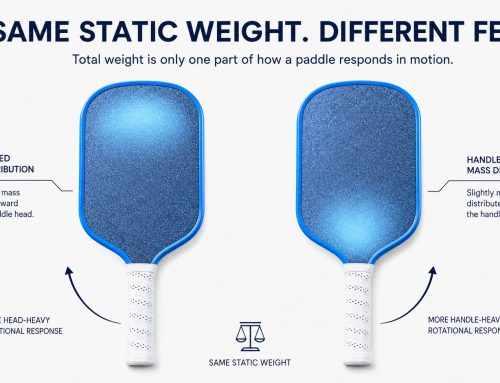
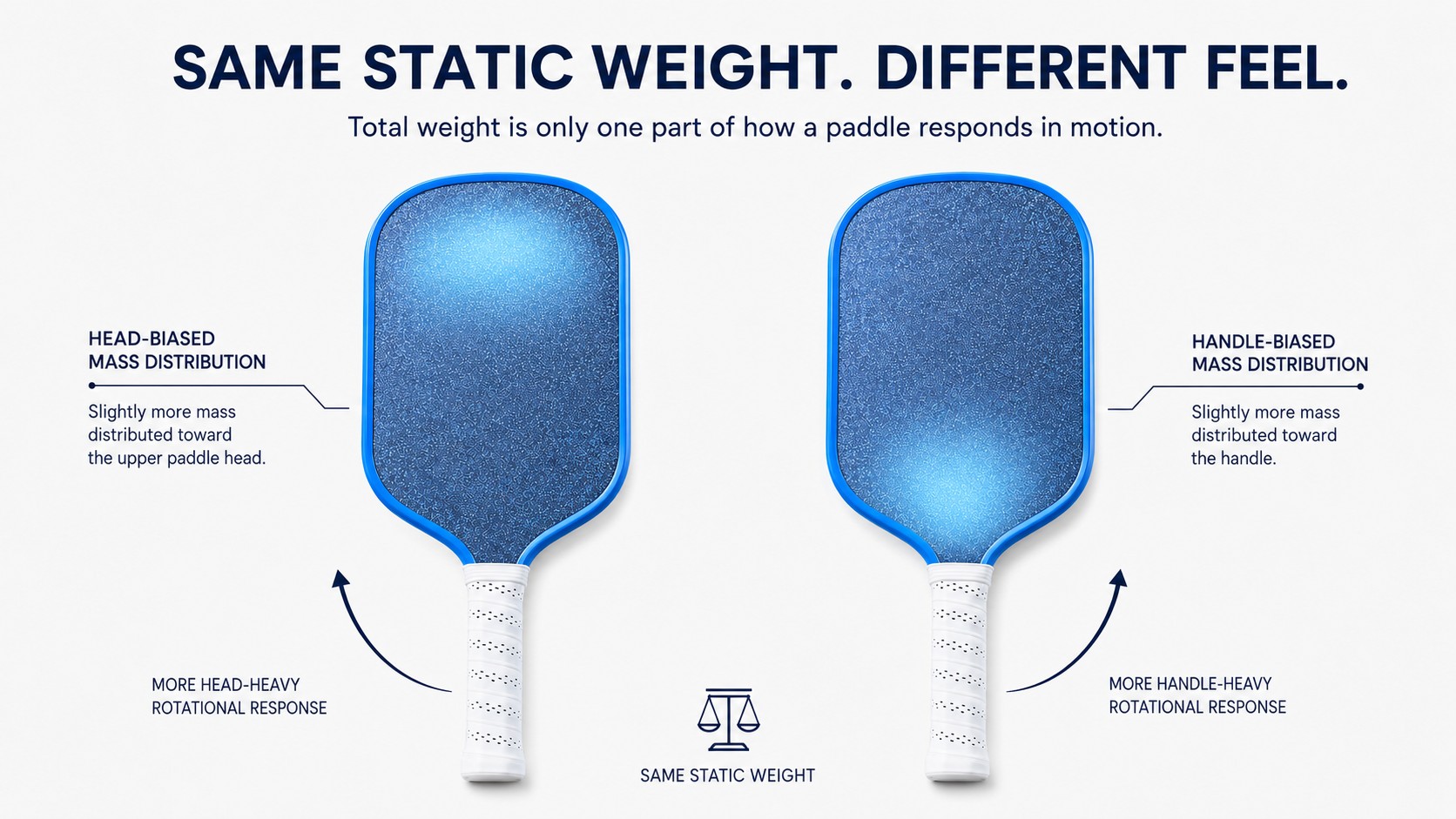
No. Face, geometry, mass distribution, surface and player interaction also matter.
What is the most important OEM core question?
Define the physical architecture and measurable incoming specifications before discussing performance.
The End about Mayvoci
1)Design:Over 100 paddle designs and photography service to assist start-up.
2)Professional:Focus on various of paddles manufacturing for 6 years
3)Quality:Strict quality management system to provide safety and satisfaction for customers
4)Amazon:Flexible comprehensive solution to make sure each Amazon seller is well cared.
5)Excellent Team:Experienced paddle experts & dynamic sales team give you 5-star service

If you work on this topic from the brand, sourcing, engineering or manufacturing side, I’d be interested in your experience: When you describe a paddle core, do you start with the material—or with the internal architecture?