
Paddle power regulation changes the engineering question.
The old question was often: how much rebound can a construction create? The more useful 2026 question is: can the paddle remain inside the applicable USA Pickleball requirements across samples, production variation and lifecycle?
USA Pickleball maintains a PBCoR .43 testing pathway and also states that approved paddles must continue to match certified specifications in market samples and throughout the product lifecycle.
That turns power compliance into a manufacturing-control problem, not a one-time prototype test.
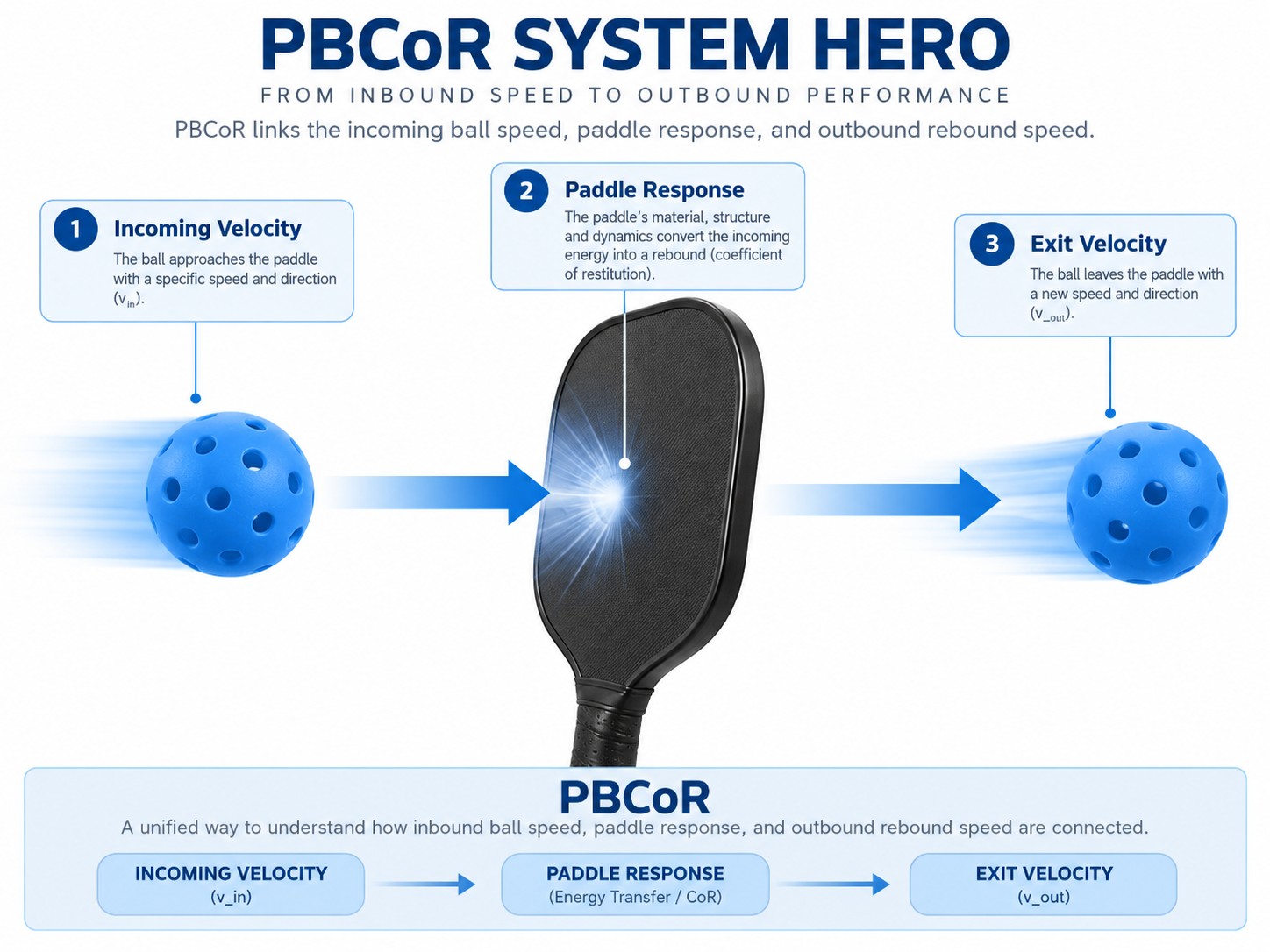
What PBCoR .43 Measures
What PBCoR Is Trying to Control
PBCoR is a paddle-ball coefficient-of-restitution concept used to characterize rebound or trampoline response of the paddle-ball system.
At product-development level, the metric is important because high-rebound constructions can change ball speed beyond the intended equipment envelope.
Manufacturers should use the current USA Pickleball Equipment Standards Manual and official test procedures for the exact method and threshold.
Why the .43 Framework Matters
USA Pickleball’s equipment site provides a specific PBCoR .43 submission path for certain previously approved paddles.
The important strategic point is not the historical transition detail. It is that power is now evaluated with a direct system-level test rather than only through construction descriptions.
A brand should therefore develop around measured output and repeatability.
Lifecycle Compliance Changes the Target
USA Pickleball’s equipment FAQ says a paddle must comply with certification requirements throughout its entire lifecycle.
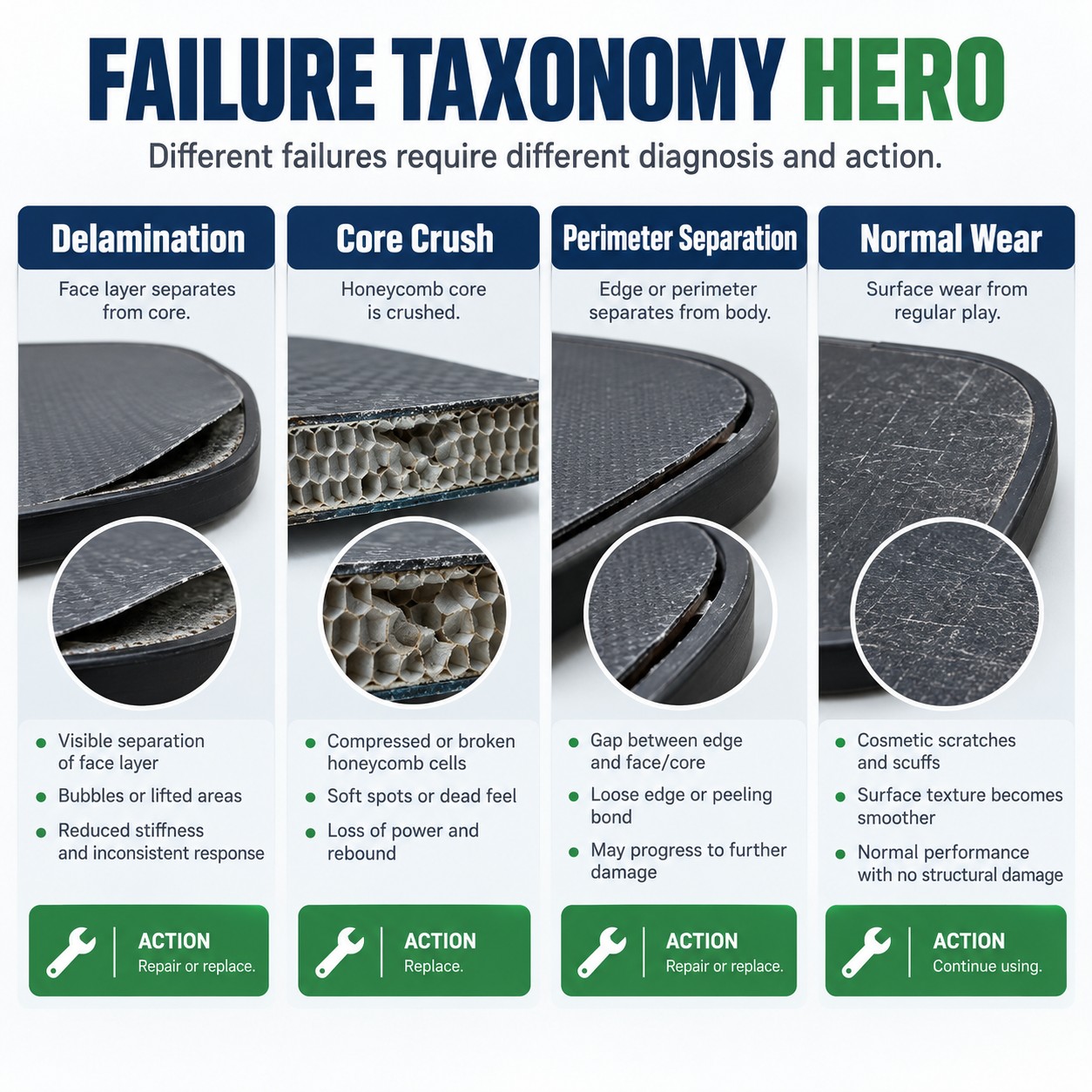
That matters because some constructions change with use. Core support, bond interfaces and perimeter structures can soften or shift.
A prototype that barely passes when new may have insufficient margin after conditioning or production variation.
Market Samples Make Production Control Part of Compliance
USA Pickleball also states that market samples may be inspected to confirm production units remain consistent with certified samples.
The implication is clear: certification does not end when the lab report arrives.
Brands need frozen materials, process controls, change approval and lot traceability so normal production remains aligned with the submitted design.
How Paddle Architecture Can Move Power Output
Engineering Variables That Can Move Power
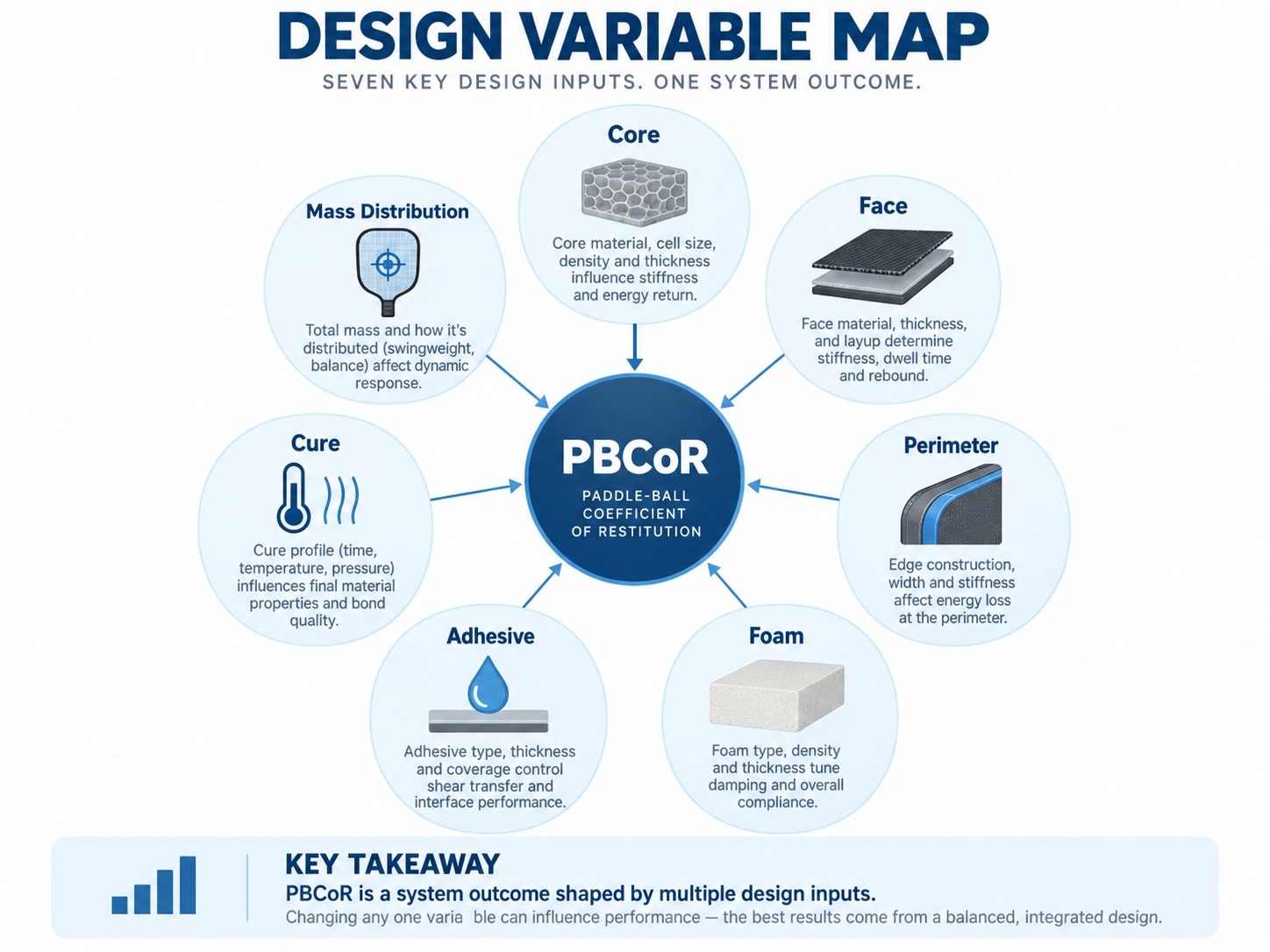
PBCoR is a system result.
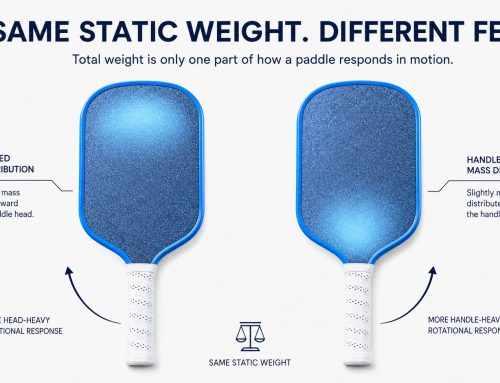
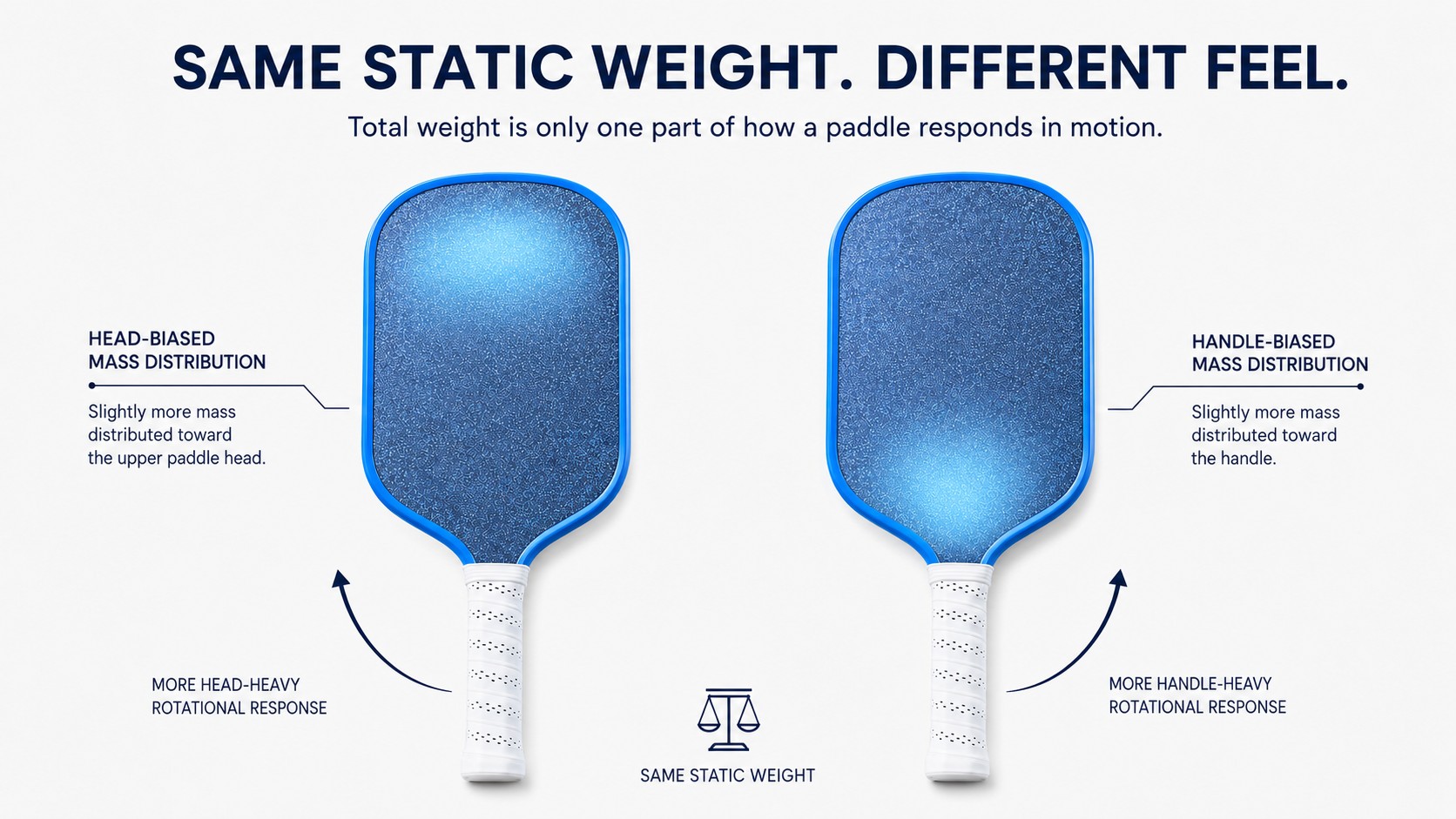
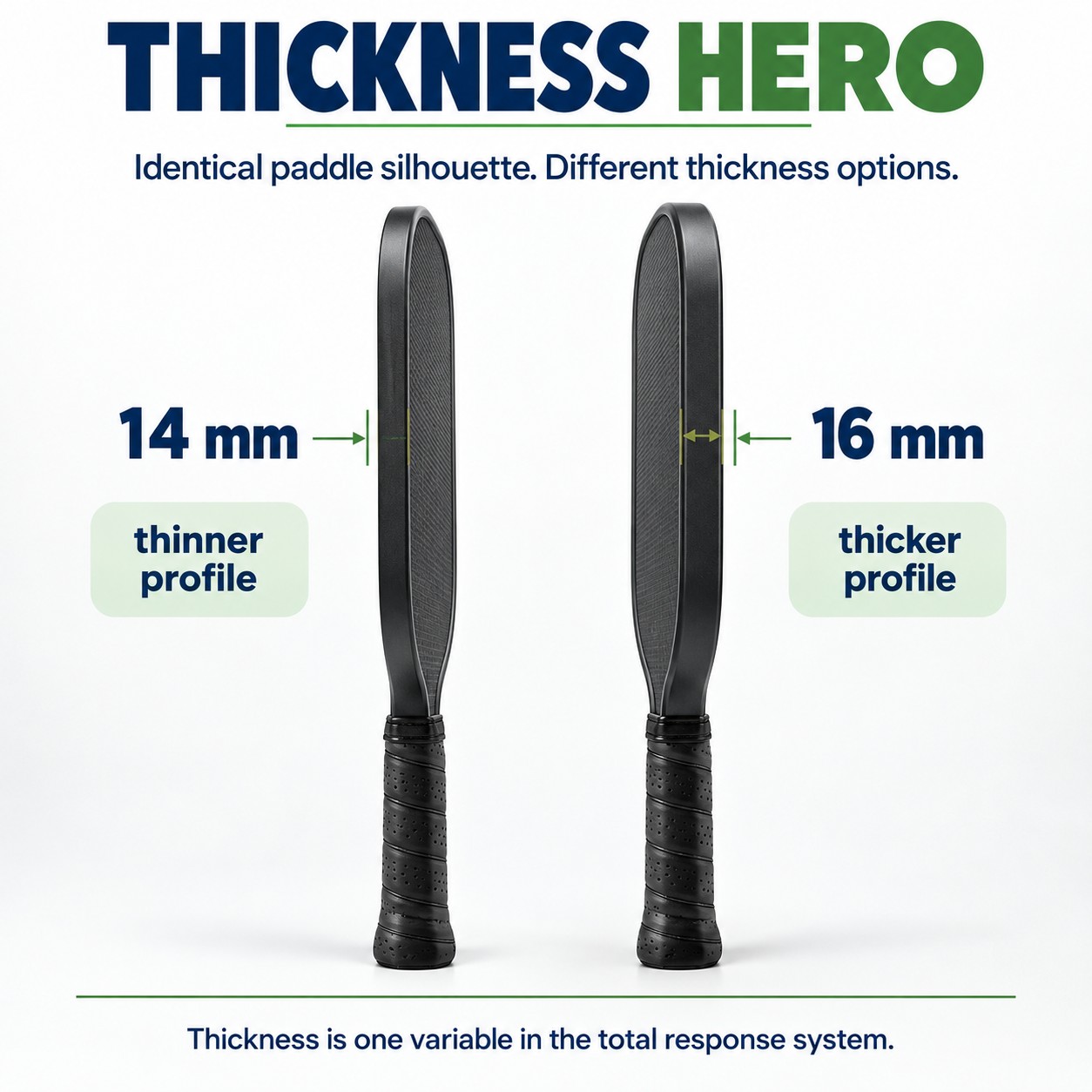
Potential design variables include core material and geometry, core thickness, face laminate, edge/perimeter support, foam placement, adhesive system, cure, local support, static weight and mass distribution. These are engineering variables to study, not an official USA Pickleball ranking of what causes power.
Use controlled experiments rather than change several variables at once.
Break-In Should Be Part of Prototype Testing
If a construction is expected to change through impact or compression, test it after a defined conditioning protocol.
Track new, conditioned and retained-production samples. Compare the distribution, not only the best unit.
The objective is to understand drift before formal certification or market sampling discovers it.
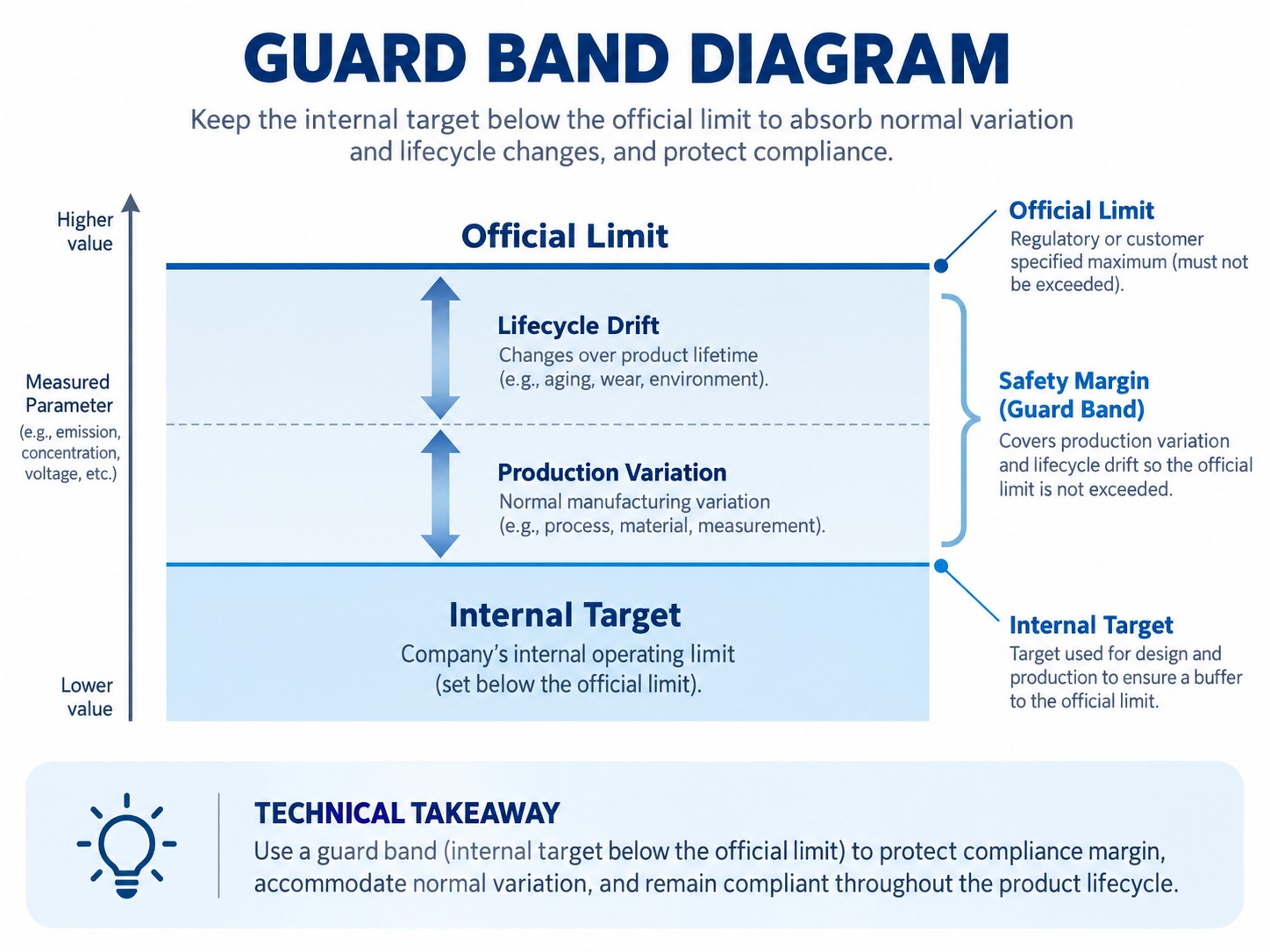
Set an Internal Guard Band
Do not design the average production paddle exactly at the compliance boundary.
Every material and process has variation. An internal guard band gives room for normal lot-to-lot movement, measurement variation and lifecycle change.
The specific margin should come from the brand’s prototype and pilot data rather than a generic percentage copied from another company.
Pilot Production Is the Real Stress Test
A hand-built prototype proves that a concept can work.
A pilot run tests whether normal operators, production materials, molds and process windows can reproduce it. Sample multiple units and inspect weight, dimensions, surface, internal construction where appropriate and power-related measurements.
If the pilot distribution is too wide, fix the process before scale-up.
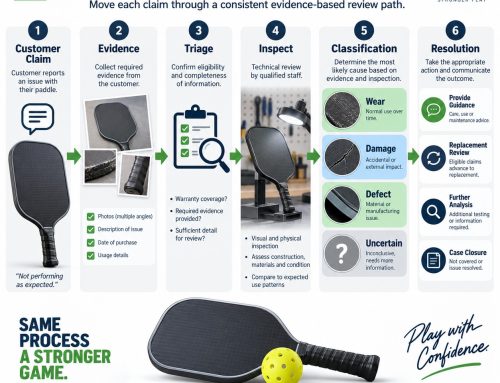
Link Compliance to Change Control
After approval, define which changes require engineering review.
Core source, foam, face laminate, surface, adhesive, cure, edge construction and other performance-relevant variables should not change silently.
A controlled BOM and retained samples make future investigations much faster.
Prototype and Production Validation
PBCoR Does Not Replace the Rest of Certification
Power is one compliance dimension.
Paddles still need to meet the other requirements in the governing body’s current standards, including dimensions, construction and—depending on submission timing—surface/spin requirements.
Build one integrated compliance plan rather than independent last-minute tests.
Prototype DOE for PBCoR-Oriented Development
Use a small design-of-experiments matrix. Freeze shape and overall thickness, then compare one or two variables such as core support, perimeter construction or face stack. Produce multiple units per condition.
Measure the same variables before and after conditioning. The objective is to understand which construction moves the power metric and which one creates the smallest spread.
Diagnosing a Paddle That Gets ‘Hotter’
If conditioned samples show more rebound, do not immediately blame the core material.
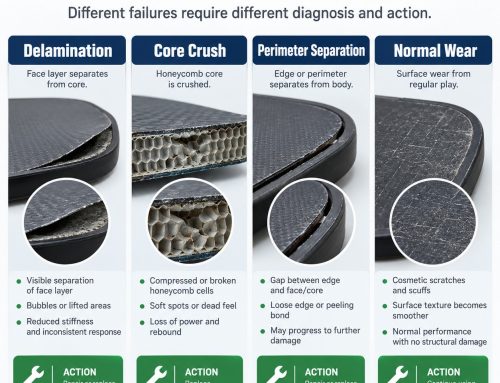
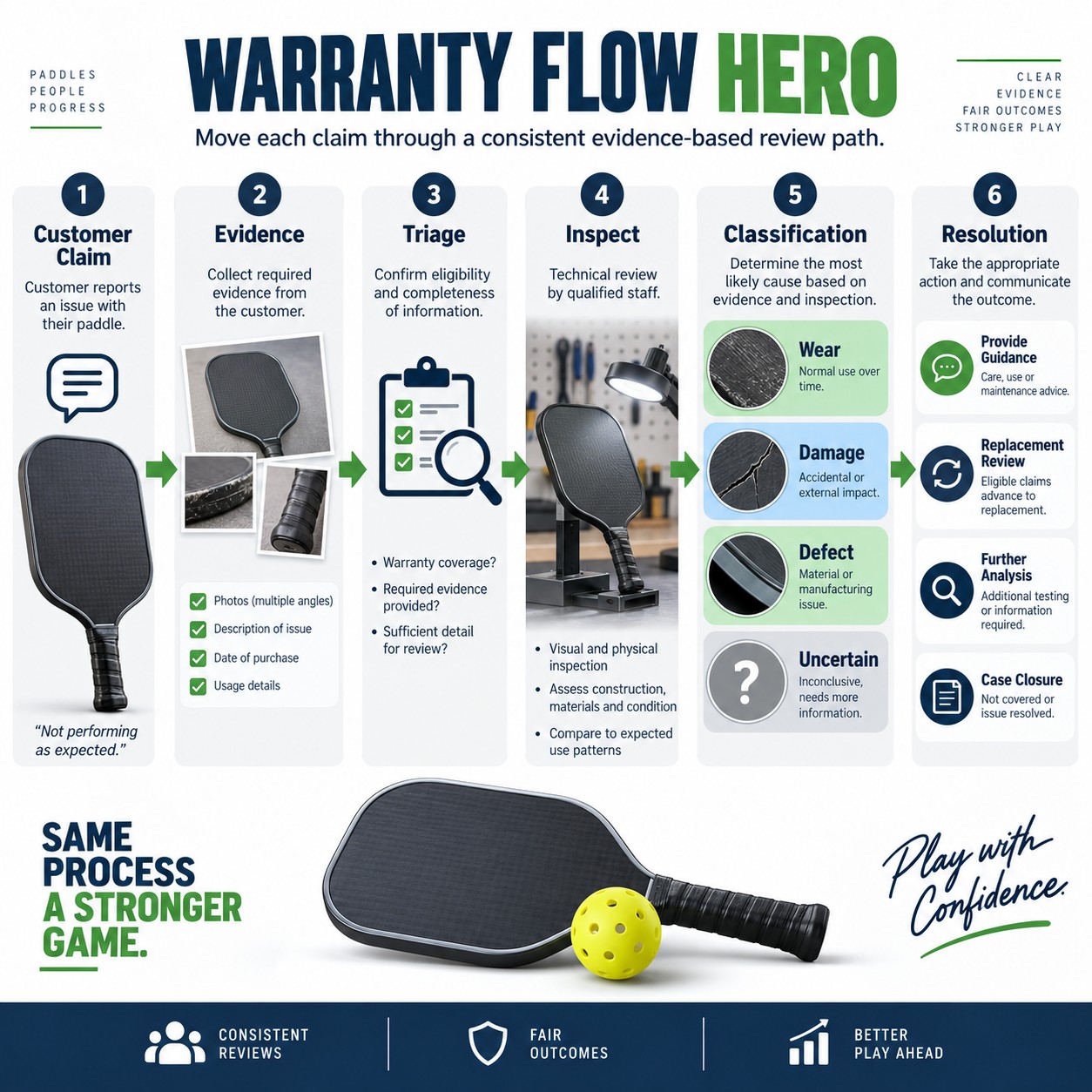
Inspect core crush, local debonding, foam movement, adhesive failure, perimeter support, face damage and dimensional change. A cross-section of retained samples can help locate the mechanism.
Corrective action should target the physical cause rather than simply adding mass or changing a marketing material.
PBCoR Portfolio Strategy
A high-performance hero model may justify a narrower internal process window and more frequent validation. A volume all-court model may benefit from more conservative output and easier-to-control construction.
Not every SKU needs to sit close to the performance envelope. Product-line strategy can reduce compliance and warranty risk while still giving players clear choices.
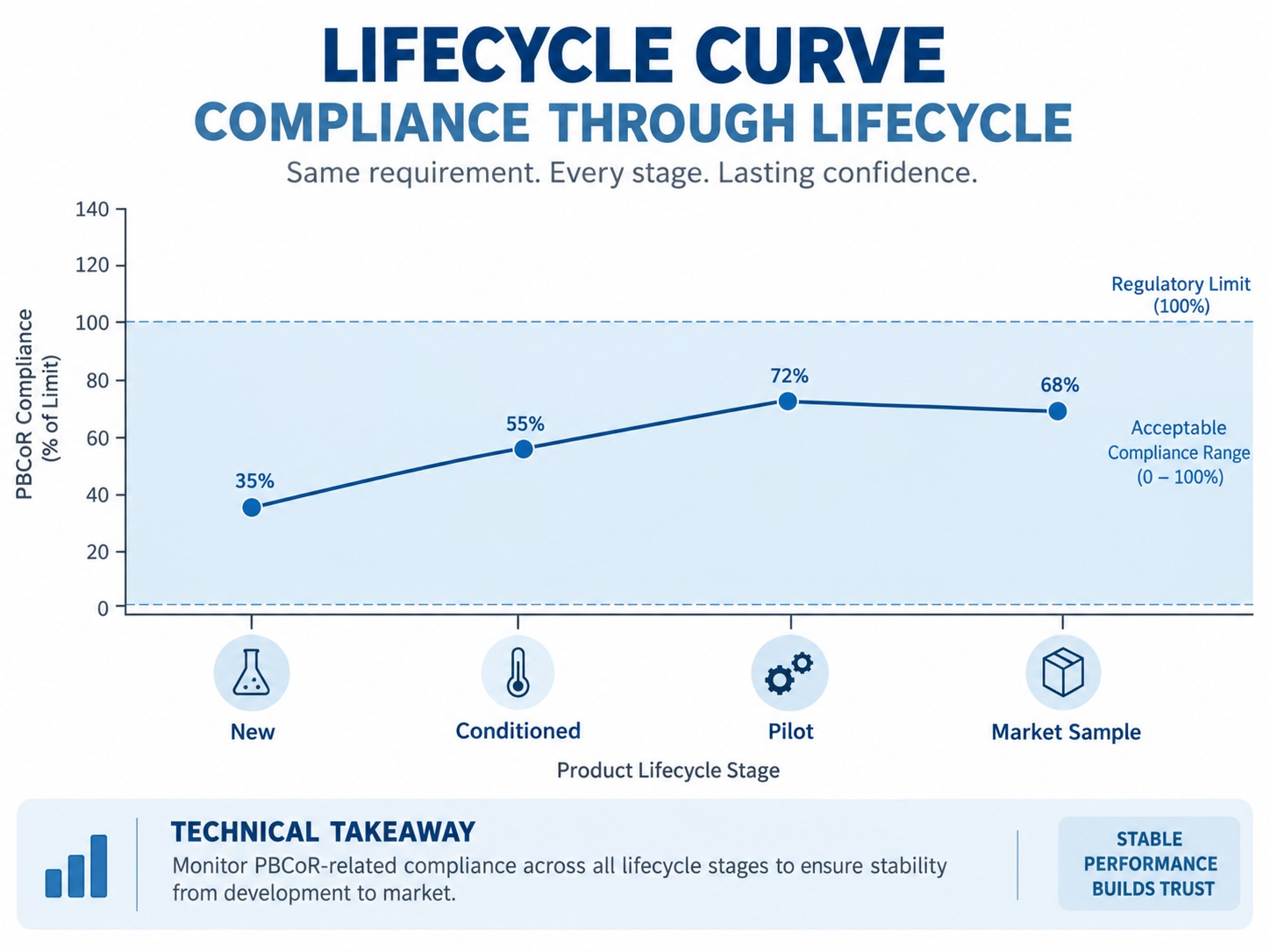
Compliance Margin and Change Control
PBCoR Engineering Matrix
| Variable | Why It May Matter | How to Validate | Control |
|---|---|---|---|
| Core / foam | Rebound / break-in | Prototype + conditioned test | BOM / density / source |
| Face / layup | Stiffness / energy transfer | Controlled A/B | Layup sheet |
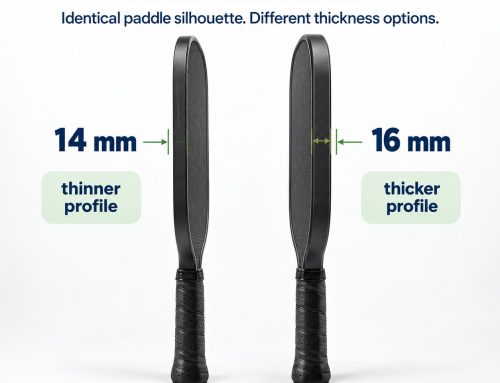
| Thickness / geometry | Structural response | Same-method comparison | Drawing / tolerance |
| Bonding / forming | System response | Pilot lot | Process window |
| Break-in | Performance drift | New + conditioned samples | Lifecycle check |
Sources / Current-Update Notes
- USA Pickleball PBCoR — Current PBCoR .43 testing pathway for eligible models. Primary source
- Equipment Standards Manual — PBCoR not-to-exceed .43 effective Nov. 1, 2025 in the published standard. Primary source
Design for Compliance Margin, Not the Published Limit
A paddle that barely passes a power limit in one prototype is not a production-ready design. Material lots, forming, bonding, conditioning and unit-to-unit variation can all move the finished result. Engineering should therefore target an internal margin rather than the published ceiling.
That margin belongs in product development and pilot validation. Multiple production-intent units should be measured in new and conditioned states, and meaningful material or process changes should trigger review before the next shipment.
- Measure multiple units, not one best prototype.
- Include conditioned samples in power validation.
- Treat compliance margin as a product specification, not a test-day surprise.
Frequently Asked Questions
What does PBCoR measure?
It characterizes rebound behavior of the paddle-ball system.
Does a paddle only need to pass once?
No. USA Pickleball states that certified products must remain compliant through their lifecycle and market samples may be checked.
Should I design exactly to the limit?
A safer engineering approach is to create an internal guard band based on real prototype and pilot variation.
What can change PBCoR?
Many construction and process variables can contribute; use controlled testing to identify the relevant ones for your design.
Is PBCoR the only certification test?
No. It is one part of the broader equipment standards.
Developing a power-focused paddle?
Mayvoci can help connect core, face, forming and pilot-lot controls to a pre-compliance development plan.
The End about Mayvoci
1)Design:Over 100 paddle designs and photography service to assist start-up.
2)Professional:Focus on various of paddles manufacturing for 6 years
3)Quality:Strict quality management system to provide safety and satisfaction for customers
4)Amazon:Flexible comprehensive solution to make sure each Amazon seller is well cared.
5)Excellent Team:Experienced paddle experts & dynamic sales team give you 5-star service

If you work on this topic from the brand, sourcing, engineering or channel side, I’d be interested in your experience: How much validation do you run before formal certification: one prototype, a small sample set or a pilot-lot distribution?