
“Kevlar versus carbon fiber” sounds like a simple material comparison, but a finished pickleball paddle is not a raw-fiber test. It is a composite system.
A brand can make two paddles with the same outline and core and still get different results if the face fabrics have different areal weight, weave, resin content, layer count, orientation, surface treatment, or bonding conditions. The reverse is also true: two paddles marketed with different face materials can feel surprisingly similar if the rest of the construction is tuned to the same target.
The useful question is therefore not “Which material is best?” It is “What changes when we substitute one reinforcement system for another while holding the other important variables under control?”
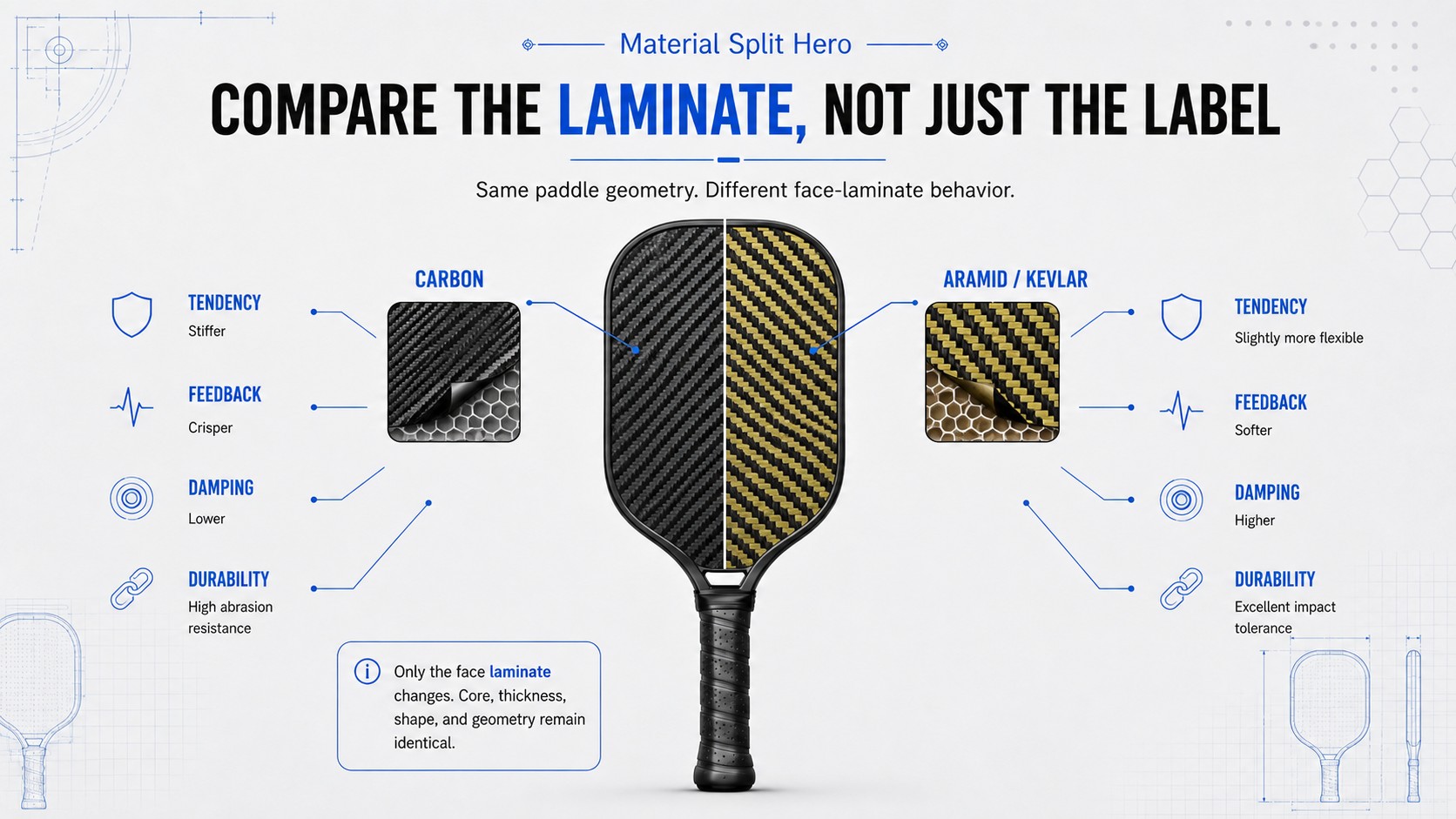
Start with the Material Definition
Carbon fiber and para-aramid are different reinforcement families, but both are used in composite laminates. In paddle manufacturing, the reinforcement is normally combined with resin and may appear as woven cloth, unidirectional material, or a hybrid structure.
For OEM work, the supplier should identify the material form rather than relying on the word “Kevlar” or “carbon.” Ask for fabric code or specification where available, areal weight, weave or orientation, resin system, layer count, and whether the face is a pure or hybrid laminate.
This definition step prevents a common mistake: comparing a thick woven aramid laminate with a thin carbon laminate and then attributing every difference to fiber chemistry.
Stiffness and Impact Feel
Carbon-fiber laminates can be designed over a wide stiffness range. Aramid-containing laminates can also be made more or less compliant depending on architecture and thickness.
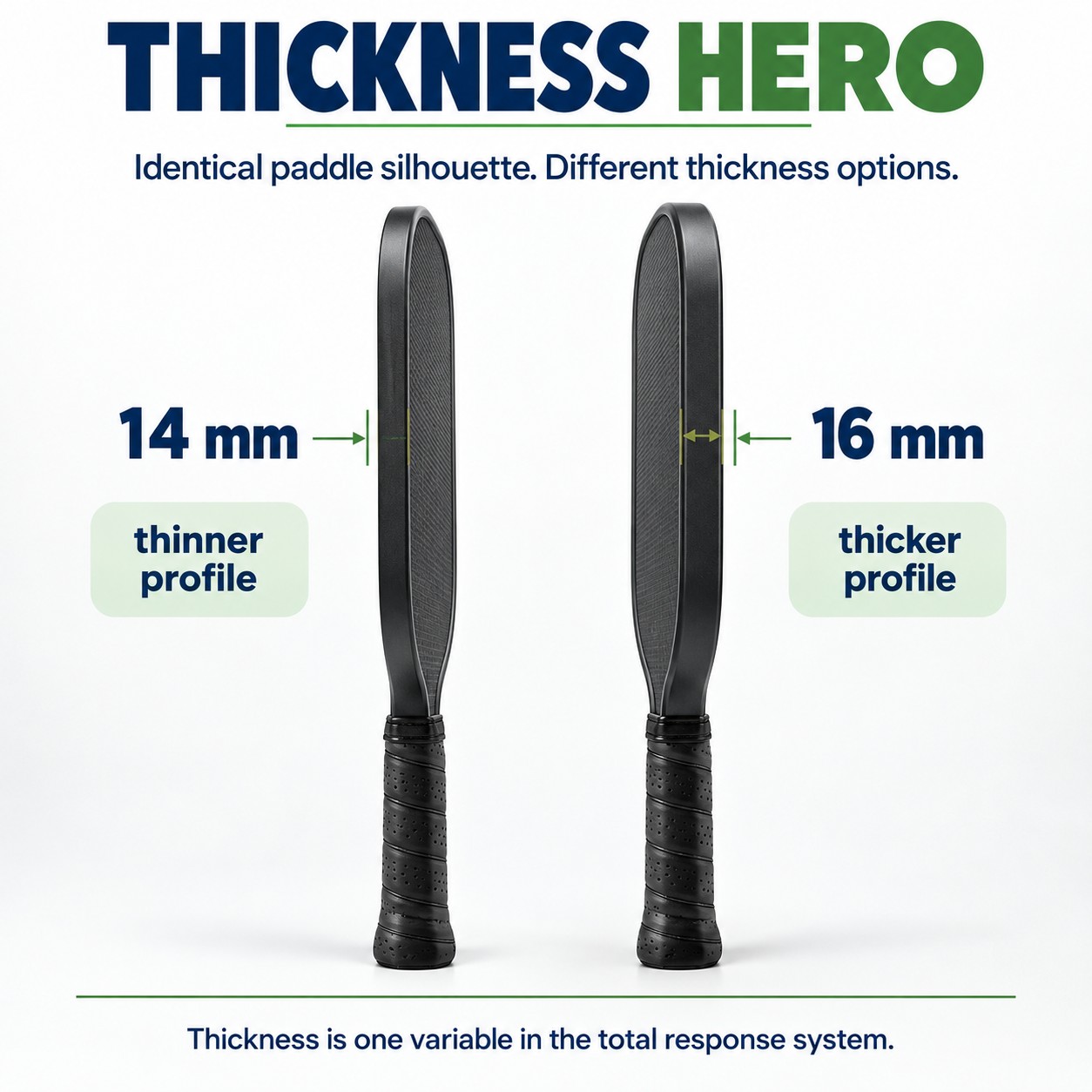
At paddle level, perceived impact feel is influenced by face bending, core response, perimeter structure, static weight, balance, grip system, and contact location. That means claims such as “Kevlar is always soft” or “carbon is always crisp” should be treated as tendencies that require prototype confirmation, not universal laws.
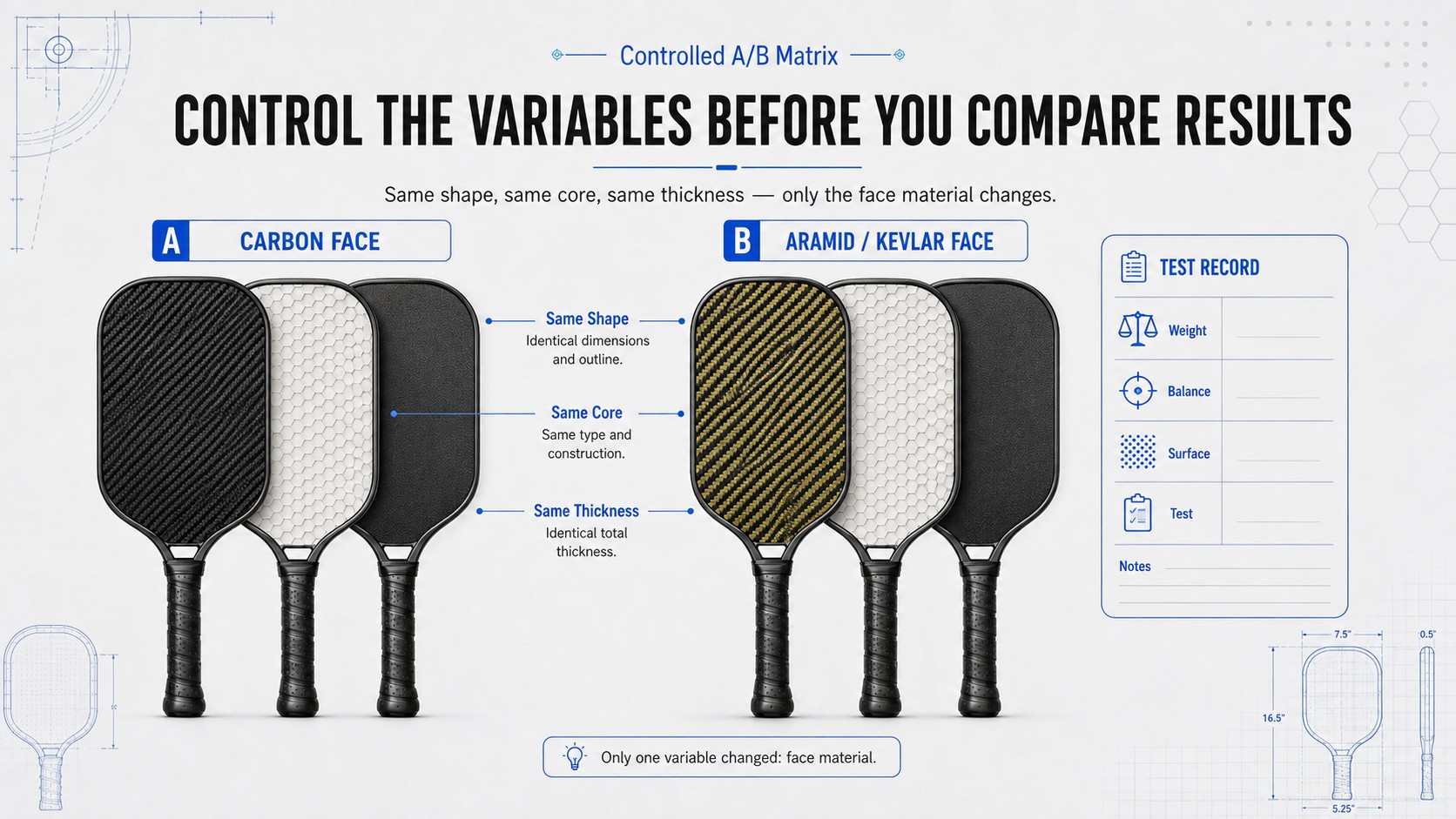
For a fair comparison, keep mold, core, thickness, surface, weight target, and perimeter construction constant. Then compare controlled face changes across several samples.
Damping and Vibration
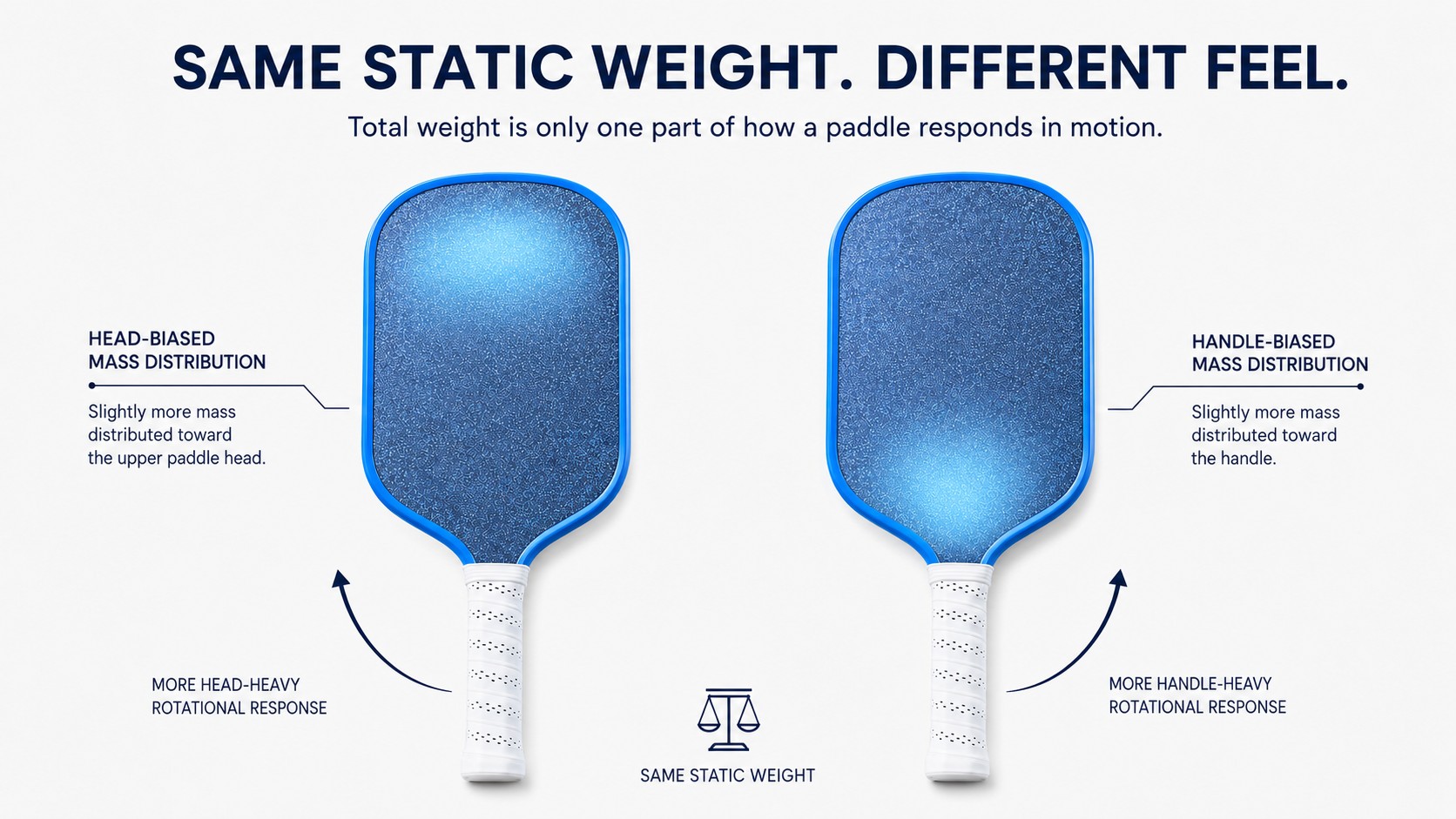
Material choice can influence how vibration travels through the laminate, but the player experiences the complete paddle. Core material, handle connection, foam placement, grip build-up, and mass distribution can amplify or reduce the difference.
If comfort or vibration character is part of the product brief, include subjective player evaluation and an instrumented proxy when available. Do not rely only on one tester using one prototype.
A controlled A/B set is more informative than comparing two unrelated retail paddles with different shape, thickness and balance.
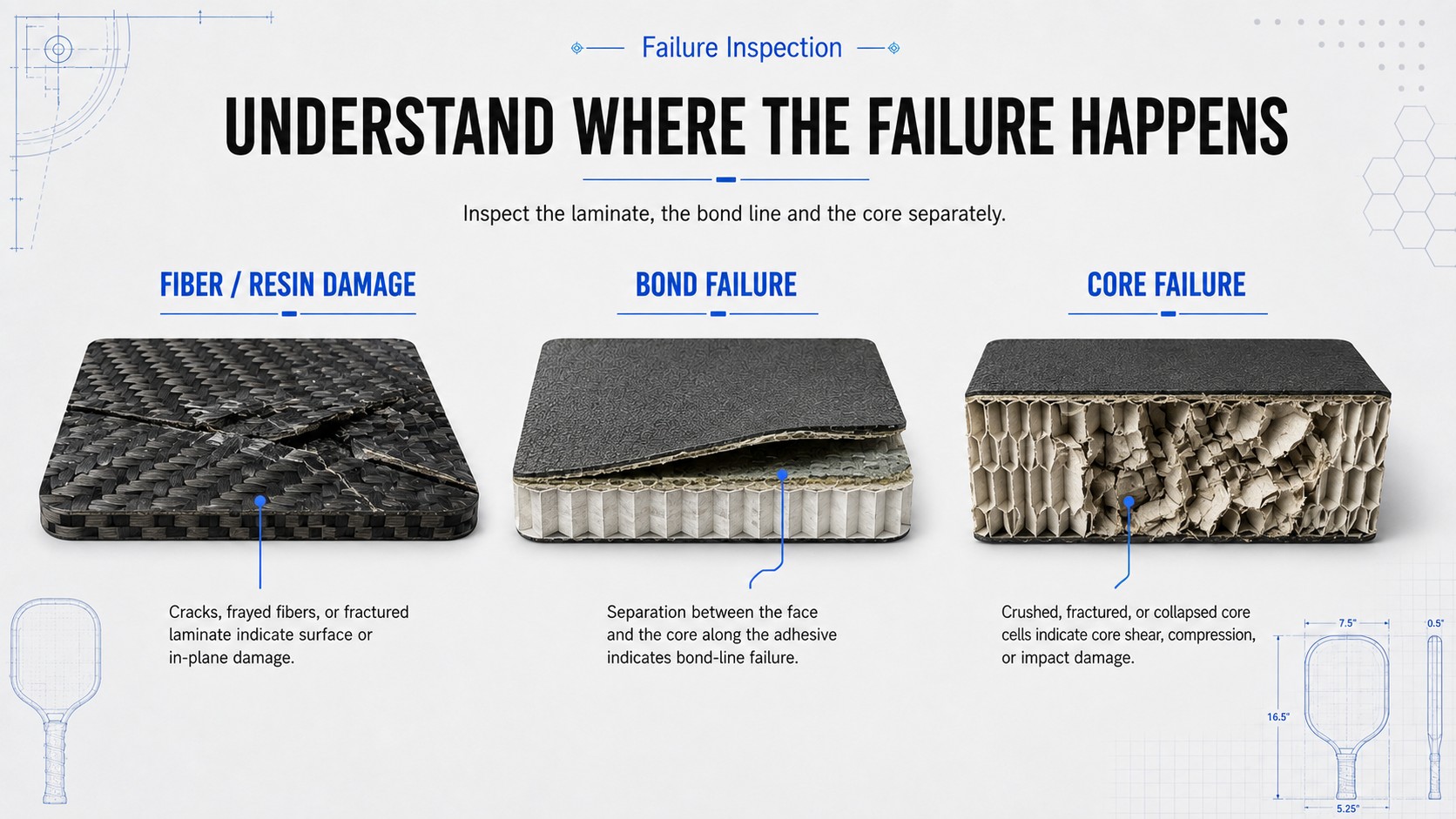
Durability: Separate Fiber Damage from Structural Failure
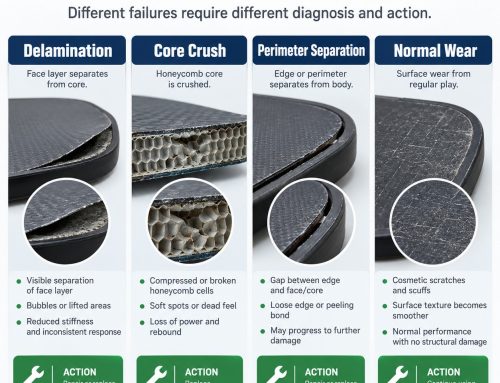
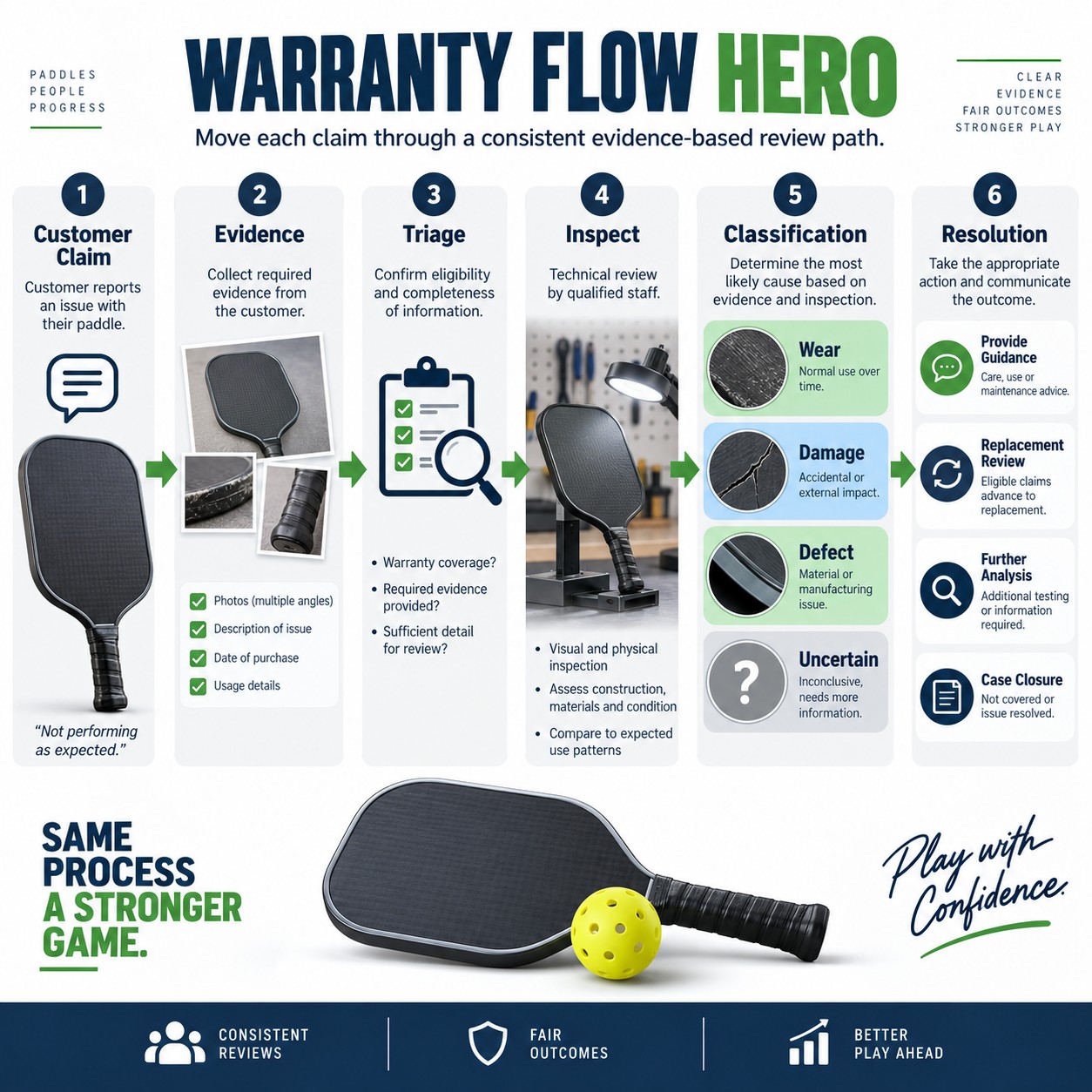
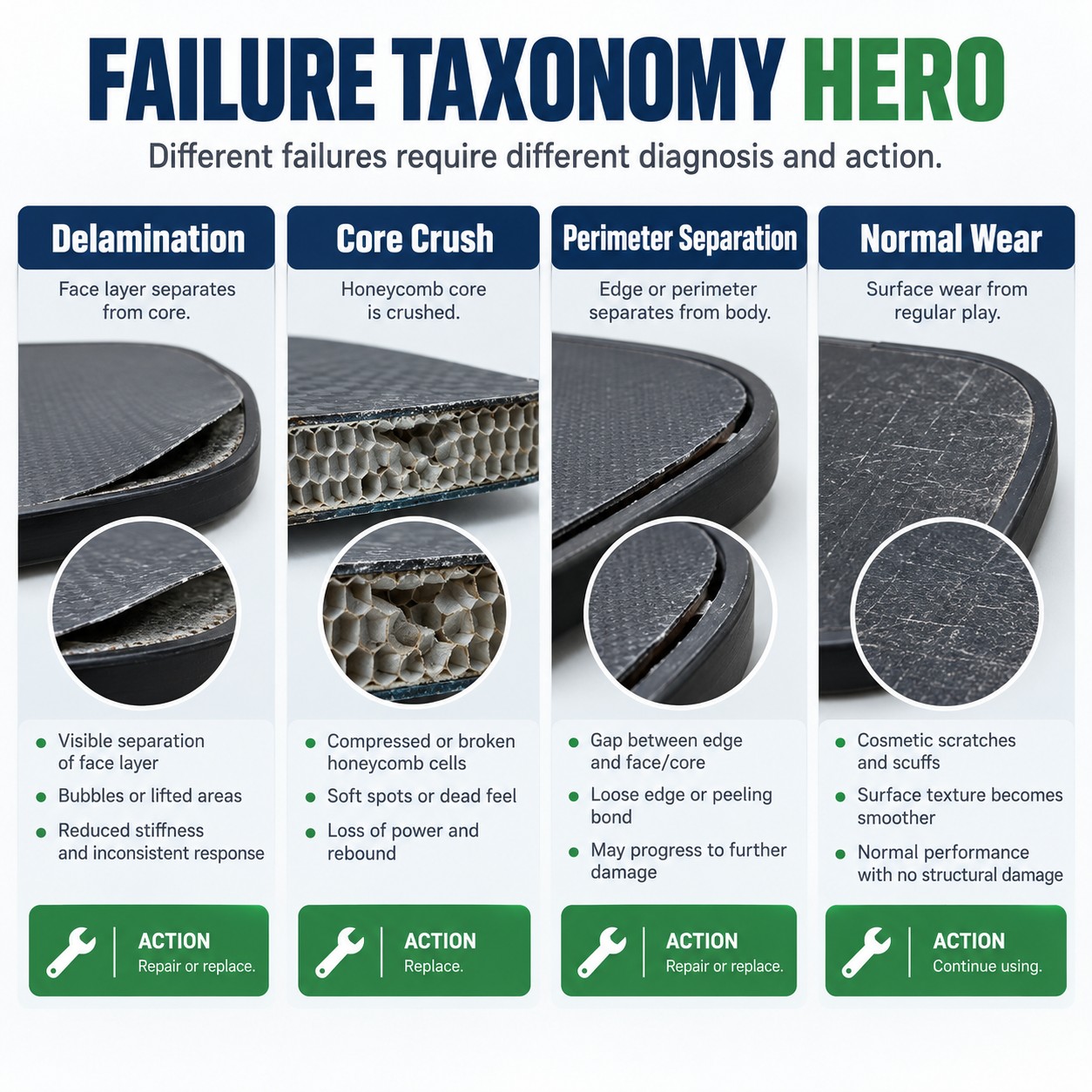
“Durability” includes several possible failure modes: fiber or resin damage in the face, delamination at an interface, edge impact damage, core crush, cosmetic abrasion, surface-wear change, and handle or perimeter failure.
A durable fiber does not guarantee a durable paddle if bonding, cure, trimming or edge protection is weak. Conversely, a well-controlled laminate can deliver good service life even when the marketing material is less exotic.
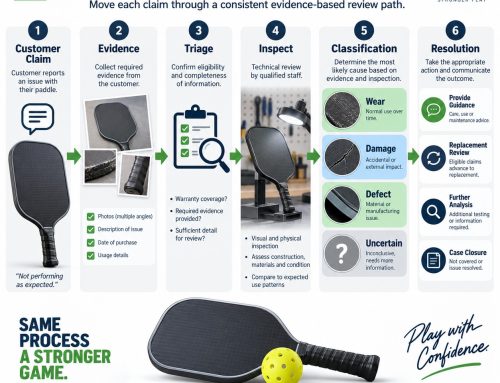
For OEM validation, inspect used samples and cut retained units when necessary. Cross-sections can reveal bond coverage, voids, crushed core, resin distribution and local separation that the exterior does not show.
Surface Texture Is a Separate Design Variable
A raw reinforcement fabric and the final playing surface are not the same thing. Peel-ply, resin-rich texture, coatings, particle grit, printing and finishing steps can all change the contact surface.
That matters because spin claims are often incorrectly attributed to the fiber name. If two paddles use different surface processes, a spin difference cannot be assigned to Kevlar versus carbon without further testing.
Specify and inspect the surface separately from the reinforcement laminate.
Weight and Layup Trade-Offs
Changing reinforcement can alter the mass of the face stack. The engineering response may be to adjust layer count, resin amount, perimeter reinforcement, or another component to recover the target weight.
Those adjustments then change the experiment. A useful development program documents every change, because a “Kevlar prototype” that also receives less resin and a different edge layup is not a one-variable comparison.
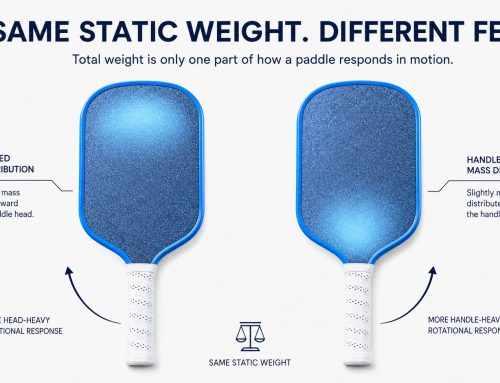
For a commercial product, the final question is not whether one face is lighter in isolation. It is whether the complete paddle can repeatedly meet the intended static weight and mass distribution.
Cost and Supply-Chain Considerations
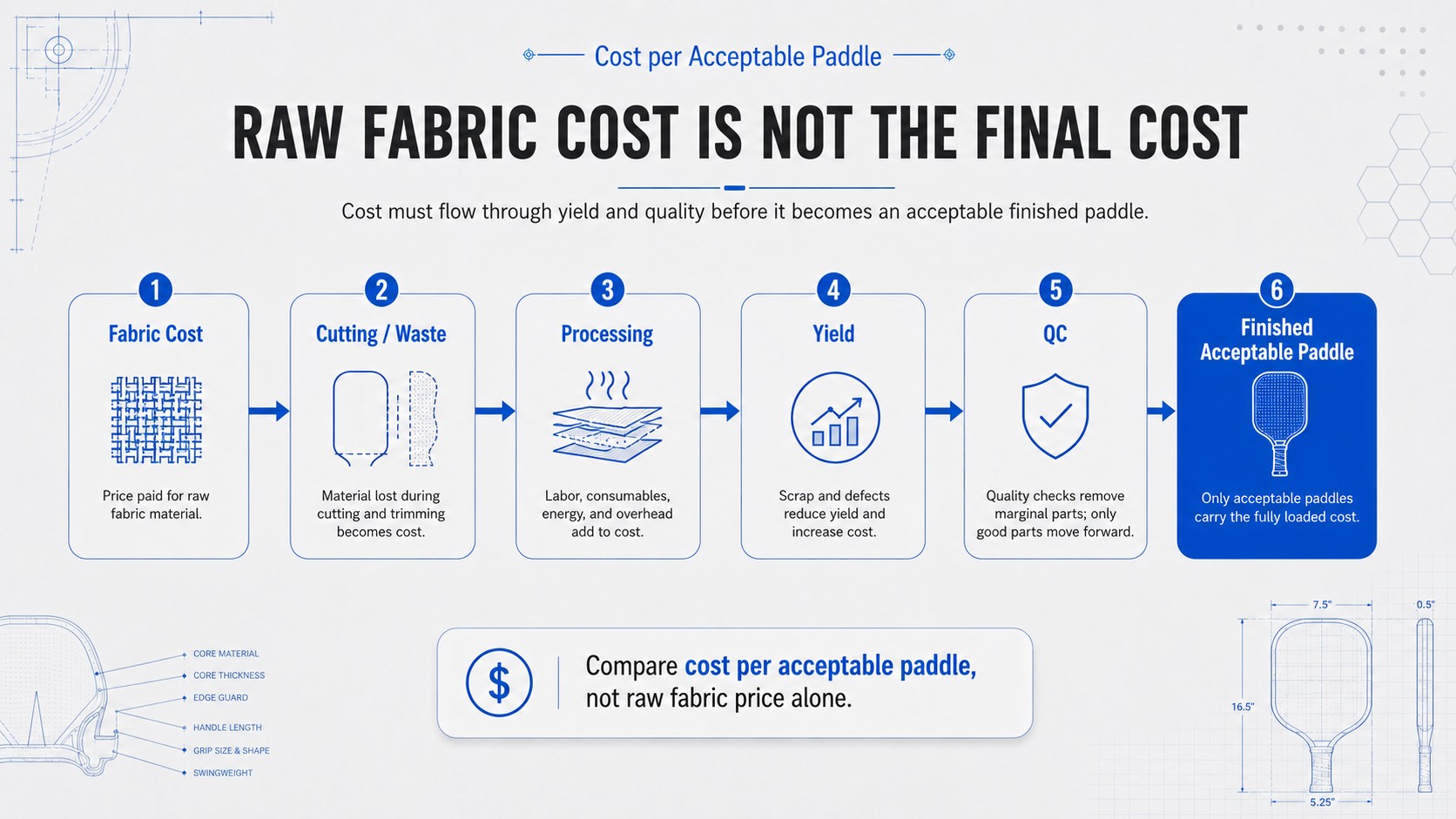
Material cost is only one part of cost. Yield, cutting waste, handling, resin compatibility, cosmetic acceptance, cycle time, inspection, minimum order quantities and replacement sourcing can all influence the finished BOM.
An expensive reinforcement may make sense in a hero SKU when the customer can understand the difference and the factory can reproduce it. The same material may be unnecessary in a volume SKU if it increases cost without creating a clear product benefit.
Brands should therefore compare cost per acceptable finished paddle, not just cost per square meter of fabric.
How to Build a Fair OEM A/B Test
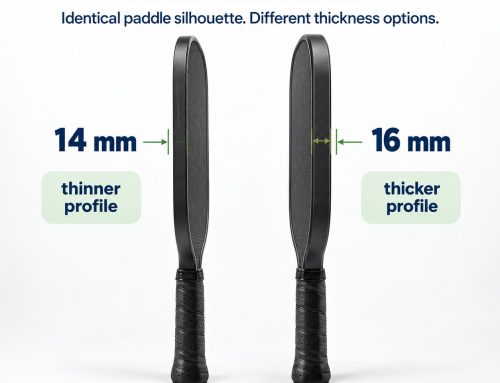
Start with one frozen geometry, one core, one thickness, one perimeter construction, one grip, one surface process and one target weight range. Create several samples of each face option.
Record static weight, balance, dimensions, thickness, visible surface condition and any available swing-weight or stiffness proxy. Run the same play-test protocol and, if durability matters, repeat the evaluation after conditioning or a defined use cycle.
The goal is not to prove one material “wins.” The goal is to determine which controlled construction better matches the intended product brief.
Which Product Brief Fits Each Direction?
A material choice should map to a product promise that can be tested.
If the priority is a particular impact feel, the face material can be one tuning lever. If the priority is a distinctive visual identity, fabric appearance may be commercially important. If the priority is production simplicity and scale, availability and process robustness may matter more than material novelty.
The best OEM selection is the construction that meets player target, compliance needs, durability expectations, production repeatability and target cost at the same time.
Frequently Asked Questions
Does Kevlar automatically create more control?
No. Control is a paddle-level outcome influenced by face, core, geometry, mass distribution, surface and player interaction.
Does carbon fiber automatically create more power?
No. Fiber grade does not determine the finished paddle by itself.
Can Kevlar and carbon be used together?
Yes, hybrid laminates are possible. The layer role, orientation, resin and production process should be specified.
Which is more durable?
There is no universal paddle-level answer. Durability must be evaluated by failure mode and complete construction.
How should an OEM buyer compare them?
Use controlled prototypes with the same geometry, core, thickness, surface and weight target, then compare multiple samples.
The End about Mayvoci
1)Design:Over 100 paddle designs and photography service to assist start-up.
2)Professional:Focus on various of paddles manufacturing for 6 years
3)Quality:Strict quality management system to provide safety and satisfaction for customers
4)Amazon:Flexible comprehensive solution to make sure each Amazon seller is well cared.
5)Excellent Team:Experienced paddle experts & dynamic sales team give you 5-star service

If you work on this topic from the brand, sourcing, engineering or manufacturing side, I’d be interested in your experience: If you built an A/B test for Kevlar and carbon, which outcome would decide the winner: feel, durability, consistency, weight or cost?