
Paddles do not have a universal expiration date. A recreational paddle used twice a month and a tournament paddle used daily experience very different wear. Surface process, core architecture, edge impacts, storage and grip replacement also matter.
Condition is a better replacement rule than a fixed number of months.
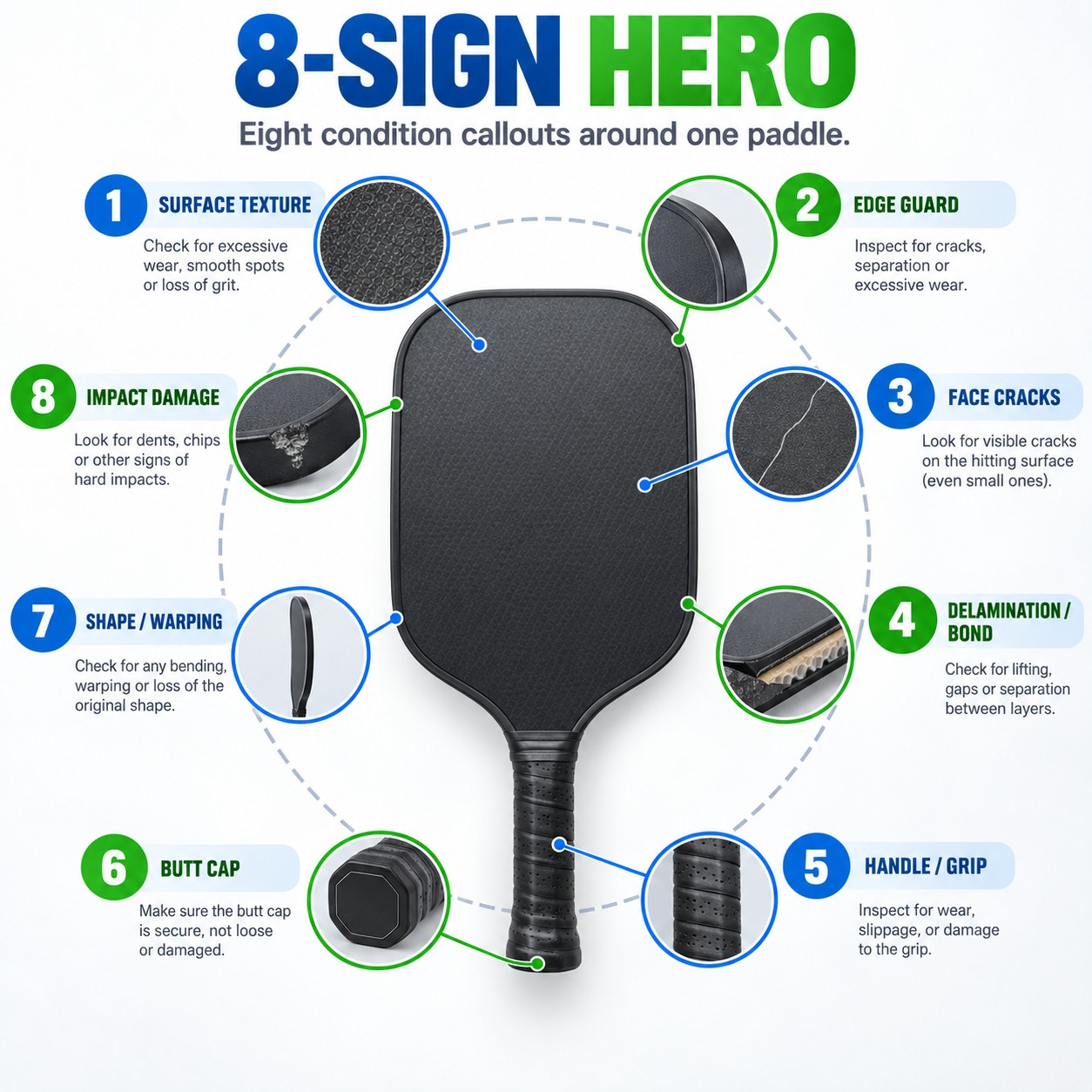
Separate Consumable Wear From Structural Wear
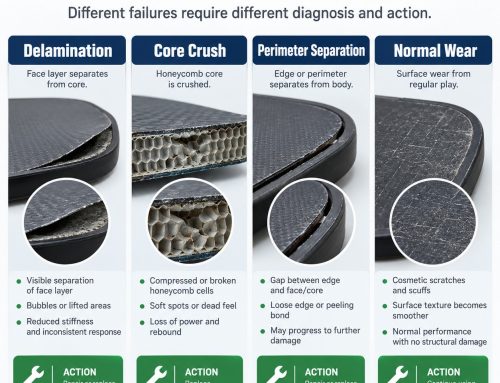
1. Structural Cracks
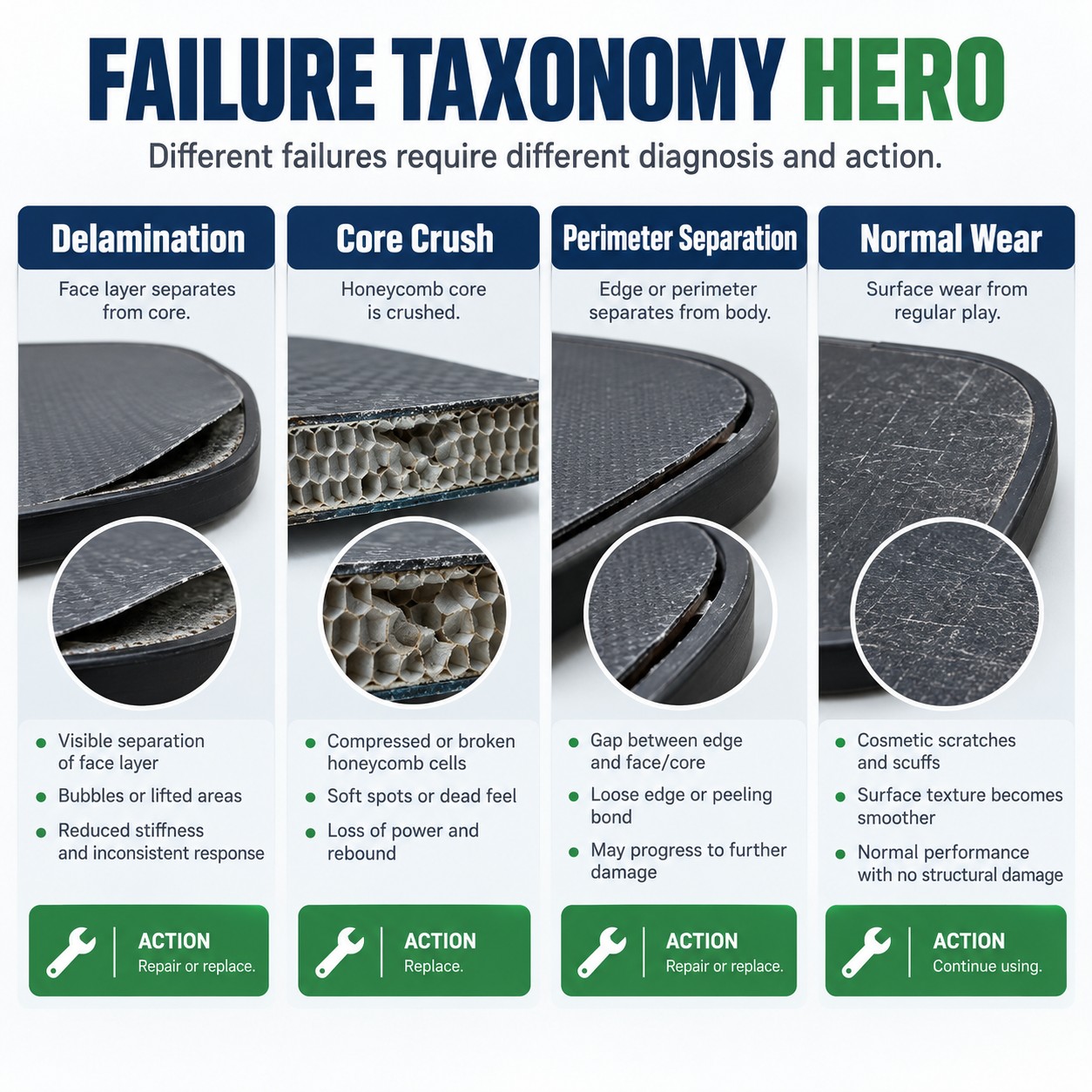
Visible cracks in the face, throat or handle deserve inspection. Stop using a paddle if damage creates a sharp or unstable component.
2. Loose Edge Guard
Cosmetic scuffs are normal, but a separating or moving edge guard can expose the structure and worsen with use.
3. Soft Spots
A local region that feels very different can indicate internal change. Do not diagnose the cause from feel alone.
4. Surface Wear
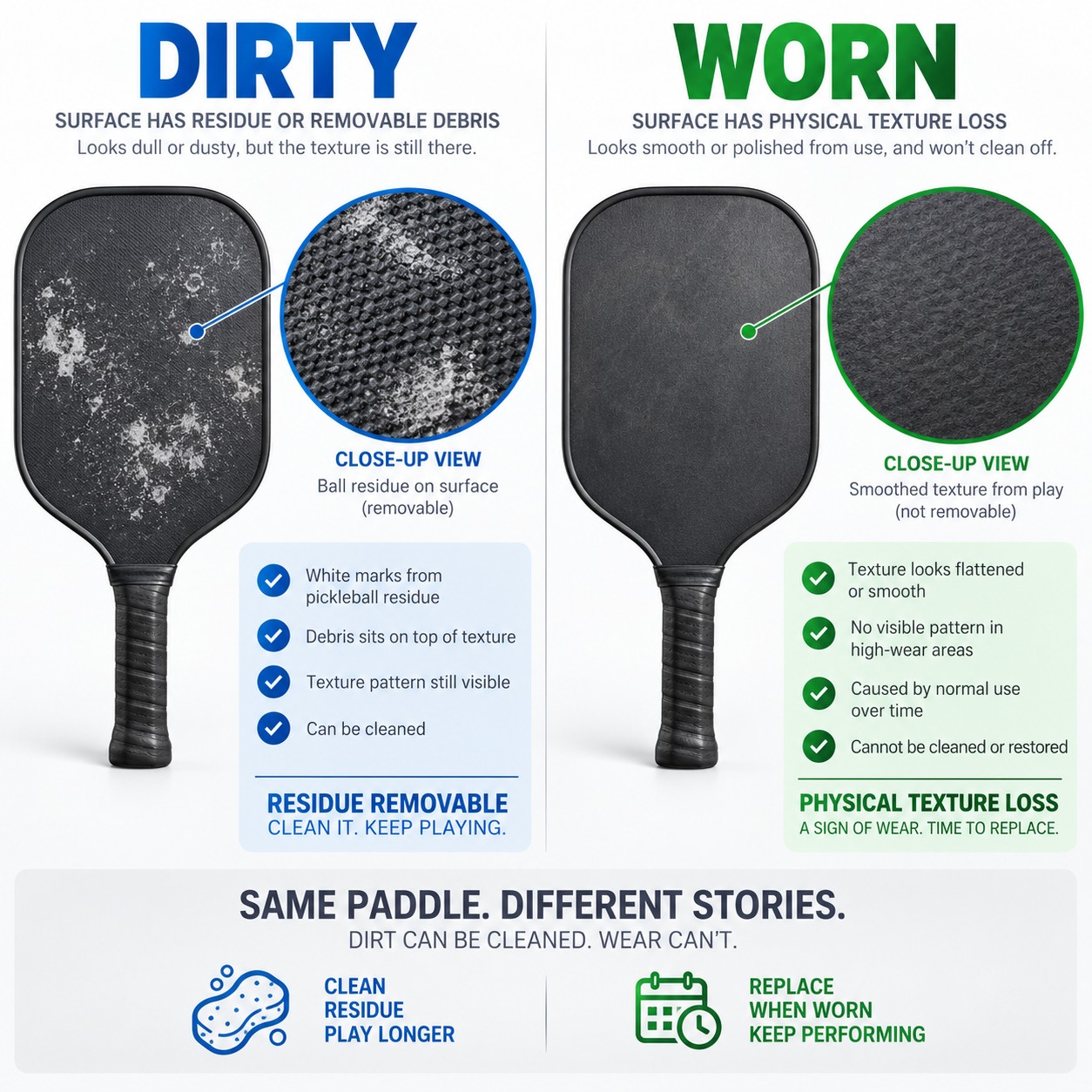
Texture can polish or particles can wear. Cleaning removes residue but does not rebuild lost texture.
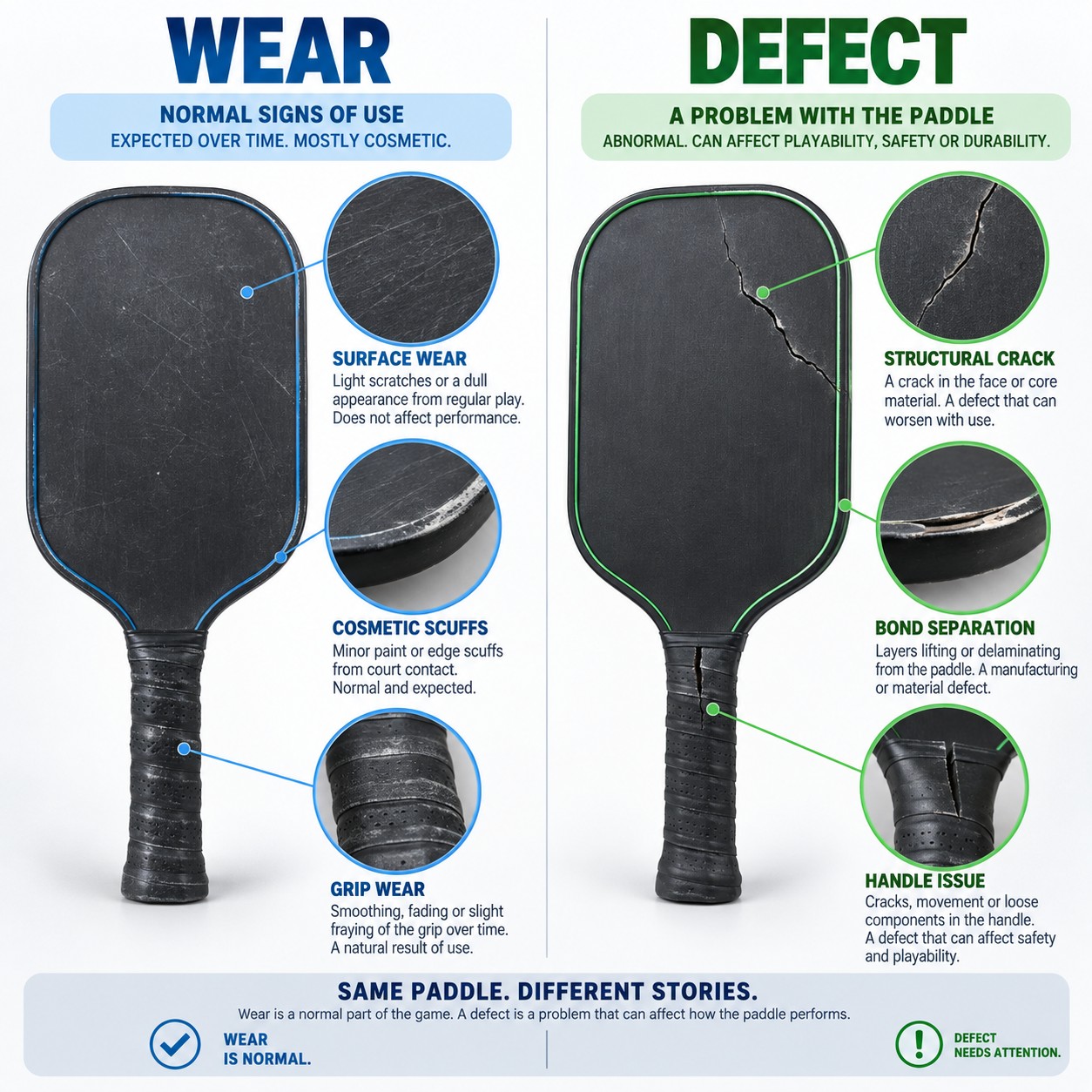
Separate Consumable Wear From Structural Wear
1. Structural Cracks
Visible cracks in the face, throat or handle deserve inspection. Stop using a paddle if damage creates a sharp or unstable component.
2. Loose Edge Guard
Cosmetic scuffs are normal, but a separating or moving edge guard can expose the structure and worsen with use.
3. Soft Spots
A local region that feels very different can indicate internal change. Do not diagnose the cause from feel alone.
4. Surface Wear
Texture can polish or particles can wear. Cleaning removes residue but does not rebuild lost texture.
Use Warranty / Replacement Escalation
Replacement Decision Matrix
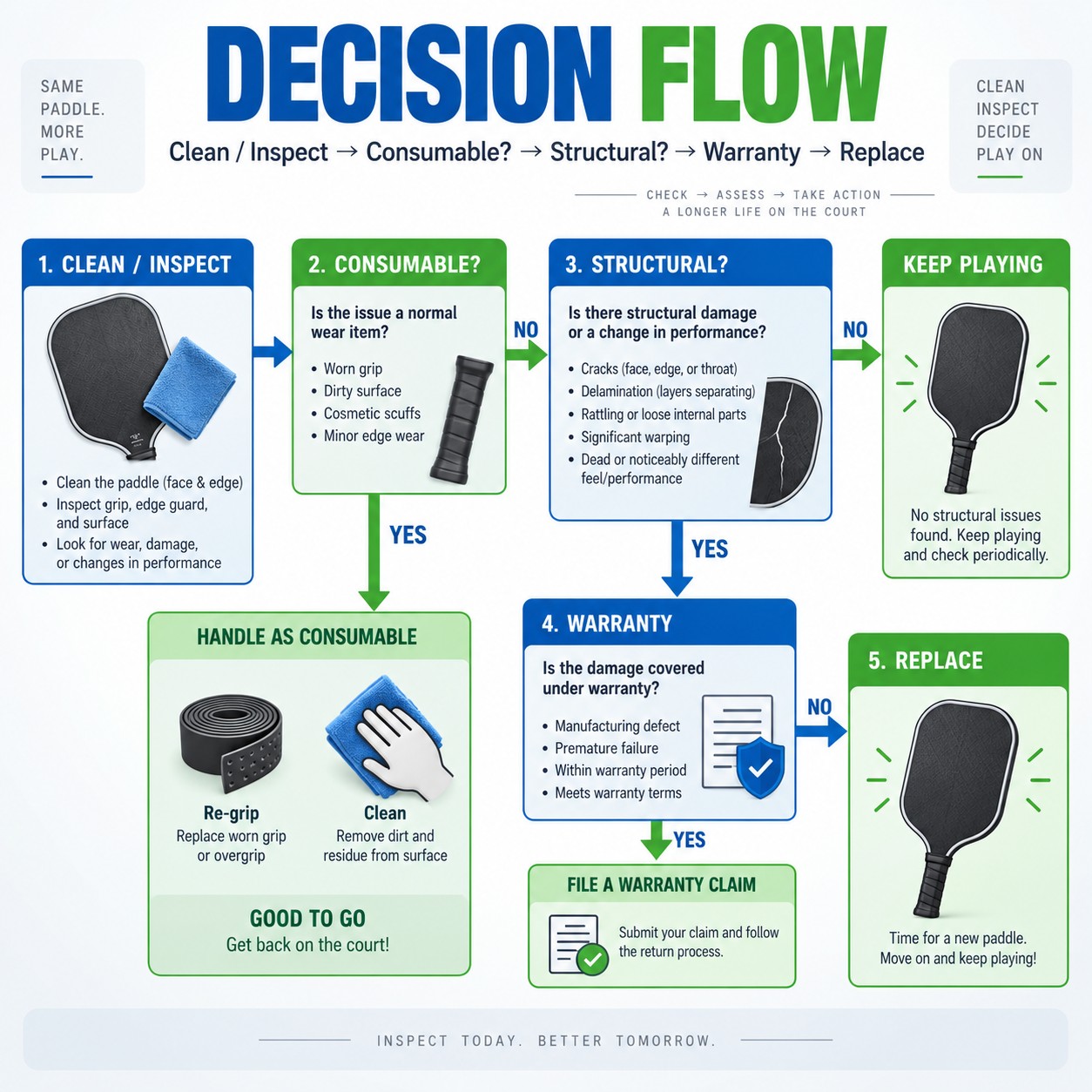
If the issue is only a worn overgrip, replace the grip. If the surface is polished but the structure is healthy, decide based on your spin needs. If there is structural cracking, movement or a major soft spot, move to inspection or replacement.
This matrix keeps cheap consumable wear from being confused with paddle-body failure.
Document Condition Over Time
Competitive players can photograph the face and edge when the paddle is new, record weight/setup and take periodic comparison images.
A simple baseline makes it easier to understand gradual wear and gives customer service better evidence if a warranty question appears.
Retire Versus Reuse
A paddle that no longer meets competitive expectations may still be suitable as a casual loaner if it is structurally safe. A structurally damaged paddle should not be reassigned to beginners.
Replacement decisions should distinguish performance preference from safety and structural integrity.
Practical Editorial / Decision Notes
Competitive players can photograph and weigh a new paddle, then keep periodic comparison records. That baseline makes gradual wear easier to interpret and improves warranty evidence.
A paddle that no longer meets a player’s competition preferences can still be a loaner if structurally safe; a structurally compromised paddle should not be reassigned.
Document Condition Over Time
Replace / Repair Decision
| Condition | Action |
|---|---|
| Grip wear only | Replace grip |
| Surface polished, structure healthy | Decide by performance need |
| Loose edge / structural movement | Inspect / warranty |
| Crack / major soft spot | Stop / escalate |
| No structural issue, cosmetic wear | Continue if appropriate |
Replacement Decisions Should Separate Safety, Wear and Preference
A player can replace a paddle because they want fresher texture long before the structure is unsafe. Conversely, a cracked or moving handle should not remain in service simply because the surface still looks new.
Brands should help users distinguish consumable wear, cosmetic wear, performance wear and structural failure. Clear categories reduce unnecessary warranty claims and help real structural problems escalate faster.
- Replace grips separately from the paddle body.
- Document new-condition photos for high-use products.
- Stop using visibly unstable structural components.
Frequently Asked Questions
How long does a paddle last?
There is no universal lifespan.
Does surface wear mean the whole paddle is dead?
Not necessarily.
Can I use a cracked paddle?
Structural damage should be inspected and potentially retired.
Does a sound change prove delamination?
No.
Should I replace the grip first?
Yes when grip wear is the only problem.
Need a care and replacement policy for your paddle line?
Mayvoci can help connect surface, structural and warranty guidance to the actual construction of the product.
The End about Mayvoci
1)Design:Over 100 paddle designs and photography service to assist start-up.
2)Professional:Focus on various of paddles manufacturing for 6 years
3)Quality:Strict quality management system to provide safety and satisfaction for customers
4)Amazon:Flexible comprehensive solution to make sure each Amazon seller is well cared.
5)Excellent Team:Experienced paddle experts & dynamic sales team give you 5-star service

One thing we didn’t cover in detail is how differently players replace paddles.
Some competitive players change paddles every 6–12 months to keep performance as consistent as possible.
Others use the same paddle for several years because it still feels comfortable and reliable.
There isn’t one “correct” replacement schedule—it depends on how often you play, your playing style, and what you expect from your equipment.
So we’re curious:
🏓 What’s the longest you’ve ever used the same pickleball paddle?
Did you replace it because it broke, or simply because it no longer felt the same?
👇 We’d love to hear your experience.