CRBN TruFoam Genesis is useful as a case study because it makes one construction decision unusually visible: CRBN markets the series around a 100% foam core rather than a conventional polypropylene honeycomb core.
That does not mean “full foam” is automatically the next universal generation of pickleball paddles. It means developers now have another architecture to compare. The right questions are structural: how the core supports the faces, how density and geometry affect mass, how the perimeter and handle are integrated, how the construction changes through use, and whether production can reproduce the same response across many units.
This article separates public product facts from engineering interpretation so the case study can remain useful even when individual retail models change.
Start With Public Facts
Public Facts We Can Verify
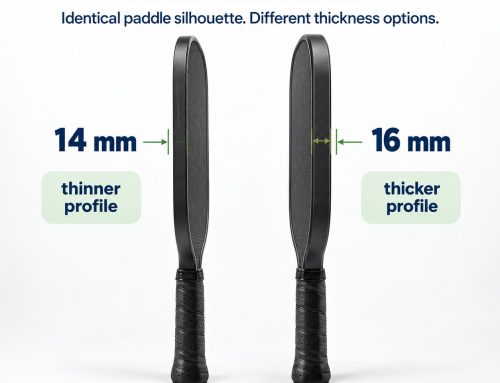
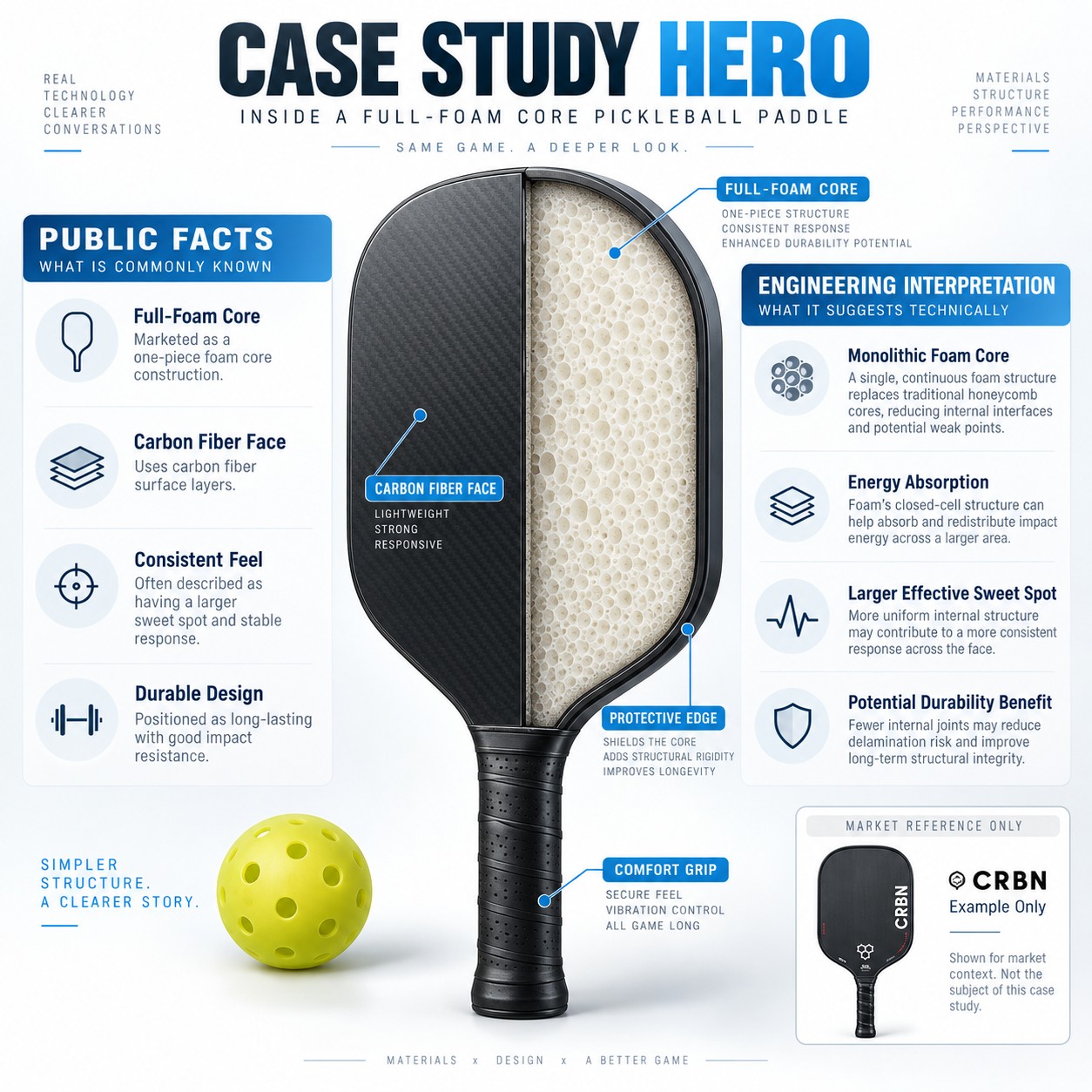
CRBN currently describes its TruFoam Genesis series as using a 100% foam core and markets the line as a “4th Generation” construction. Current product pages also describe 16 mm versions and T700 carbon-fiber faces.
Those are manufacturer-published product facts. They do not by themselves prove a universal improvement in durability, power, control or spin.
The first editorial rule for a competitor case study is therefore simple: attribute brand claims to the brand and keep engineering conclusions separate.
What ‘100% Foam Core’ Changes Architecturally
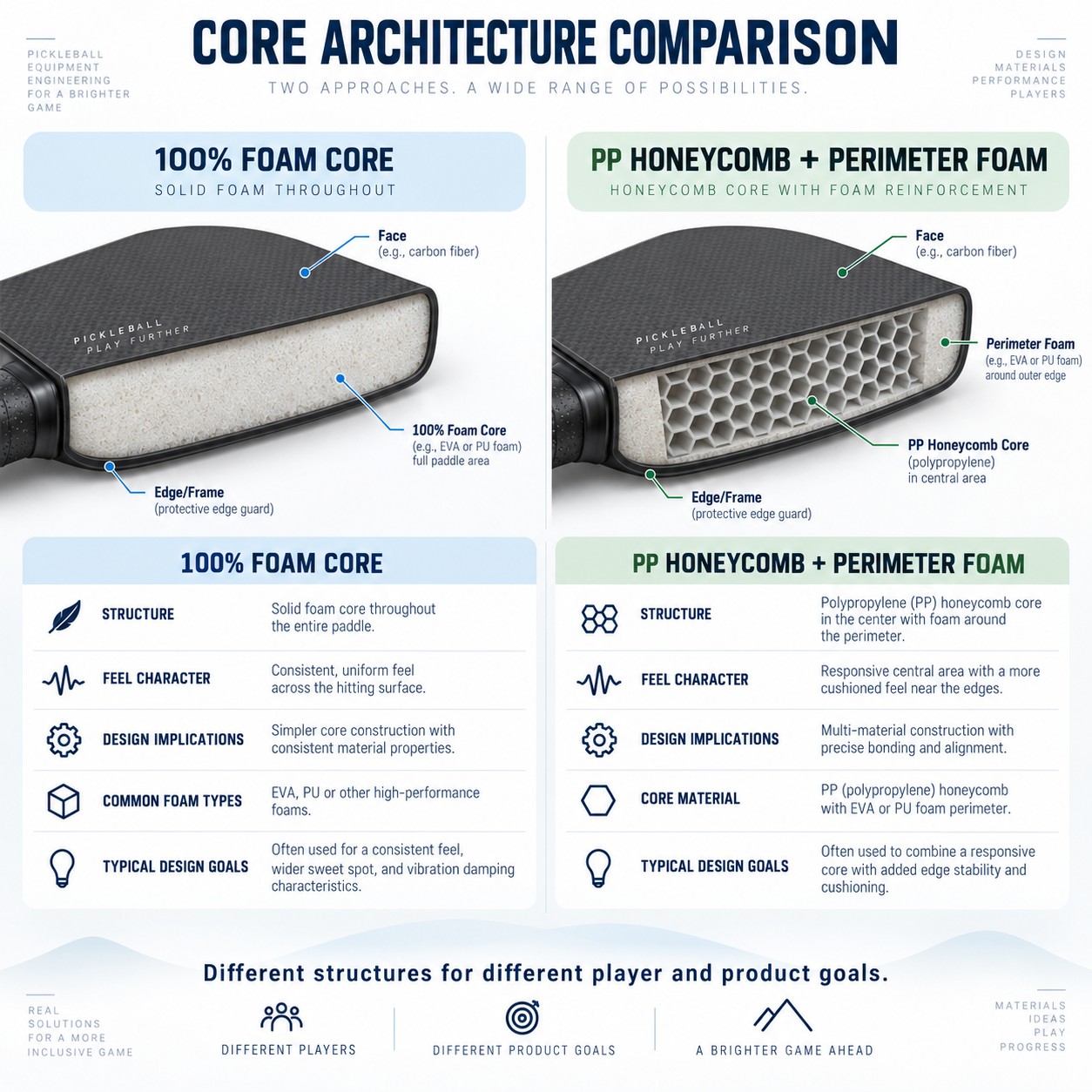
A full-foam construction removes the large central polypropylene honeycomb sheet used in many traditional paddles. That changes the internal support system.
Instead of face sheets spanning a cellular honeycomb field, the faces are supported by a foam architecture whose density, stiffness, resilience and bonding determine local response.
The exact internal geometry still matters. “100% foam” is a category description, not a complete BOM.
Why Foam Density and Internal Geometry Matter
A lower-density foam can reduce mass but may need geometry or reinforcement to provide adequate support. A higher-density foam can increase support while adding weight.
Manufacturers may also use different foam regions, ribs, inserts or reinforcement strategies. Unless the brand publishes a full internal construction drawing, those details should be treated as unknown rather than guessed.
For OEM development, density and geometry should be specified separately.
Durability: What Full Foam May Solve—and What It Does Not
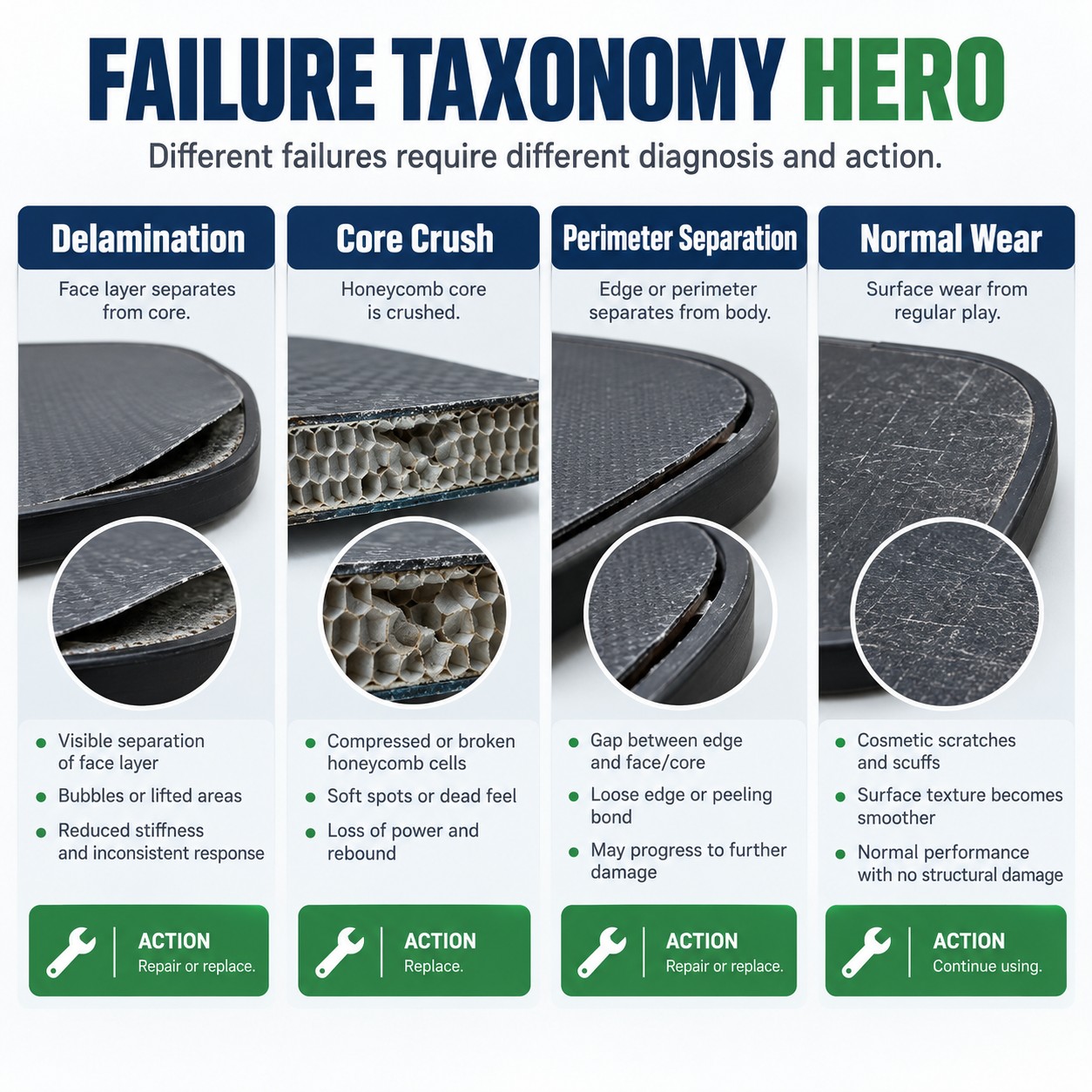
One reason brands explore full-foam cores is to reduce failure modes associated with local honeycomb crushing or cell-wall collapse.
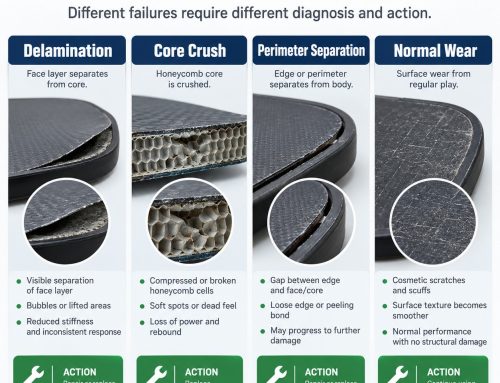
However, replacing honeycomb does not remove all durability risks. Face-to-core bonding, foam fatigue, edge impact, handle connection, surface wear and local separation can still occur.
Durability therefore needs lifecycle testing, not a construction label.
Interpret Full-Foam Architecture Carefully
Break-In and Lifecycle Response
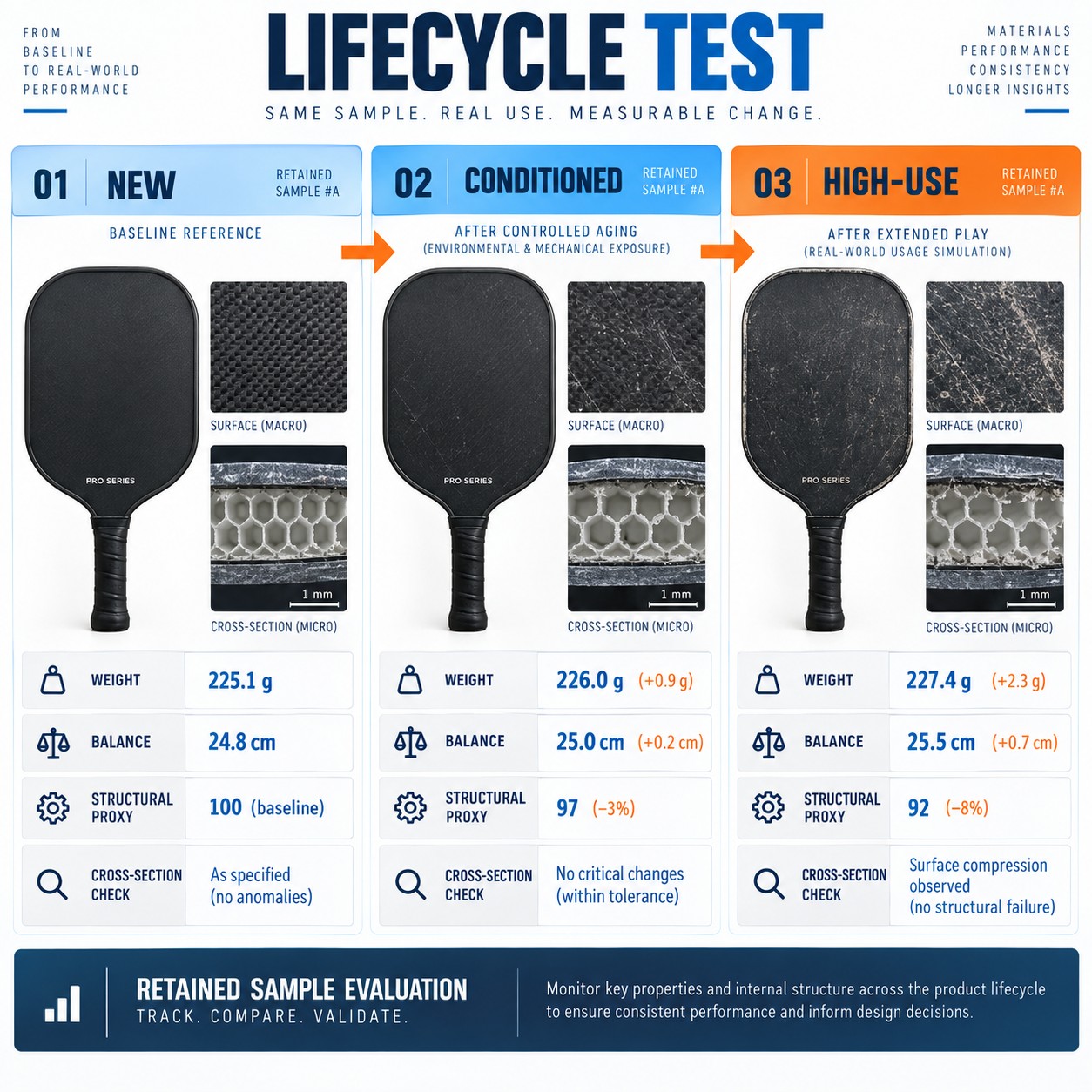
A paddle can change after repeated impact even when there is no visible damage.
For full-foam development, track new, conditioned and high-use samples. Record static weight, balance, deflection or other structural proxies, sound, surface condition and any formal performance metrics available.
The development objective is not zero change; it is predictable change within the product and compliance target.
Manufacturing Repeatability
Foam introduces its own process variables: incoming density, hardness, cell structure, cutting or molding accuracy, adhesive wet-out, cure, compression during assembly and storage.
If a full-foam paddle feels exceptional only when one carefully selected core piece is used, the architecture is not production-ready.
Pilot-lot spread matters more than one prototype.
Cost and SKU Positioning
A full-foam paddle may require different materials, processing steps, tooling or inspection. That can raise cost even before marketing is considered.
A premium SKU can justify the complexity if the user can perceive a consistent benefit and warranty risk is controlled. A volume SKU may need a simpler architecture.
The correct commercial comparison is cost per acceptable, repeatable finished paddle.
OEM Lessons From the TruFoam Case
The strongest lesson is not “copy TruFoam.” It is that core architecture is now a visible product differentiator.
Brands should define the player problem first, prototype multiple architectures, condition the samples, inspect cross-sections, and select the construction that meets performance, durability, compliance and cost requirements.
Case studies are most valuable when they generate better development questions rather than imitation.
Validate Performance and Durability
What a Brand Should Measure Instead of Repeating Marketing Claims
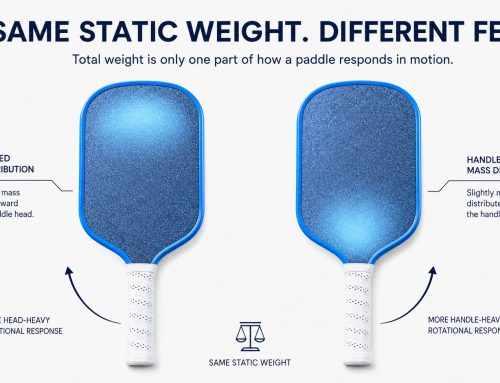
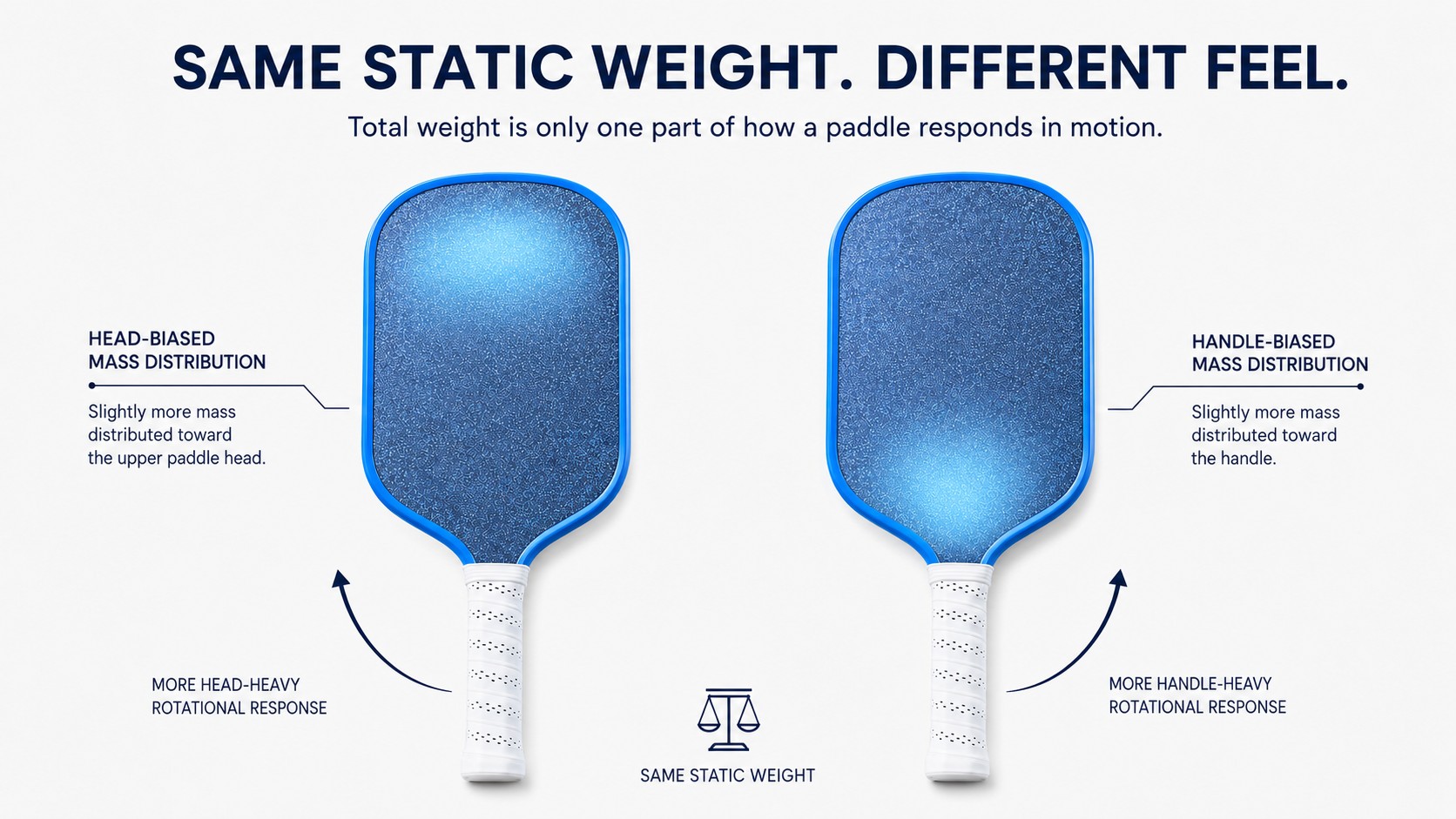
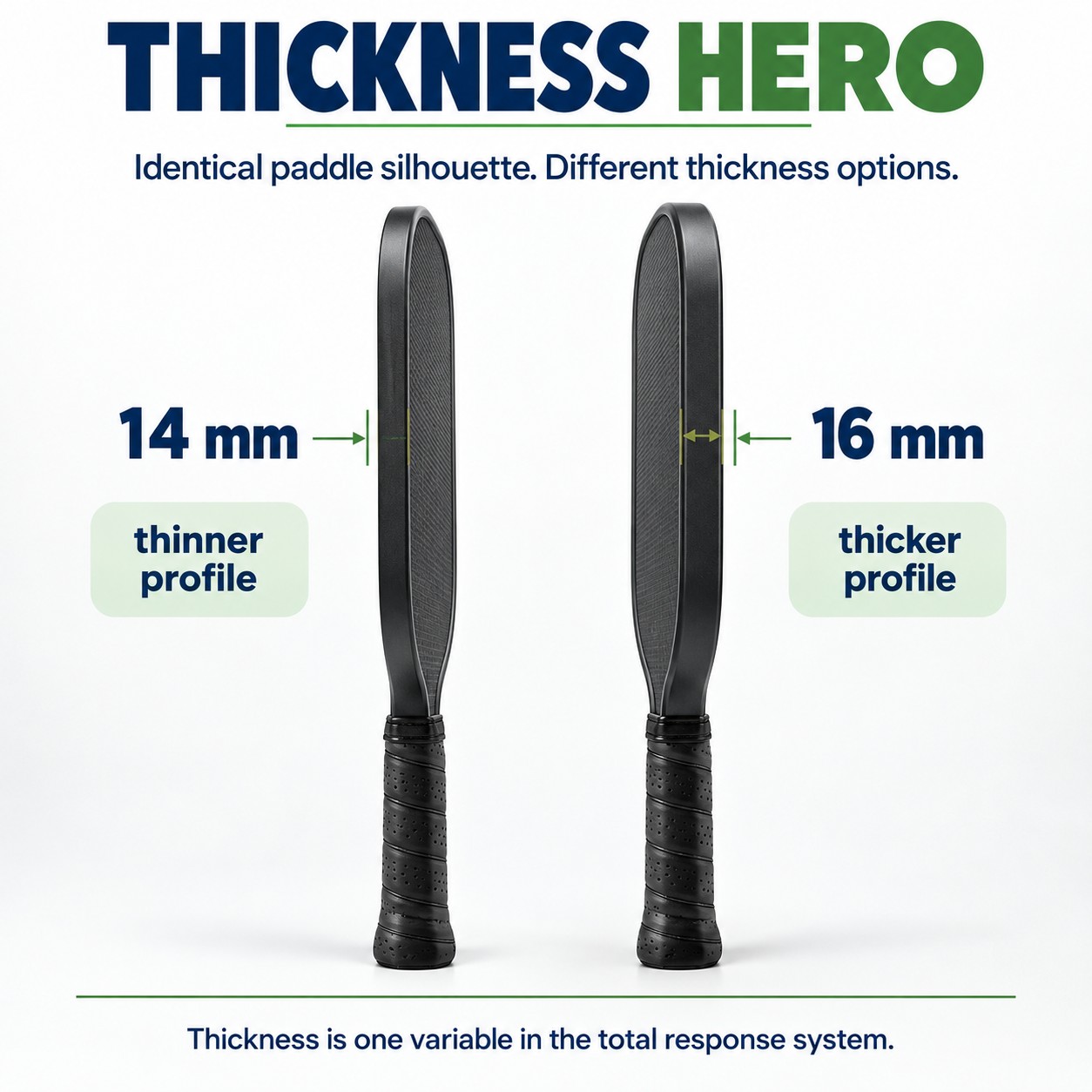
If a brand wants to benchmark a full-foam paddle, start with measurable variables: static weight, balance point, swing weight when available, thickness, dimensional consistency, surface condition, structural deflection proxy, sound change and conditioned behavior. Record several units, not one hand-selected sample.
Then compare those results with the product brief. A player may value hand speed, stability or comfort more than the construction story itself. The case study becomes useful when the measurements explain a player benefit rather than when the material name is simply repeated.
Cross-Section Verification
A cutaway of an approved development sample can confirm where foam is located, whether density regions appear different, how the face is bonded and how the handle/perimeter transitions are built. It cannot prove every material chemistry without further analysis, but it can reveal whether production construction matches the intended architecture.
For OEM teams, keep one labeled cross-section with the golden sample and use it as a visual reference during pilot review.
Full-Foam Product-Line Strategy
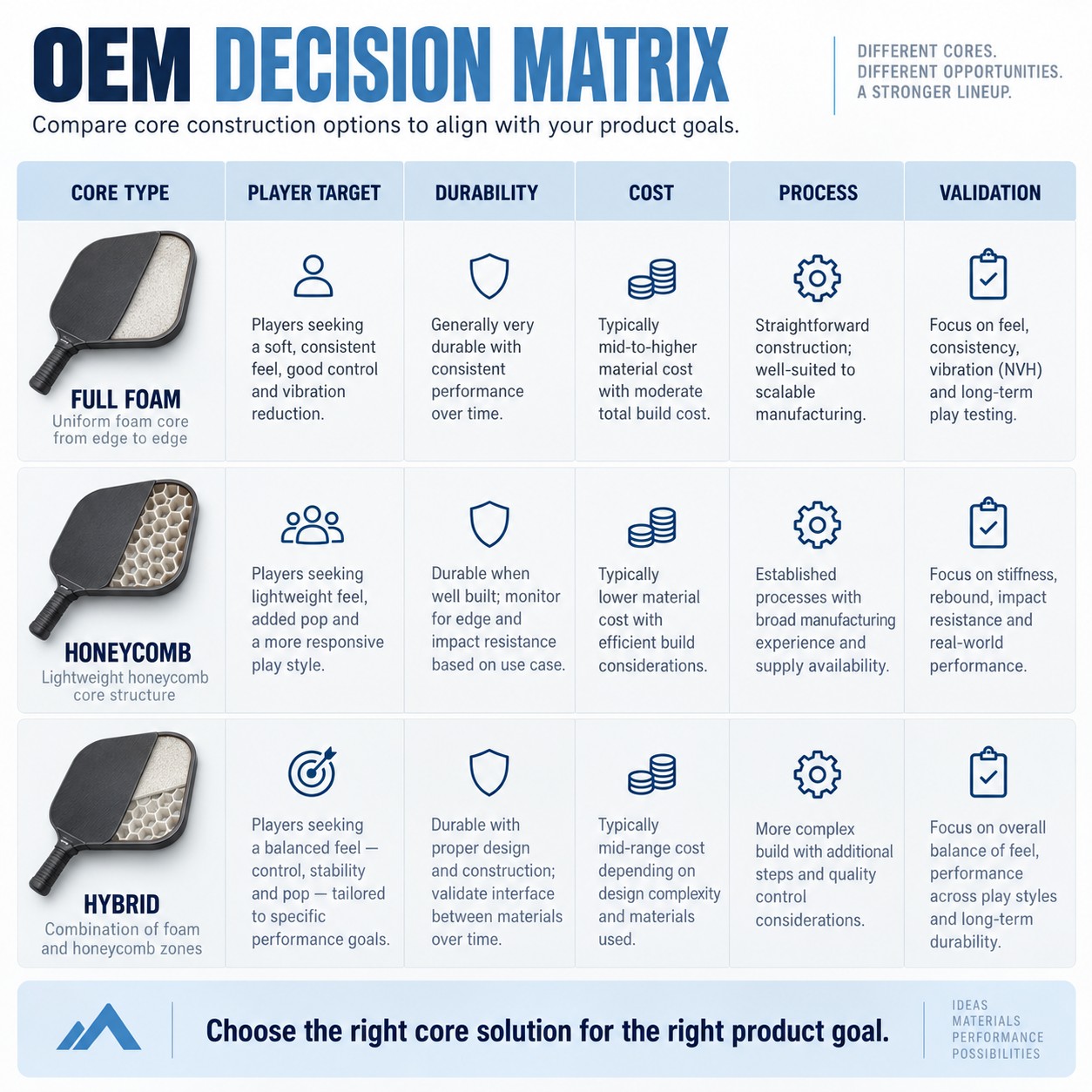
A brand does not need to convert every model to full foam. The architecture may work best as a hero product, a durability-oriented platform or a specific feel category. Other SKUs can remain honeycomb or hybrid if they better serve cost, weight or player targets.
A coherent line gives each architecture a job. That is stronger than changing technology simply because the market has started using a new generation label.
Practical Editorial / Decision Notes
A stronger case study should also compare architecture against the product job. Full foam can be a hero platform for a brand, but it does not need to replace honeycomb or hybrid SKUs that serve different mass, cost or player targets.
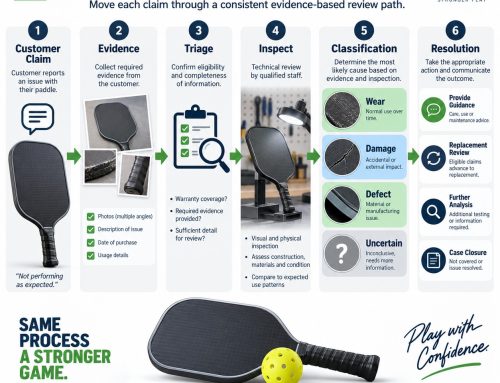
For OEM benchmarking, the safest approach is to reproduce the decision process rather than the competitor construction: define the target player, freeze geometry, choose the internal architecture, condition multiple samples, and compare the resulting performance and failure modes.
Translate the Case Into OEM Lessons
Full-Foam Case-Study Evidence Ladder
| Layer | Example | Editorial Treatment |
|---|---|---|
| Official fact | Brand states 100% foam core | Attribute to brand |
| Visible construction | Cross-section / published architecture | Describe what can be observed |
| Brand claim | Power / durability / sweet spot | Do not restate as independent fact |
| Independent evidence | Controlled tests across samples | Use only if method is documented |
Sources / Current-Update Notes
- CRBN TruFoam Collection — Use official product description for construction claims; keep performance claims attributed to CRBN. Primary source
What OEM Teams Should Benchmark From TruFoam
The useful benchmark is not the competitor name. It is the development question that the product raises: what happens when cellular honeycomb is replaced by a primary foam architecture, how does the mass distribution change, and which durability risks are removed or introduced?
An OEM team should compare architectures with the same product job. Freeze shape, thickness and target mass as far as practical, then compare multiple samples new and conditioned. Otherwise the result is a comparison of complete products rather than a clean lesson about the core.
- Benchmark the product problem, not proprietary geometry.
- Separate official brand facts from independent evidence.
- Use cross-sections and conditioned samples before making durability claims.
Frequently Asked Questions
Is CRBN TruFoam Genesis really a full-foam paddle?
CRBN currently markets the series as using a 100% foam core.
Does full foam automatically last longer than honeycomb?
No. It changes failure modes but still requires lifecycle and bonding validation.
Is ‘Gen 4’ an official pickleball standard?
No. Generation labels are industry shorthand, not a universally standardized technical classification.
Should OEM brands copy a competitor’s internal construction?
No. Use public products as benchmarks, then develop around your own target, testing and manufacturing capability.
What should be tested in a full-foam prototype?
Mass, balance, structural response, bonding, surface, conditioned behavior, pilot variation and the relevant compliance metrics.
Exploring a full-foam platform?
Mayvoci can help build an independent prototype brief around your target player, mass, architecture and validation plan.
The End about Mayvoci
1)Design:Over 100 paddle designs and photography service to assist start-up.
2)Professional:Focus on various of paddles manufacturing for 6 years
3)Quality:Strict quality management system to provide safety and satisfaction for customers
4)Amazon:Flexible comprehensive solution to make sure each Amazon seller is well cared.
5)Excellent Team:Experienced paddle experts & dynamic sales team give you 5-star service