14 mm and 16 mm are useful specifications because they describe physical thickness. They are not complete performance categories.
USA Pickleball currently places no restriction on paddle thickness, so the market can use many thicknesses. The familiar 14-versus-16 comparison exists because those two ranges are common in commercial products—not because the rules define one as power and the other as control.
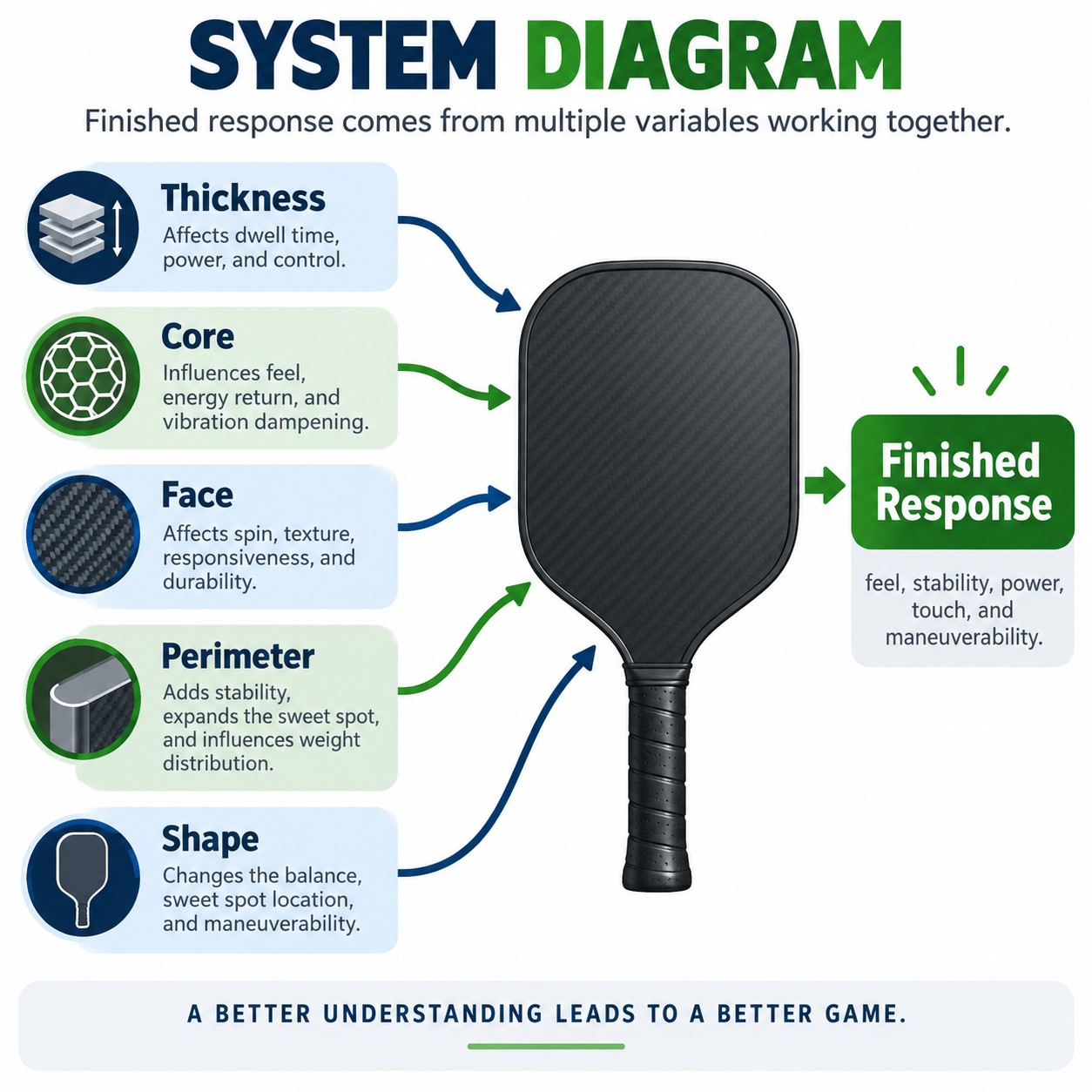
Thickness changes the structural system and must be read together with core, face, shape and mass distribution.
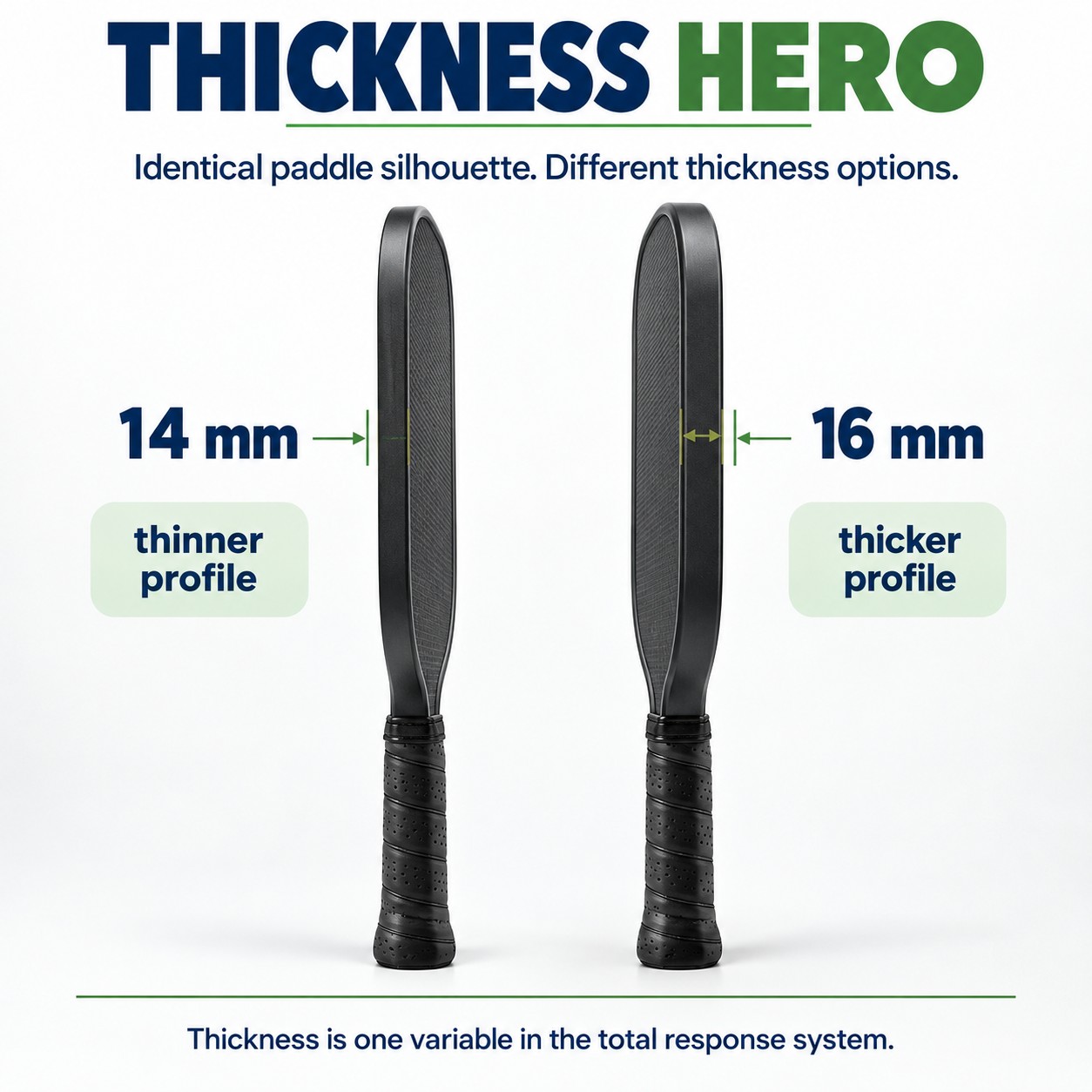
What 14 mm and 16 mm Actually Describe
What the Number Measures
The thickness figure generally refers to the paddle body/core stack around its main face area.
Brands should define the measurement location and tolerance.
Edge-guard geometry and local taper can complicate casual measurements.
Structural Effect of Thickness
A thicker sandwich structure can change bending and core support, but material properties and face construction still matter.
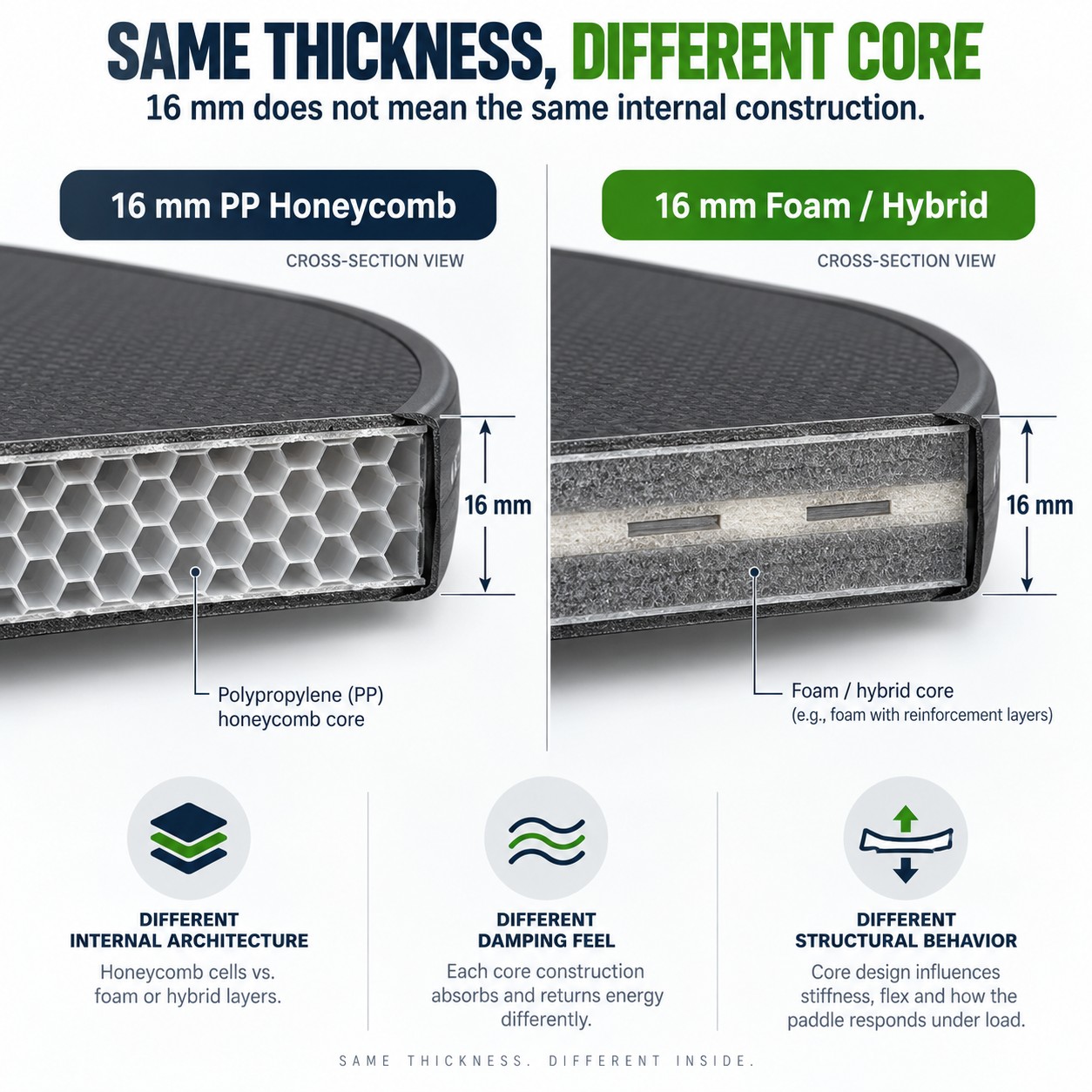
A 16 mm paddle with soft support can behave differently from another 16 mm paddle with denser or more reinforced internals.
Thickness alone cannot predict stiffness.
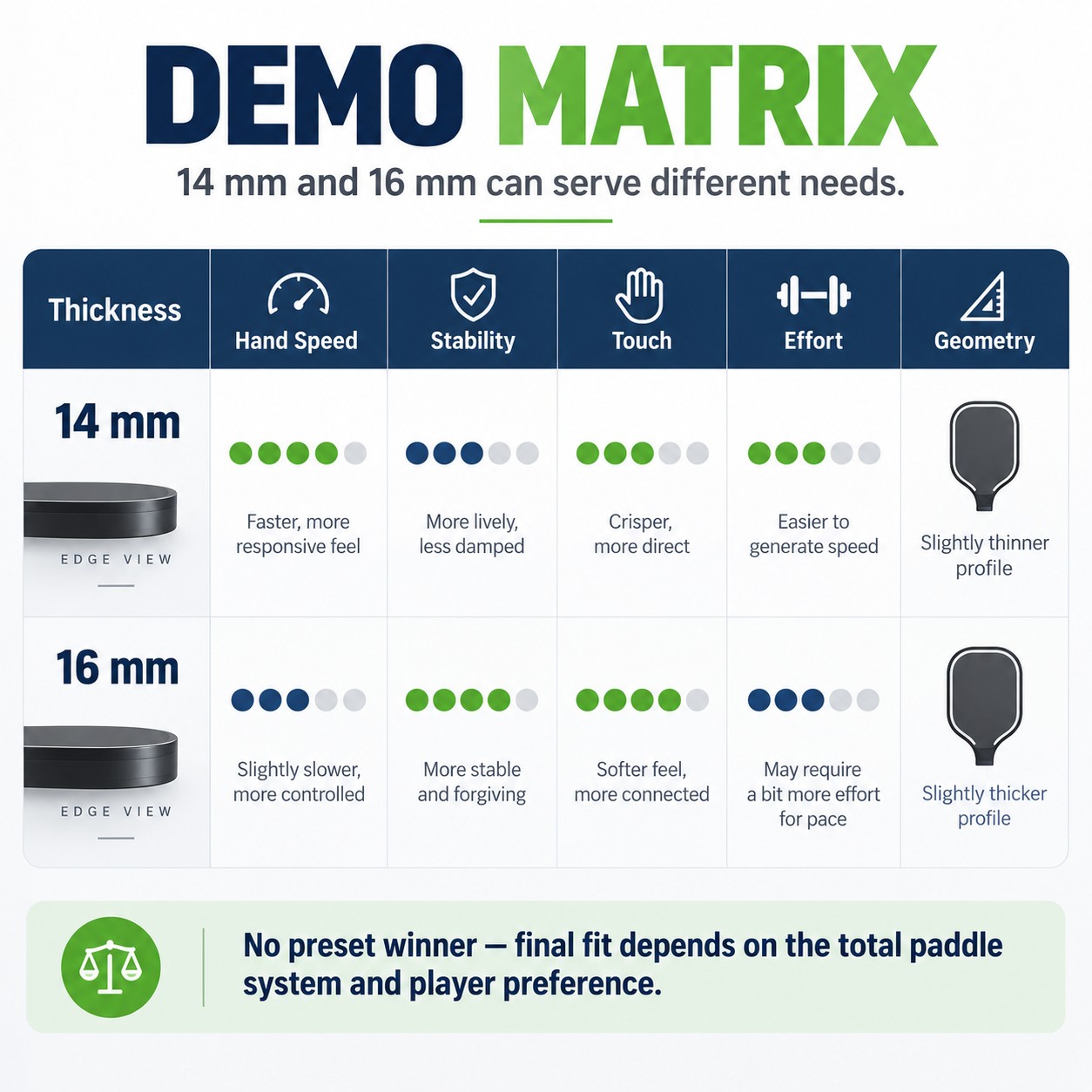
14 mm Direction
A thinner construction can feel more direct and may reduce some mass, depending on materials.
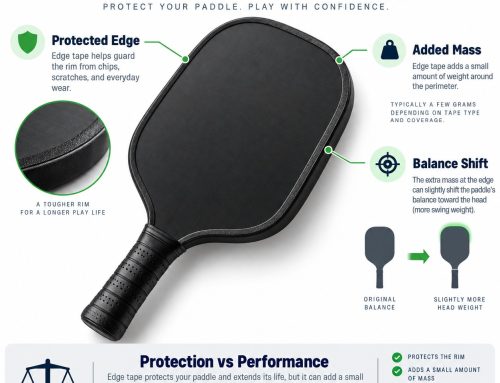
But manufacturers can add reinforcement or perimeter mass that changes the expected feel.
Do not label every 14 mm paddle as a power paddle.
16 mm Direction
A thicker core provides more structural depth and can support different damping or deformation behavior.
But a stiff face, high rebound architecture or mass distribution can still make a 16 mm paddle feel very powerful.
Do not label every 16 mm paddle as control-only.
Why Thickness Interacts With the Whole Paddle
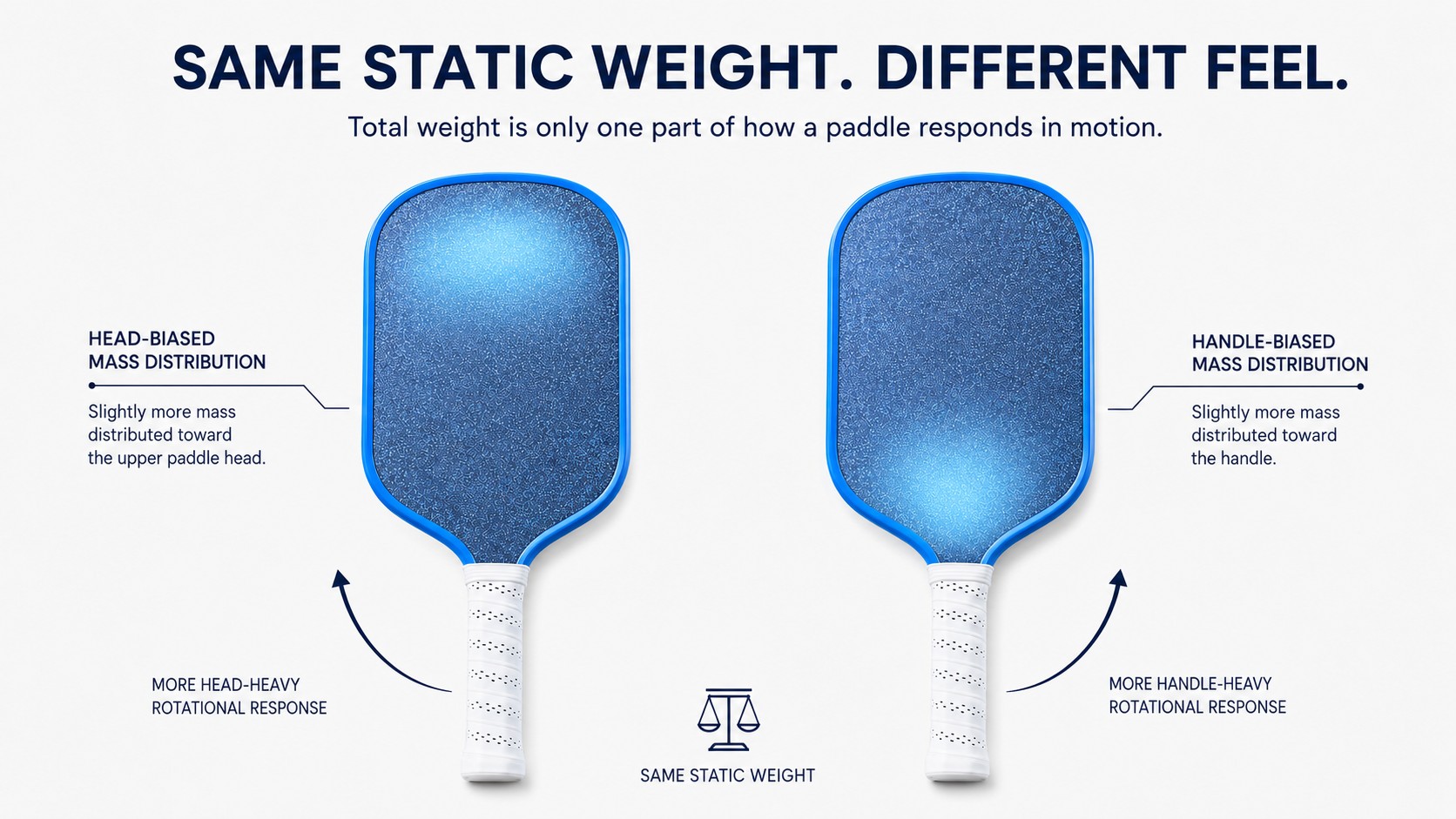
Swing Weight and Balance
Thickness can change total material volume and edge geometry, which may affect mass distribution.
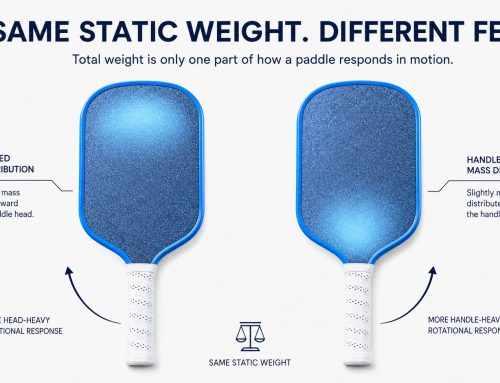
Always compare measured weight, balance and swing weight.
A thinner but head-heavy paddle may swing slower than a thicker neutral one.
Shape Interaction
An elongated 16 mm and a widebody 16 mm do not provide the same leverage or stability.
Likewise, thickness comparisons should be made within similar geometry when possible.
Otherwise shape can dominate the player’s impression.
Core Material and Architecture
PP honeycomb, full foam and hybrid structures use thickness differently.
Cell size, density, foam support and bonding determine how the available depth is used.
This is why thickness and core should be specified together.
How to Demo 14 vs 16
Use similar shape and weight if possible. Test serves, drives, drops, resets, blocks and hand-speed exchanges.
Pay attention to effort, trajectory and consistency over a session.
Choose the thickness that works with the whole paddle and your game.
Player Fit and OEM Validation
Thickness and Compliance Testing
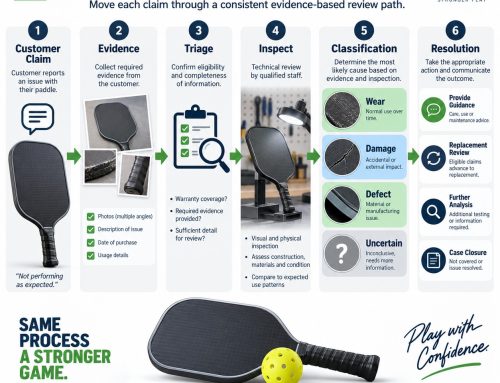
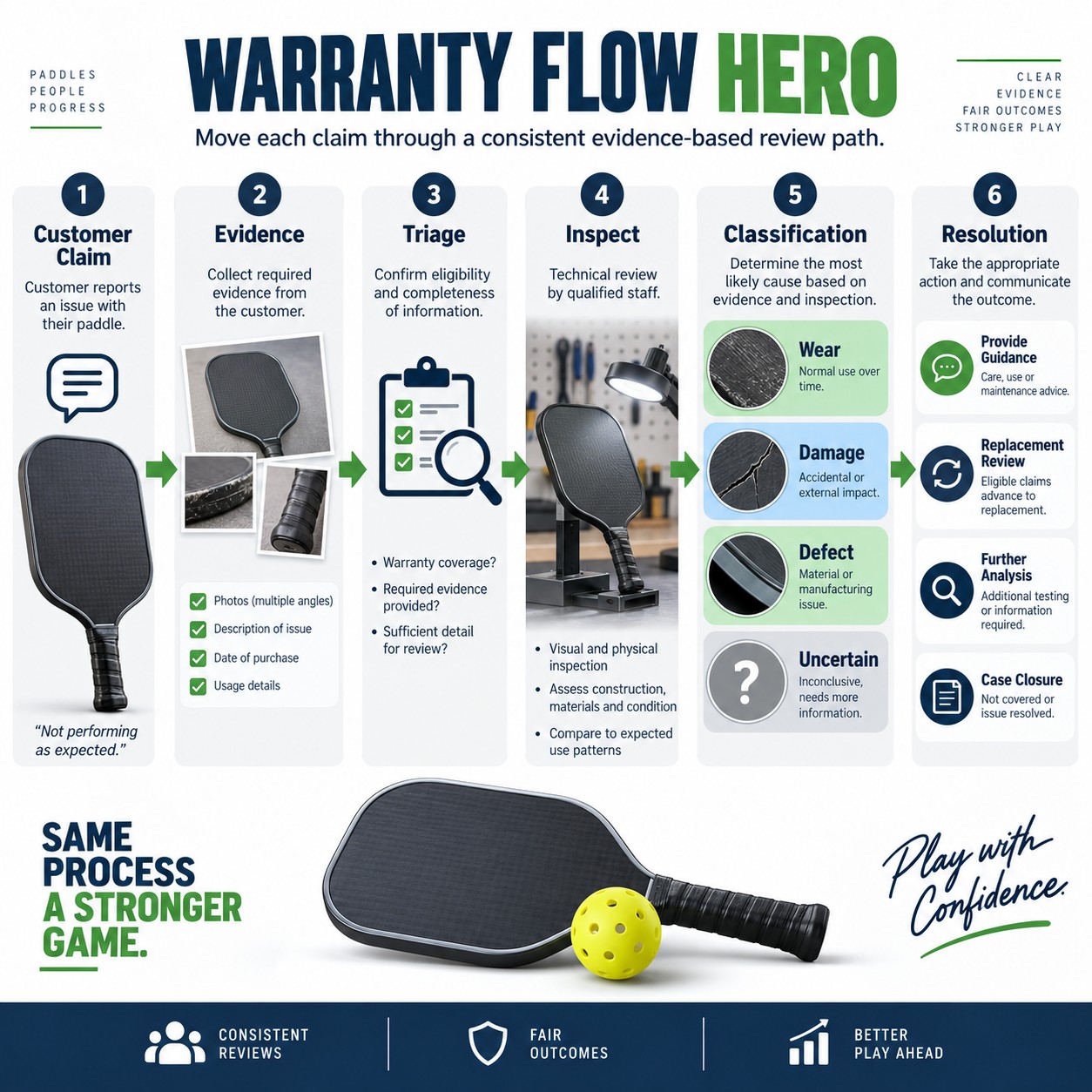
Because thickness changes structure, a new thickness should not be treated as a cosmetic variant. If the same model moves from 16 mm to 14 mm, repeat the relevant performance and certification validation.
The thinner version may need different face, perimeter or weight tuning to meet the same product job.
OEM Tolerance Control
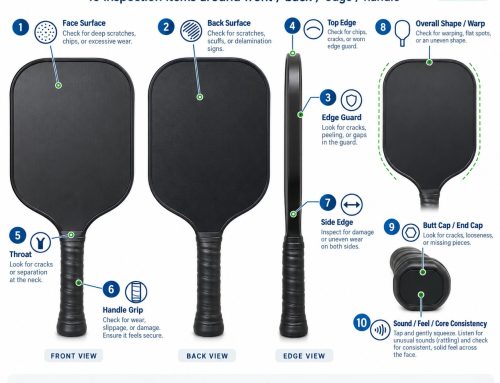
Specify nominal thickness and an acceptable tolerance, then measure production at consistent locations. Local edge or surface features can create misleading readings.
Thickness drift can indicate core-sheet variation, compression during forming or assembly differences.
Product-Line Positioning
A brand can use 14 and 16 mm as clear choices only if the two paddles deliver meaningfully different player experiences. If internal tuning makes them nearly identical, the extra SKU may not help the customer.
Position by player job and demonstrate the difference in testing.
Practical Editorial / Decision Notes
A thickness variant should be treated as a physical product variant rather than a cosmetic option. It may require different face, perimeter or mass tuning to preserve the intended product job.
For production QC, measure at defined locations and distinguish nominal core thickness from total finished thickness where edge or surface features can distort readings.
Control Thickness in Production
14 mm vs 16 mm Validation Matrix
| Question | 14 mm | 16 mm | Do Not Assume |
|---|---|---|---|
| Core thickness | Thinner architecture | Thicker architecture | Power/control outcome |
| Mass distribution | Can vary | Can vary | Same static weight |
| Face/core interaction | System-dependent | System-dependent | Universal feel |
| Certification | Physical variant | Physical variant | Cosmetic-only change |
Sources / Current-Update Notes
- USA Pickleball Equipment Standards — Current rules do not impose a general paddle thickness limit; thickness is a design variable. Primary source
Treat Thickness as a Construction Variant
Moving from 16 mm to 14 mm changes physical architecture, even when the artwork and mold family look similar. It can affect core depth, edge construction, mass and the relationship between face and internal support.
For brands, a thickness variant should be revalidated as a product rather than marketed as a simple cosmetic option. Production QC also needs a defined measurement location and tolerance instead of casual edge measurements.
- Freeze thickness together with core and face specifications.
- Compare similar geometry when evaluating feel.
- Revalidate performance/compliance when thickness changes.
Frequently Asked Questions
Is 14 mm always more powerful?
No.
Is 16 mm always more control-oriented?
No.
Does USA Pickleball limit paddle thickness?
The current rules state there is no restriction on paddle thickness.
Can thickness affect swing weight?
Indirectly, because it can change material volume and construction; measure the actual paddle.
What should OEM brands specify?
Thickness tolerance together with core, face, geometry and weight targets.
Developing 14 mm and 16 mm variants?
Mayvoci can help define what should stay constant and what needs a separate prototype/pilot validation.
The End about Mayvoci
1)Design:Over 100 paddle designs and photography service to assist start-up.
2)Professional:Focus on various of paddles manufacturing for 6 years
3)Quality:Strict quality management system to provide safety and satisfaction for customers
4)Amazon:Flexible comprehensive solution to make sure each Amazon seller is well cared.
5)Excellent Team:Experienced paddle experts & dynamic sales team give you 5-star service