On June 25, 2026, Paddletek announced that it had acquired PIKKL and simultaneously expanded its athlete roster with JW Johnson, Jorja Johnson, Julie Johnson and Hurricane Tyra Black.
The transaction is useful because it combines brand portfolio, product capability and athlete visibility. The strongest lessons are about why a larger pickleball company might buy capability instead of building it from zero.
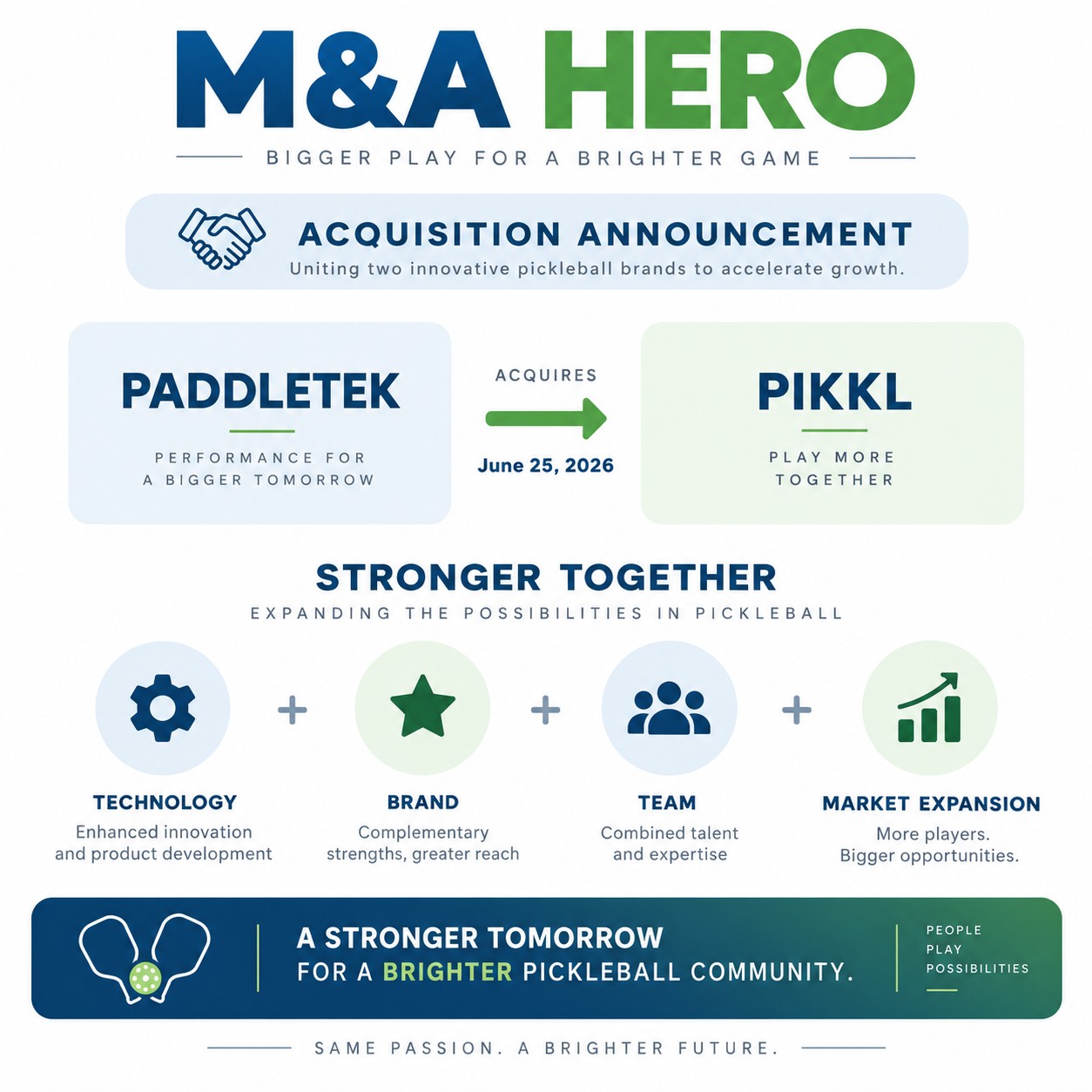
What Paddletek Announced
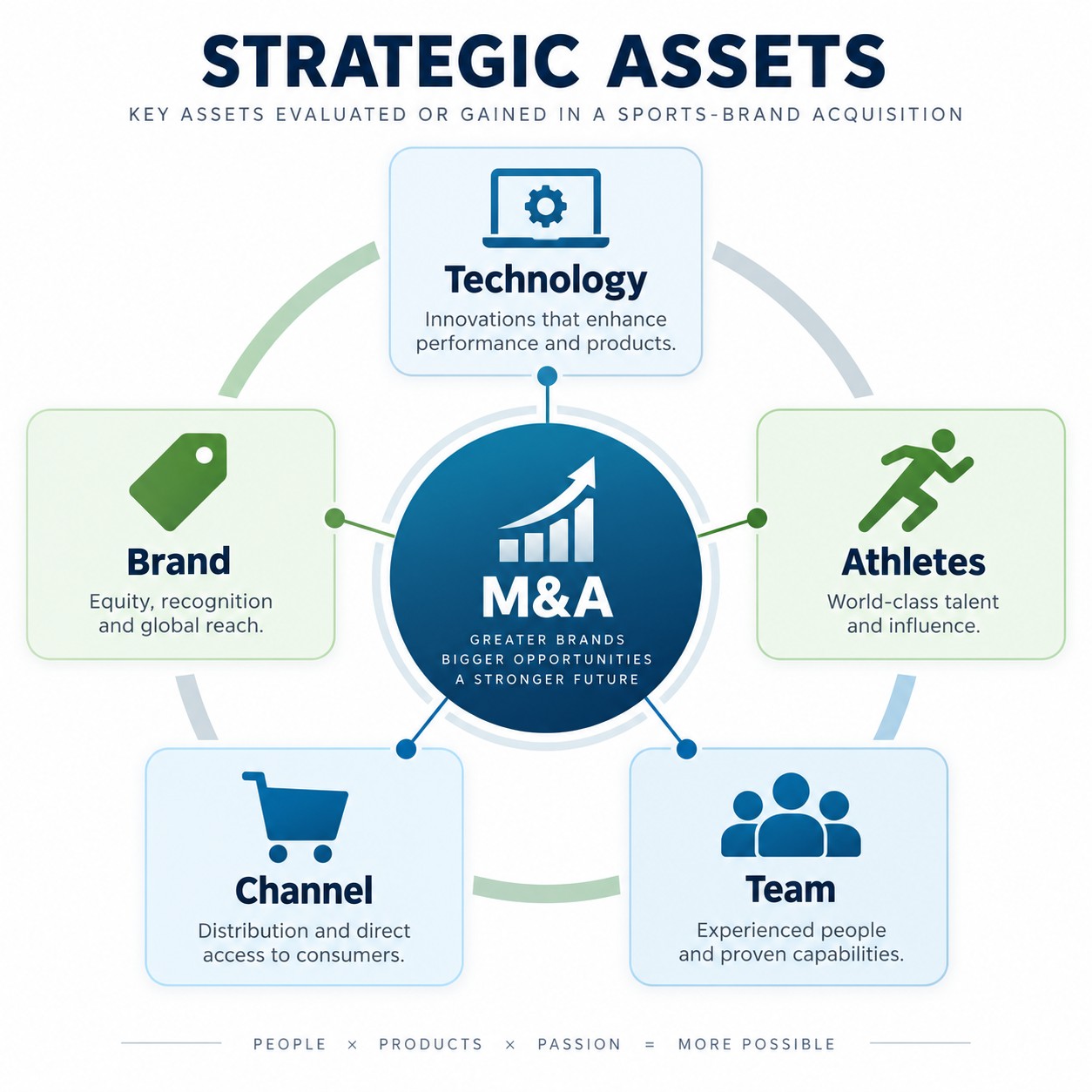
1. Technology Can Be an Acquisition Asset
Paddletek’s announcement highlighted PIKKL’s performance-innovation approach. Smaller brands can learn from this: a recognizable technical capability can be strategically valuable beyond individual SKUs.
2. Portfolio Architecture Matters
An acquisition can add a customer segment or technology position, but it can also create overlap. Product roles need to remain clear after the deal.
3. Athletes and Products Reinforce Each Other
The announcement linked athlete signings with product fit. Athletes can support visibility and feedback, but they do not replace underlying customer demand.
Technology, Brand and Athlete Assets
4. Integration Is the Real Work
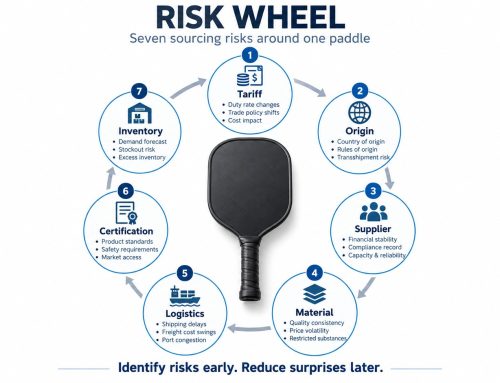
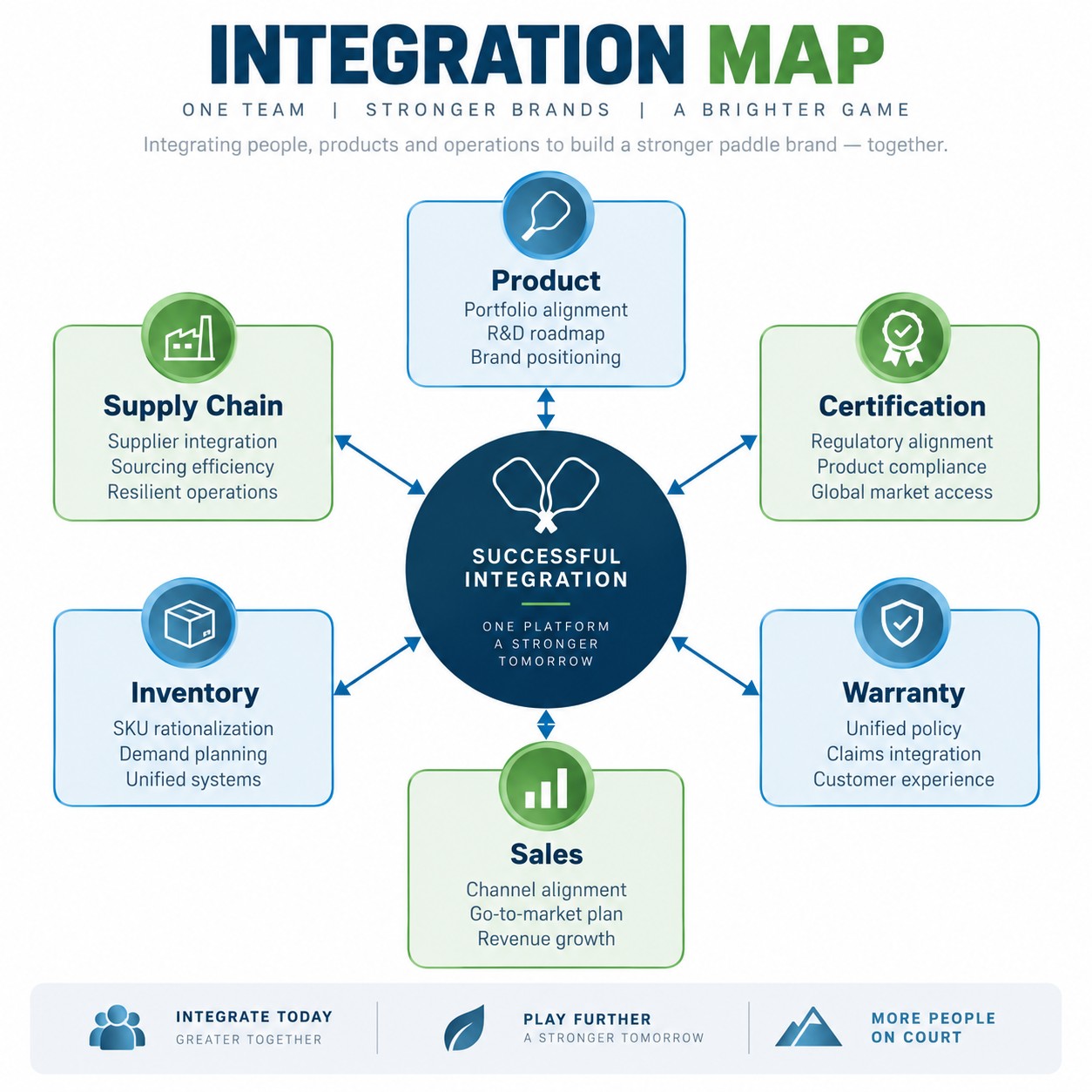
Product roadmap, supply chain, certification, inventory, sales, warranty and brand identity need to align after acquisition. A press release creates attention; integration creates value.
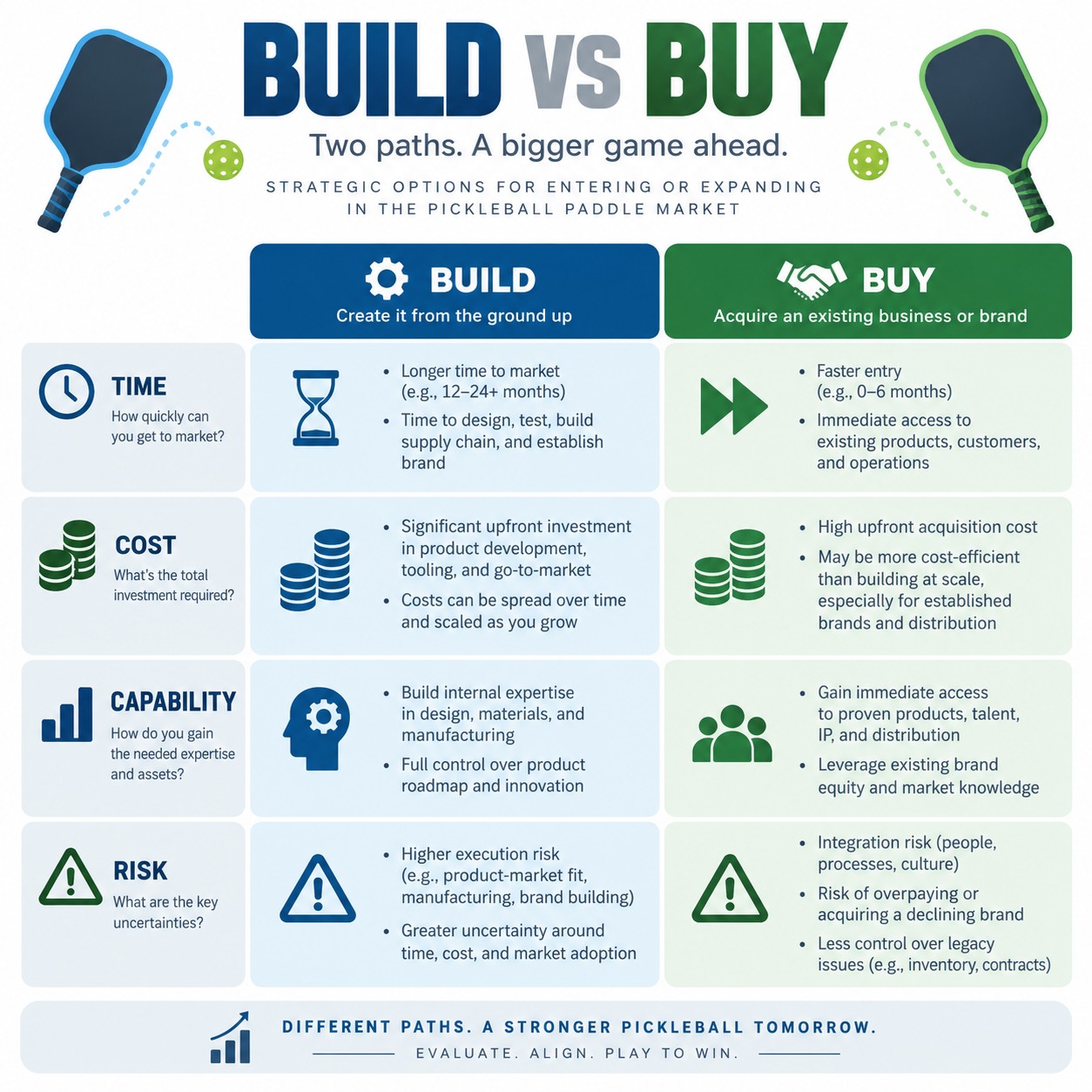
5. Build Versus Buy
Companies should compare time, cost and risk of internal development with partnership or acquisition. Buying capability can accelerate entry but creates valuation and integration risk.
What Smaller Brands Should Learn
Specialization can be an advantage. A smaller company can become strategically interesting by owning a clear segment, technology or community rather than copying a multi-brand portfolio too early.
M&A Due-Diligence Lens
Before buying a paddle brand or technology company, evaluate IP ownership, product pipeline, approved/certified models, supplier contracts, inventory, warranty liabilities, athlete agreements and customer data.
An attractive brand story can hide expensive operational obligations.
Integration and Build-vs-Buy
Manufacturing Integration
If acquired brands use different factories or specifications, the parent company must decide what to standardize and what to keep distinct. Over-standardization can erase product differentiation; under-standardization can preserve unnecessary complexity.
Integration should follow product strategy.
How to Update This Article
Future versions should track what Paddletek actually does with PIKKL after the June 25 announcement. Separate later outcomes from the original deal rationale.
This keeps the article historically accurate instead of rewriting the announcement with hindsight.
Practical Editorial / Decision Notes
M&A due diligence should examine IP ownership, approved products, supplier agreements, athlete contracts, inventory, warranty liabilities and customer data—not just brand recognition.
After acquisition, the parent must decide which systems to standardize and which product differences are strategically worth preserving.
Lessons for Smaller Brands and Suppliers
M&A Due-Diligence Matrix
| Asset | Question |
|---|---|
| IP / technology | Who owns it? |
| Approved products | What remains valid? |
| Suppliers | What contracts / dependencies transfer? |
| Inventory / warranty | What liabilities exist? |
| Athletes / community | What rights / relationships transfer? |
Sources / Current-Update Notes
- Paddletek / PIKKL Announcement — Official announcement dated June 25, 2026. Primary source
The Real M&A Story Starts After the Announcement
The acquisition press release establishes the transaction and strategic intent; it does not prove later integration success. Future updates should track what changes in product portfolio, suppliers, athletes, channels and brand architecture after June 25, 2026.
For smaller brands, the more practical lesson is specialization. A focused technology, community or product job can create strategic value without trying to imitate a multi-brand group too early.
- Separate announcement facts from later outcomes.
- Evaluate IP, suppliers, inventory and warranty in due diligence.
- Protect differentiated brand roles after integration.
Frequently Asked Questions
When was the acquisition announced?
June 25, 2026.
Did Paddletek mention PIKKL’s innovation?
Yes.
Were athlete signings announced at the same time?
Yes.
Does acquisition guarantee success?
No.
What can smaller brands learn?
Build differentiated capability and clear positioning.
Thinking about portfolio expansion or OEM differentiation?
Mayvoci can help define which product capabilities should be shared across a portfolio and which should remain distinct.
The End about Mayvoci
1)Design:Over 100 paddle designs and photography service to assist start-up.
2)Professional:Focus on various of paddles manufacturing for 6 years
3)Quality:Strict quality management system to provide safety and satisfaction for customers
4)Amazon:Flexible comprehensive solution to make sure each Amazon seller is well cared.
5)Excellent Team:Experienced paddle experts & dynamic sales team give you 5-star service