Warranty policy is a commercial promise, but warranty decisions are technical.
A customer may report lost pop, surface wear, a loose edge guard, a cracked handle or a soft spot. The brand must decide whether the condition is normal wear, accidental damage, a manufacturing defect or an unresolved structural issue.
The best system does not begin by arguing with the customer. It begins by collecting consistent evidence.
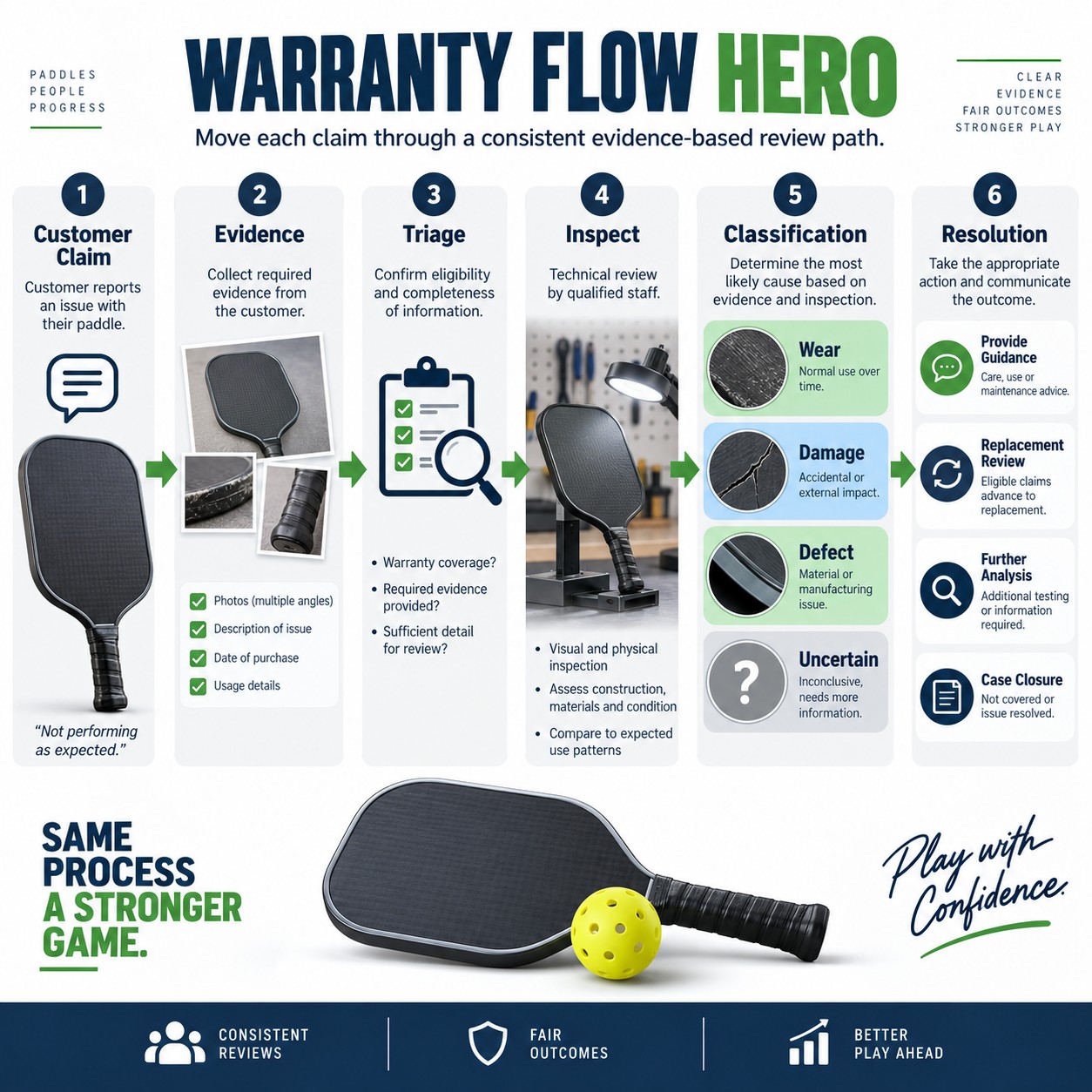
Separate Normal Wear From Defect
Define Coverage Before Claims Arrive
Write the warranty around manufacturing defects and workmanship in clear language.
State exclusions such as normal wear, abuse, unauthorized modification and cosmetic change where legally appropriate.
Have counsel review the policy for the markets where you sell.
Separate Wear From Defect
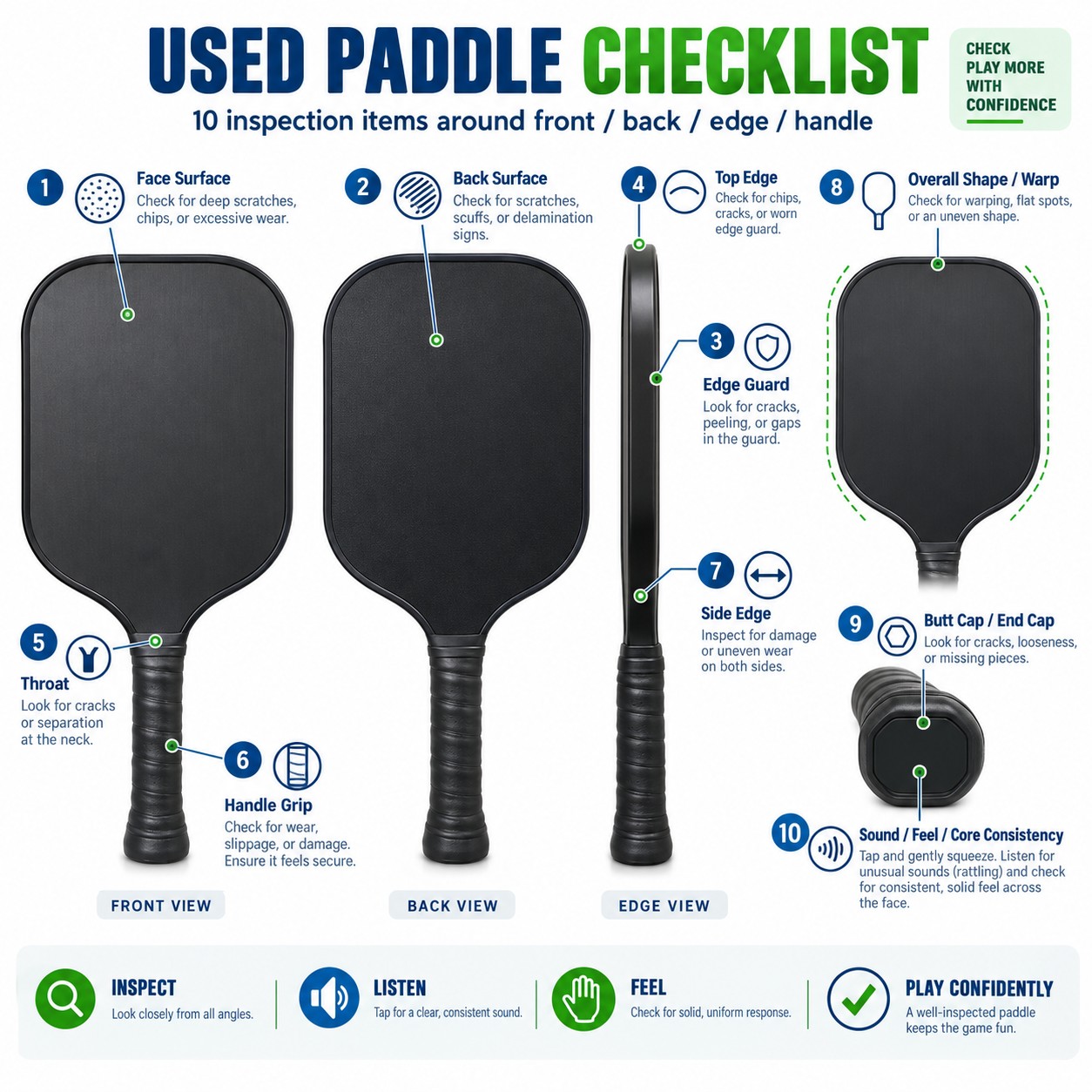
Grip polishing, cosmetic scuffs and gradual texture change can be normal wear.
Premature bond failure, loose components, abnormal cracking or out-of-spec construction may indicate manufacturing issues.
Do not decide only from the customer’s description.
Collect Standard Evidence
Request model, serial/lot information if available, purchase date, photos, short video, description of use and the observed change.
Keep the process simple enough that customers will complete it.
Use the same intake form for every claim.
Triage the Claim
Immediate safety/structural issues should move quickly to replacement or inspection according to policy.
Cosmetic-only claims can be handled separately.
Performance-change claims may need a returned sample or comparison with retained units.
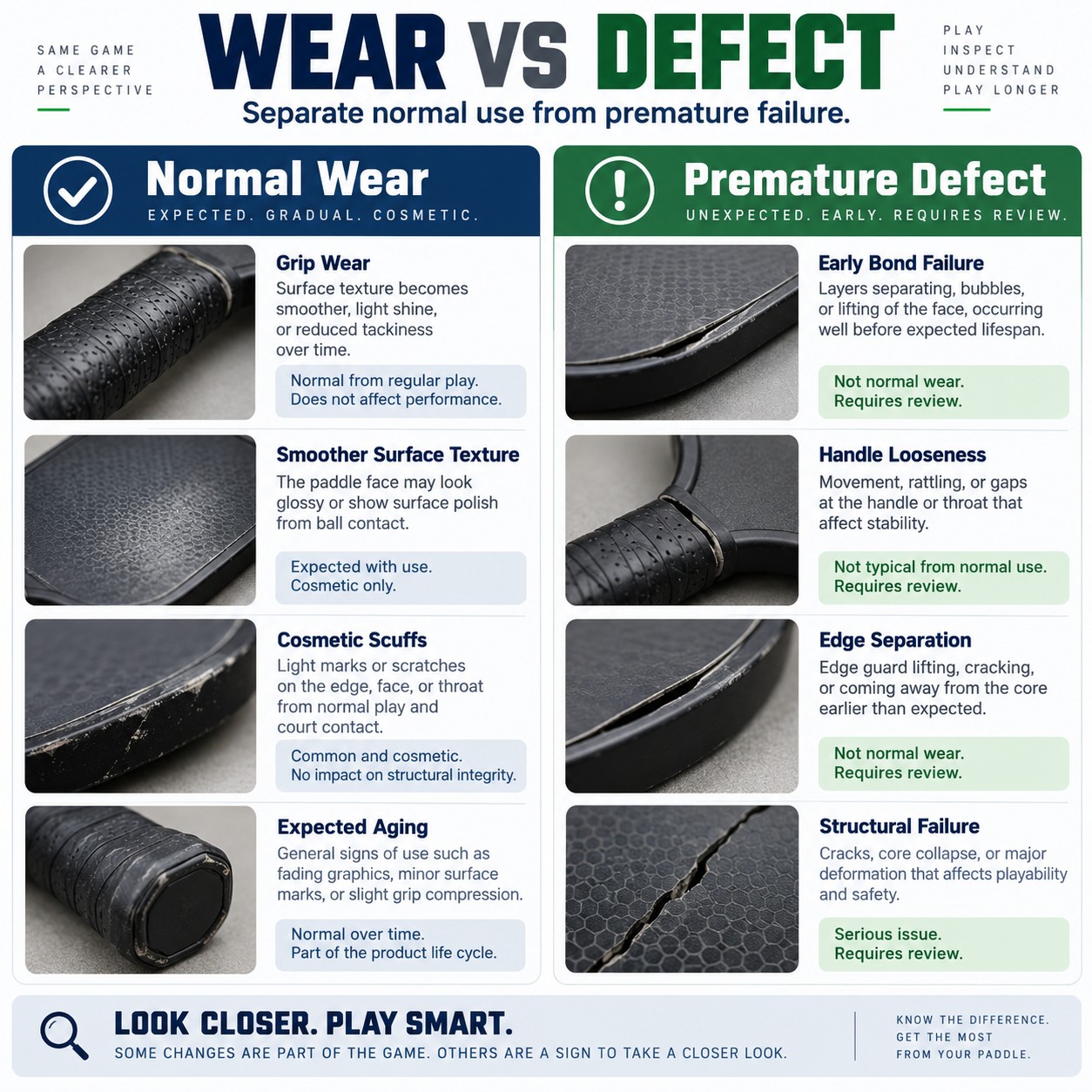
Build a Consistent Evidence Standard
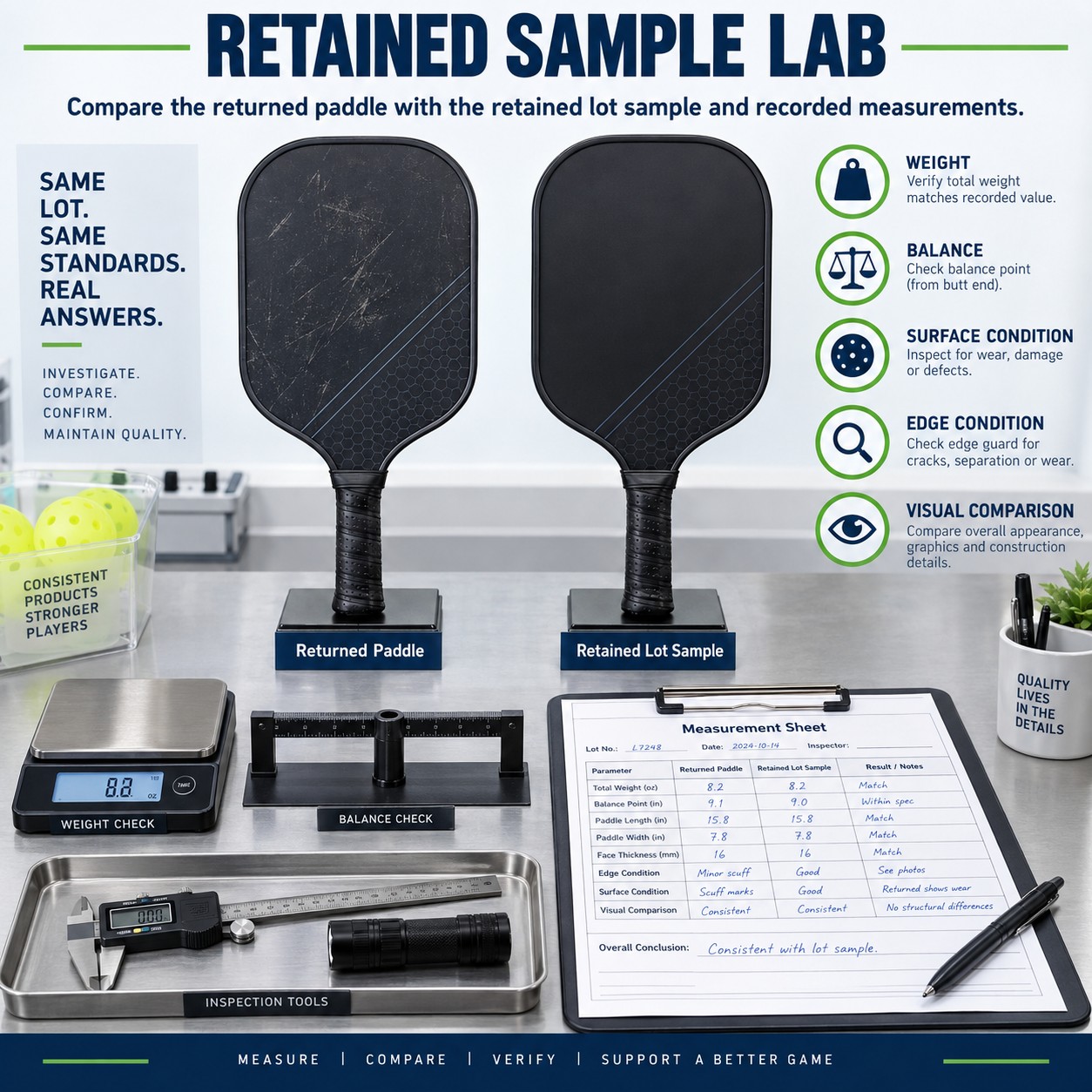
Use Retained Samples
A retained production sample provides a baseline for weight, dimensions, structure and surface.
If multiple claims come from one lot, retained samples become especially valuable.
Without them, warranty investigation often becomes subjective.
Engineering Inspection
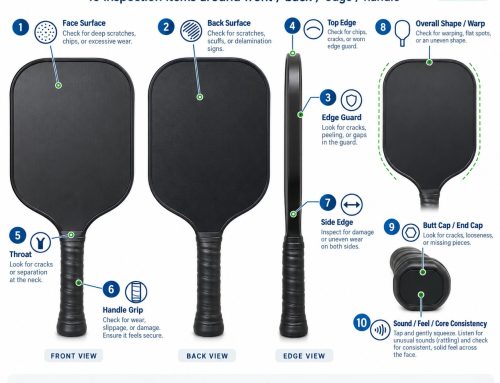
Check exterior condition first, then relevant measurements.
For structural claims, use non-destructive or destructive inspection in the engineering process as appropriate.
Document whether the failure is adhesive, core, face, handle, edge or another system.
Root Cause and CAPA
If a manufacturing defect is confirmed, contain affected stock, identify root cause, correct the process and verify recurrence prevention.
Warranty data should feed back into production.
A replacement without root-cause work only solves one customer.
Warranty Metrics
Track claims per production lot, failure mode, time-to-failure, product model and resolution.
A rising rate can reveal a material or process shift.
Do not publish percentages unless the denominator and definition are clear.
Use a Resolution Matrix
Customer Communication
Explain the decision in plain language and keep technical claims proportional to the evidence.
If the cause is uncertain, say so and continue investigation.
A transparent process can preserve trust even when a claim is not covered.
Create a Warranty Classification Code
Use a short list of standardized failure codes such as Grip Wear, Surface Wear, Edge Damage, Handle Failure, Bond Separation, Core Crush, Cosmetic, Shipping Damage and Unknown.
Consistent codes make monthly trend analysis possible and prevent customer-service wording from becoming the database.
Resolution Matrix
Define which outcomes lead to education, replacement part, full replacement, inspection request or denial under the published policy. Allow escalation for safety issues and uncertain structural failures.
The matrix should guide staff while still allowing judgment when evidence is incomplete.
Close the Loop With Product Development
Quarterly warranty reviews should be attended by engineering, quality and product teams, not only customer service. Repeated complaints may justify a process audit, material change, design revision or clearer care instructions.
Warranty is one of the richest sources of real-world product data when the company classifies it consistently.
Practical Editorial / Decision Notes
Warranty data becomes engineering data only when claims are classified consistently. Use a small list of failure codes rather than free-text descriptions alone.
Quarterly reviews should include engineering, quality and product teams so repeated claims can lead to process audits, clearer care guidance or design changes.
Feed Warranty Data Back to Engineering
Warranty Classification Matrix
| Claim Type | Typical Evidence | Likely Route |
|---|---|---|
| Normal grip wear | Photos + usage | Education / replacement grip |
| Surface wear | Photos + condition | Policy-based evaluation |
| Bond / core issue | Photos + return / inspection | Engineering escalation |
| Handle failure | Structural evidence | Replace / investigate |
| Shipping damage | Packaging + delivery evidence | Logistics claim |
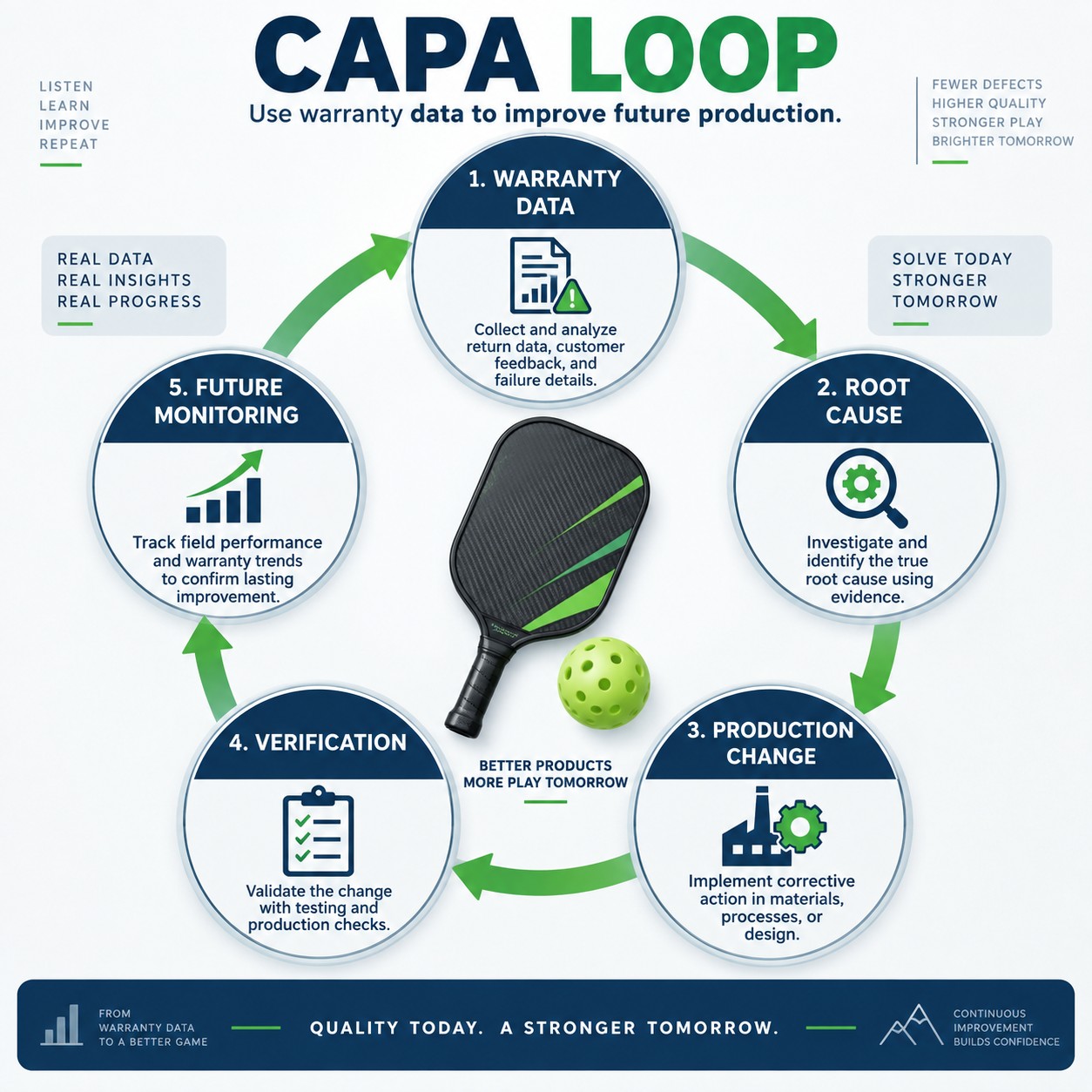
Make Warranty Data Part of Product Development
Warranty becomes valuable when every claim is classified consistently. Free-text customer descriptions are useful context, but the database should also identify model, lot, failure code, age, usage context and final disposition.
That lets engineering see patterns: one isolated loose edge, repeated handle failures from one lot, or surface complaints concentrated in a specific finish. Quarterly warranty review can then drive actual design or process action.
- Create a small, stable failure-code system.
- Keep retained production samples for comparison.
- Connect recurring claim patterns to CAPA and product revisions.
Frequently Asked Questions
Is surface wear always a warranty defect?
No. Normal wear and manufacturing defects must be separated.
Does lost pop prove core failure?
No.
What evidence should a brand collect?
Purchase/model information, photos/video, use history, lot/serial data and returned sample when needed.
Why keep retained production samples?
They provide a reference for lot-level comparison and root-cause analysis.
Should warranty policy be reviewed legally?
Yes, especially for consumer-protection requirements in target markets.
Building an OEM warranty process?
Mayvoci can help align product traceability, evidence requirements and factory investigation with the brand’s customer-service workflow.
The End about Mayvoci
1)Design:Over 100 paddle designs and photography service to assist start-up.
2)Professional:Focus on various of paddles manufacturing for 6 years
3)Quality:Strict quality management system to provide safety and satisfaction for customers
4)Amazon:Flexible comprehensive solution to make sure each Amazon seller is well cared.
5)Excellent Team:Experienced paddle experts & dynamic sales team give you 5-star service