Paddle shape changes geometry, but geometry does not act alone.
A longer paddle can increase reach while also changing mass distribution. A widebody can provide more lateral face area while the actual sweet-spot behavior still depends on internal support and twist stability. A hybrid shape can sit between categories but vary widely from brand to brand.
The most useful shape guide compares physical constraints first and player experience second.
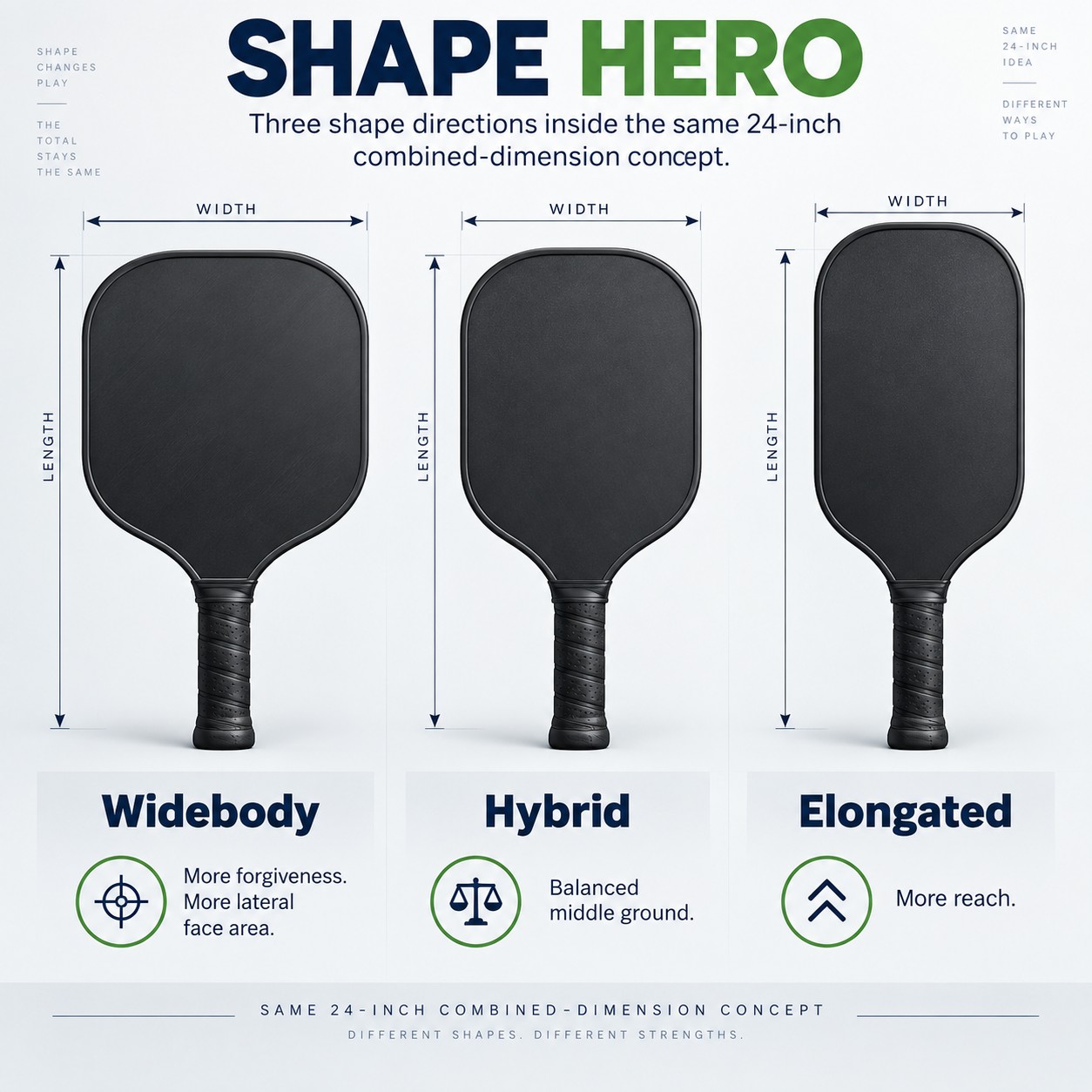
Start With the Legal Geometry Envelope
Start With the USA Pickleball Size Envelope
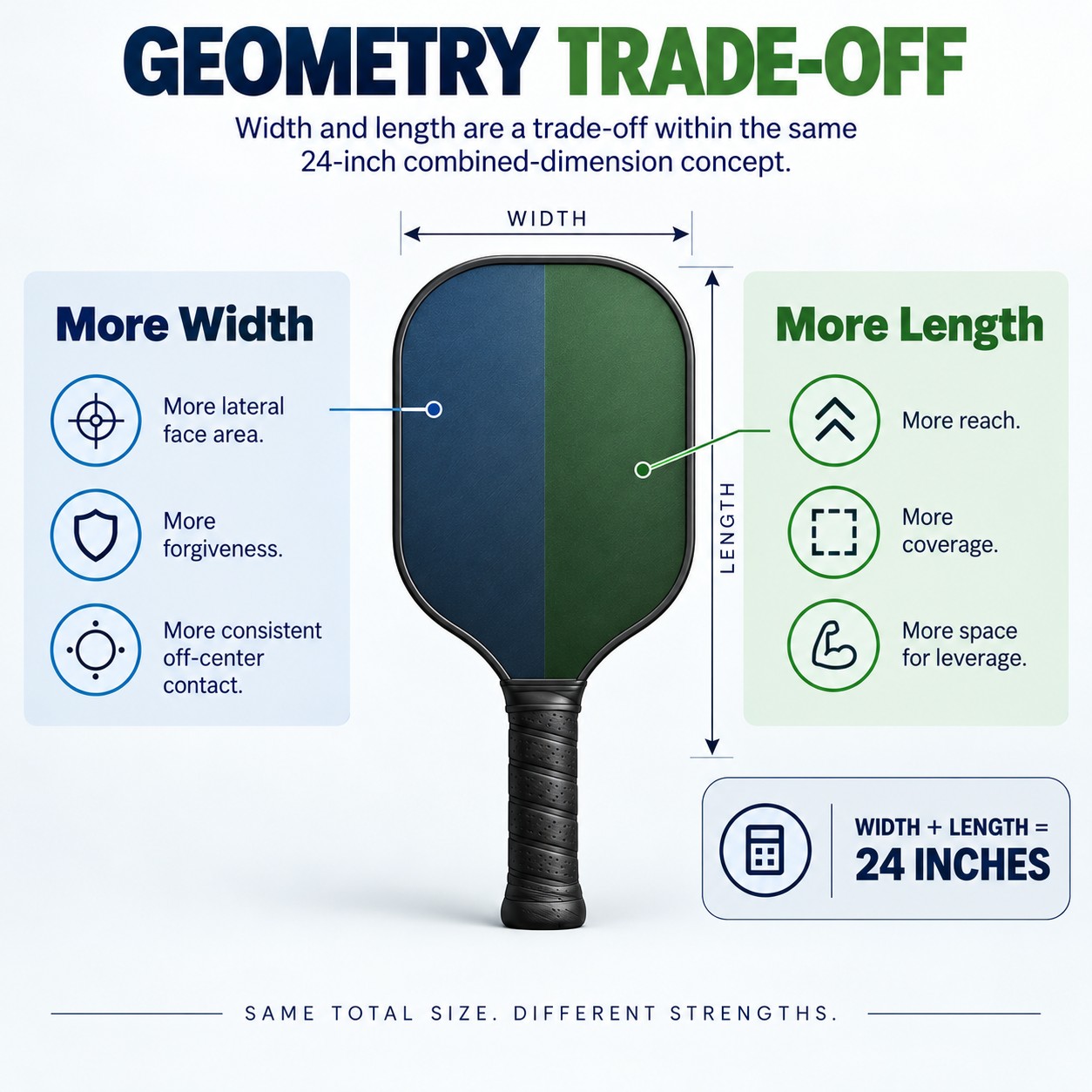
USA Pickleball’s current equipment standards limit combined paddle length plus width to 24 inches and paddle length to 17 inches.
That means designers trade length and width inside a fixed envelope.
There is no single official “widebody,” “hybrid” or “elongated” dimension.
Widebody
Widebody paddles allocate more of the envelope to width.
That can increase lateral face area and may support more forgiving off-center contact depending on twist stability and internal construction.
The trade-off can be reduced reach or a different swing profile.
Elongated
Elongated paddles allocate more of the envelope to length.
They can provide reach and additional leverage for some players, especially on serves, drives and two-handed strokes.
But longer geometry can raise swing demand if mass is carried farther from the hand.
Hybrid
Hybrid shapes sit between traditional widebody and elongated proportions.
The label is broad. One hybrid may be nearly elongated; another may be only slightly narrower than a widebody.
Compare actual dimensions rather than the category name.
Compare Widebody, Hybrid and Elongated Shapes
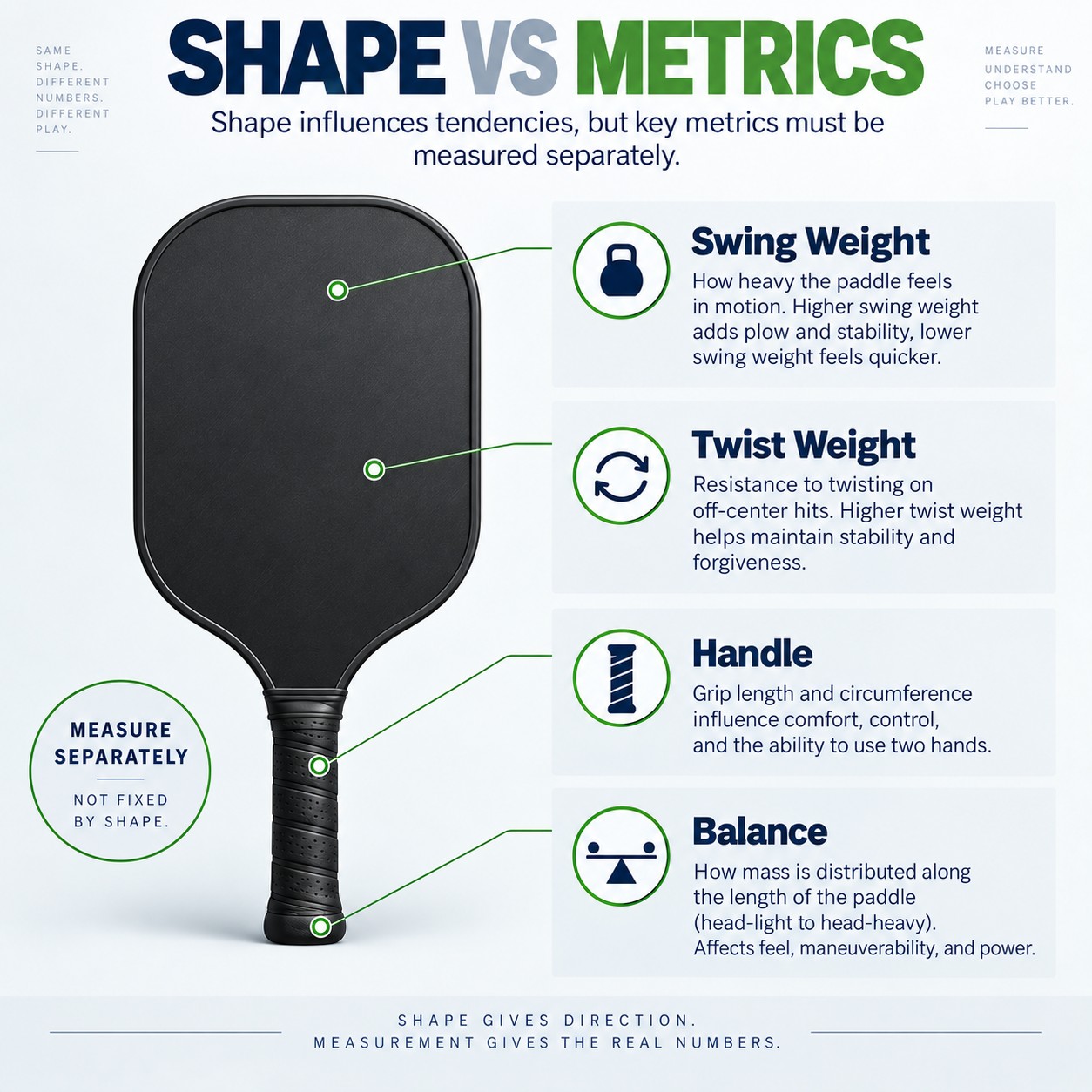
Shape and Swing Weight
Length can move mass farther from the hand, but actual swing weight depends on total mass distribution.
A light elongated paddle can swing faster than a heavier widebody.
Use measured swing weight when available.
Shape and Twist Stability
Face width and perimeter mass can influence resistance to twisting on off-center hits.
Twist weight is a better engineering measurement than assuming “wide = stable.”
Foam, edge structure and weighting can alter the result.
Handle Length and Shape Are Linked
Within the same overall envelope, a longer handle can reduce usable face length or shift proportions.
Two-handed players should compare usable grip space with reach and face geometry together.
Do not choose elongated purely for handle length.
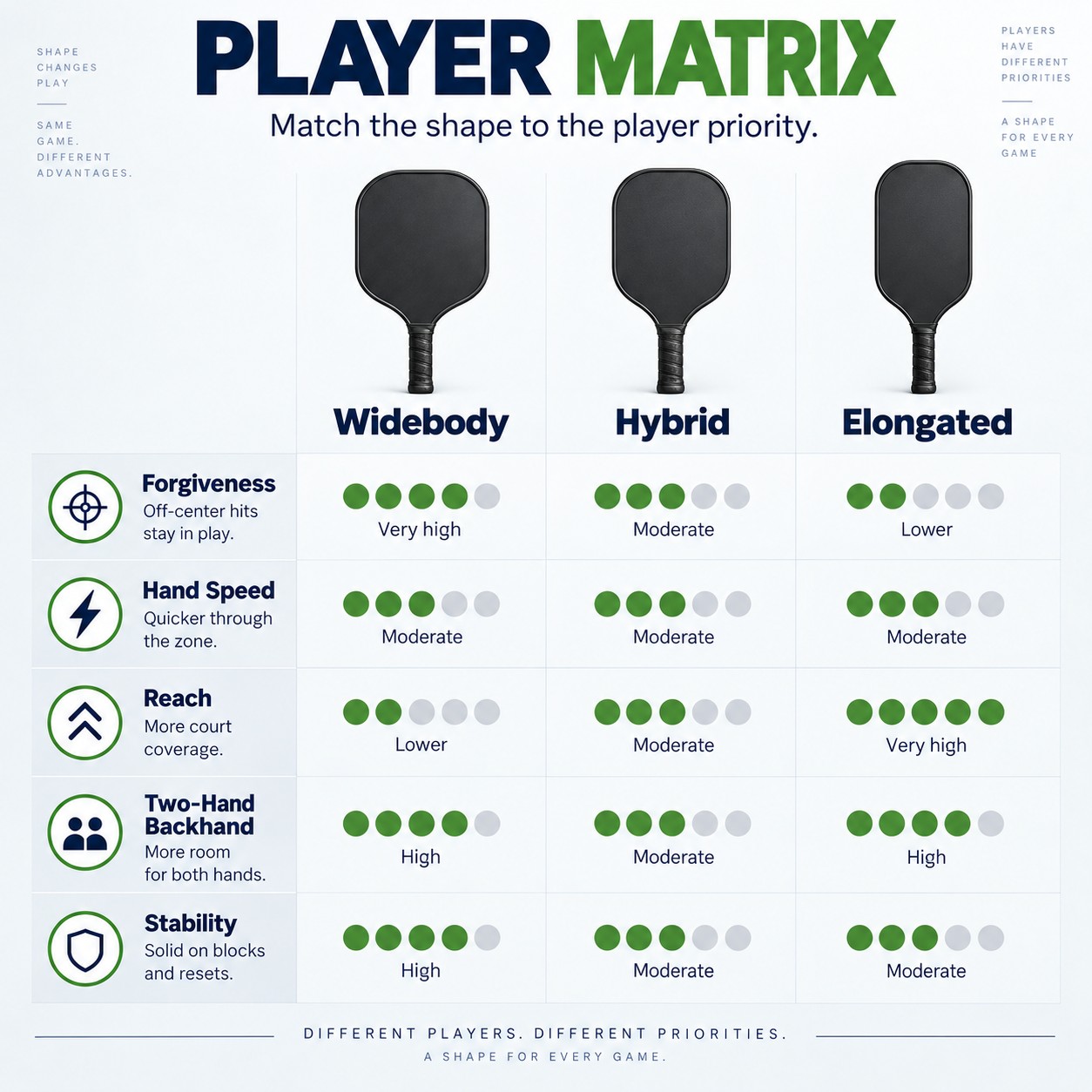
Player Selection Matrix
Choose widebody when forgiveness and compact handling are priorities. Explore elongated when reach and leverage matter. Consider hybrid when you want a middle geometry.
Then confirm with swing weight, balance, handle fit and an on-court demo.
Shape should narrow the options, not make the entire decision.
Separate Shape From Mass Distribution
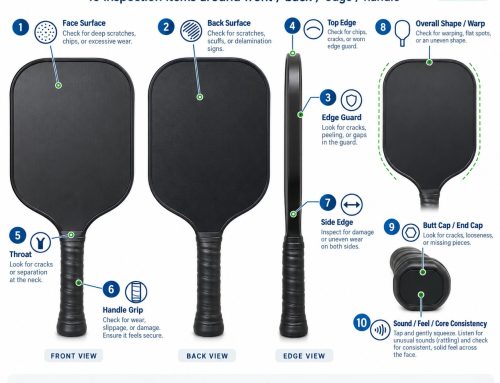
Sweet Spot Is Not a Printed Shape on the Face
Players often describe widebody paddles as having a larger sweet spot. The phrase is useful, but the effective response area depends on twist stability, face stiffness, core support and mass distribution.
During a shape comparison, test off-center impacts at several locations rather than assuming face width alone determines forgiveness.
Aerodynamics and Hand Speed
Shape can influence air resistance and how easily the paddle changes direction, especially when edge profile and face area also differ. However, swing weight and player technique can dominate the sensation.
If hand speed is a priority, compare actual swing behavior instead of selecting the narrowest outline automatically.
OEM Geometry Development
When creating a new mold, freeze the total length/width envelope first, then allocate handle length, face length, face width and corner radius. After that, tune mass distribution and internal support.
Changing shape after internal engineering is complete can move balance and swing weight enough to require a new validation round.
Practical Editorial / Decision Notes
The effective sweet spot is not the printed outline on the face. Off-center response depends on twist stability, face stiffness, core support and mass distribution, so width alone is only one input.
When developing a new mold, change geometry before final mass tuning. Moving length, width or handle allocation after the internal architecture is finished can force another balance and swing-weight validation round.
Match Geometry to the Player
Shape Selection Matrix
| Shape | Potential Benefit | Trade-Off | Validate |
|---|---|---|---|
| Widebody | More lateral face area / stability potential | Less reach | Swing/twist + demo |
| Hybrid | Balanced envelope | No universal middle performance | Actual dimensions |
| Elongated | Reach / leverage potential | Higher swing demand / narrower face | Player demo |
| Any shape | Only geometry | Does not set final performance | Mass distribution + core |
Sources / Current-Update Notes
- USA Pickleball Equipment Standards — Current geometry envelope: max length 17 in; length + width ≤24 in. Primary source
Shape Is the Starting Geometry, Not the Final Performance
Widebody, hybrid and elongated labels describe how the legal size envelope is allocated. The actual playing result still depends on usable handle length, mass distribution, swing weight, twist stability and internal support.
For OEM development, geometry should be frozen before final balance tuning. Changing the mold late can move leverage, face area and rotational behavior enough to require a new validation round.
- Compare actual dimensions, not category names alone.
- Test off-center stability instead of assuming width equals forgiveness.
- Tune mass distribution after geometry is stable.
Frequently Asked Questions
What is the maximum pickleball paddle length?
USA Pickleball currently limits paddle length to 17 inches.
Is there a maximum width?
The combined length plus width cannot exceed 24 inches; there is no single standalone width category defining widebody.
Are elongated paddles more powerful?
Not automatically. Mass distribution, construction and player swing matter.
Are widebody paddles more forgiving?
They often provide more lateral face area, but real stability depends on the complete paddle.
What is a hybrid shape?
A commercial category between widebody and elongated; exact dimensions vary.
Developing a new paddle shape?
Mayvoci can help translate reach, hand-speed and stability goals into a mold and mass-distribution brief.
The End about Mayvoci
1)Design:Over 100 paddle designs and photography service to assist start-up.
2)Professional:Focus on various of paddles manufacturing for 6 years
3)Quality:Strict quality management system to provide safety and satisfaction for customers
4)Amazon:Flexible comprehensive solution to make sure each Amazon seller is well cared.
5)Excellent Team:Experienced paddle experts & dynamic sales team give you 5-star service