A youth paddle should not simply be an adult paddle with brighter graphics.
Children differ in hand size, strength, reach, coordination and how quickly equipment fit changes as they grow. Schools and clubs also have different priorities from individual players: durability, easy identification, replacement cost and broad fit can matter more than advanced performance positioning.
There is no single official youth paddle specification, so selection should be based on fit and use case rather than age labels alone.
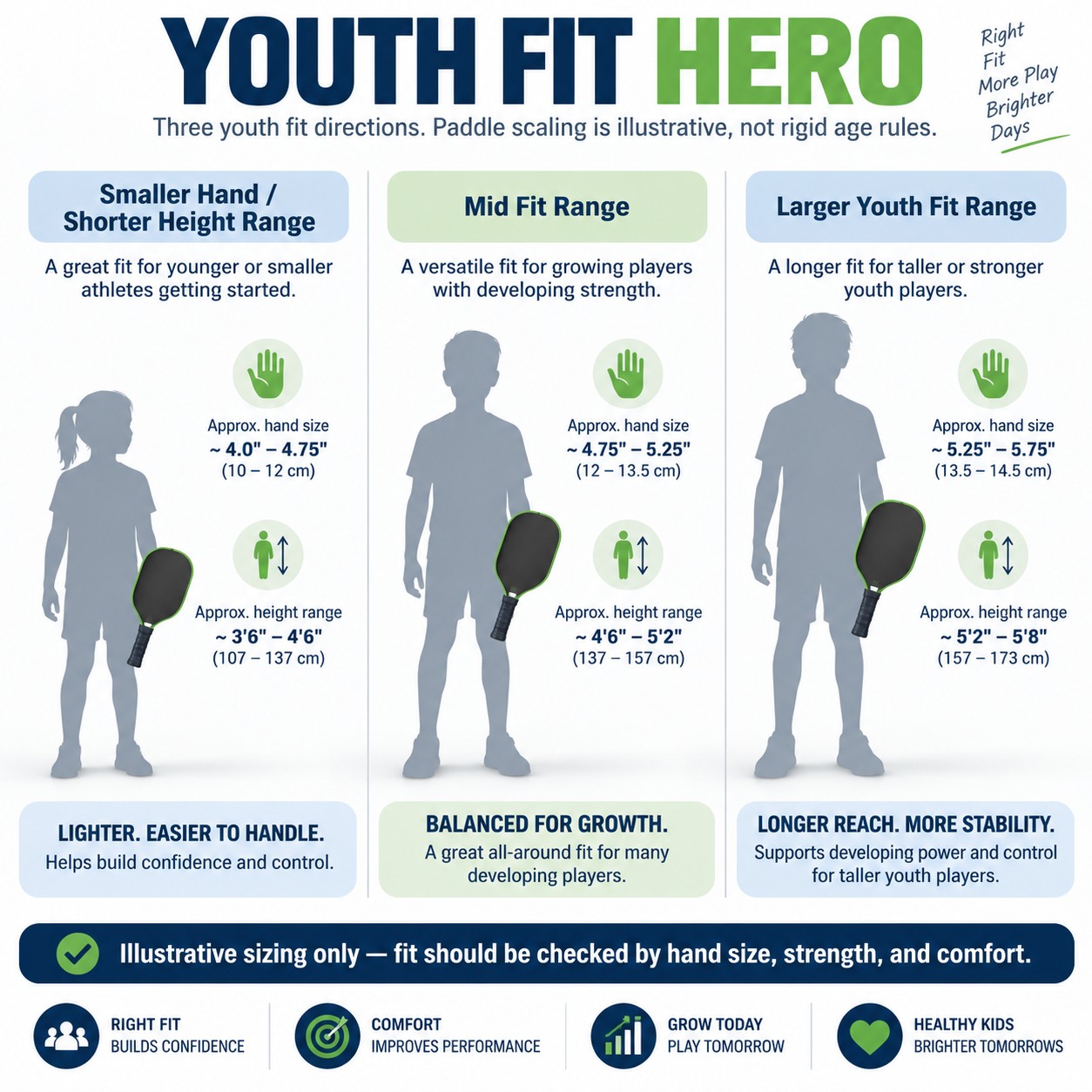
Design Around Youth Fit, Not Adult Marketing
Start With Manageable Mass
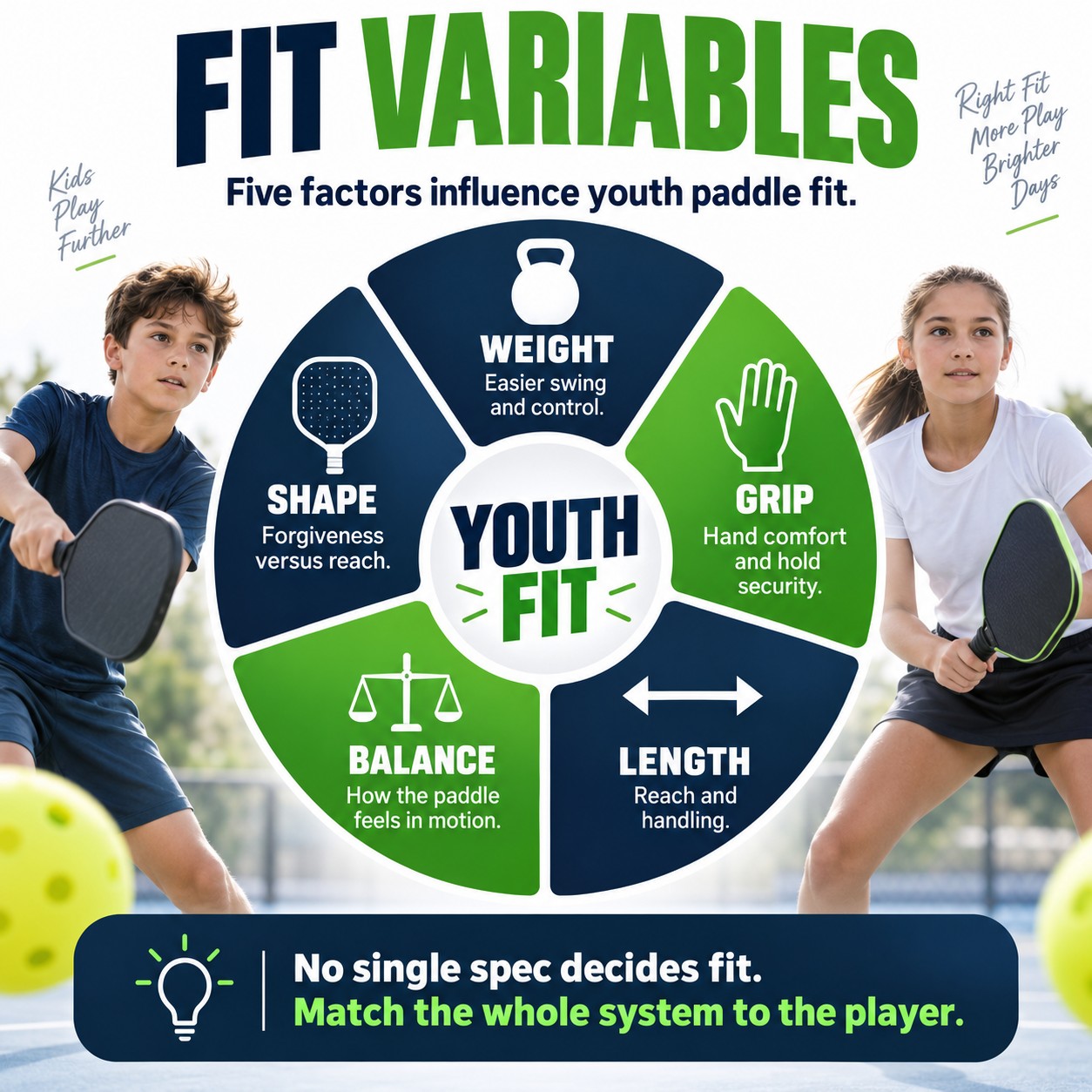
A child should be able to prepare, swing and recover repeatedly without the paddle pulling the arm out of position.
Do not chase the lightest possible number either. Very low mass can reduce stability and durability.
Test repeated swings and short rallies, not one comfortable hold.
Grip Circumference
Grip that is too large can make secure control difficult; too small can encourage excessive squeezing.
Use hand fit and comfort rather than age-only size charts.
Schools may benefit from one or two clearly differentiated grip sizes.
Handle Length
Long handles are useful for two-handed strokes, but extra handle length consumes part of the paddle geometry.
Young beginners may benefit more from simple one-hand control and compact handling.
Choose usable grip length based on actual hand placement.
Overall Length and Reach
A slightly shorter paddle can reduce swing demand for smaller players, while full adult length can be appropriate for larger/older youth.
There is no need to force every child into a miniature paddle.
Fit should progress with player size and skill.
Weight, Grip, Length and Balance
Balance and Swing Demand
Two paddles of the same weight can feel different if one carries more mass toward the head.
For youth programs, neutral or manageable swing characteristics are usually easier to share across players than extreme head-heavy designs.
Measure or demo rather than infer from static weight.
Face and Core Priorities
Forgiveness, predictable rebound and durability usually matter more than exotic material labels for first-time youth users.
A widebody shape and stable construction can simplify learning.
Do not market advanced carbon or foam technology as a substitute for fit.
Durability and School Use
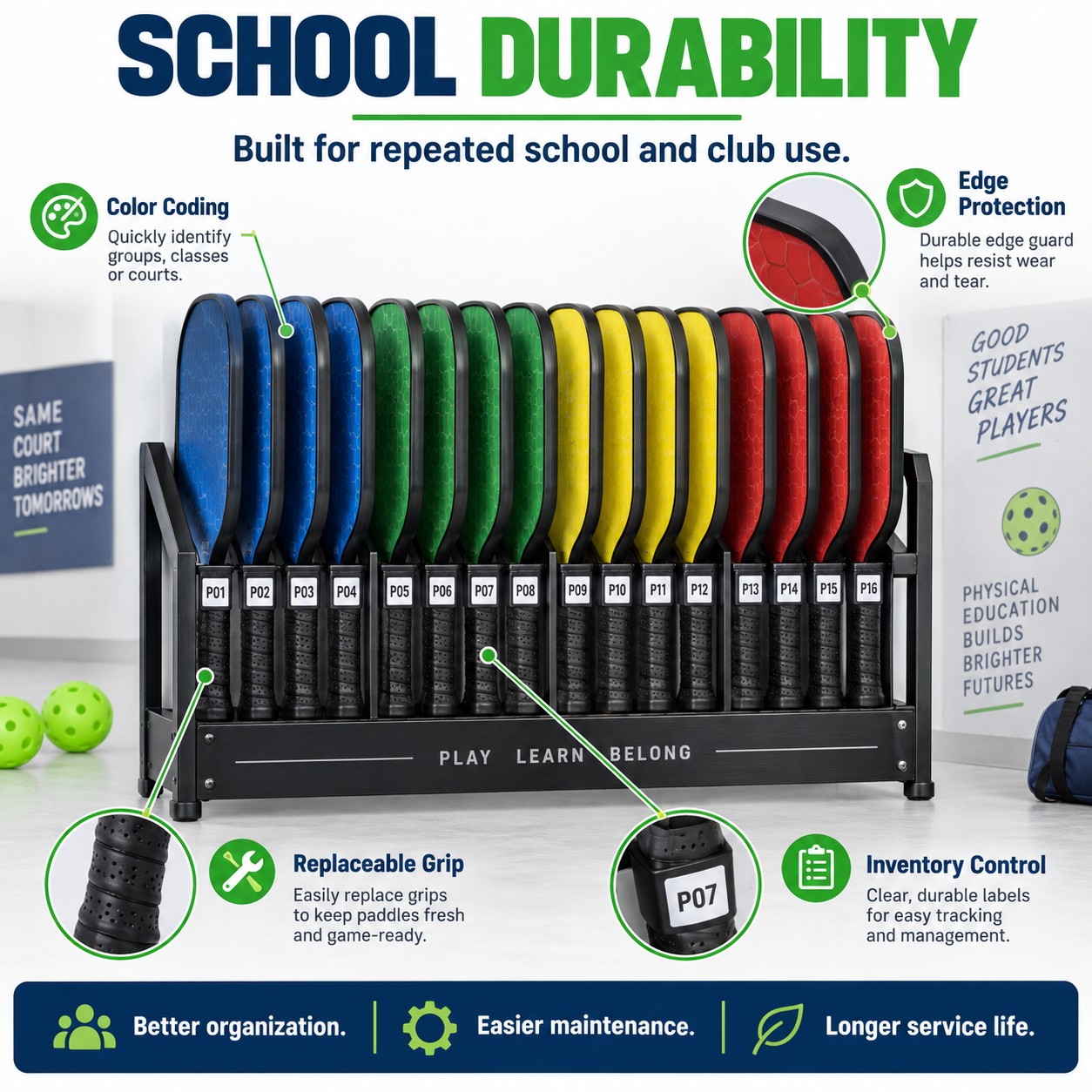
School paddles experience drops, edge hits, stacking, storage and many users.
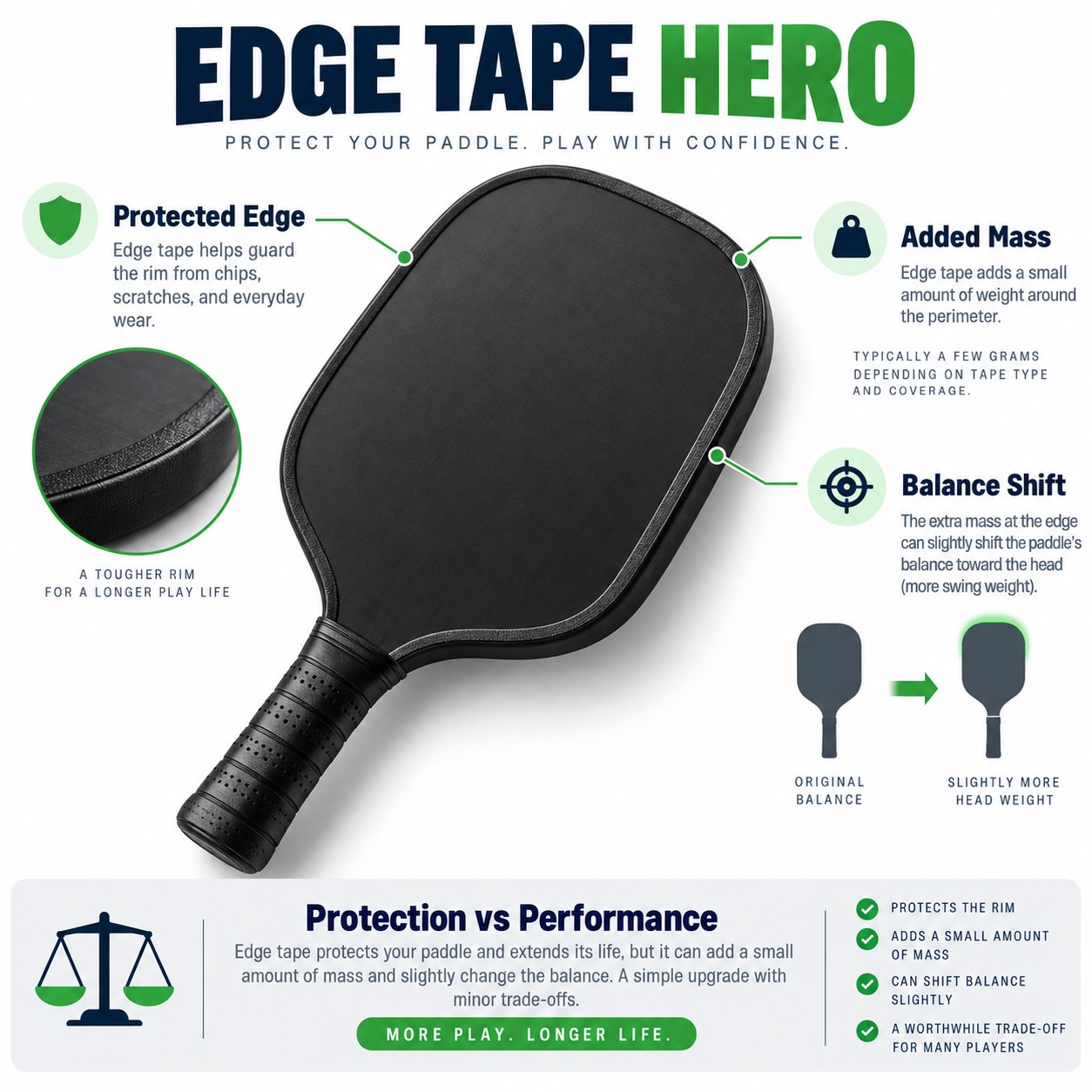
Prioritize edge protection, grip replacement, clear model identification and easy inventory.
A slightly more robust paddle may be better value than the lightest design.
Safety and Inspection
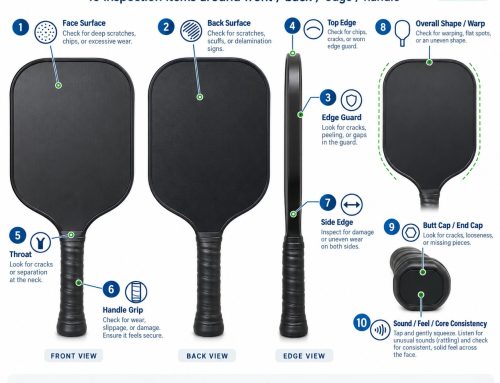
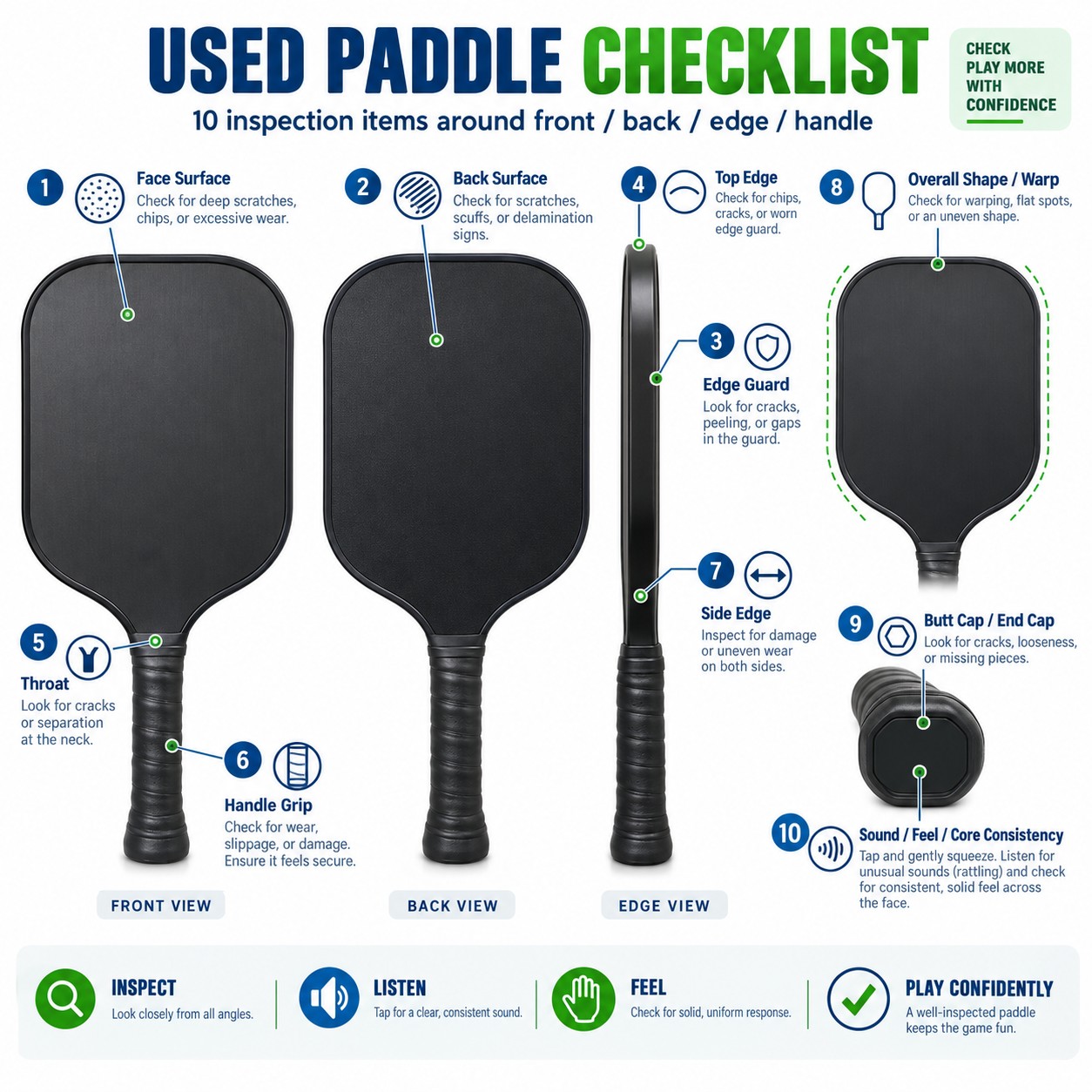
Inspect for cracks, loose edge guards, sharp damage, loose butt caps and compromised grips.
Retire damaged paddles rather than letting children continue using structurally questionable equipment.
Follow school and manufacturer safety policies.
Durability, Safety and Program Use
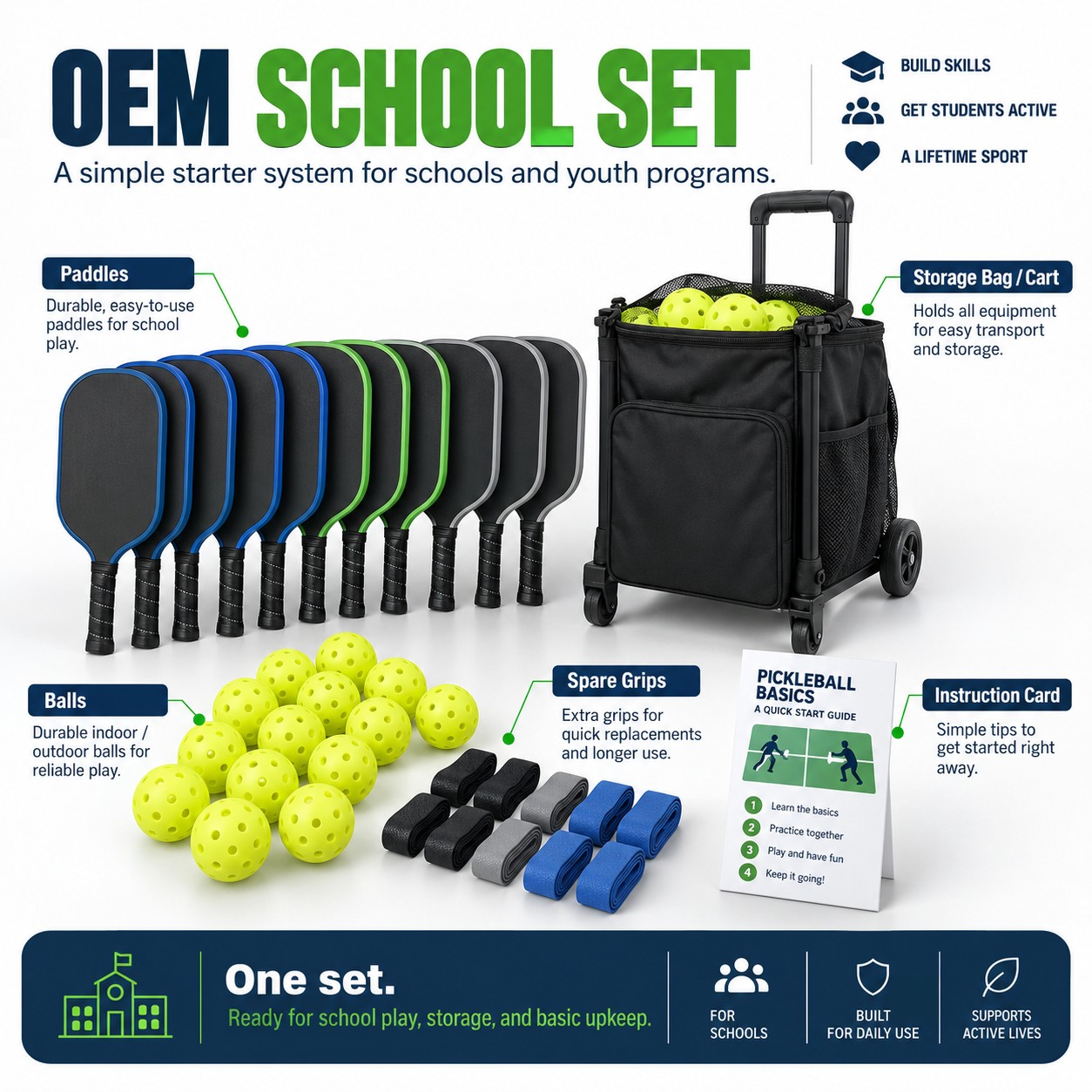
OEM School Set Design
For an institutional set, standardize colors/sizes, spare grips, balls, storage and replacement SKUs.
Keep packaging and instructions simple.
The commercial value is low-friction program management, not maximum customization.
Youth Demo Protocol
Ask the child to perform repeated ready-position movements, short volleys, controlled serves and easy rallies. Watch whether the paddle drops late, the wrist collapses, the grip slips or the player changes technique simply to manage the equipment.
The right paddle should allow learning movements without unnecessary compensation.
Age Labels vs Growth
Children of the same age can differ greatly in hand size, height, coordination and strength. Product pages can use age ranges as navigation, but they should not present them as exact fit rules.
A better system combines age guidance with height/hand fit and an easy exchange path for programs where children are still growing.
School Procurement Economics
Schools should compare cost per usable season, not only purchase price. Include spare grips, edge damage, lost paddles, ball replacement, storage and how easy it is to reorder the same model.
A stable school SKU with simple graphics and available replacement parts can outperform a more fashionable model operationally.
Practical Editorial / Decision Notes
Youth procurement should also consider operational economics. Schools and clubs need stable SKUs, simple labeling, replacement grips, ball replenishment and storage—not just a child-sized performance story.
Age ranges should be guidance, not exact fit rules. Children of the same age can differ substantially in hand size, strength and coordination, so demo-based fit remains important.
Build a School / Club Procurement Spec
Youth / School Procurement Matrix
| Need | Design Question | Procurement Check |
|---|---|---|
| Fit | Weight / grip / length | Can children control it without compensation? |
| Durability | Edge / handle / face | Cost per usable season |
| Program use | Shared equipment | Easy labeling / storage |
| Reorder | Stable SKU | Can the same model be reordered? |
| Safety / support | Age/size guidance | Clear inspection and replacement policy |
Design Youth Products for Programs, Not Just Smaller Hands
A youth paddle has two customers: the child using it and often a school, club or parent buying it. Fit matters, but so do durability, labeling, replacement parts, storage and the ability to reorder the same model later.
That makes school-set development an operations problem as well as a design problem. Standardized colors, durable edges, replaceable grips and simple packaging can create more value than premium material labels.
- Use age ranges only as guidance, not exact fit rules.
- Test repeated swings and rallies, not just static comfort.
- Model cost per usable season for institutional buyers.
Frequently Asked Questions
What weight should a youth pickleball paddle be?
There is no universal number; choose a mass the child can swing and recover repeatedly with good form.
Should children use smaller grips?
Often, but hand fit matters more than age alone.
Do youth paddles need carbon fiber?
No. Material should serve fit, durability and product goals rather than prestige.
What shape is good for beginners?
A forgiving, manageable geometry is usually easier to learn with, but demo fit matters.
What should schools prioritize?
Broad fit, durability, clear identification, replaceable grips, storage and cost.
Building a youth or school paddle program?
Mayvoci can help define fit, durability, packaging and replacement requirements for an institutional SKU.
The End about Mayvoci
1)Design:Over 100 paddle designs and photography service to assist start-up.
2)Professional:Focus on various of paddles manufacturing for 6 years
3)Quality:Strict quality management system to provide safety and satisfaction for customers
4)Amazon:Flexible comprehensive solution to make sure each Amazon seller is well cared.
5)Excellent Team:Experienced paddle experts & dynamic sales team give you 5-star service