
Pickleball paddle innovation has accelerated: thermoforming, foam, hybrid cores, new surfaces, perimeter weighting and rapidly changing performance language. Innovation itself is not the problem.
The risk appears when product cycles move faster than validation, regulation or customer understanding.
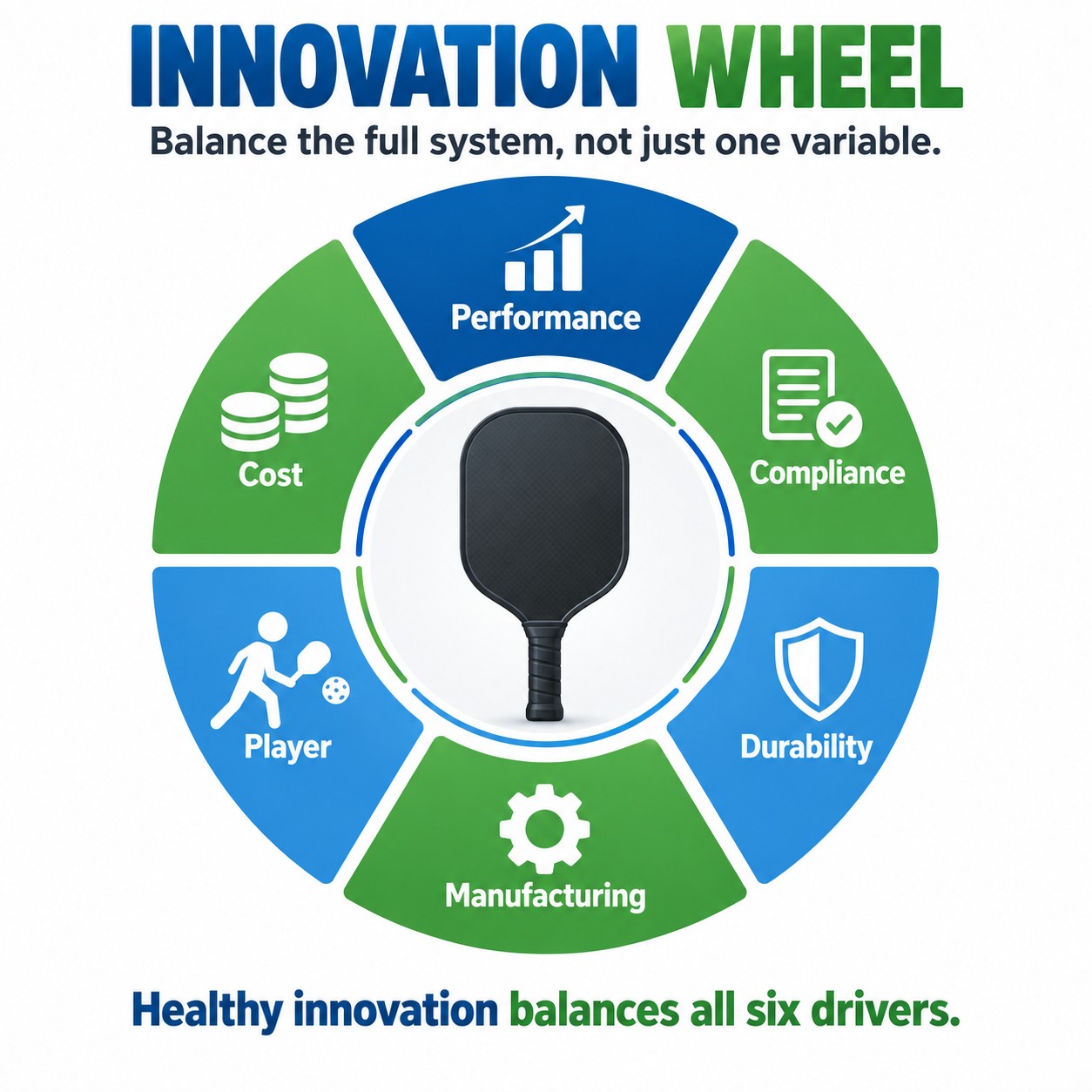
Why Paddle Innovation Accelerated
Why Innovation Accelerated
Participation growth, direct-to-consumer launches, reviewer culture and competitive play reward visible differentiation. Construction features are easy to market, so brands have strong incentive to launch frequently.
Regulation Is Catching Up
USA Pickleball and UPA-A use more direct controls for power and spin. Certification is now part of product strategy, and internal compliance margin matters more than headline performance.
Durability Versus Launch Speed
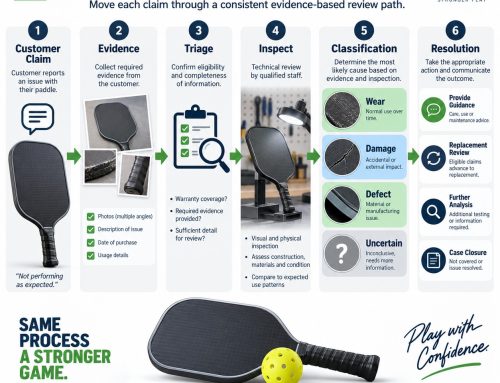
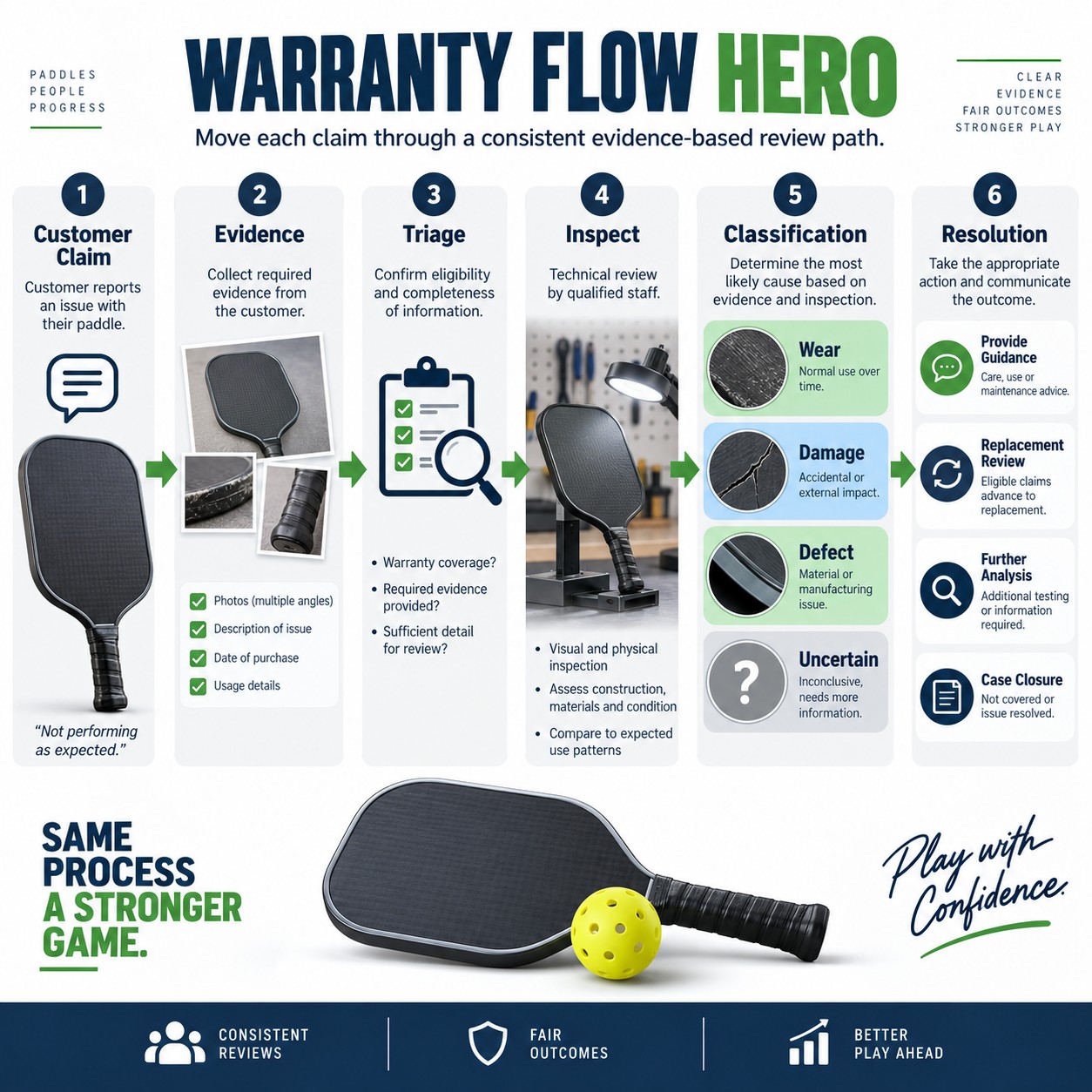
New cores and bonding systems need lifecycle testing. A paddle that feels exciting when new but changes quickly can create warranty and compliance problems.
Regulation, Durability and Portfolio Risk
Player Segmentation
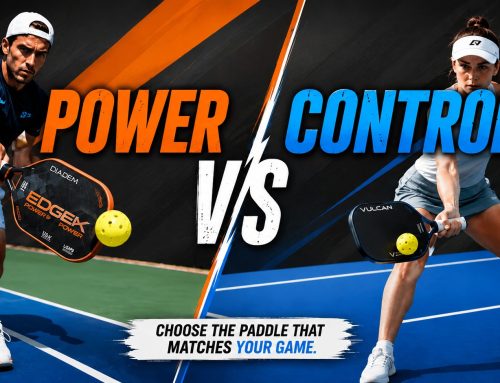
Not every player needs maximum power or spin. Beginner, control, speed, stability and comfort products can create a stronger portfolio than a line of nearly identical performance paddles.
Certification and SKU Cost
More physical variants can mean more testing, inventory and administrative complexity. SKU discipline becomes a technical and commercial advantage.
Healthy Innovation
Define the problem, build controlled prototypes, test several units, condition them, verify pilot production and launch with clear claims. Then monitor warranty and field data.
The companies that connect performance, compliance, durability, manufacturing and segmentation will be harder to copy.
Innovation Portfolio Budget
Allocate development budget across proven core products, incremental improvements and higher-risk experiments. Do not place the entire year’s revenue plan on unvalidated new architecture.
A portfolio approach lets the brand learn aggressively while protecting the commercial base.
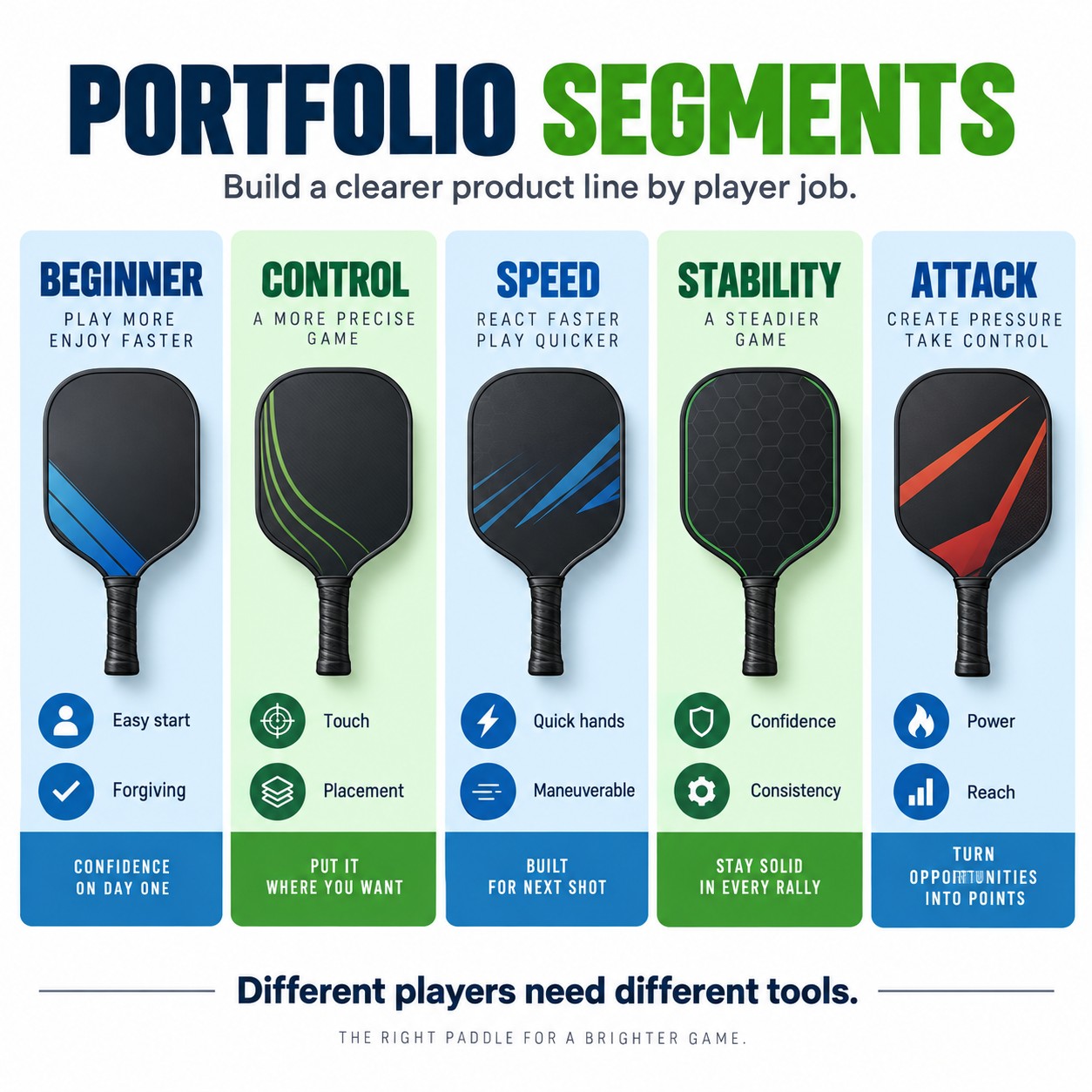
Evidence and Certification Discipline
Evidence Hierarchy
Rank claims from construction fact, internal test, independent test, certification result and long-term field data. The stronger the marketing claim, the stronger the evidence should be.
This hierarchy helps marketing teams understand when a prototype result is not yet ready for a permanent product claim.
When to Stop a Development Project
Stop or reset a project when the product no longer has a clear player job, compliance margin is too small, pilot variation is unacceptable or cost has moved beyond the target segment.
Killing a weak project early is part of healthy innovation, not a failure of creativity.
Practical Editorial / Decision Notes
Use an innovation portfolio: protect proven core products, fund incremental improvement and reserve a smaller share for high-risk architecture experiments.
Stop projects when player job becomes unclear, compliance margin is too small, pilot variation is unacceptable or cost no longer fits the target segment.
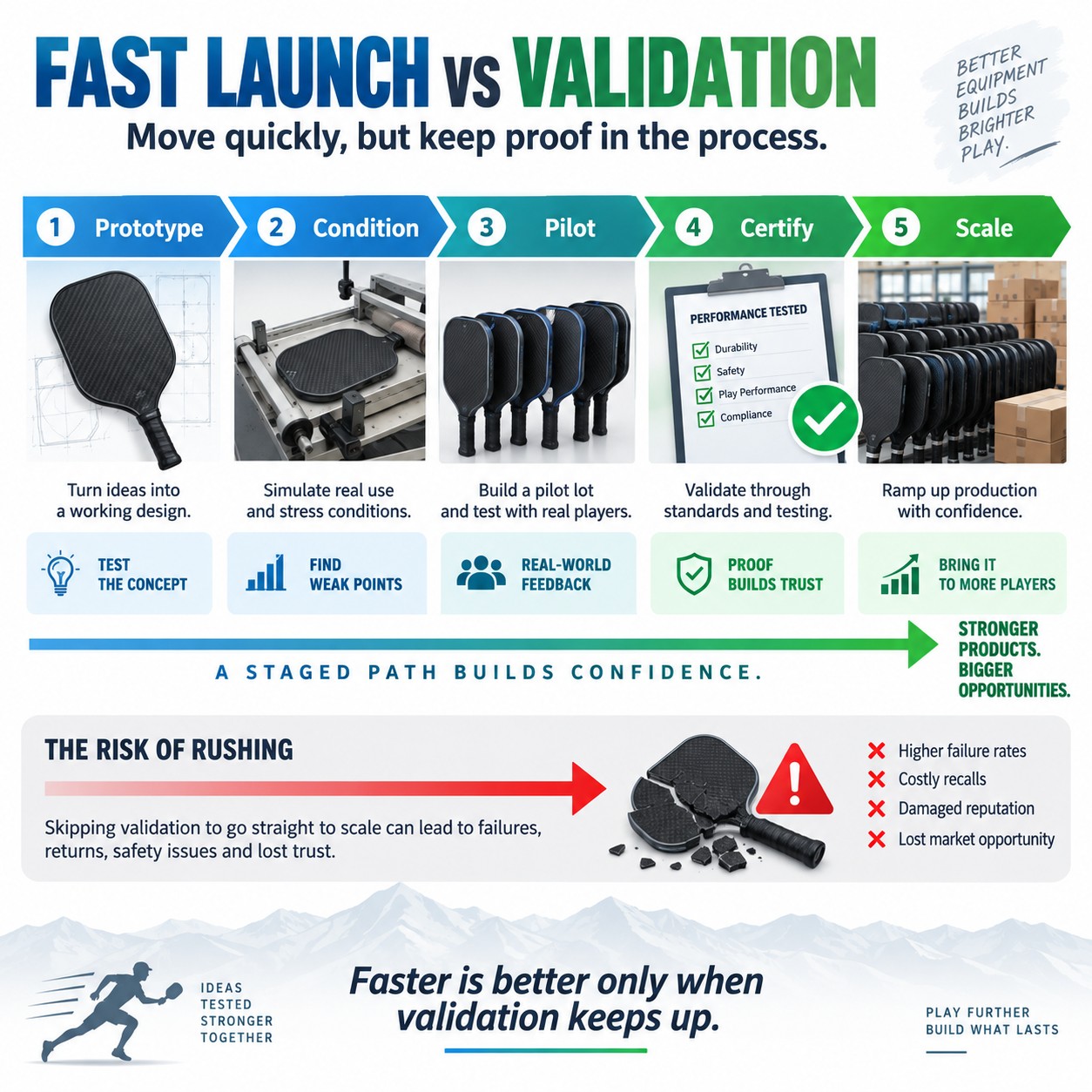
Define Healthy Innovation
Innovation Gate
| Question | Pass Condition |
|---|---|
| Player problem | Clear user job exists |
| Evidence | Construction + test support |
| Compliance | Margin below relevant limit |
| Repeatability | Pilot-lot consistency |
| Commercial fit | Cost / SKU / warranty manageable |
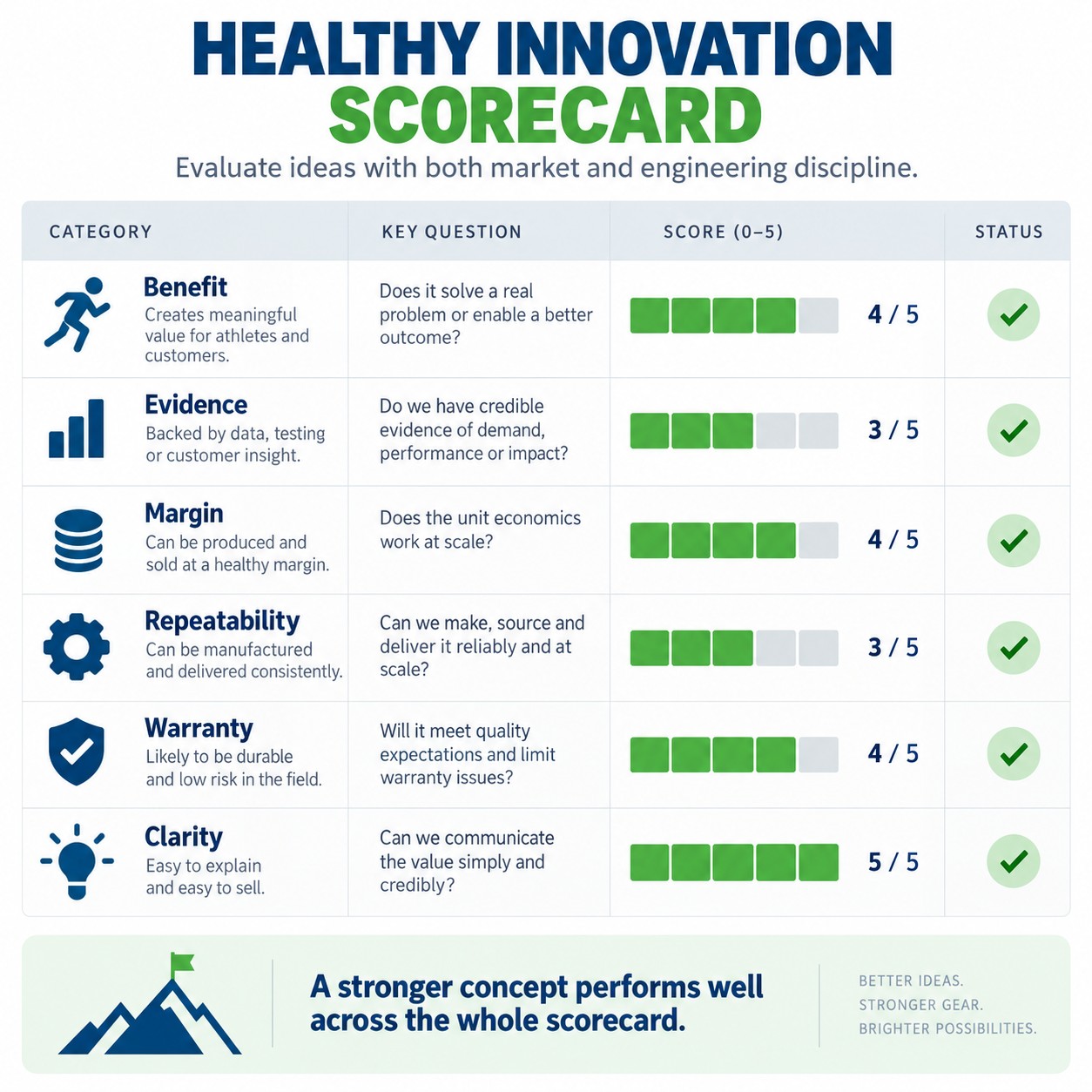
Innovation Needs a Kill Gate as Well as a Launch Gate
Fast product cycles create pressure to keep every prototype alive because development money has already been spent. A mature product team also defines when to stop: unclear user benefit, weak compliance margin, unstable pilot variation, excessive warranty risk or cost outside the segment.
That discipline protects the core catalog and leaves more budget for experiments that have a real chance of creating durable differentiation.
- Separate experimental budget from core-product revenue plans.
- Require evidence strength to rise with claim strength.
- Stop projects that cannot meet player, compliance and production gates.
Frequently Asked Questions
Is paddle innovation bad?
No.
Why are rules more important now?
Performance technology has advanced and governing bodies use more direct controls.
Should brands launch fewer paddles?
Often a more disciplined portfolio is easier to validate and explain.
What is the biggest risk?
Launching before durability, compliance and repeatability are understood.
What is sustainable innovation?
Repeatable improvement tied to a real player problem.
Developing a new paddle architecture?
Mayvoci can help structure prototype gates, pilot evidence and manufacturing constraints before the concept becomes an inventory commitment.
The End about Mayvoci
1)Design:Over 100 paddle designs and photography service to assist start-up.
2)Professional:Focus on various of paddles manufacturing for 6 years
3)Quality:Strict quality management system to provide safety and satisfaction for customers
4)Amazon:Flexible comprehensive solution to make sure each Amazon seller is well cared.
5)Excellent Team:Experienced paddle experts & dynamic sales team give you 5-star service

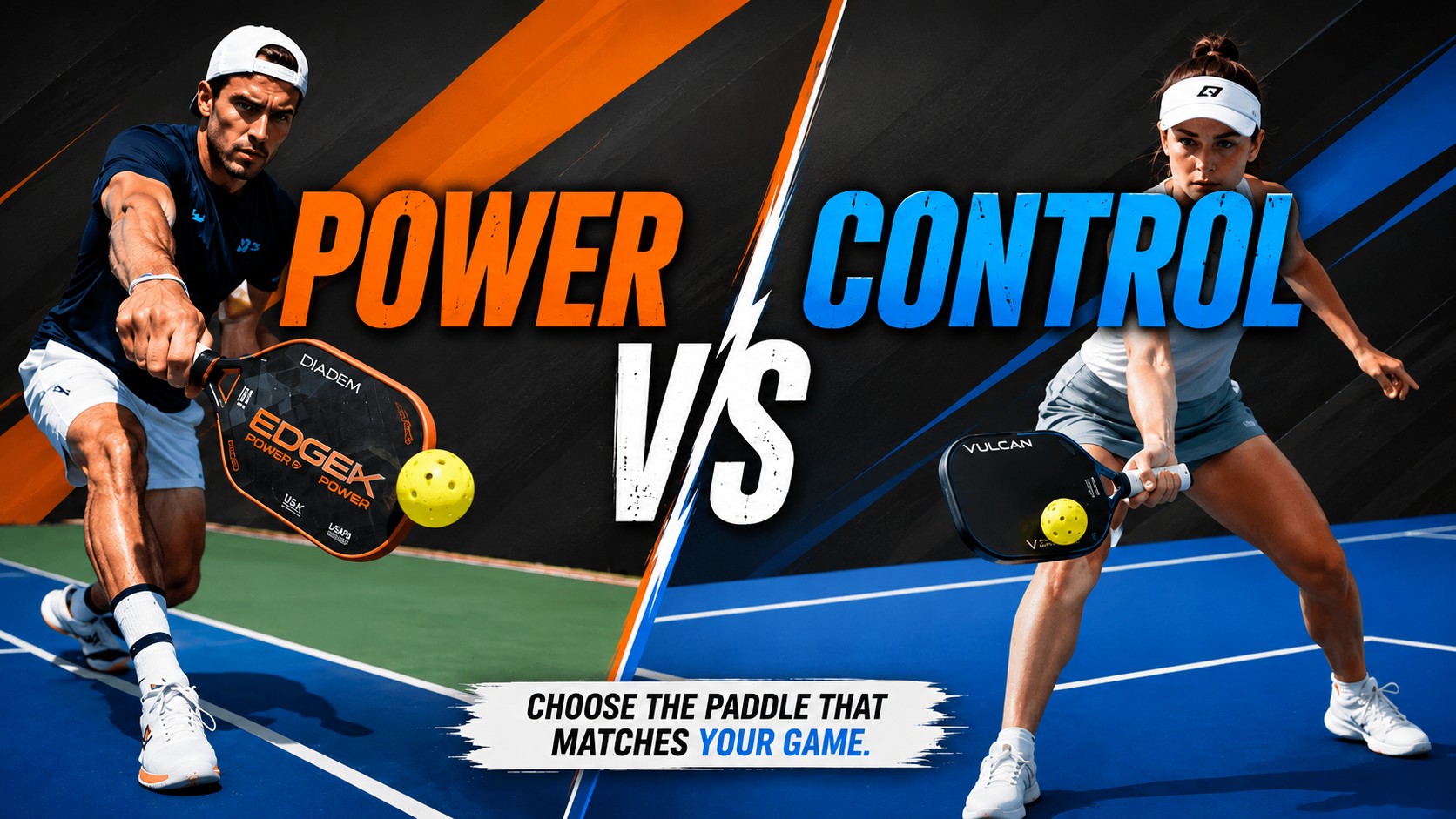
As the author, I have mixed feelings about this “power race.” We’re pushing technology to its limits, but at what cost to the game’s soul?
A seasoned player once told me, “My new paddle wins points, but it can’t create those magical dink exchanges that make pickleball special.” That stuck with me.
What’s your take? Has the pursuit of power made the game better or more one-dimensional? What innovation would you truly want to see next?
Your court-level perspective is what matters most.