Grip material is the interface between the player and the paddle.
A tacky grip can feel secure in dry conditions, while a dry-texture grip may feel more predictable to players who dislike sticky surfaces. Soft grips add cushioning; firm grips transmit more handle definition. Sweat, humidity and wear can change all of those impressions.
There is no universal best grip because hand chemistry and playing conditions vary.
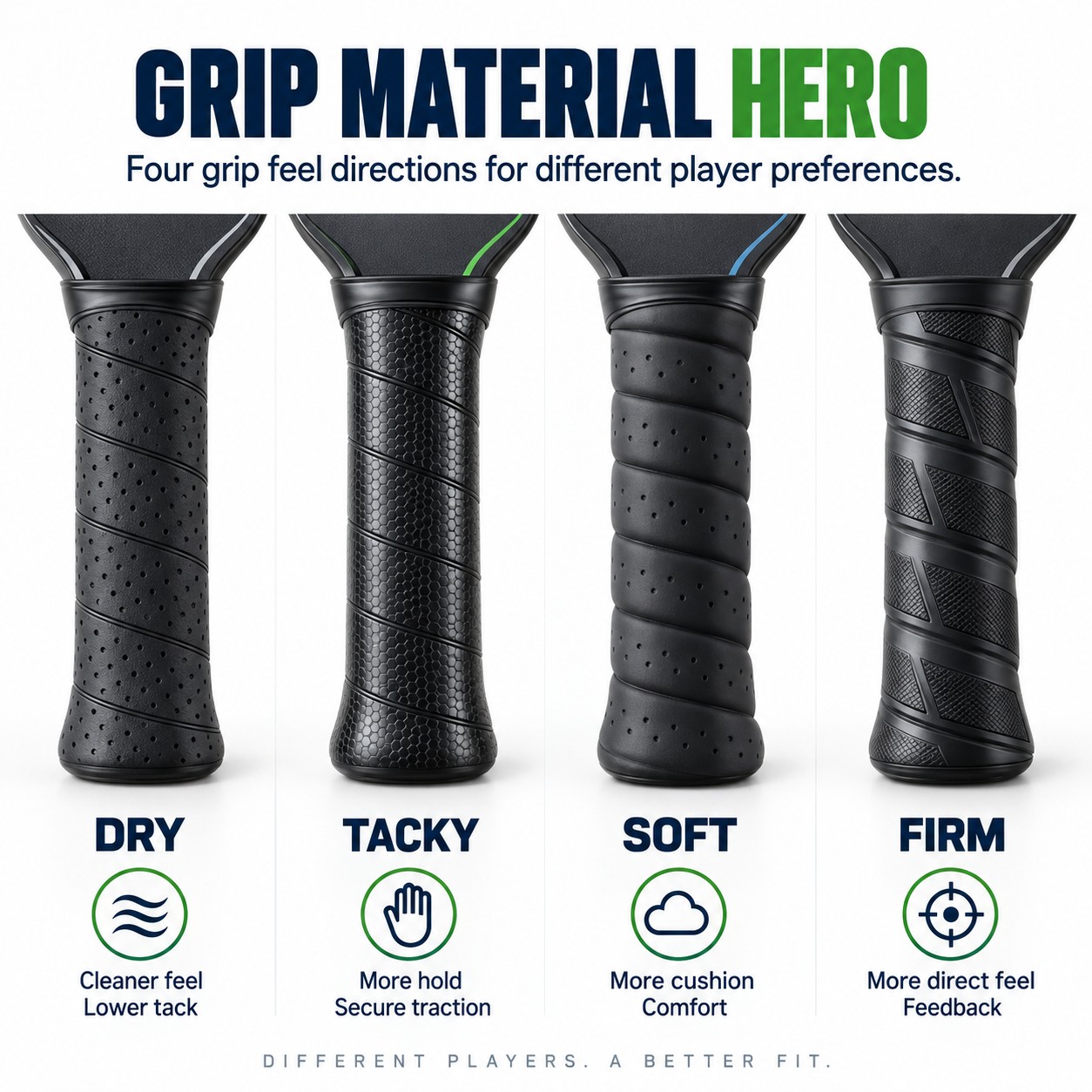
Grip Feel Is a Material System
Dry vs Tacky
Tacky grips use surface adhesion to create a secure feel. Dry grips rely more on texture and friction.
Some players prefer tack for confident hold; others find it grabs too much during grip changes.
Test in the conditions where you normally play.
Soft vs Firm
Soft grips compress and can reduce pressure points.
Firm grips preserve bevel definition and can feel more precise.
Compression also changes apparent circumference, so material and size interact.
Sweat Management
Perforation, absorbent layers and surface texture can help manage moisture.
A grip that feels excellent for ten minutes may become slippery later in a humid session.
Evaluate over full play time.
Base Grip vs Overgrip
The base grip provides the original cushioning and shape.
Overgrips are replaceable wear layers used to change traction, feel or circumference.
Frequent players may prefer refreshing an overgrip rather than repeatedly cleaning a worn base grip.
Dry vs Tacky and Soft vs Firm
Wear Signs
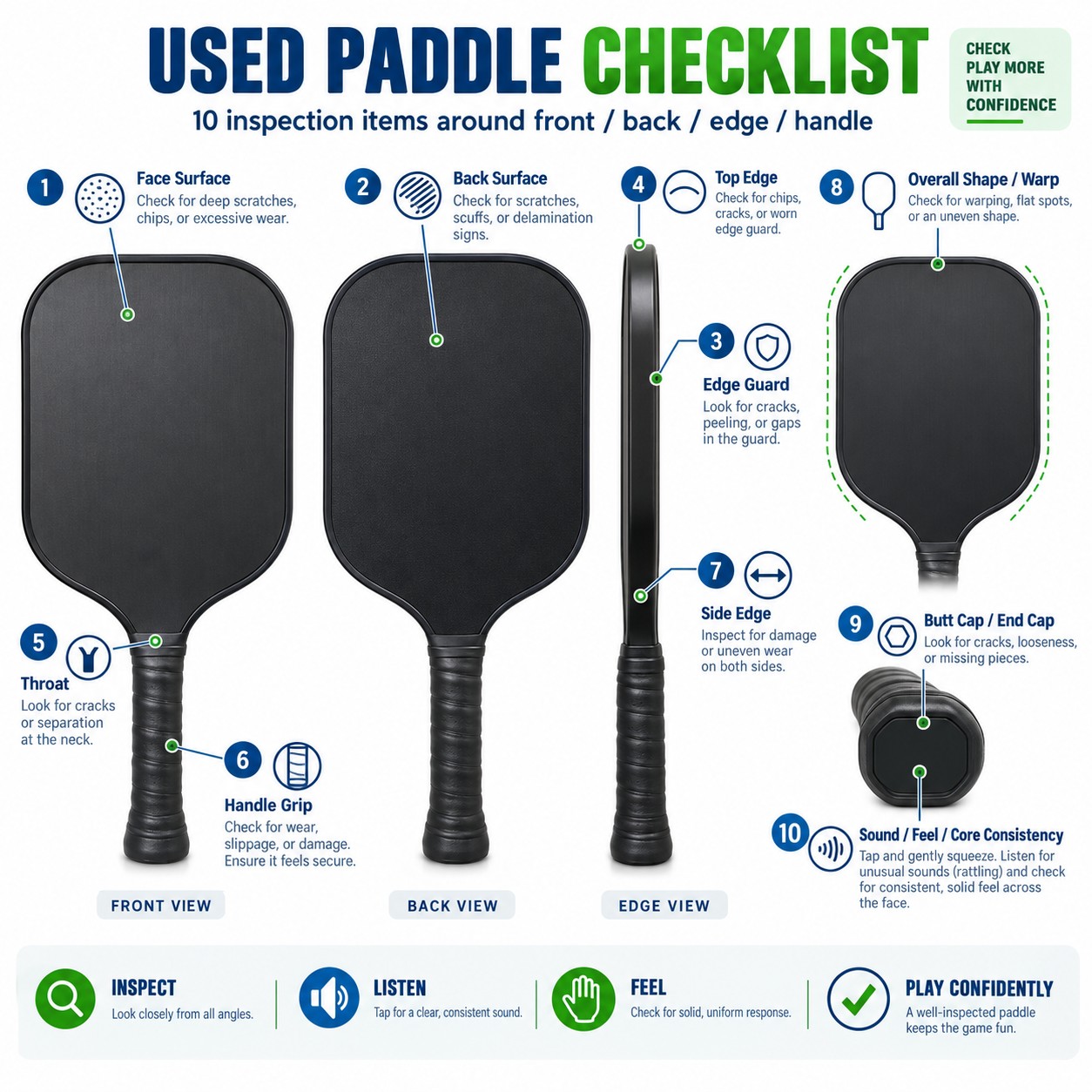
Replace when traction drops, the surface becomes polished, material tears, cushioning collapses or odor/hygiene becomes difficult to manage.
Wear rate depends on sweat, play frequency and material.
There is no universal replacement interval.
Effect on Paddle Mass
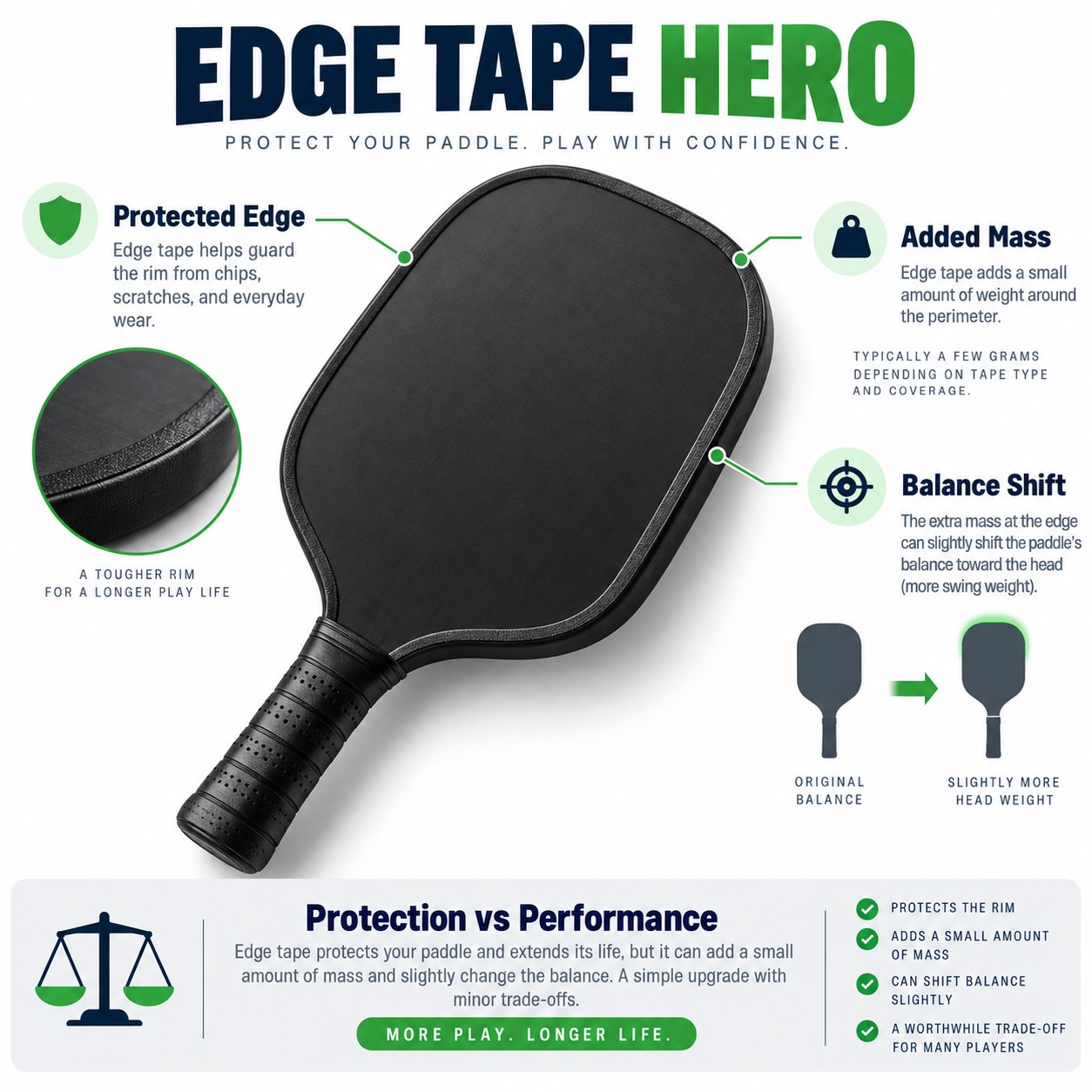
A replacement grip or multiple overgrips add weight near the handle.
That usually affects balance differently from adding the same mass near the head.
Players tuning feel should record grip setup.
Grip Material vs Grip Size
A soft thick grip may feel larger than a firm thin grip even at similar nominal circumference.
Measure finished setup if fit is critical.
Do not use “4.25 inch” as the only descriptor.
OEM Grip Specification
Specify substrate, thickness, texture, tack direction, perforation, color, wrap overlap, finished circumference and butt-cap finish.
Approve the actual mass-production grip, not only a material swatch.
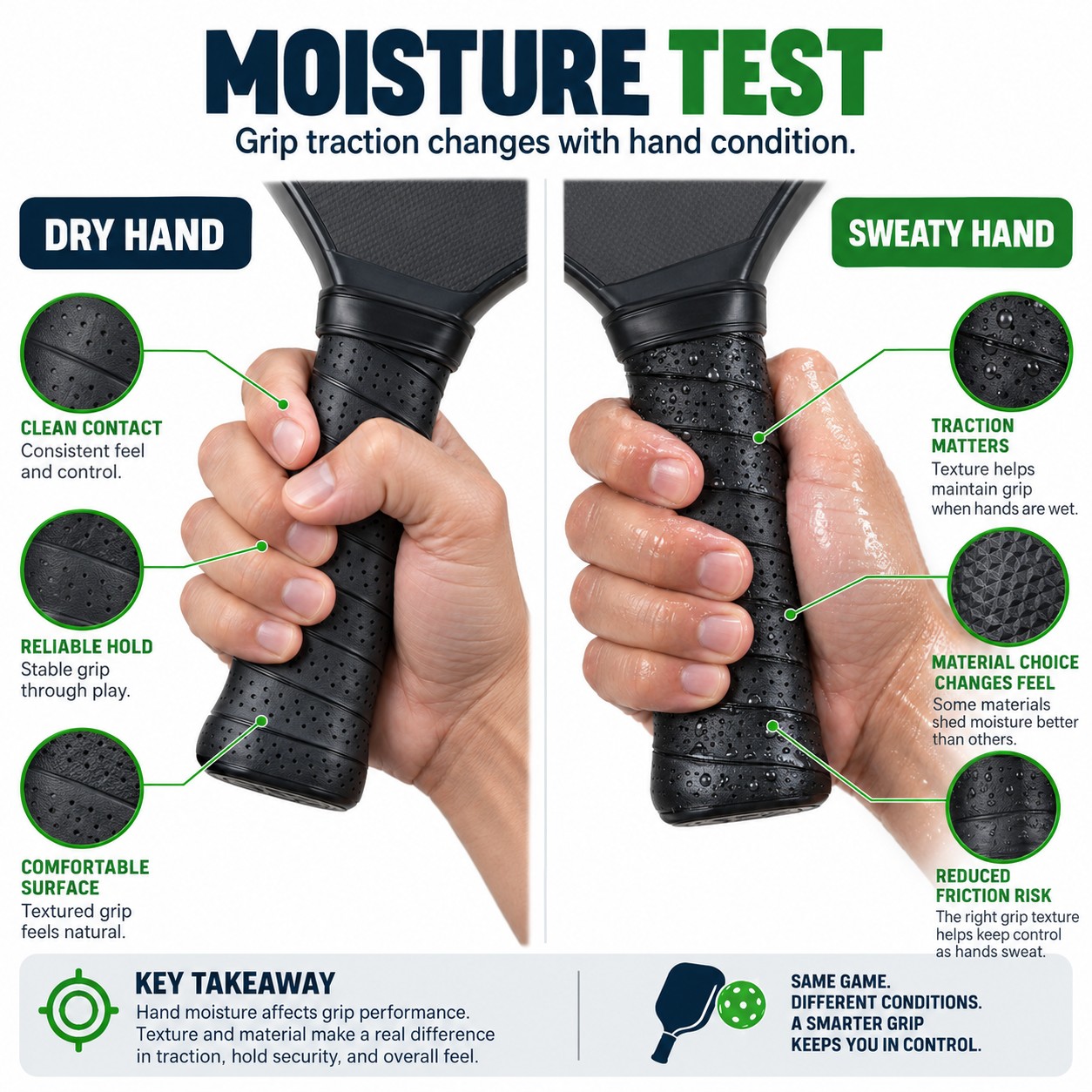
Climate, Wear and Replacement
Climate and Player Chemistry
Humidity, sweat rate, skin dryness and temperature can change grip preference dramatically. A tacky surface that feels secure indoors can become uncomfortable for another player outdoors.
Product testing should include the target climate rather than a single office evaluation.
Replacement as Part of Product Design
A grip is a wear component. Make replacement simple by standardizing wrap direction, length, butt-cap finish and accessory compatibility.
For OEM brands, selling replacement grips or specifying common overgrip dimensions can improve ownership experience without changing the paddle body.
Grip QC
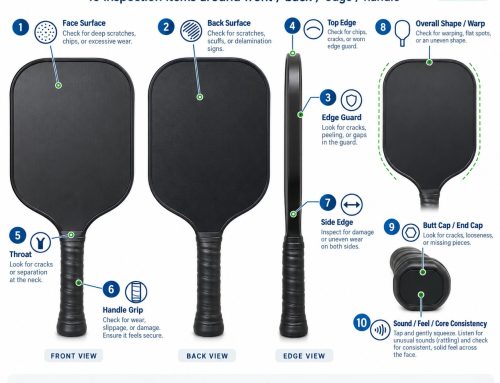
Inspect wrap overlap, end tape, wrinkles, finished circumference, butt-cap security and weight. A grip installed too tightly or loosely can change both feel and final dimension.
Keep an approved wrapped handle as the factory visual standard.
Practical Editorial / Decision Notes
Grip preference changes with climate, sweat and skin condition. A tacky surface that works indoors for one player can feel uncomfortable in humid outdoor play for another.
Because the grip is a wear component, replacement design matters: standardize wrap direction, butt-cap finish, grip length and accessory compatibility so ownership remains simple.
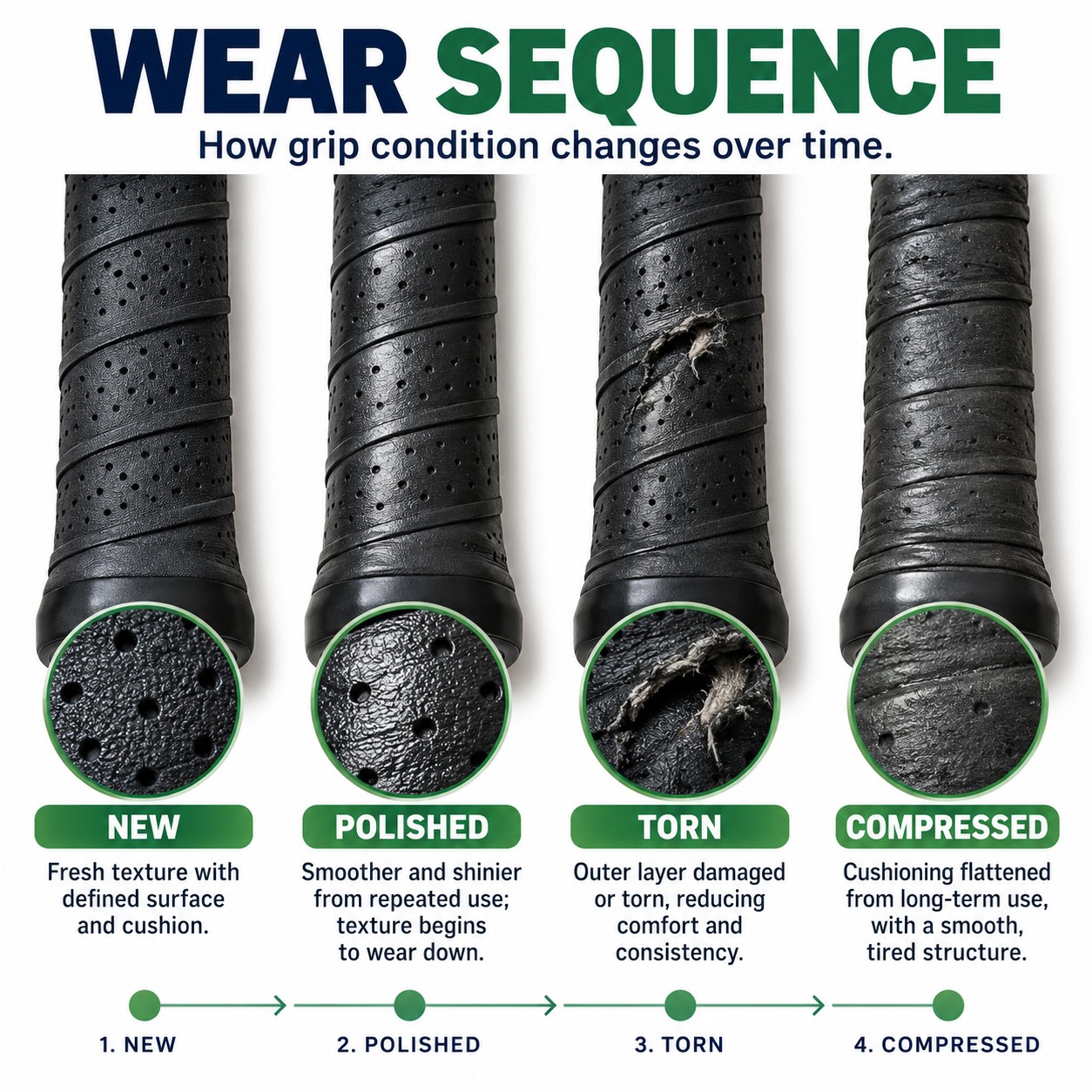
Specify and QC the Finished Grip
Grip Material Selection
| Environment / Player | Useful Direction | QC Focus |
|---|---|---|
| High sweat / humidity | Dry / absorbent feel may help | Wet feel + wrap consistency |
| Dry hands / cool climate | Tackier surface may help | Adhesion / tack consistency |
| Comfort priority | Softer build | Compression / circumference |
| Feedback priority | Firmer build | Thickness / wrap tension |
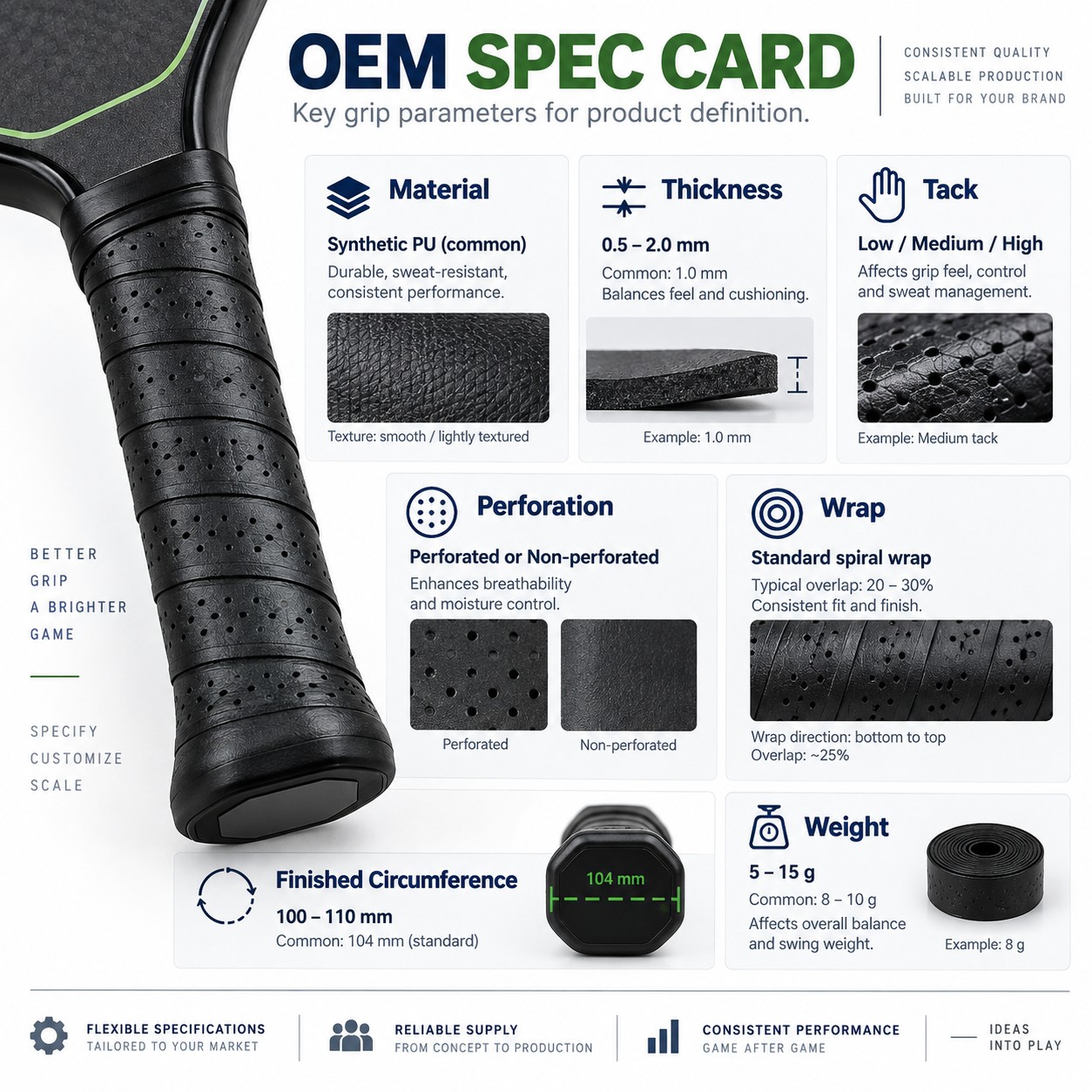
Specify Grip Feel as an Owned Component
Dry, tacky, soft and firm are useful player words, but the factory needs a physical specification: substrate, thickness, texture, perforation, wrap overlap, adhesive, finished circumference and mass.
Climate testing also matters. A grip approved in an air-conditioned sample room may behave differently in humid outdoor play, and a worn grip can change both traction and perceived handle size.
- Approve the actual wrapped handle, not only a material swatch.
- Test sweat/humidity conditions relevant to the market.
- Treat replacement compatibility as part of product design.
Frequently Asked Questions
Is tacky always better?
No.
When should I replace an overgrip?
When traction, integrity or hygiene no longer meets your needs.
Does a grip change paddle balance?
Yes, added mass at the handle can shift balance.
Is grip material the same as grip size?
No.
Can I wash a worn grip back to new condition?
Cleaning may remove dirt, but it cannot reverse material compression or wear.
Developing a proprietary grip setup?
Mayvoci can help define material, finished geometry and production QC for the complete wrapped handle.
The End about Mayvoci
1)Design:Over 100 paddle designs and photography service to assist start-up.
2)Professional:Focus on various of paddles manufacturing for 6 years
3)Quality:Strict quality management system to provide safety and satisfaction for customers
4)Amazon:Flexible comprehensive solution to make sure each Amazon seller is well cared.
5)Excellent Team:Experienced paddle experts & dynamic sales team give you 5-star service