
“Can you customize a pickleball paddle?” is not one question. Customization can mean printing a logo on an existing paddle, changing components, developing a new surface, changing the face/core construction or creating a new mold.
Each level changes MOQ, sample cost, lead time, testing, inventory risk and the amount of information that must be frozen before production.
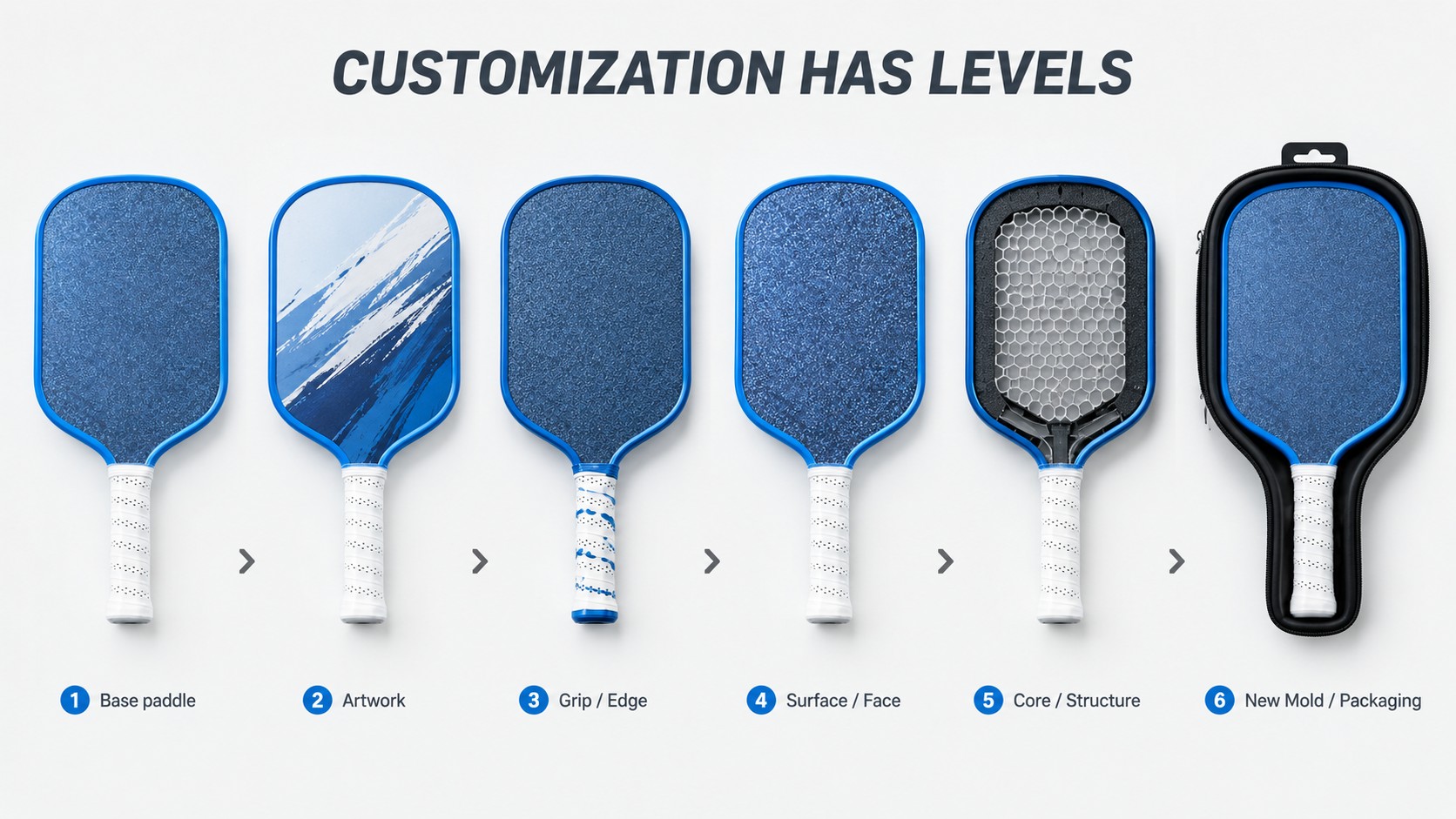
Customization Has Levels—and Each Level Changes Risk
Level 1: artwork and branding on an existing platform. Level 2: visible components such as grip, edge guard, surface finish and packaging. Level 3: face, core and structural construction. Level 4: new geometry, mold and deeper platform development.
The deeper the change, the more development, testing and production control are required.
Artwork can create a distinct shelf appearance without changing the engineering platform. But even artwork needs control: color standard, print method, placement, bleed, finish, file version and approval sample.
Do not approve a screenshot. Freeze the production artwork file and a physical reference when color is important.
Grip color, texture, cushioning, butt cap and edge color can create a more custom product, but component minimums may apply. Changing grip weight or edge components can also shift final static weight and balance.
Surface, Face and Core Customization Are Engineering Changes
A surface can involve print, peel-ply texture, particle coating or another treatment. Surface customization may influence wear, friction, print durability, manufacturing yield and compliance.
Define the actual process and acceptance method. A proprietary marketing name should correspond to a repeatable production specification.
Changing from fiberglass to carbon, aramid/Kevlar or a hybrid laminate is a structural change. So is changing GSM, orientation or layer count.
Material selection should be tied to a product brief and prototype plan.
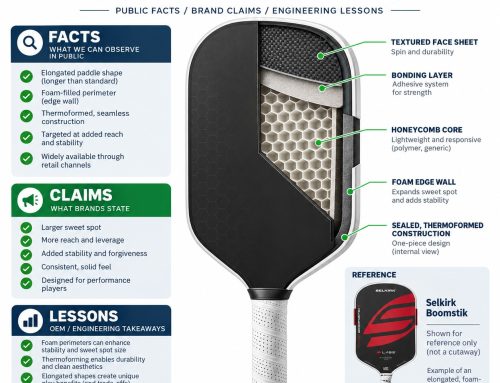
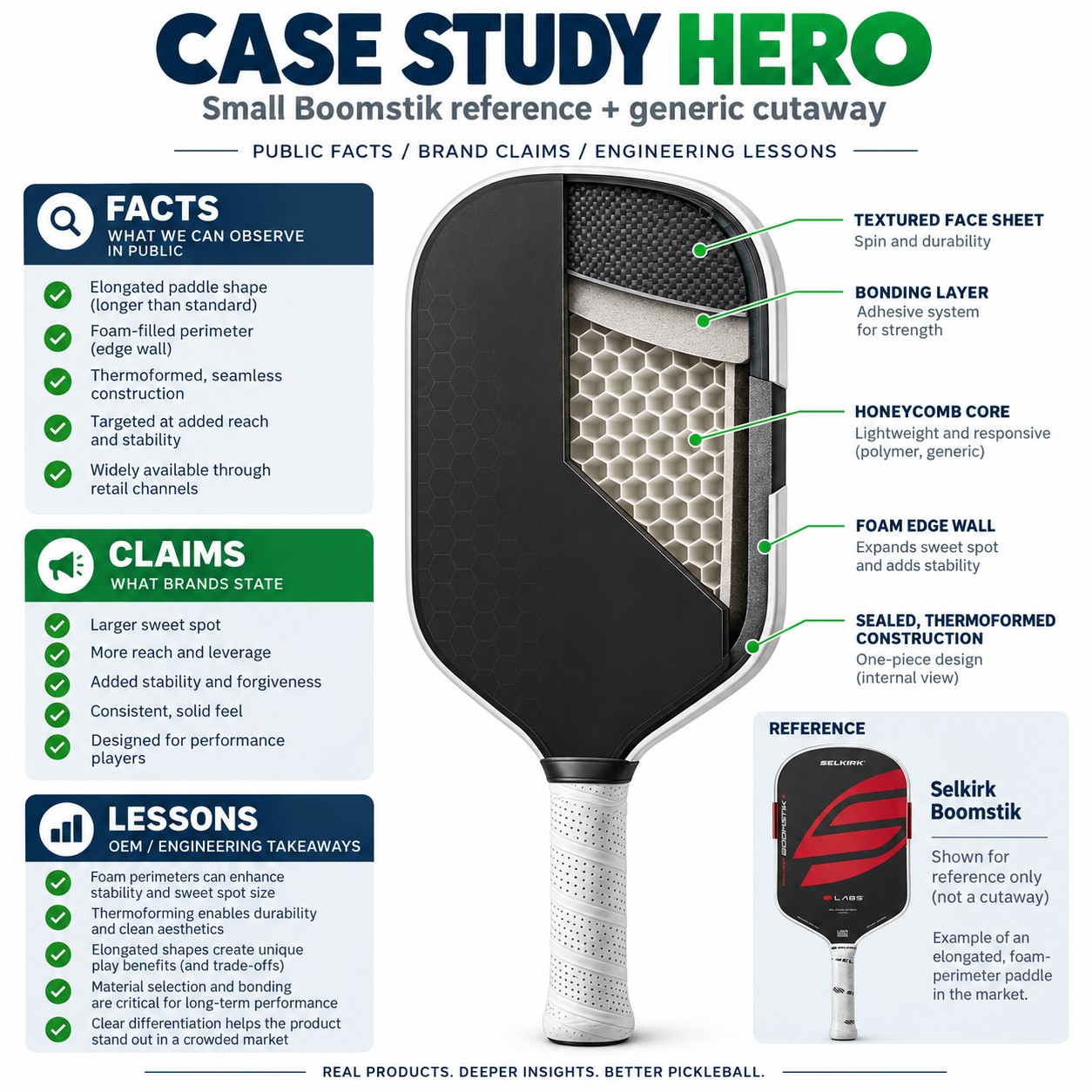
Core material, cell geometry, foam, perimeter construction and thermoforming sequence can materially change the paddle. These variables require more development and should be version controlled in the BOM.
New Shape and Packaging Create Different Types of Commitment
A new mold creates the deepest differentiation but also increases tooling cost and commitment. Freeze total length, width, handle length, throat, corner radius, edge architecture and target mass distribution before cutting tooling.
Retail box, sleeve, hangtag, barcode label, master carton and protective inserts all have their own files, materials and minimums. Packaging also affects freight volume and damage risk.
Customization Decision Matrix
| Customization | Customer Visibility | Engineering Impact | MOQ / Setup Impact | Revalidation Need |
|---|---|---|---|---|
| Logo / artwork | High | Low | Low–Medium | Usually low if construction unchanged |
| Grip / edge color | High | Low–Medium | Medium | Check mass/balance and component equivalence |
| Surface process | High | High | Medium–High | High when performance/compliance can change |
| Face / core / layup | Medium | High | Medium–High | High |
| New mold / geometry | High | Very High | High | Full prototype/testing path |
| Custom packaging | High | Low to paddle | Medium–High | Logistics and packaging validation |
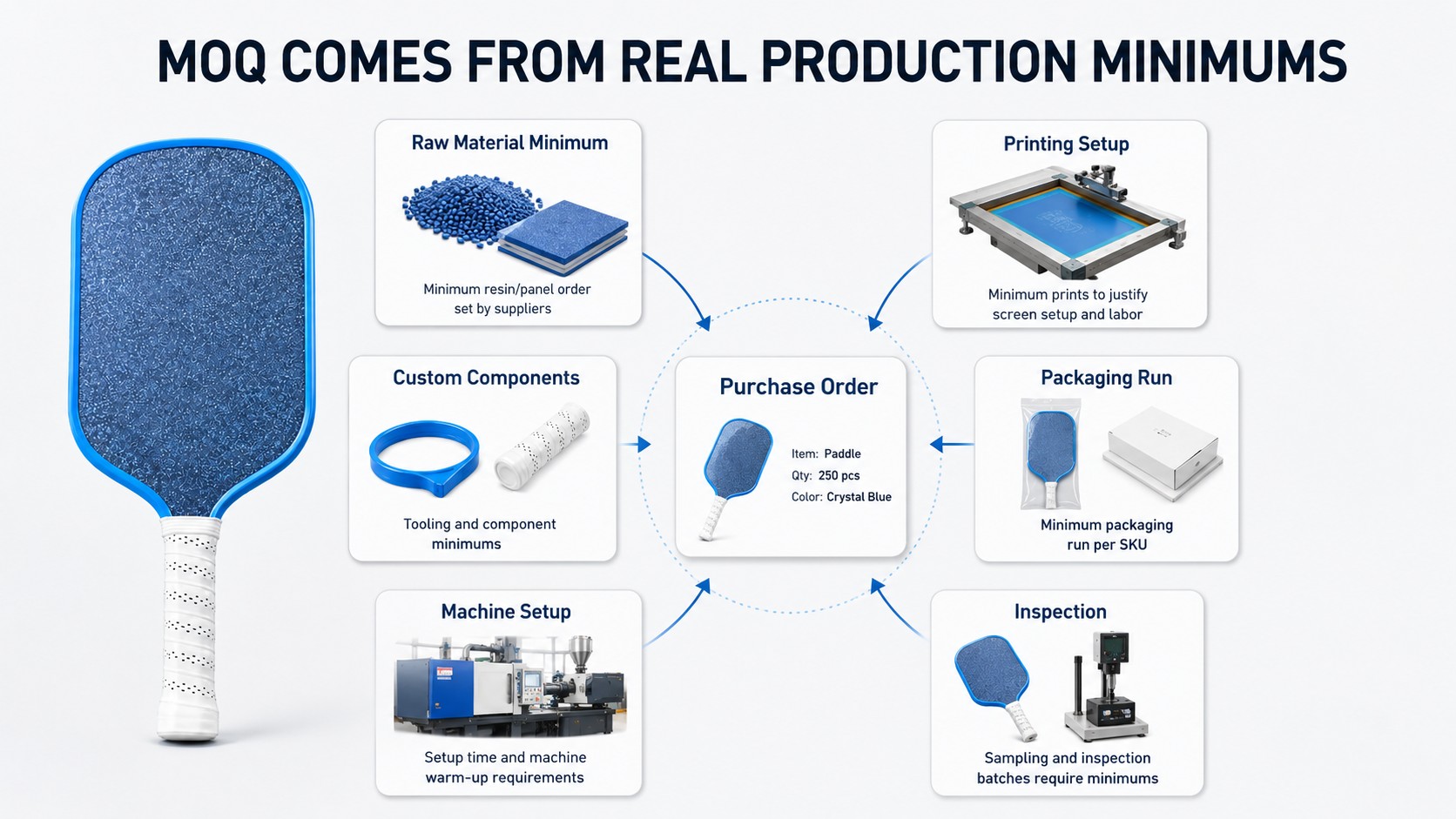
MOQ, Sample Cost, Tooling and Lead Time Come From Real Production Constraints
- Minimum raw-material purchases
- Printing setup
- Custom grip or edge colors
- Packaging print runs
- Machine or mold setup
- Inspection and lot separation
- Special material procurement
A supplier promising “zero MOQ” is usually using stock materials and limiting customization. That can be useful for testing demand, but it is not the same as deep OEM development.
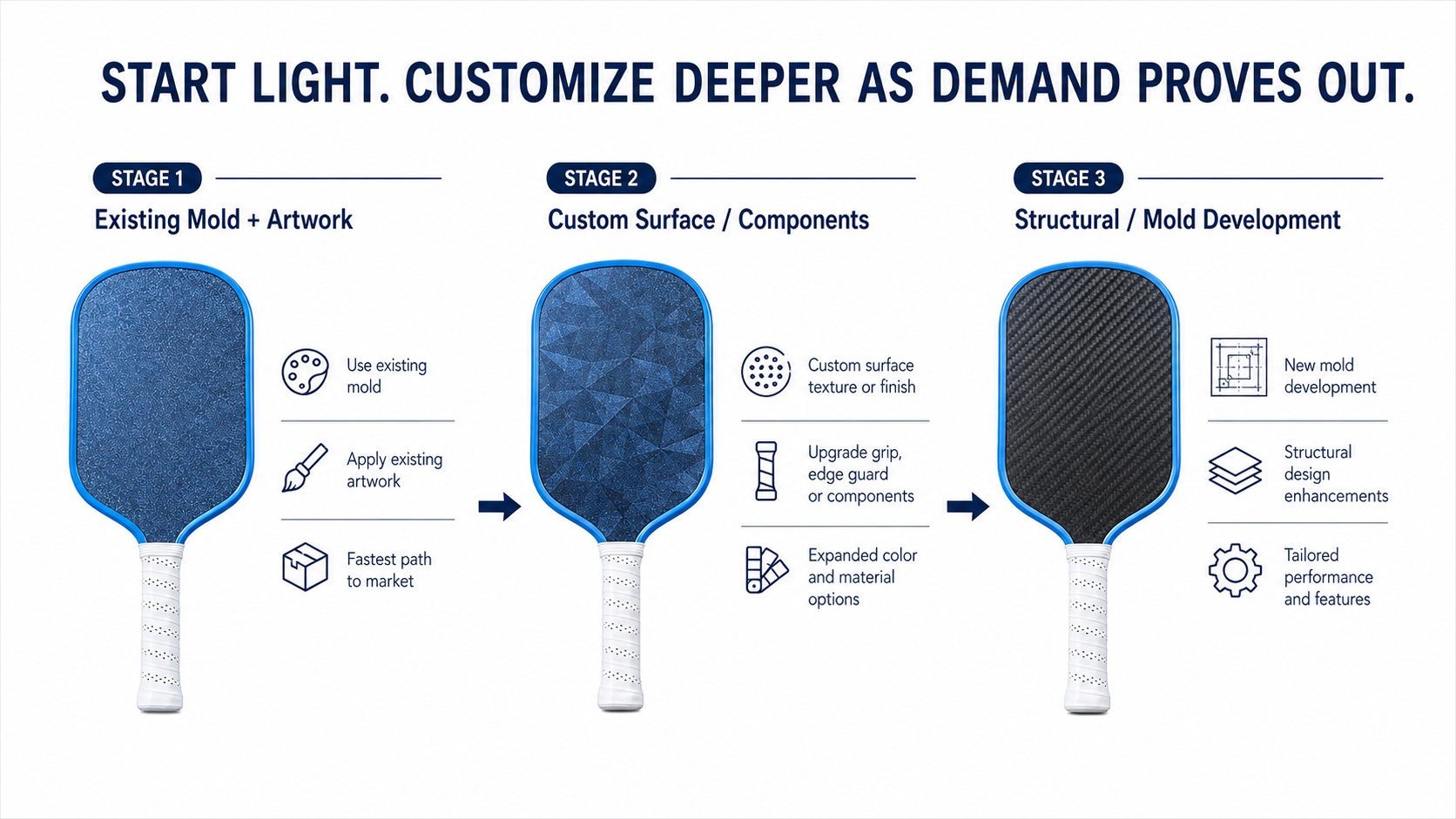
Keep the engineering platform standard and customize what the customer can see first. Use an existing mold, standard core, approved grip and standard edge system while creating custom artwork and packaging.
As sales become predictable, move into custom surface, components, structural layup or new mold development.
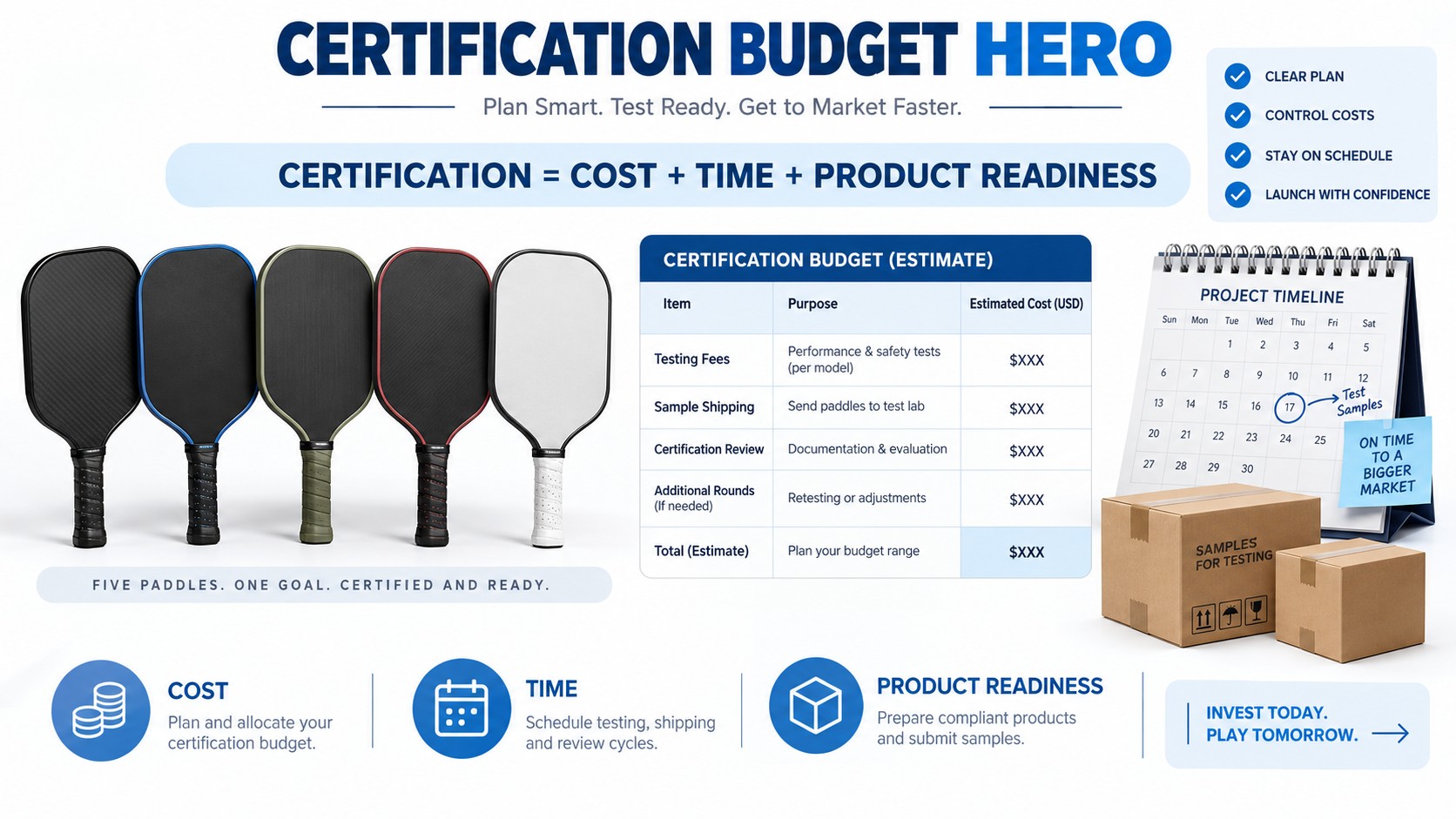
Separate one-time development costs from unit cost. Samples, printing setup, mold/tooling, testing and packaging setup may not belong inside the long-term mass-production unit price.
Lead time should also be separated into development, material preparation, production and shipping.
Freeze the Product With a Better OEM Brief and Decision Matrix
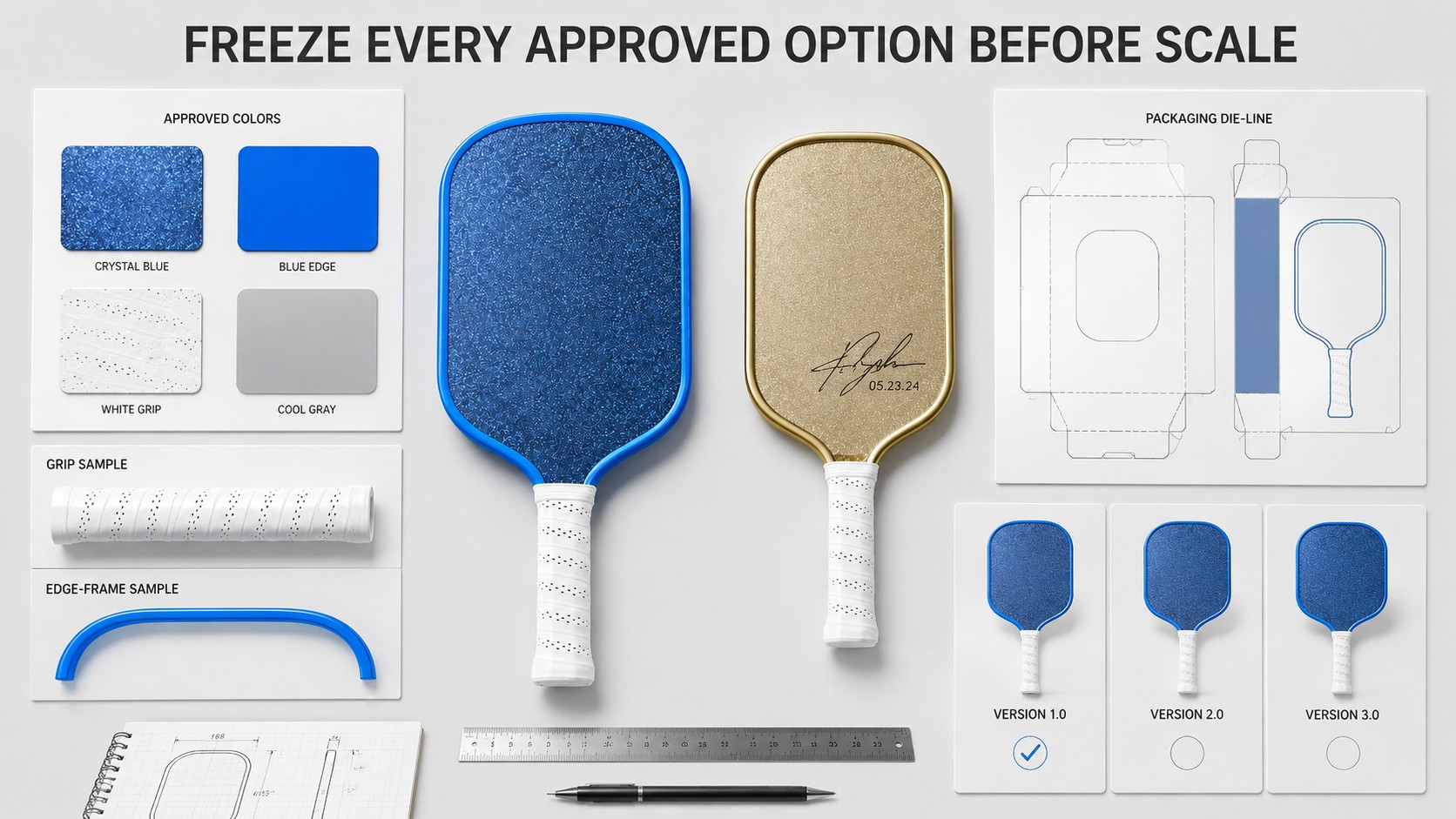
Before scale-up, freeze the approved product: BOM, mold version, artwork, colors, grip, edge, surface, packaging and inspection criteria. Keep a signed golden sample and controlled digital files.
A useful custom paddle brief includes target player, product job, geometry, construction, face, core, surface, weight, balance, grip, artwork, packaging, expected volume, target market, testing path, launch date and which variables are open for supplier recommendation.
For each requested change, score four dimensions: customer visibility, engineering impact, minimum-order impact and revalidation requirement. A new logo scores high on visibility but low on structural impact. A new core or face layup scores high on engineering impact and may require more testing. A new retail box can be high in visibility and MOQ impact while leaving paddle performance unchanged.
This matrix helps a startup spend customization budget where the buyer can actually see or feel the difference.
Separate Cosmetic Customization From Performance-Relevant Change
Customization becomes risky when a buyer assumes every request is equivalent. Artwork, packaging and some grip changes can be mostly commercial; face material, surface finishing, core, thickness, geometry and manufacturing process can change the physical product.
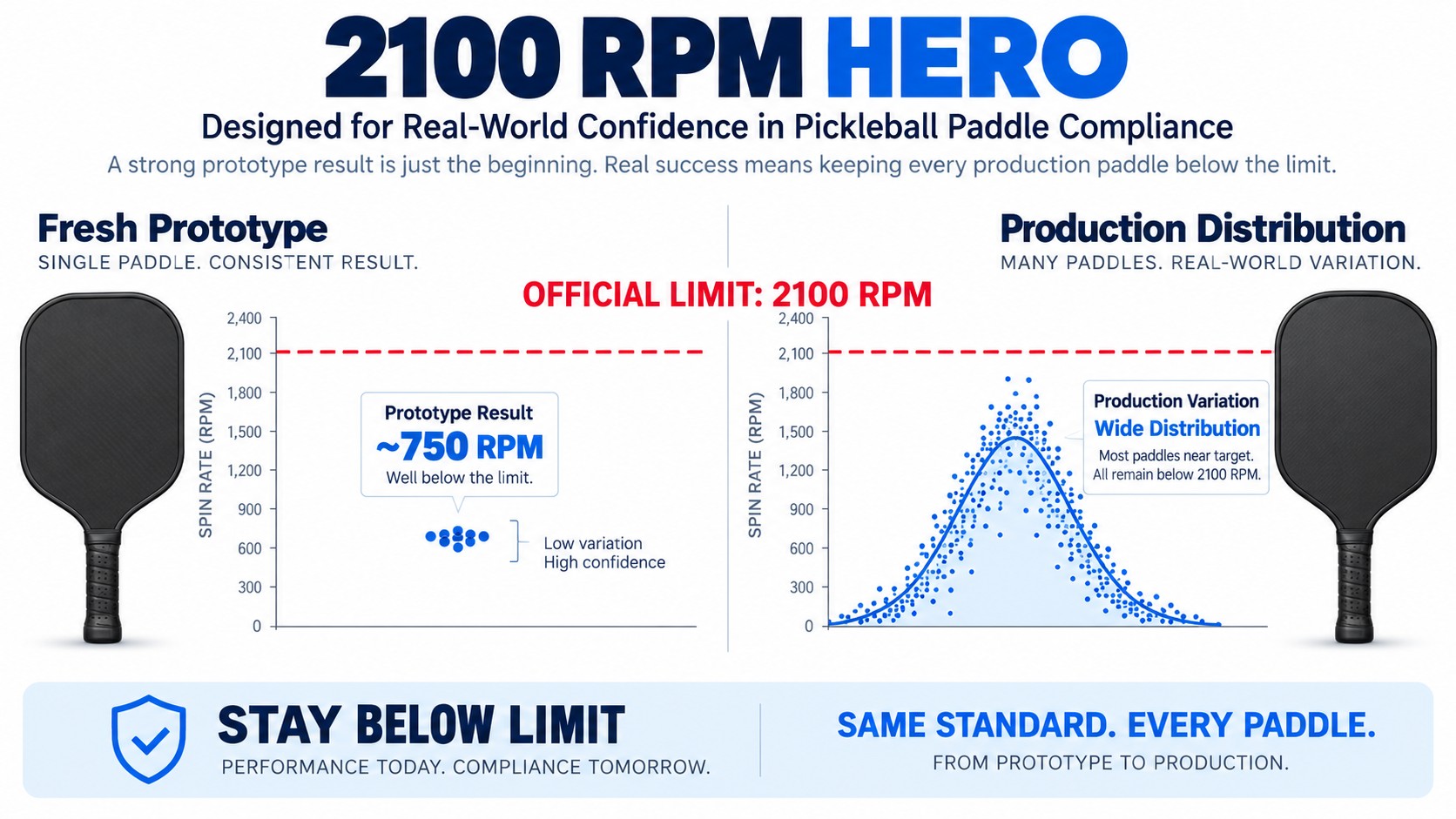
USA Pickleball’s current submission FAQ illustrates the distinction: a similarity submission must use identical materials, manufacturing and surface-finishing processes as the fully tested reference paddle. A visually small request can therefore be technically significant if it changes one of those controlled layers.
Every OEM request should be classified before lead time, MOQ or approval reuse is promised.
| Customization Request | Typical Class | Engineering Review? | Validation Question |
|---|---|---|---|
| Logo / face artwork only | Cosmetic | Check print/finish interaction | Is finishing otherwise identical? |
| Retail box / insert | Packaging | Usually separate from paddle engineering | Does paddle BOM remain unchanged? |
| Grip / handle build | Fit / component | Yes if mass or geometry changes | Does final approved configuration change? |
| Face material / grit / coating | Performance-relevant | Yes | Does material or surface process differ? |
| Core / foam / thickness | Performance-relevant | Yes | Does construction require new validation? |
| New mold / shape | Geometry | Yes | Treat as a distinct physical product unless current rules say otherwise |
Define What Is Custom, What Is Exclusive and Who Owns Each Decision
A custom color or artwork does not automatically mean the construction is exclusive to one brand. If exclusivity matters, define exactly what is exclusive: mold, artwork, material stack, region, time period or specific combination. Commercial exclusivity should be written into the agreement rather than assumed from a sample.
Assign one owner for each frozen item: engineering owns construction, design owns artwork, purchasing owns approved components, and the project manager controls the version list. When responsibility is unclear, a supplier may receive conflicting instructions from different people.
A one-page approval matrix can prevent expensive last-minute changes.
Customize only as deeply as the brand can validate, finance and manage. The goal is not maximum customization. It is a differentiated product that can still be reproduced at the target cost and volume.
FAQ
What is the easiest customization for a new brand?
Usually artwork and packaging on an existing, proven platform because they create visible differentiation with lower engineering risk.
Why do custom paddles have MOQ?
Raw materials, printing, custom components, packaging, machine setup and lot separation can each have economic minimums.
Can I customize the paddle shape at low MOQ?
A new shape often requires new tooling and deeper validation, so it creates more cost and commitment than artwork-only customization.
Should I freeze packaging before mass production?
Yes. Packaging affects artwork, protection, freight volume and launch photography.
What is a golden sample?
The approved physical reference representing the frozen product version used to compare production output.
The End about Mayvoci
1)Design:Over 100 paddle designs and photography service to assist start-up.
2)Professional:Focus on various of paddles manufacturing for 6 years
3)Quality:Strict quality management system to provide safety and satisfaction for customers
4)Amazon:Flexible comprehensive solution to make sure each Amazon seller is well cared.
5)Excellent Team:Experienced paddle experts & dynamic sales team give you 5-star service

Which customization usually creates the most hidden complexity in your projects: shape, surface, grip, packaging or low MOQ?