
USA Pickleball is changing how new paddle submissions are regulated for spin.
Correction / current rule: USA Pickleball’s final Spin Rate Test update was published July 8, 2026. The 2,100 RPM ceiling applies to new certification submissions beginning October 1, 2026.
Beginning October 1, 2026, every paddle submitted for USA Pickleball certification must measure 2,100 RPM or less under the new Spin Rate Test to receive approval.
This is not simply a new number. It changes the role of surface roughness and coefficient of friction, moves regulation toward direct output measurement and affects how brands should design, validate and market spin-focused paddles.
What Changes on October 1, 2026
What Changes on October 1, 2026
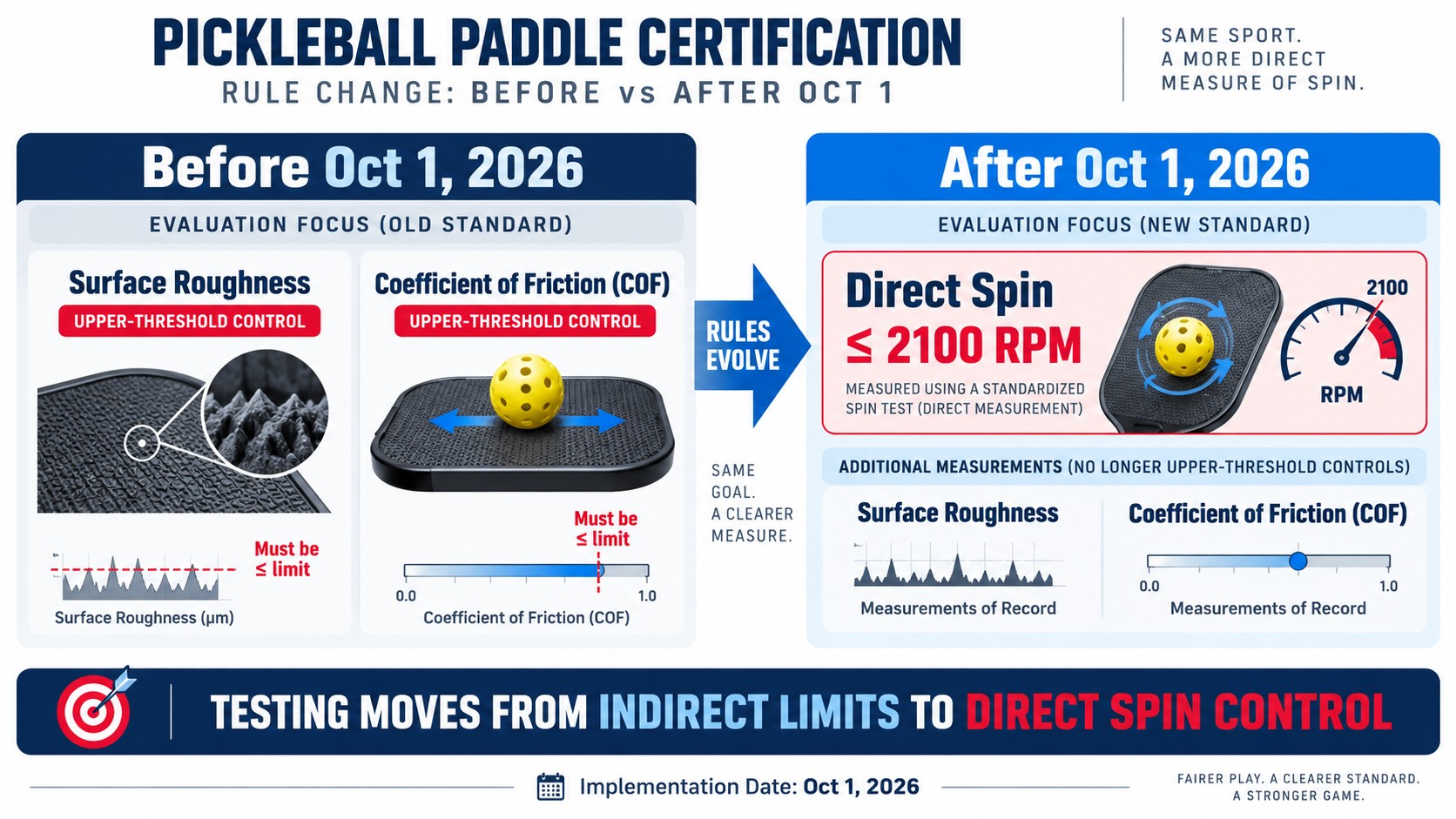
USA Pickleball’s July 8, 2026 update lists four central changes: implementation on October 1, a maximum measured spin rate of 2,100 RPM, and replacement of the previous upper thresholds for surface roughness and coefficient of friction with measurements of record.
Until October 1, paddles that meet the existing surface requirements can continue to be certified under the existing standards.
Existing Approved Paddles
USA Pickleball states that certified paddles must comply with the equipment standards that were in effect at the time of certification.
That means the October 1 rule is specifically important for new submissions.
Brands should not imply that every older approved paddle is automatically reclassified by the new submission rule; use the official approved-equipment database for current status.
Direct Spin vs Surface Proxies
Roughness and friction can help describe a surface, but neither directly tells the regulator how much spin the paddle produces under the official test.
The new framework measures the outcome—RPM.
For engineering, surface metrology remains useful for process control even when it is no longer the primary upper-limit gate.
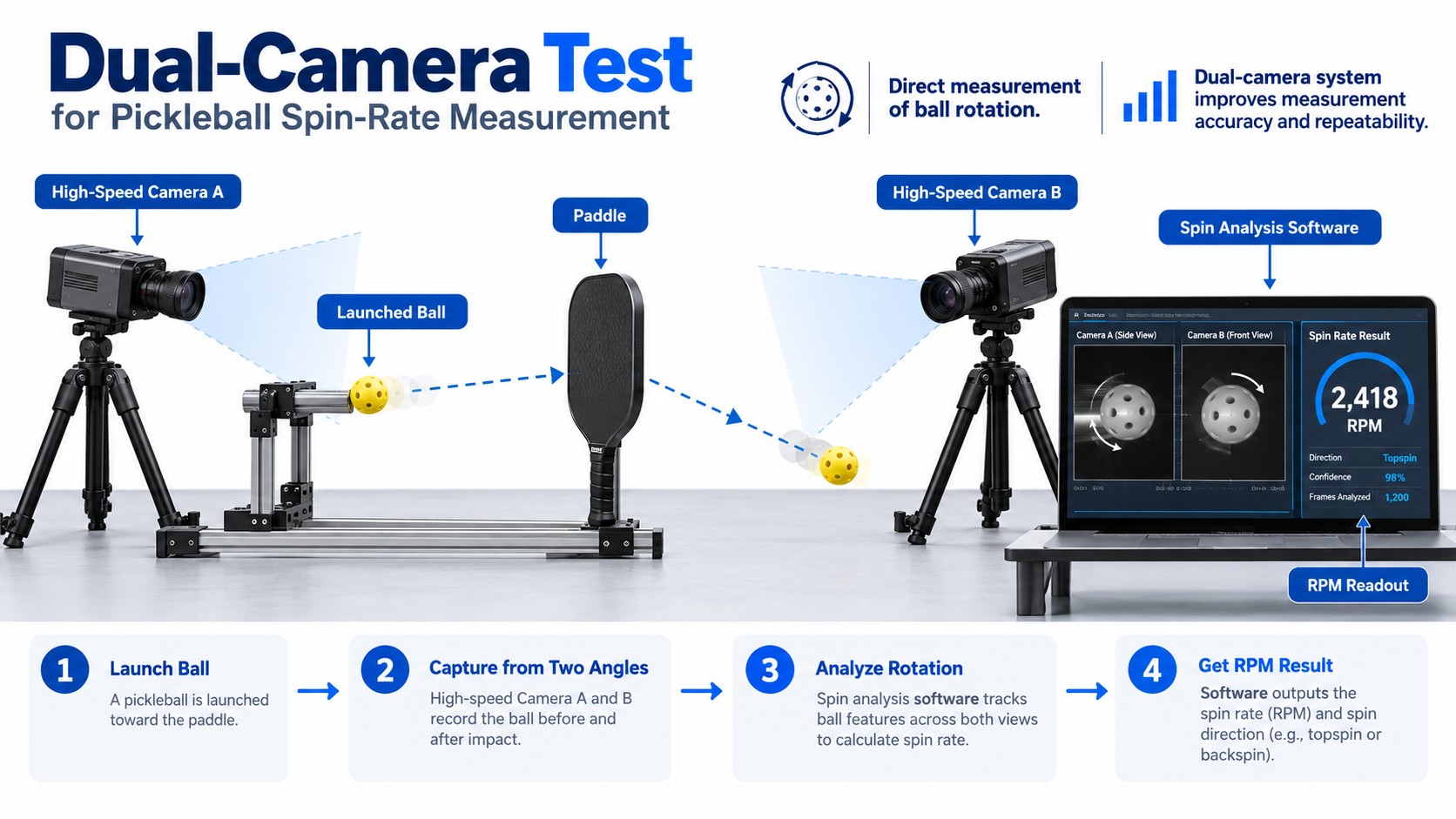
The Test Uses High-Speed Imaging
USA Pickleball says the system was developed with Image Systems and uses a dual-camera setup plus software that calculates spin rate.
The objective is a repeatable direct measurement.
Brands should use the official SOP rather than attempting to infer certification results from consumer launch monitors or informal hand tests.
Design and Surface Implications
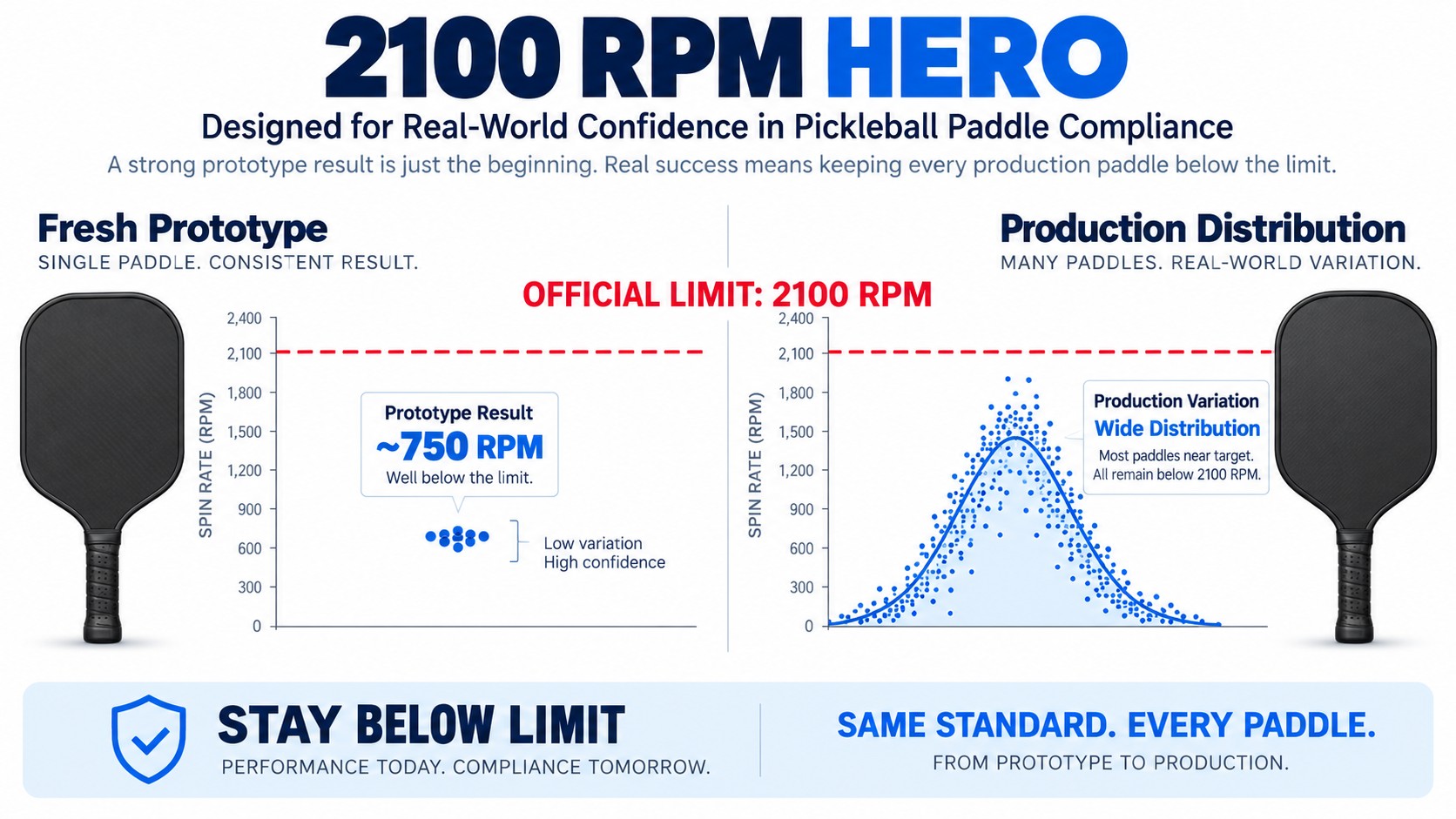
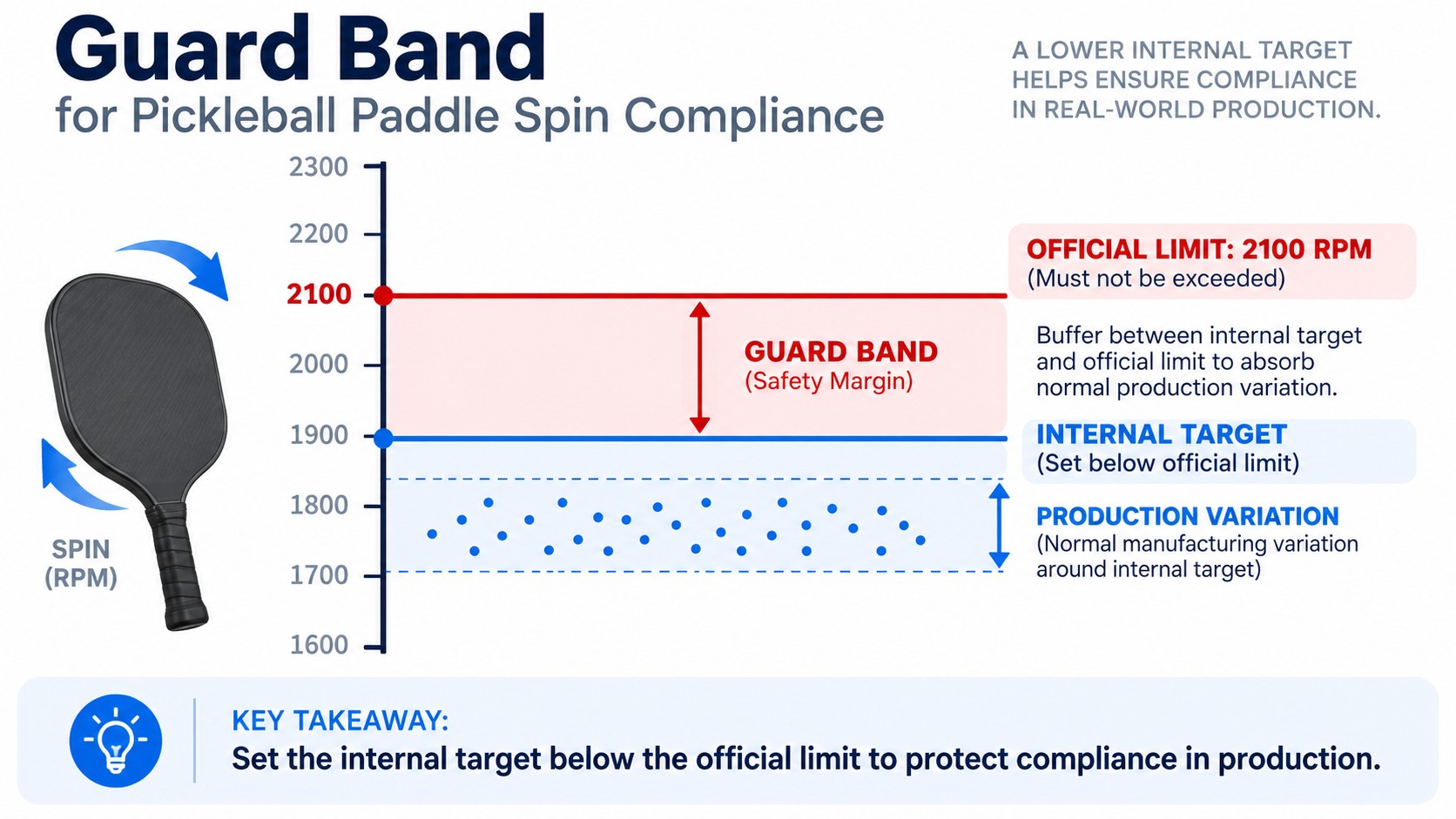
2,100 RPM Is a Ceiling, Not a Manufacturing Target
Production has variation.
If a brand designs every prototype to sit exactly at the certification ceiling, normal surface variation, wear state or measurement variation may create unnecessary risk.
Use an internal target below the official limit, based on prototype and pilot distribution.
Surface Design Still Matters
The regulatory change does not make surface engineering irrelevant.
Particle size, binder, peel-ply transfer, resin condition, printing and wear can all influence real surface behavior and production consistency.
The difference is that brands should connect those variables to measured spin rather than claim that roughness alone guarantees RPM.
Test New and Conditioned Samples
Surface performance changes with use.
Evaluate fresh samples, conditioned samples and multiple production units. Track both spin and the surface process variables that explain the result.
This supports both compliance margin and realistic consumer claims.
Marketing Claims Need Context
An advertised RPM number is meaningful only with a test method and sample condition.
Consumer or third-party tests can differ from the official USA Pickleball method. Do not present an informal result as an official certification number.
Use careful wording such as “measured under our internal test method” when appropriate.
Player Buying Implications
Players should not choose a paddle only by the highest advertised RPM.
Shape, swing weight, contact quality, surface durability and technique affect how much spin a player actually creates.
The separate Spin Buying Guide should translate the rule into player choice without turning certification into a shopping leaderboard.
Testing, Variation and Compliance Margin
Manufacturer Action Plan
Before October 1, update prototype test plans, establish an internal guard band, document surface processes, test multiple pilot units and connect the spin page with the approved-equipment status.
After October 1, keep surface/process changes under control because future production still needs to remain consistent with the certified product.
Surface Process Capability Becomes More Important
Direct spin testing does not eliminate the need for surface metrology. It changes its role.
Use roughness, visual inspection, coating weight, particle distribution, peel-ply controls or other process measurements to explain and control the RPM distribution. The regulator cares about output; the factory still needs process inputs that operators can control.
Build an RPM Capability Chart
For each pilot lot, plot every measured unit rather than reporting only the average.
The chart should show internal target, warning level and the 2,100 RPM official ceiling. Watch spread and drift across production days.
A stable average with a very wide spread is not a stable process.
What to Do With a Prototype Above the Internal Target
Do not simply sand the surface until one sample passes.
Identify the mechanism: particle loading, binder exposure, peel-ply pattern, cure, surface finishing or another variable. Adjust the process and rebuild several samples.
The goal is a reproducible surface process, not a hand-corrected certification sample.
What Brands and Players Should Do
2,100 RPM Compliance Margin
| Layer | What to Control | Why |
|---|---|---|
| Surface construction | Peel-ply / grit / coating route | Explains process variation |
| Prototype spin | Multiple units under one method | Avoid single-sample confidence |
| Conditioned spin | New vs worn / conditioned | Lifecycle behavior |
| Pilot distribution | Lot-level spread | Build internal margin below ceiling |
| Marketing claim | Method + sample condition | Avoid incomparable RPM claims |
Sources / Current-Update Notes
- USA Pickleball Spin Rate Update — Published July 8, 2026. New submissions from Oct. 1, 2026 must measure ≤2,100 RPM; roughness and COF upper thresholds become measurements of record. Primary source
Build Spin Margin Below 2,100 RPM
The new ceiling changes the engineering objective from “maximum surface texture” to repeatable legal spin over product life. A brand should understand how surface construction, lot variation, conditioning and cleaning move measured RPM—not only what the highest new-sample result is.
An internal target below the official ceiling gives room for normal manufacturing spread. The exact margin should come from the brand’s own sample distribution and method rather than a universal percentage invented for every construction.
- Test several production-intent paddles under one documented method.
- Compare new and conditioned surfaces.
- Market measured spin only with the method and sample condition clearly stated.
Frequently Asked Questions
When does the 2,100 RPM limit begin?
October 1, 2026 for new USA Pickleball certification submissions.
What happens to roughness and coefficient of friction?
Their upper thresholds are replaced by measurements of record under the announced change.
Does the rule automatically remove older paddles?
No. USA Pickleball says certified paddles must comply with the standards in effect at the time of certification; check the live approved list.
Should manufacturers target exactly 2,100 RPM?
No. Use a lower internal target with production margin.
Is advertised RPM the same as official test RPM?
Not necessarily. Test method and sample condition matter.
Developing a spin-focused paddle for 2026 rules?
Mayvoci can help define the surface process, sample plan and production controls needed before certification submission.
The End about Mayvoci
1)Design:Over 100 paddle designs and photography service to assist start-up.
2)Professional:Focus on various of paddles manufacturing for 6 years
3)Quality:Strict quality management system to provide safety and satisfaction for customers
4)Amazon:Flexible comprehensive solution to make sure each Amazon seller is well cared.
5)Excellent Team:Experienced paddle experts & dynamic sales team give you 5-star service

As an OEM manufacturer, we’re closely following every certification update because these changes directly influence paddle design and product development.
We’re interested in hearing perspectives from brands, distributors, coaches, and players.
How do you think the new 2,100 RPM limit will influence the next generation of pickleball paddles?
Looking forward to the discussion.