
A clean factory tour can still be a weak audit. The original Mayvoci article correctly asks a harder question: can the supplier define, control, record and reproduce the paddle you intend to buy? V2 turns the 12 audit areas into an evidence-based buyer tool instead of twelve short descriptive sections.
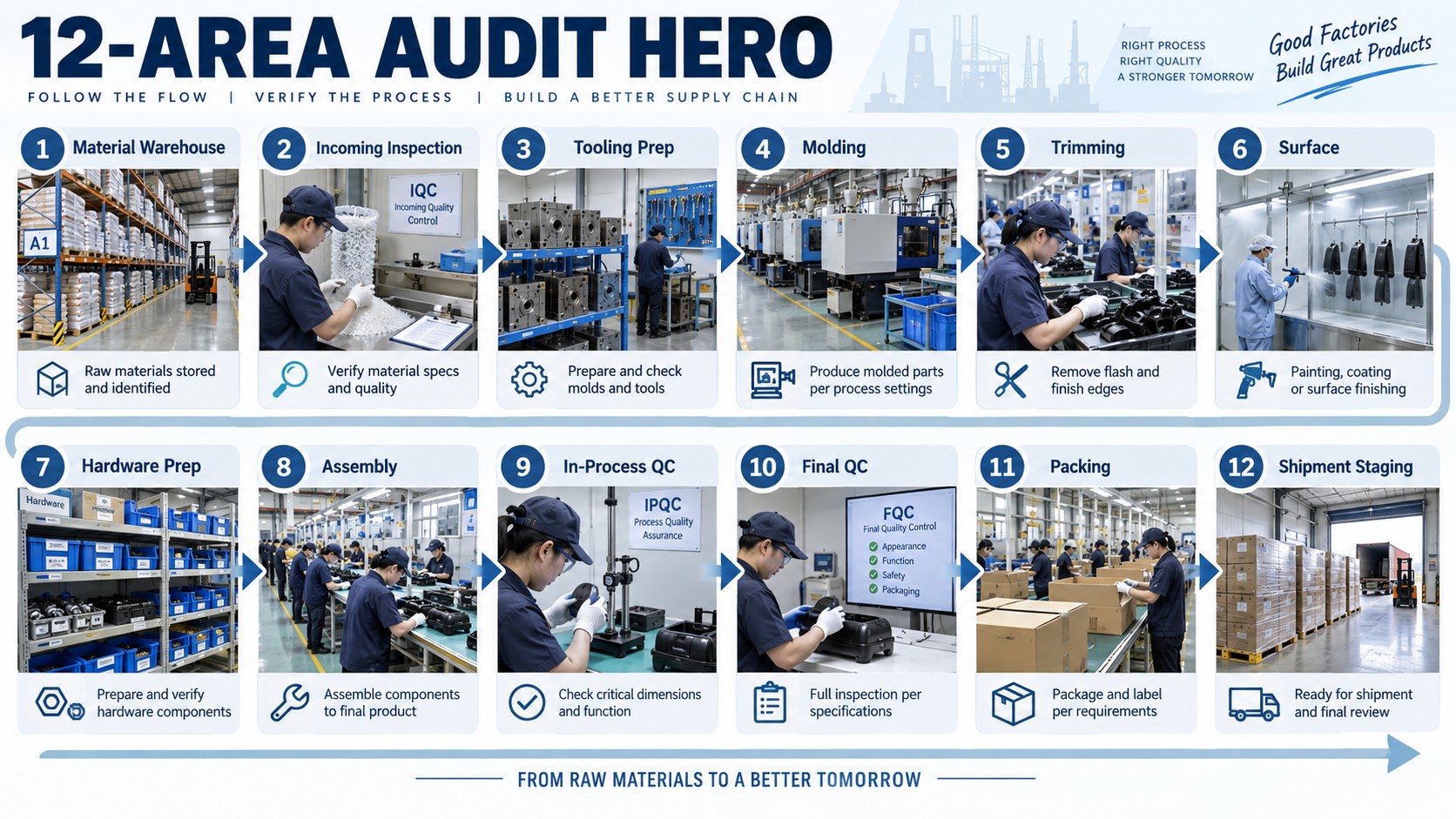
What a Pickleball Paddle Factory Audit Should Prove
A buyer-side audit is not a certification audit. Its purpose is to reduce product and supply risk before scale-up. The audit should verify three things: process ownership, control evidence and repeatability.
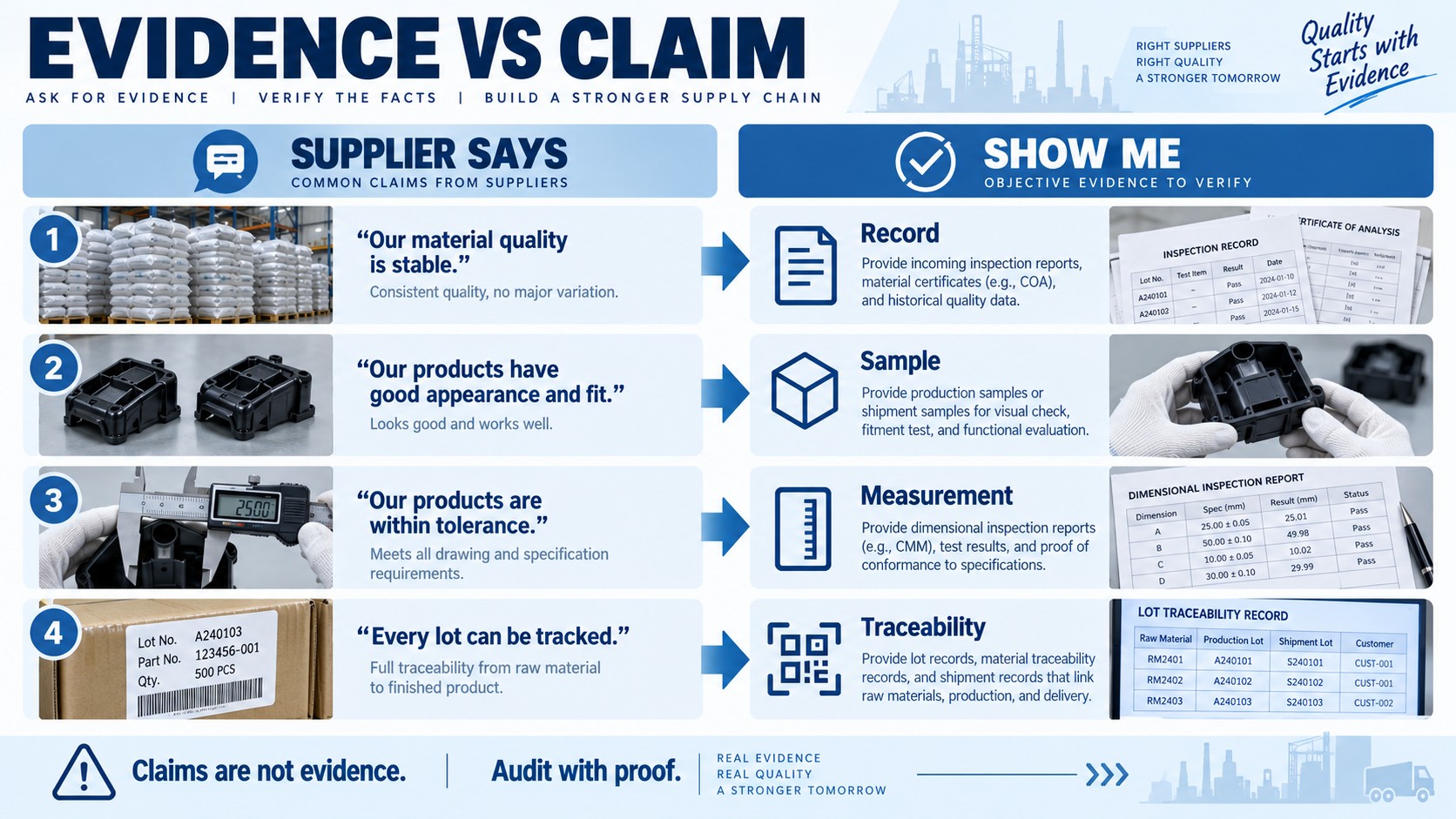
Ask the supplier to show evidence tied to real production—material lots, work instructions, inspection records, retained samples and corrective actions. A blank quality form proves that a template exists; a completed record from a real lot shows how the system is actually used.
Use the 12-Area Evidence Scorecard
Suggested weights are an internal purchasing framework, not an industry standard. Adjust them to the risk of the specific project.
| Audit Area | Buyer Question | Evidence to Request | Red Flag | Suggested Weight |
|---|---|---|---|---|
| 1. Company / process ownership | Which steps are truly in-house? | Legal entity + live process + subcontractor controls | Sales cannot identify who owns a critical process | 5 |
| 2. Raw-material control | How are critical lots identified and stored? | Labels + incoming records + approved suppliers | Unapproved substitution / no lot identity | 10 |
| 3. Tooling / molds | How are revisions and maintenance controlled? | Tool ID + maintenance / revision record | No version control | 7 |
| 4. Lamination / forming | Which variables are controlled? | Work instruction + real production record | Process depends on operator memory | 10 |
| 5. Surface process | How is texture/process consistency verified? | Consumable/material control + lot QC | Only visual claims / no reference | 8 |
| 6. Handle / assembly | How are grips, butt caps, edges and trimming controlled? | Fixture / WI / inspection criteria | Skilled-worker-only judgment | 5 |
| 7. Incoming QC | What is checked before material disappears inside the paddle? | Real incoming inspection record | Blank form only / no criteria | 8 |
| 8. In-process QC | Where are defects caught before final assembly? | Batch-linked checkpoints | No intermediate records | 8 |
| 9. Final inspection | Does final QC match the purchase specification? | Real lot report + sampling logic | Only cosmetic inspection | 8 |
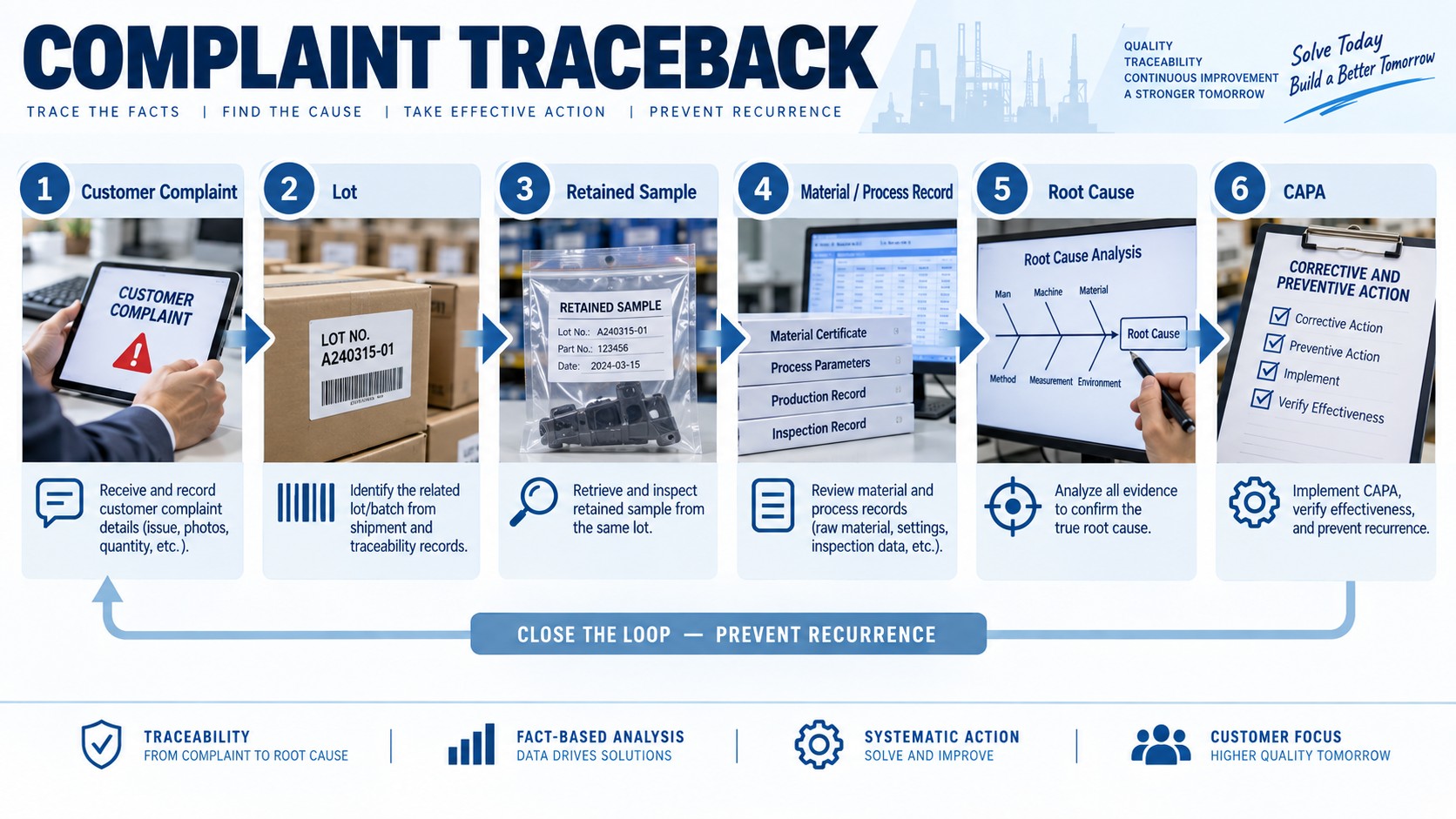
| 10. Traceability / retained samples | Can a complaint trace back to a lot? | Lot record + retained sample | No retained samples / cannot trace | 10 |
| 11. Capacity / maintenance / changes | What happens when volume or materials change? | capacity plan + maintenance + change procedure | Urgent scale-up with uncontrolled change | 7 |
| 12. CAPA / communication | Can the factory close a real problem systematically? | real corrective-action example | Blame without root cause / recurrence prevention | 9 |
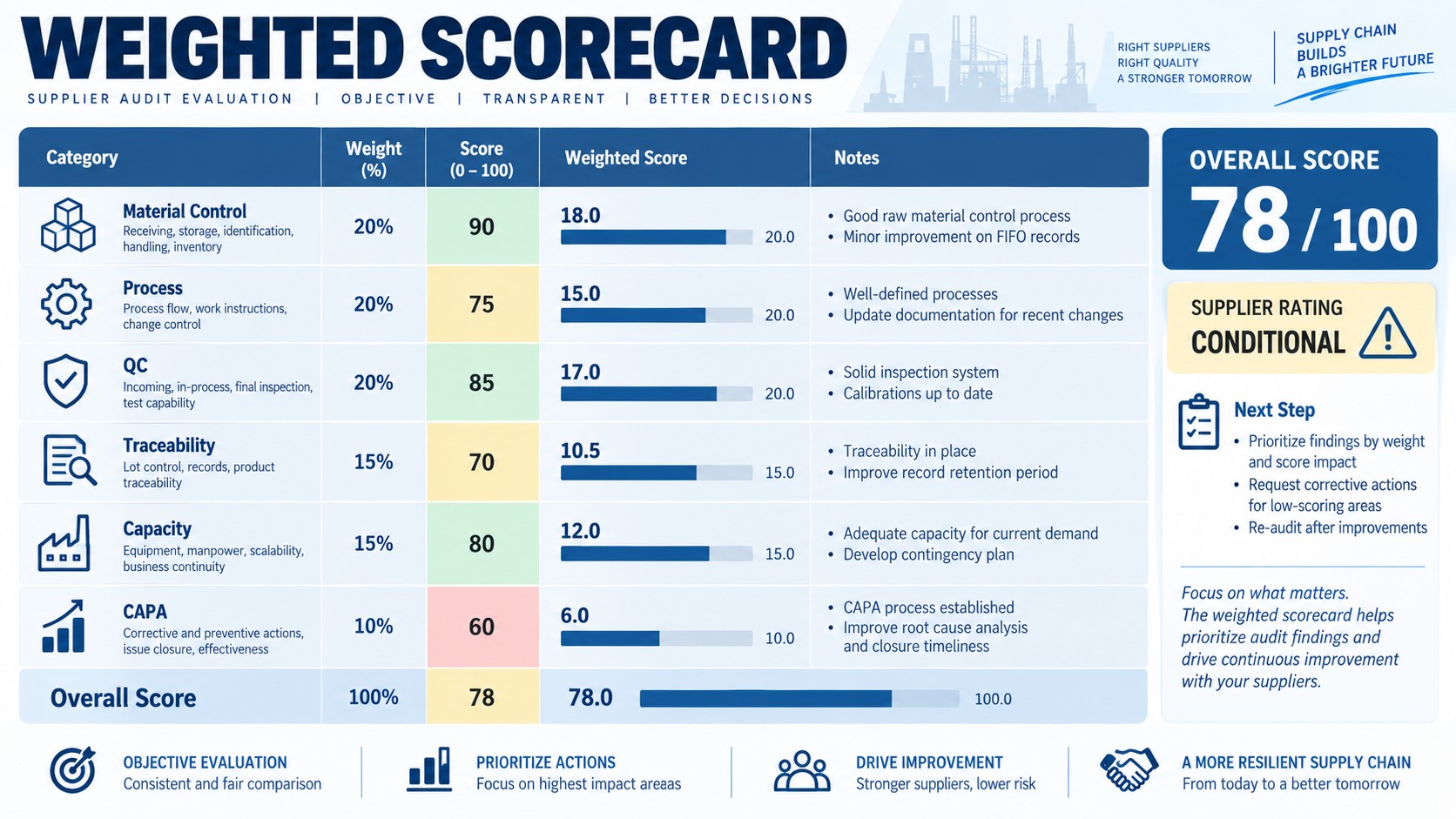
Score Evidence, Control and Repeatability Separately
A single 1–100 score can hide an important weakness. Use three dimensions for every critical area:
| Dimension | Question | 0–2 Weak | 3–4 Acceptable | 5 Strong |
|---|---|---|---|---|
| Evidence | Can the supplier show a real record/sample? | Claim only | Some real evidence | Current, traceable evidence |
| Control | Is there a defined method/window? | Operator memory | Basic WI/check | Defined method + ownership |
| Repeatability | Can normal production reproduce the result? | One good sample | Limited batch evidence | Pilot/lot distribution + retained sample |
| Risk response | What happens when something changes/fails? | Ad hoc | Basic escalation | Change control / CAPA / revalidation |
Red Flags That Should Stop or Slow Scale-Up
Examples include unclear process ownership, inability to identify critical materials, uncontrolled substitutions, no retained samples, inconsistent answers between departments, a sample-room process that differs from mass production, missing change records and a refusal to show any real lot-level evidence.
A red flag does not always mean “reject the factory.” It can mean use a smaller pilot, add inspection, freeze more of the BOM or close one specific system gap before committing volume.
Convert Audit Findings Into a Pilot Order Plan
| Audit Result | Recommended Next Step |
|---|---|
| Strong technical system + strong evidence | Proceed to controlled pilot / commercial negotiation |
| Good samples, weak traceability | Pilot only; require lot/retained-sample control before scale |
| Strong factory, new/novel construction | Run product-specific pilot and lifecycle/compliance validation |
| Critical process outsourced | Verify subcontractor control and incoming/outgoing acceptance |
| Material substitution risk | Freeze approved source/equivalent and change-approval workflow |
| Major unresolved red flag | Do not scale until evidence closes the risk |
The audit should end with owners, deadlines and a purchasing decision—not only photographs from a tour.
Create a Downloadable Audit Pack
For Mayvoci, this article has strong lead-magnet potential. The most valuable asset is a downloadable checklist containing the 12 areas, evidence request, weighted score, red-flag field and final recommendation. That turns the article into a working procurement tool and makes the page more differentiated than generic “how to choose a supplier” content.
Mayvoci First-Party Evidence to Add Before “Authority” Positioning
These are evidence tasks, not claims. Do not publish them as “our process” until the real photo, record or test exists.
Completed audit evidence
Capture: One sanitized real internal/supplier audit pack
Record: date, process areas, evidence, findings
After evidence exists: Show what an evidence-based audit looks like without exposing confidential data.
Real incoming record
Capture: Completed material inspection record
Record: material lot, criteria, result
After evidence exists: Support the Raw-Material Control section with real evidence.
Traceback example
Capture: Complaint/issue → lot → retained sample → process record
Record: lot IDs and corrective-action path
After evidence exists: Demonstrate traceability as a process, not a promise.
CAPA example
Capture: One closed real defect case
Record: containment, root cause, action, verification
After evidence exists: Show how a problem is closed systematically.
Frequently Asked Questions
Is this the same as ISO or certification auditing?
No. It is a buyer-side product/supplier risk audit.
What is the most important evidence?
Real lot-linked evidence: material identity, process records, QC results, retained samples and corrective actions.
Do all 12 areas need equal weight?
No. Weight them according to the construction and commercial risk.
What if the factory will not disclose proprietary process values?
You can verify that controlled windows, work instructions, ownership and records exist without demanding every confidential parameter.
What should happen after the audit?
Close critical findings, define pilot controls and scale only after the required evidence is in place.
The End about Mayvoci
1)Design:Over 100 paddle designs and photography service to assist start-up.
2)Professional:Focus on various of paddles manufacturing for 6 years
3)Quality:Strict quality management system to provide safety and satisfaction for customers
4)Amazon:Flexible comprehensive solution to make sure each Amazon seller is well cared.
5)Excellent Team:Experienced paddle experts & dynamic sales team give you 5-star service

If you work on this topic from the brand, sourcing, engineering or manufacturing side, I’d be interested in your experience: During a factory audit, which area tells you the most about future risk: incoming materials, process control, final QC, traceability or change management?