Finding the right pickleball distributor is only the beginning of building a successful distribution channel. If you’re still searching for qualified distribution partners, start with our guide on How to Find the Right Pickleball Paddle Distributor for Your Needsbefore creating your distributor policy.
The next challenge is often more difficult: How should you manage the relationship once the distributor is selected?
Many pickleball brands make the same mistake. They find a distributor, offer a competitive price, sign a simple agreement, and expect sales to grow naturally. But without clear distribution policies, performance targets, pricing rules, and contractual responsibilities, problems can quickly appear.
A distributor may request exclusive rights without committing to meaningful sales. Two distributors may compete by lowering prices. A partner may purchase a large initial order but make very little effort to develop the market afterward.
A well-designed distributor management system can prevent many of these problems.
This guide explains how to build a practical pickleball distributor policy, structure a distribution agreement, set realistic KPIs, and connect distributor performance with commercial benefits.
The basic principle is simple: distributor benefits should be connected to measurable performance.
Why a Clear Pickleball Distributor Policy Matters
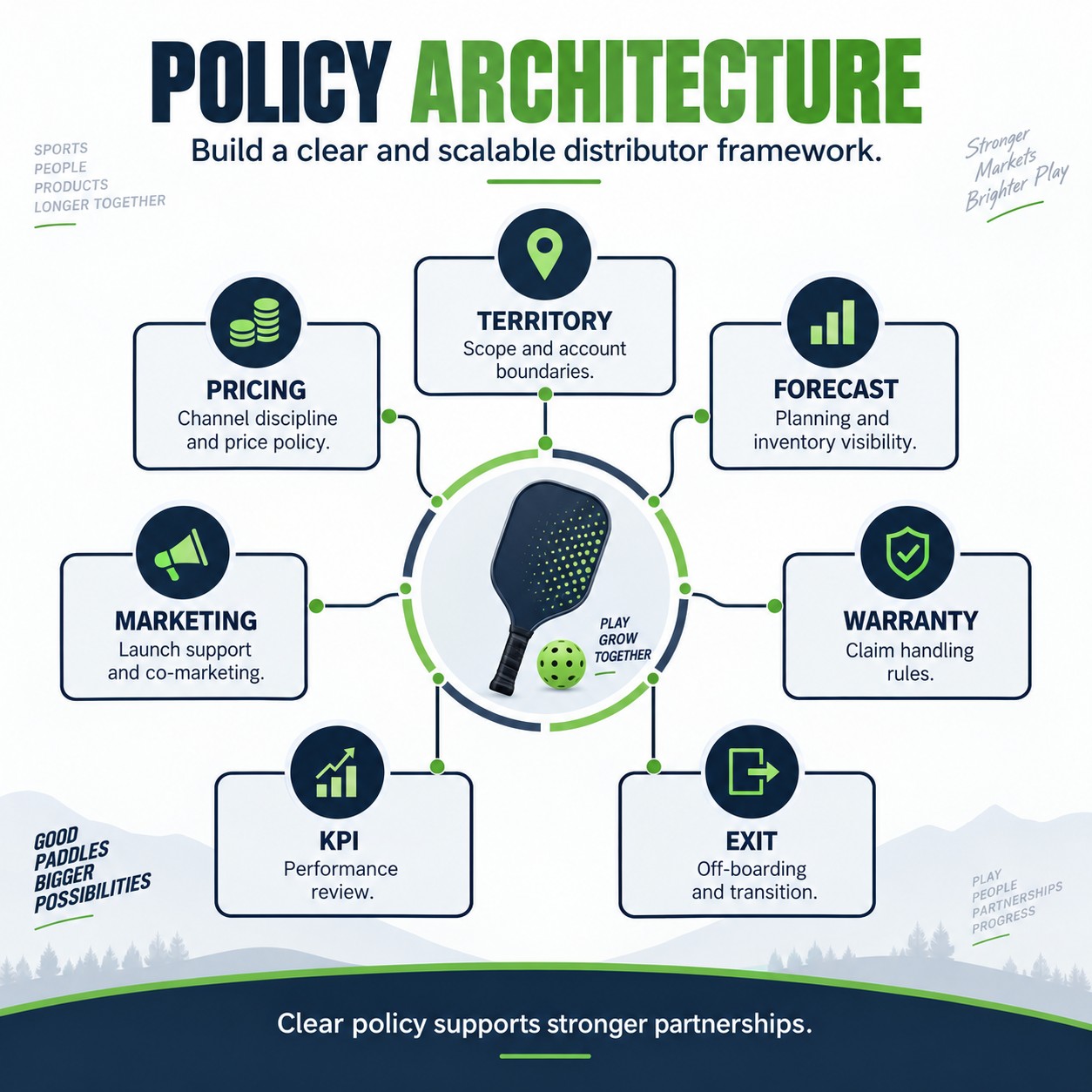
A distributor policy defines how your company works with distributors and what both parties can expect from the partnership.
Without a clear policy, negotiations often become based on individual requests.
One distributor may ask for a lower price.
Another may ask for exclusive rights.
A third may request longer payment terms.
If every distributor receives different conditions without a clear structure, your distribution network can quickly become difficult to manage.
A good distributor policy should balance three objectives:
- Distributor incentives
- Brand protection
- Market growth
The goal is not to make the distributor agreement as strict as possible. The goal is to create a structure where both sides have a clear reason to invest in the relationship.
A simple distribution management model
Clear Policy → Clear Contract → Measurable KPIs → Performance Rewards → Long-Term Partnership
This framework can be applied whether you are a new pickleball brand working with your first distributor or an established brand managing multiple distributors across different markets.

Start by Defining Your Distribution Strategy
Before setting prices or writing a contract, define what you want your distribution network to accomplish.
Ask yourself five questions:
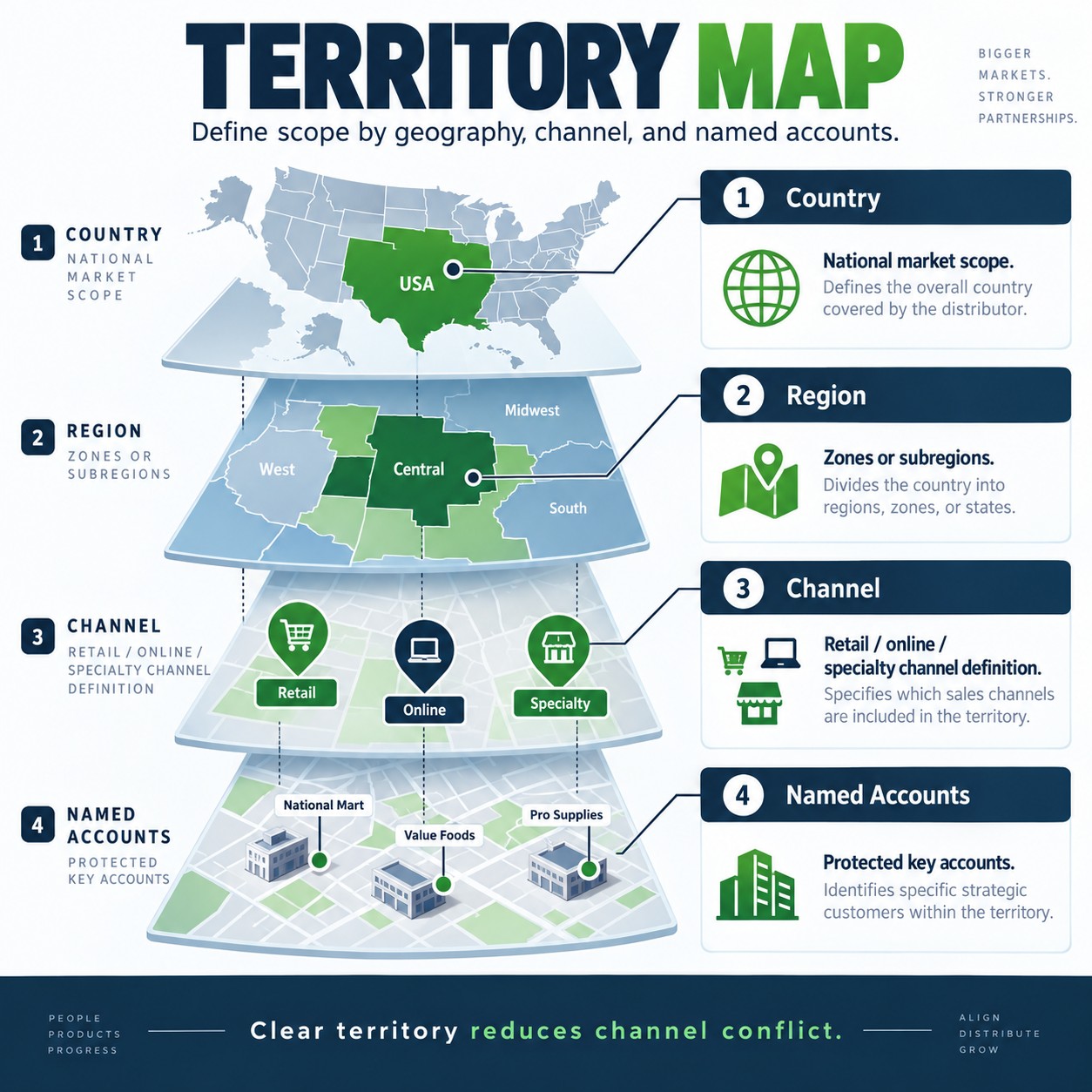
Which market are you targeting?
Determine whether the distributor will cover:
- A country
- A state or province
- A city
- A specific sales channel
- Online sales
- Offline retail
- Sports clubs
- Pickleball facilities
- E-commerce platforms
A geographic territory and a sales channel are not always the same thing.
For example, a distributor might have offline exclusivity in a country while your brand continues to sell directly through its own international website.
These distinctions should be defined before signing the agreement.
What products will the distributor represent?
Your distributor agreement should clearly define the product scope.
For example:
- Pickleball paddles
- Paddle bags
- Grips
- Edge guards
- Balls
- Apparel
- Accessories
- Customized or OEM products
You may also decide that a distributor has exclusive rights to one product line but not your entire product portfolio.
This can be useful when testing a new market.
What level of commitment do you expect?
Not every distributor needs the same commercial requirements.
A small specialty retailer may start with a relatively small order.
A national distributor should normally be expected to provide stronger commitments, such as:
- Annual purchase targets
- Quarterly forecasts
- Retail network development
- Marketing activities
- Inventory planning
- Customer service
The distributor’s benefits should increase as its commitment increases.
Before defining pricing, territories, or sales targets, make sure you’ve thoroughly evaluated your potential partners. Our guide on choosing the right pickleball distributor explains what qualifications and market capabilities you should look for.
How to Build a Pickleball Distributor Pricing Policy
Pricing is one of the most sensitive parts of distributor management.
A common mistake is to negotiate every distributor’s price independently.
This can create price conflicts and make it difficult to control your channel.
Instead, consider creating a structured pricing system.
Create Different Distributor Levels
For example:
| Distributor Level | Annual Purchase Target | Commercial Position |
|---|---|---|
| Standard Distributor | $20,000+ | Entry-level partnership |
| Authorized Distributor | $50,000+ | Established market partner |
| Strategic Distributor | $100,000+ | Key market partner |
The actual thresholds should be based on your product margins, market size, and business model.
The important principle is:
Higher commercial benefits should require higher performance.
Do not automatically give a new distributor your best price simply because it promises large future sales.
Use Volume-Based Incentives
Instead of reducing the price permanently, you can connect discounts or rebates to purchasing performance.
For example:
- Standard price → Initial cooperation
- Volume discount → Larger orders
- Annual rebate → Target achievement
- Marketing support → Performance achievement
- Better commercial terms → Long-term commitment
This protects your margin while giving distributors a reason to grow.
Define Promotional Pricing Rules
Your distributor policy should also explain how promotional pricing works.
Consider defining:
- Who can approve promotions?
- How long can a promotion last?
- What is the minimum advertised price, if applicable?
- Can distributors run independent discounts?
- How should major promotional campaigns be coordinated?
This becomes particularly important when several distributors operate in the same market.
Always have local legal counsel review pricing restrictions and competition-law requirements in the relevant market before implementing resale-price controls.

How to Set Distributor Territory and Exclusivity
Exclusivity is one of the most attractive benefits you can offer a distributor.
It is also one of the easiest benefits to give away too early.
A distributor may say:
“We want exclusive rights for the entire country.”
The better question is:
“What level of annual investment and sales commitment comes with that exclusivity?”
Avoid Permanent Exclusivity
Instead of giving permanent exclusive rights, consider making exclusivity performance-based.
For example:
| Annual Target Achievement | Possible Result |
|---|---|
| 100%+ | Exclusivity maintained |
| 90–99% | Continue with performance review |
| 70–89% | Improvement plan |
| 70–89% | Exclusivity subject to renegotiation |
These numbers are examples rather than universal standards.
Your actual thresholds should reflect the market potential and the distributor’s role.
The key concept is:
Exclusivity should be earned and maintained through performance.
Define Exactly What “Exclusive” Means
The word “exclusive” can create problems if it is not clearly defined.
Does exclusivity cover:
- The entire country?
- Physical stores only?
- E-commerce?
- Amazon or other marketplaces?
- Sports clubs?
- Corporate customers?
- OEM customers?
- Certain product models?
For example, an agreement could distinguish between:
Geographic exclusivity
and
Channel exclusivity
This gives brands more flexibility when building their market.
Set Clear MOQ and Ordering Policies
Minimum order quantities are another important part of distributor management.
A new distributor and an established distributor do not necessarily need identical requirements.
You may consider separating:
Initial Order MOQ
The minimum quantity required to start the partnership.
Reorder MOQ
The minimum quantity required for subsequent orders.
Mixed-Model MOQ
Whether distributors can combine multiple paddle models to reach the minimum order quantity.
Sample Policy
Whether samples are available and how sample costs are handled.
Forecasting Requirements
Whether larger distributors must provide quarterly or six-month forecasts.
This structure makes it easier for new distributors to enter the market while still protecting your production and inventory planning.
What Should Be Included in a Pickleball Distributor Contract?
Once commercial terms are agreed, the next step is to document them in a formal distribution agreement.
A distributor contract should clearly define the responsibilities and rights of both parties.
At minimum, consider covering the following areas:
- Parties to the agreement
- Products covered
- Territory
- Sales channels
- Exclusivity
- Pricing
- MOQ
- Payment terms
- Delivery terms
- Sales targets
- Marketing responsibilities
- Product training
- Brand and trademark usage
- Warranty and returns
- Intellectual property
- Confidentiality
- Reporting requirements
- Contract duration
- Renewal conditions
- Termination conditions
- Dispute resolution
The exact legal language should be prepared or reviewed by a qualified lawyer familiar with the applicable jurisdiction.

Pay Special Attention to the Exclusivity Clause
The exclusivity clause is often the most commercially important part of the agreement.
A weak clause might simply say:
The distributor has exclusive rights in the territory.
A stronger commercial structure connects exclusivity to measurable performance.
For example:
Exclusive distribution rights are subject to the distributor achieving the agreed annual purchase target and maintaining the agreed market-development activities.
The agreement can then specify what happens if the target is not achieved.
Possible outcomes include:
- Performance review
- Improvement period
- Reduction of territory
- Conversion from exclusive to non-exclusive
- Termination of exclusivity
- Contract renegotiation
This protects the brand while giving the distributor a clear opportunity to retain its position.

How to Set Pickleball Distributor KPIs
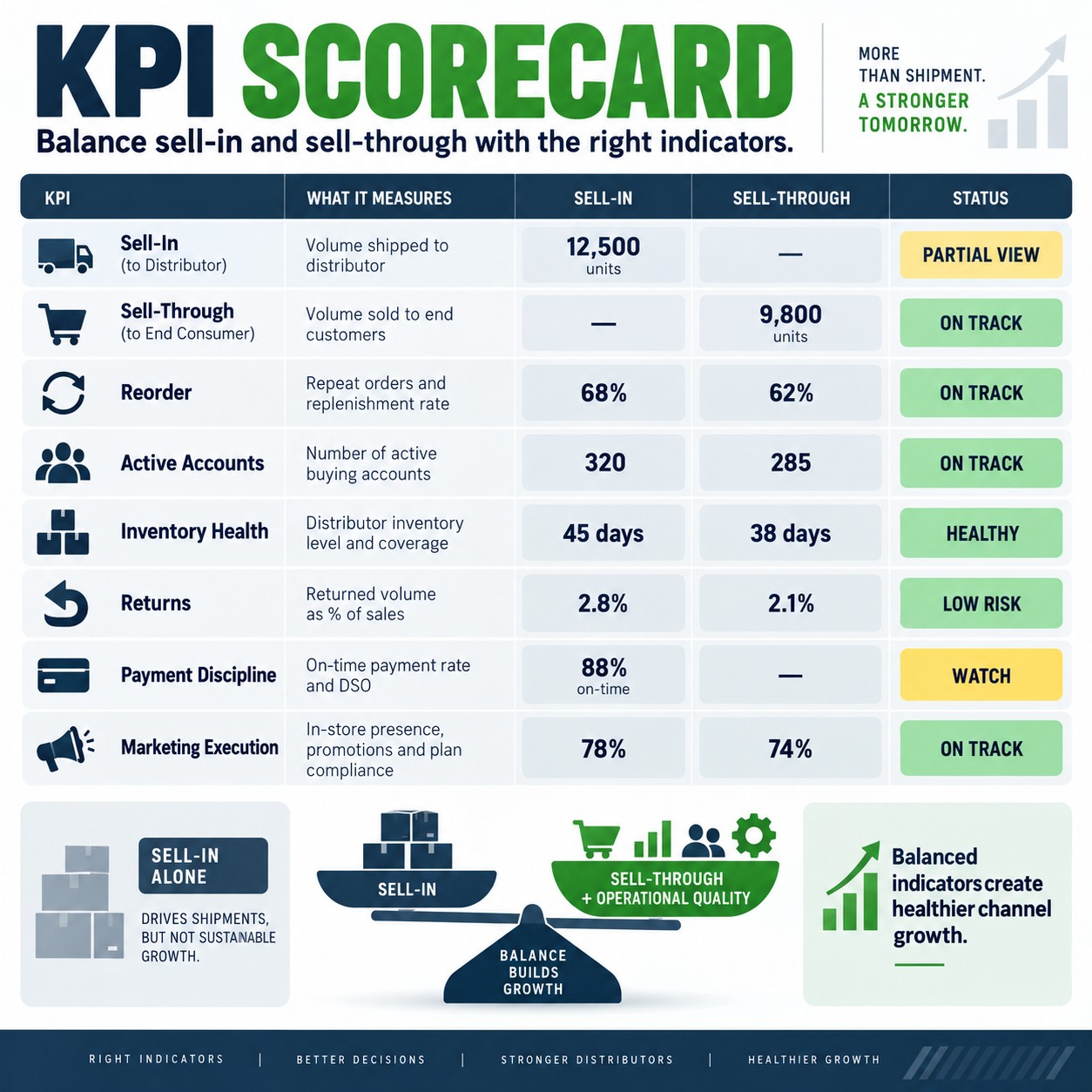
A distributor KPI should do more than measure how much product was purchased.
Sales are important, but they are only one indicator of distributor performance.
A stronger KPI system measures four areas:
Sales + Market Development + Inventory + Marketing
Sales KPIs
Typical sales KPIs include:
- Annual sales
- Quarterly sales
- Monthly order volume
- Reorder frequency
- Average order value
- Year-over-year growth
For example:
Annual purchasing target: $100,000
This is easy to measure, but it should not be the only KPI.
Market Development KPIs
A distributor may have relatively low sales during its first year because it is still building the market.
Therefore, consider measuring:
- Number of new retail accounts
- Number of new dealers
- Number of pickleball clubs served
- Number of sports facilities developed
- Geographic coverage
- Number of active sales channels
For example:
| KPI | Annual Target |
|---|---|
| New retail accounts | 20 |
| New pickleball clubs | 10 |
| New sales channels | 5 |
This helps distinguish a distributor that is building a market from one that is simply waiting for customers to arrive.

Measure Inventory Performance
Inventory is particularly important for physical products such as pickleball paddles.
A distributor can achieve a large initial purchase but still perform poorly if most of the inventory remains unsold.
Useful inventory KPIs include:
- Inventory turnover
- Days of inventory
- Overstock rate
- Stock-out frequency
- Reorder cycle
- Slow-moving product percentage
For example:
A distributor purchases 2,000 paddles but still has 1,500 units in inventory after a long period.
The initial purchase looks impressive.
The actual market performance may not be.
Therefore:
Sell-in should not be confused with sell-through.
Whenever possible, brands should evaluate both.

Add Marketing KPIs
A distributor should not only purchase products. It should also help develop the brand.
Possible marketing KPIs include:
- Number of marketing campaigns
- Social media promotions
- Product demonstrations
- Local tournaments
- Trade show participation
- Retail training sessions
- Product launches
- Website exposure
For example:
| Marketing Activity | Target |
|---|---|
| Product campaigns | 1/month |
| Local events | 4/year |
| Retail training | 2/quarter |
| Trade shows | 1–2/year |
The exact targets should depend on the distributor’s market and business model.
Build a Distributor KPI Scorecard
Instead of evaluating distributors based on one number, create a weighted scorecard.
For example:
| KPI Category | Weight | Example Target |
|---|---|---|
| Sales | 40% | $100,000+ |
| New Accounts | 20% | 20+ |
| Reorder Performance | 15% | ≥60% |
| Inventory Management | 10% | Healthy stock levels |
| Marketing Activities | 10% | 1+ activity/month |
| Customer Service | 5% | Low complaint rate |
This gives the brand a more complete view of distributor performance.
A distributor that achieves strong sales but provides poor customer service may need improvement.
A distributor with moderate first-year sales but excellent market development may deserve more time and support.

Connect KPI Performance to Distributor Benefits
KPI systems work better when they are connected to incentives.
Instead of using KPIs only to punish poor performance, use them to reward strong performance.
For example:
| Performance | Potential Benefit |
|---|---|
| 100% of annual target | Standard commercial terms |
| 110% | Additional rebate |
| 120% | Increased marketing support |
| 130%+ | Priority production or expanded cooperation |
Depending on your business model, rewards could include:
- Better pricing
- Annual rebates
- Marketing subsidies
- Product samples
- Exhibition support
- New product priority
- Extended territory
- Additional product authorization
This creates a simple principle:
Better performance → Better benefits

Example: How to Structure an Exclusive Distributor Partnership
Imagine a pickleball brand appoints a distributor for a specific country.
The distributor requests exclusive rights.
Instead of granting permanent exclusivity, the brand establishes the following framework:
Year 1
Annual purchase target:
$100,000
Required market-development activities:
- 20 new retail accounts
- 10 pickleball clubs
- 4 promotional events
- Quarterly sales reports
Performance Review
At the end of the year:
100%+ target achievement
→ Exclusivity renewed
80–99%
→ Performance review and improvement plan
Below 80%
→ Exclusivity may be converted to non-exclusive status
This approach gives both parties a clear understanding of what success looks like.
The distributor knows what it needs to achieve.
The brand knows what it is giving in return.
Common Distributor Management Mistakes
Even experienced brands can make mistakes when building distribution networks.
Mistake 1: Giving Exclusivity Too Early
A distributor should normally demonstrate commitment before receiving valuable exclusive rights.
Mistake 2: Offering the Best Price Immediately
If the distributor receives the lowest price before proving its sales capability, there may be little incentive to increase performance.
Mistake 3: Measuring Only Purchase Volume
A large first order does not necessarily mean strong market performance.
Always consider sell-through and market development.
Mistake 4: Setting Unrealistic Targets
A target that is impossible to achieve will eventually damage the relationship.
Targets should be based on:
- Market size
- Product positioning
- Competitive landscape
- Distributor network
- Historical sales
- Marketing investment
Mistake 5: Leaving Online Sales Undefined
Modern distribution networks often combine physical retail, websites, marketplaces, and social commerce.
Your agreement should clearly explain which channels each distributor can use.
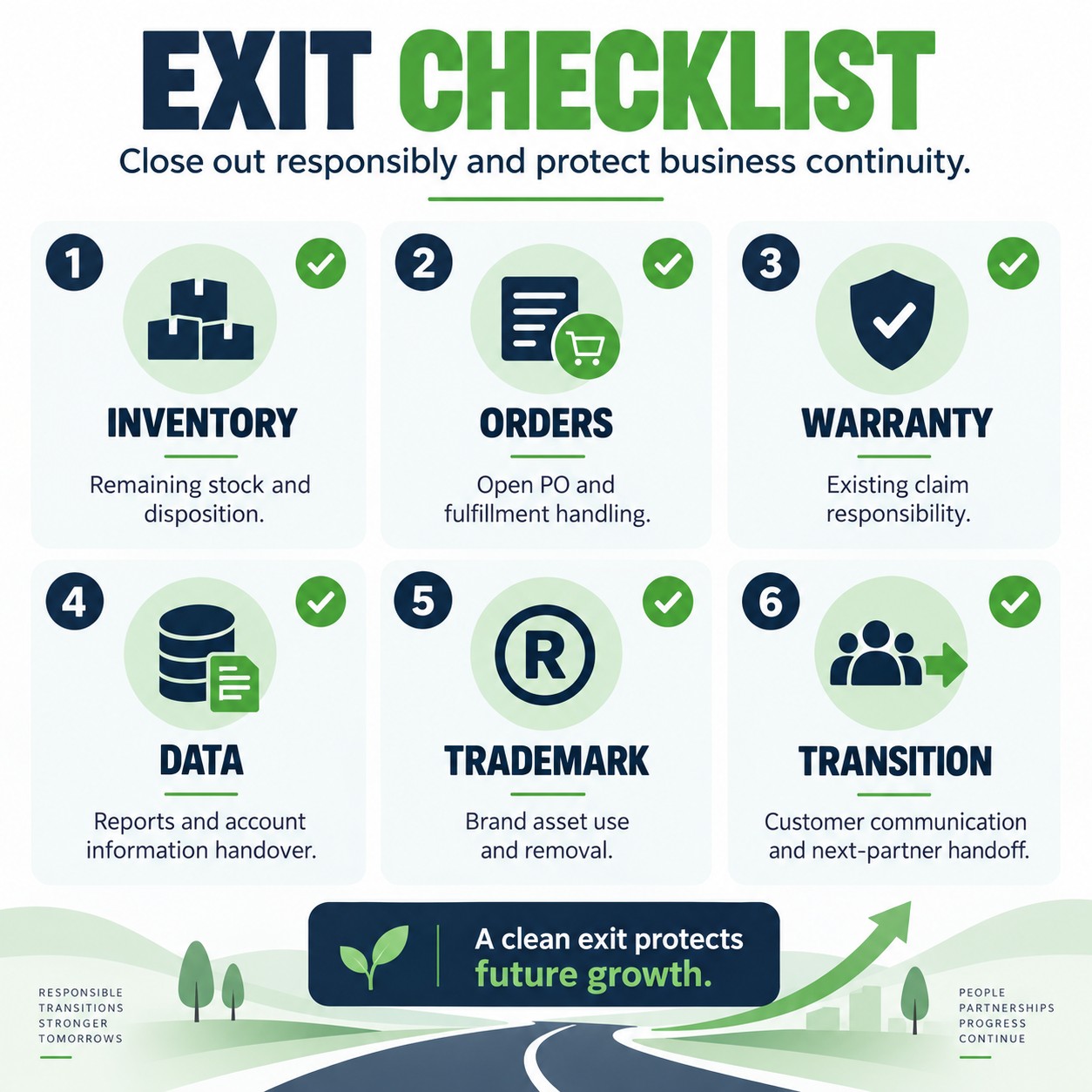
Mistake 6: No Termination or Review Mechanism
A distribution relationship should have a clear review process.
This does not mean you expect the relationship to fail.
It means both parties understand what happens if circumstances change.

A Practical Pickleball Distributor Management Framework
For brands that want a simple system, the following framework can work as a starting point.
Step 1: Define the Target Market
Identify the country, territory, customer type, and sales channels.
↓
Step 2: Create Pricing Levels
Define standard pricing, volume incentives, and performance-based benefits.
↓
Step 3: Define Territory Rules
Decide whether the relationship is exclusive, non-exclusive, geographic, or channel-specific.
↓
Step 4: Set MOQ and Purchase Commitments
Define initial orders, reorders, mixed-model requirements, and annual targets.
↓
Step 5: Draft the Distributor Agreement
Document pricing, territory, exclusivity, payment, delivery, marketing, IP, KPI, and termination terms.
↓
Step 6: Set Distributor KPIs
Measure sales, market development, inventory, marketing, and customer service.
↓
Step 7: Link Performance to Benefits
Reward distributors that consistently exceed expectations.
↓
Step 8: Review Every 6–12 Months
Use performance data to adjust targets, territory, pricing, and support.
The Best Distributor Policy Is Flexible but Measurable
A good distributor policy should not become a rigid rulebook.
Markets change.
Pickleball participation changes.
New competitors enter the market.
New paddle technologies appear.
Consumer preferences evolve.
Your distributor policy should therefore allow reasonable adjustments while maintaining clear performance standards.
The most effective approach is to establish:
Clear commercial rules + measurable performance + regular communication + reasonable flexibility
This gives distributors enough confidence to invest while allowing brands to protect their long-term interests.
Even the best distributor agreement cannot compensate for choosing the wrong partner. If you’re still evaluating candidates, read our step-by-step guide on finding the right pickleball paddle distributor before finalizing your distribution strategy.
Conclusion: Build a Distribution System, Not Just a Distributor List
Finding a distributor is only the first step.
The real challenge is building a distribution system that encourages the right behavior.
A successful pickleball distributor strategy should answer four questions:
What does the distributor receive?
What does the distributor need to achieve?
How will performance be measured?
What happens when performance changes?
When pricing, territory, contracts, KPIs, and incentives are designed together, the distributor relationship becomes much easier to manage.
Instead of simply selling products to distributors, brands can build long-term partnerships that support market development, protect brand value, and create sustainable growth.
If you are developing a pickleball brand and looking for an experienced manufacturing partner, working with a supplier that understands product development, OEM/ODM production, quality control, and distributor requirements can make the process much easier.
The right distributor can open a market. The right distributor policy can help you keep it.
Note: Distributor agreements, exclusivity provisions, pricing practices, and termination clauses can be subject to local competition, commercial, and contract laws. Always have the final agreement reviewed by qualified legal counsel in the relevant market.
The End about Mayvoci
1)Design:Over 100 paddle designs and photography service to assist start-up.
2)Professional:Focus on various of paddles manufacturing for 6 years
3)Quality:Strict quality management system to provide safety and satisfaction for customers
4)Amazon:Flexible comprehensive solution to make sure each Amazon seller is well cared.
5)Excellent Team:Experienced paddle experts & dynamic sales team give you 5-star service

One topic we didn’t fully explore in the article is exclusivity.
Many distributors ask for exclusive rights from day one, while many brands are hesitant to grant them.
From our perspective, exclusivity works best when it’s tied to measurable performance—not just promises. Annual purchase commitments, market development, and marketing activities can all be part of the evaluation.
How does your company handle exclusive distribution agreements
Do you grant exclusivity immediately, or only after sales targets are achieved
👇 We’d love to hear different approaches from brands, distributors, and industry professionals.