
A distributor can accelerate market entry, but the wrong distributor can also lock a brand into slow inventory, poor pricing discipline and weak market feedback. The goal is not to collect as many contacts as possible. It is to identify partners whose geography, customer base, sales model and operating capability match the product line.
The most reliable search process starts with market design rather than cold outreach.
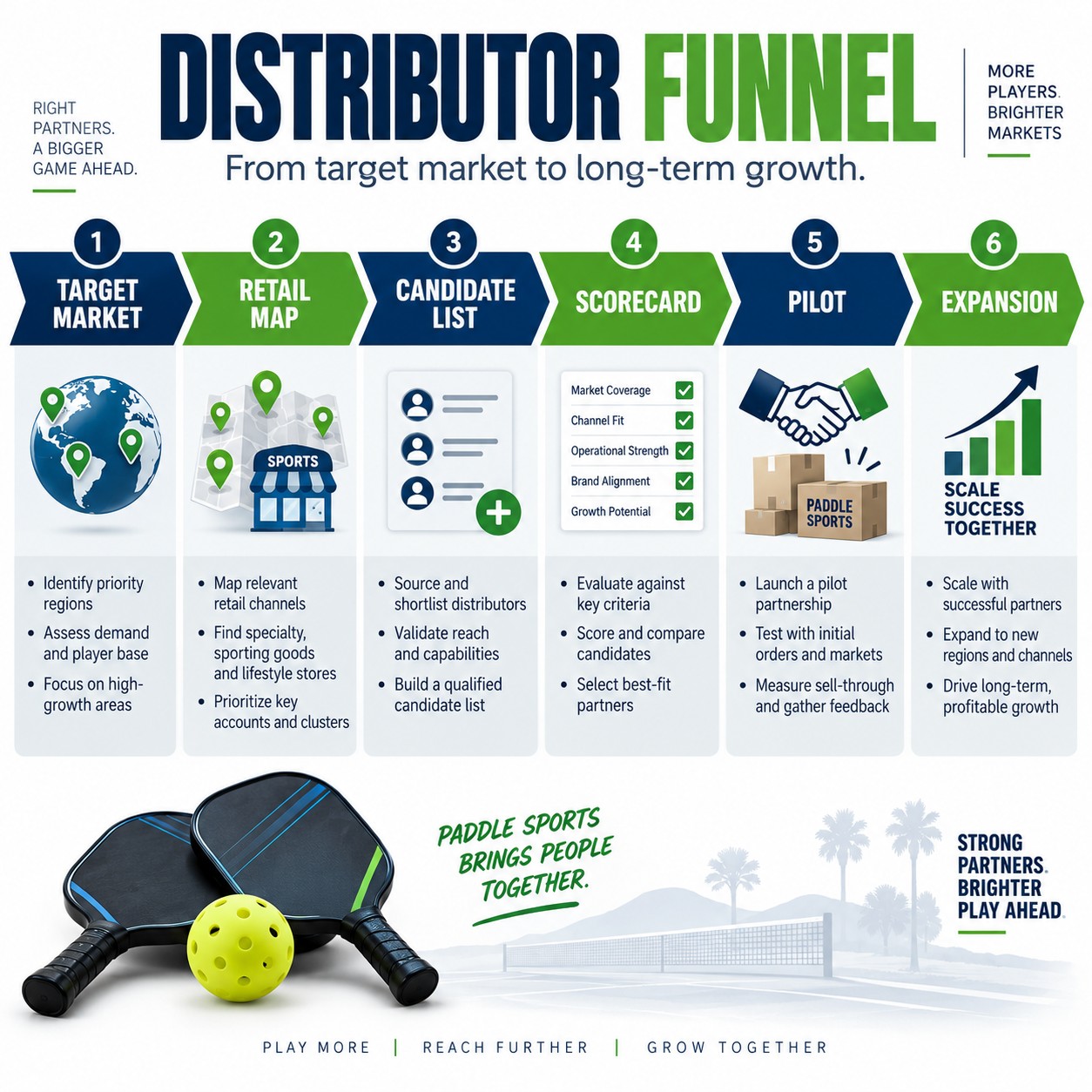
Define the Distributor You Need
Define the Distributor You Actually Need
Specify the target country or region, customer type, product category, expected volume and channel role. A specialty racquet-sports distributor serving clubs and pro shops is very different from a broad sporting-goods importer or an Amazon-focused reseller.
Write the ideal profile first so your search has a filter.
Map the Market Backward
List major retailers, clubs, tournament operators, e-commerce stores and competing brands in the market. Then identify which distributors already serve those accounts.
This reverse mapping often finds stronger candidates than searching only for the words “pickleball distributor.” Adjacent tennis and padel networks can also be useful when they already reach the right buyers.
Build a Qualification Scorecard
Score geographic coverage, active accounts, sales team, warehouse capability, category knowledge, marketing activity, creditworthiness, reporting, after-sales support and conflicts with competing brands.
Add one strategic-fit question: can this company explain why your product belongs in its portfolio? A distributor should bring more than an opening PO.
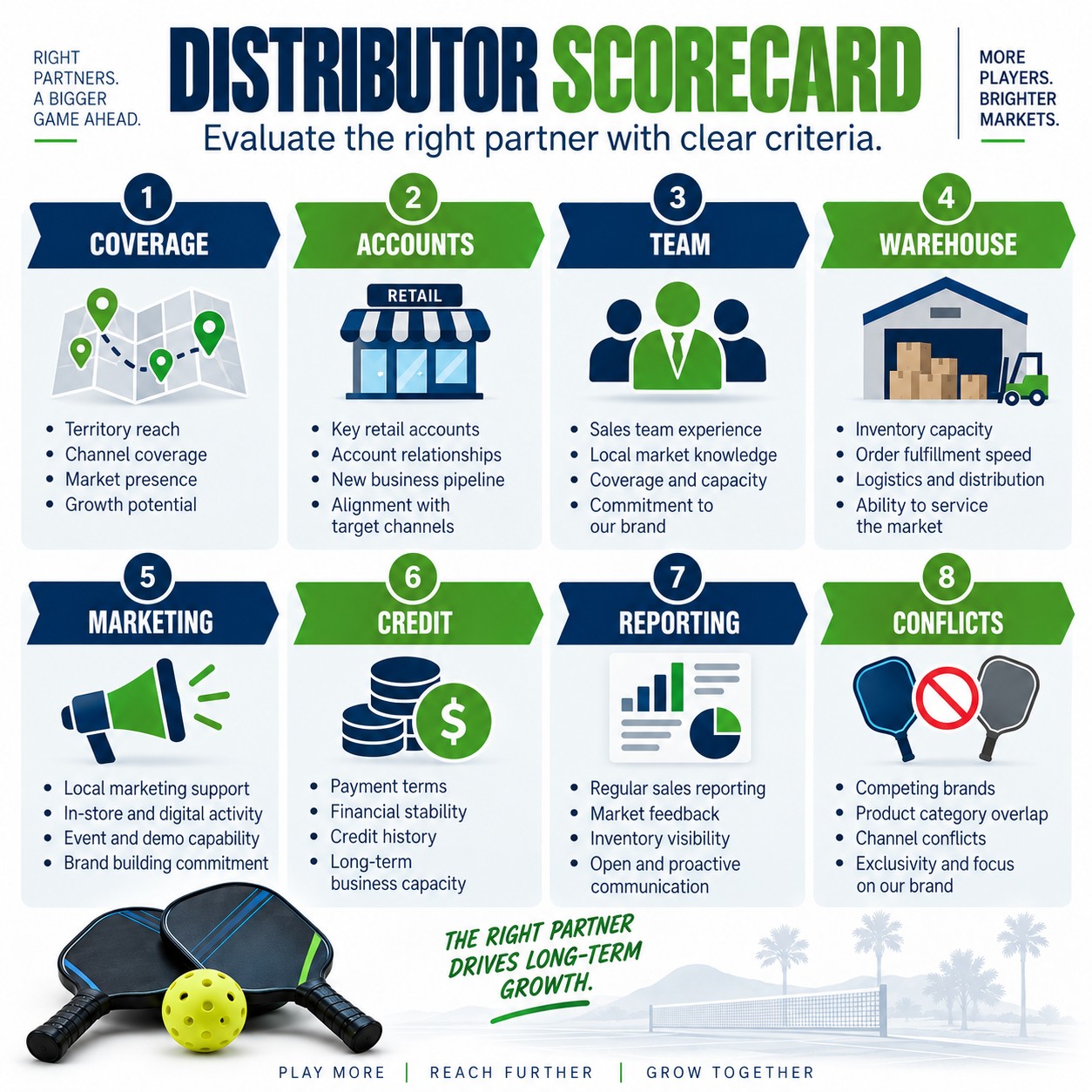
Build and Qualify the Candidate List
Prepare a Focused Distributor Pitch
Lead with a small opening assortment, player positioning, wholesale logic, certification, launch assets, reorder model and the support the brand will provide.
Do not send a large catalog with twenty similar SKUs. The partner should be able to understand the product line quickly and explain it to retailers.
Pilot Before Exclusivity
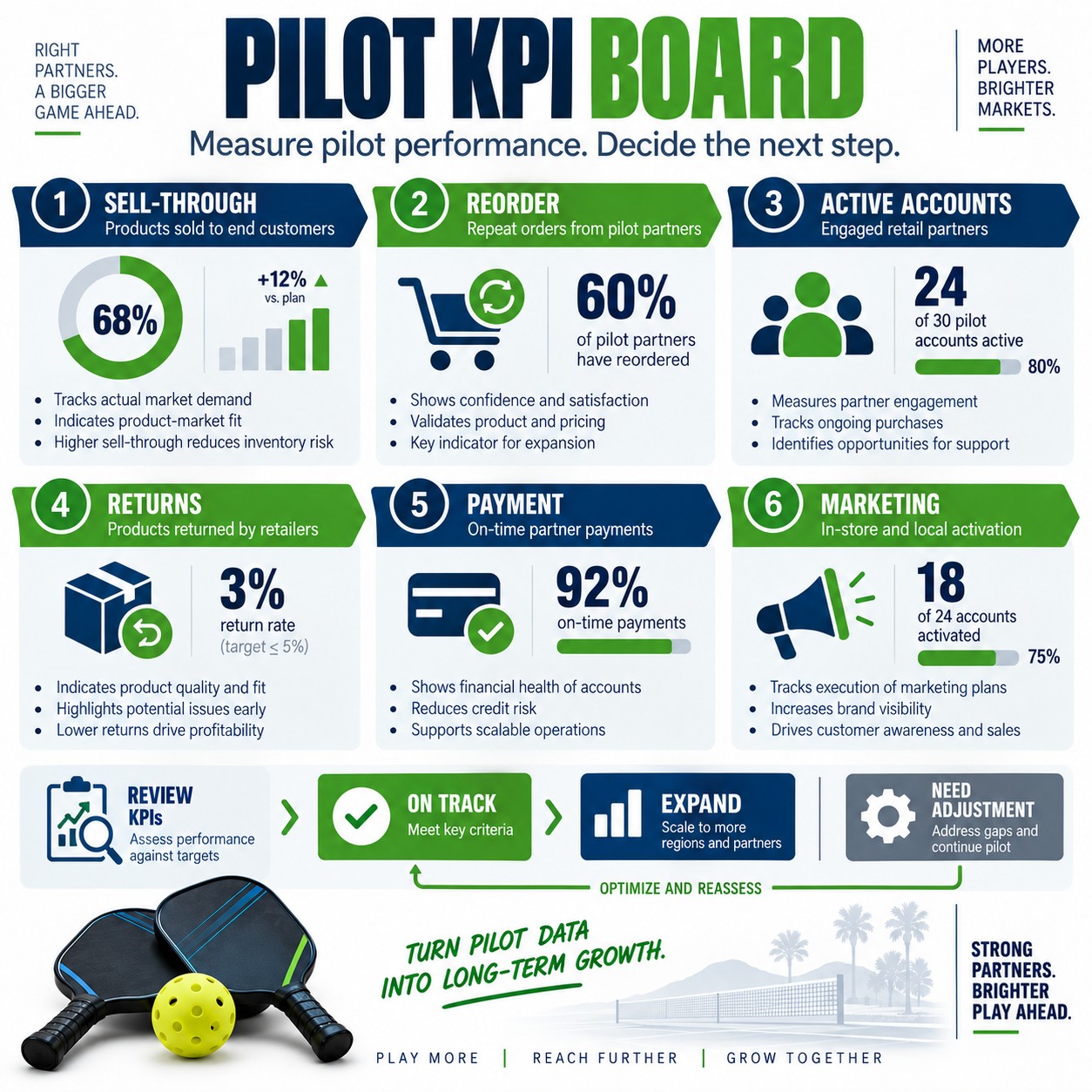
Use a limited territory, defined assortment or time-bound pilot before granting broad exclusivity. Track sell-through, reorder speed, active accounts, payment and marketing execution.
Exclusivity should be a reward for evidence, not a requirement for the first order.
Create a Feedback Loop
Distributors hear retailer objections, warranty issues, competitor moves and product requests early. Establish a monthly or quarterly review for sales, returns, lost deals and future demand.
Channel intelligence should feed product development rather than remain inside the sales team.
Distributor Outreach Sequence
After the shortlist is ready, use a staged outreach sequence instead of sending price sheets to everyone. First introduce the product category, target market and why you selected that distributor. Then ask a small set of qualification questions. Only after the partner demonstrates fit should you share wholesale pricing, samples and territory discussions.
This sequence protects time and prevents the brand from negotiating commercial terms with companies that cannot actually build the market.
Pitch and Pilot Before Exclusivity
Distributor Due-Diligence Questions
Ask for top customer types, sales-team size, warehouse location, current brands, annual planning process, marketing examples, return handling and payment references where appropriate. Request evidence such as retailer lists, event photos, showroom images or anonymized sales reports rather than accepting broad claims.
The purpose is not to distrust the partner; it is to establish a factual operating baseline before exclusivity or credit exposure.
90-Day Pilot Structure
A practical pilot can define opening assortment, target active accounts, demo activity, sell-through reporting and a review date. The distributor should know what success looks like before the first shipment.
At the review, decide whether to expand territory, add SKUs, continue the pilot or stop. A structured pilot makes both sides faster because future decisions are tied to evidence rather than expectations.
Practical Editorial / Decision Notes
A distributor search can also start from the market backward: identify the strongest retailers, clubs and tournament operators, then trace which distributors already serve them. This often produces a better lead list than searching only for companies using the word “pickleball.”
The relationship should start with a time-bound pilot. Agree on opening assortment, reporting, dealer activation and review date before exclusivity is discussed.
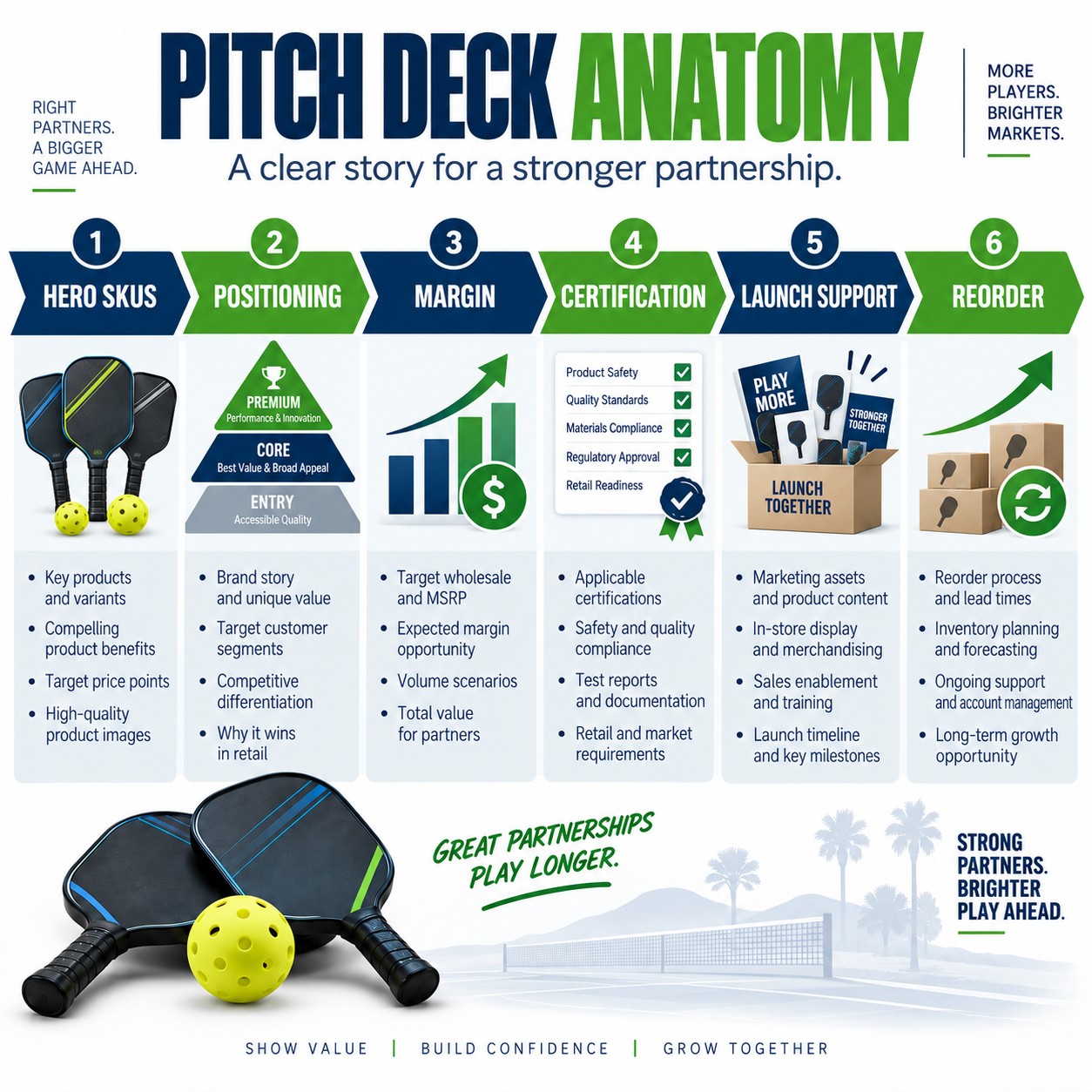
Scale With Evidence
Distributor Scorecard
| Dimension | Evidence | Why It Matters |
|---|---|---|
| Coverage | Retail / club account list | Real reach |
| Category capability | Current sports brands / team | Selling knowledge |
| Operations | Warehouse / reporting / service | Execution |
| Commercial health | Payment / inventory / forecast | Risk |
| Strategic fit | Why your line belongs | Portfolio logic |
Find Distributors by Mapping the Market Backward
A distributor list is more useful when it starts from the customers you want to reach. Identify strong retailers, clubs, e-commerce operators and event networks, then research which distributors already serve them.
That approach reveals channel capability instead of simply finding companies that describe themselves as distributors. It also makes exclusivity negotiations more rational because the brand can see which accounts and regions the partner actually covers.
- Define the target account type before outreach.
- Verify current portfolio conflicts and real customer coverage.
- Use a time-bound pilot before granting exclusivity.
Frequently Asked Questions
Where can I find pickleball distributors?
Start with retailer mapping, racquet-sport networks, events, B2B platforms and competitor-channel research.
Should I offer exclusivity immediately?
Usually not. Use a pilot and performance conditions first.
What should I ask a distributor?
Coverage, account base, sales team, warehouse, competing brands, reporting, payment and after-sales capability.
What makes a strong pitch?
Clear product positioning, margin logic, a focused opening assortment and launch support.
What should determine renewal?
Sell-through, reorder, active accounts, payment and market execution.
Looking for distribution partners?
Mayvoci can help brands prepare a focused opening assortment, product story and B2B pitch before distributor outreach.
The End about Mayvoci
1)Design:Over 100 paddle designs and photography service to assist start-up.
2)Professional:Focus on various of paddles manufacturing for 6 years
3)Quality:Strict quality management system to provide safety and satisfaction for customers
4)Amazon:Flexible comprehensive solution to make sure each Amazon seller is well cared.
5)Excellent Team:Experienced paddle experts & dynamic sales team give you 5-star service

One question we hear from many emerging brands is:
“Should we spend more time finding distributors—or building direct sales first?”
There isn’t a universal answer. It depends on your product, target market, and growth stage.
In our experience, brands that define their ideal distributor profile *before* reaching out tend to build stronger and longer-lasting partnerships.
We’d be interested to hear how other brands approached this challenge.