Sustainability in pickleball cannot be solved by attaching the word “biodegradable” to a ball or “eco-friendly” to a package. A paddle combines composites, adhesives, foams, plastics, grips, edge materials and packaging. Some components are difficult to separate at end of life.
Extending product life, reducing unnecessary packaging and making specific substantiated claims can be more credible than broad environmental promises.
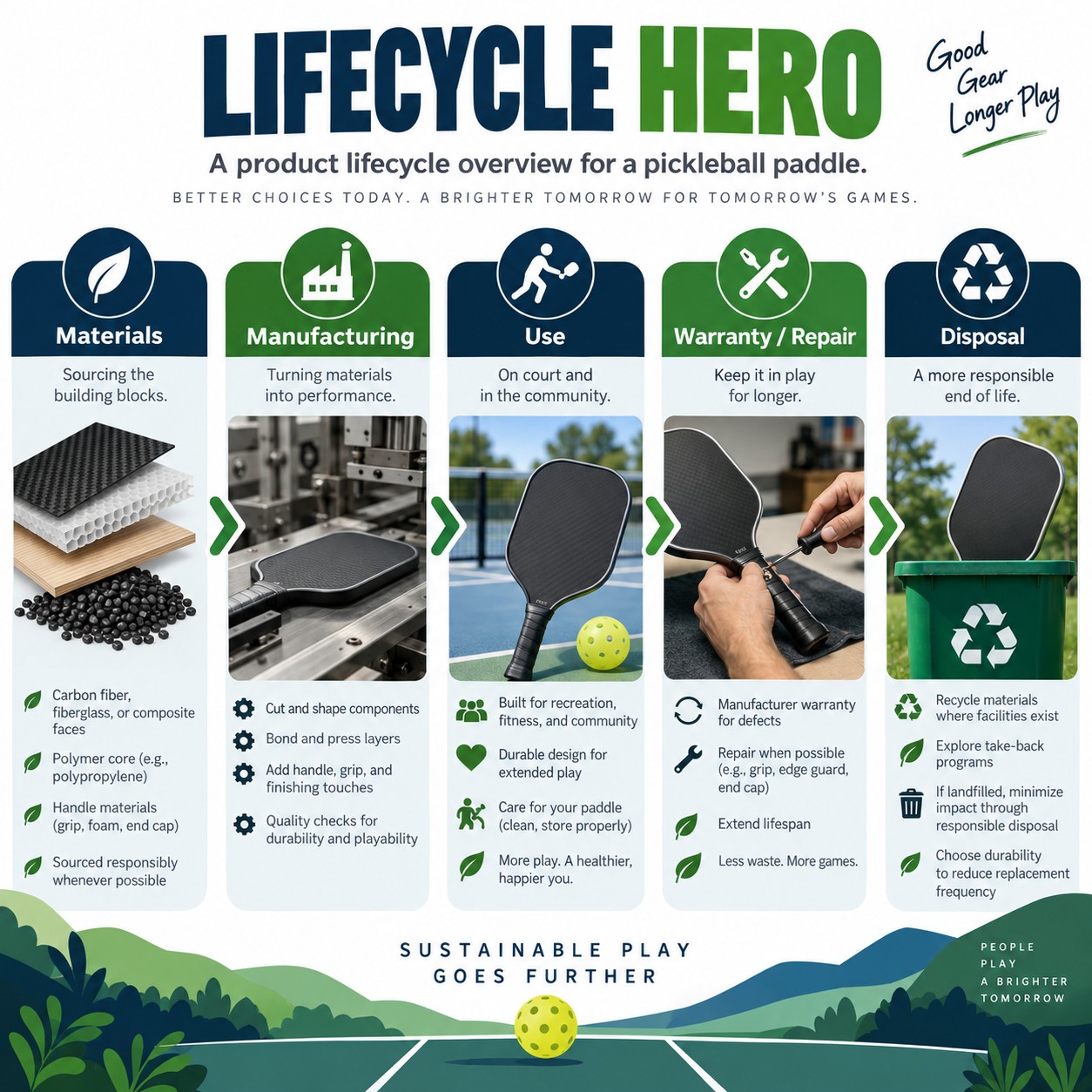
Start With the Product Lifecycle
Start With the Lifecycle
Map raw materials, manufacturing yield, product life, warranty, packaging, transport and disposal. Do not focus only on one visible “green” component.
A change that reduces material but shortens useful life creates a trade-off.
Durability Is a Sustainability Lever
Longer product life can reduce replacement frequency, but that does not allow a brand to label the entire product sustainable without evidence. Track warranty and failure data.
Recycled Content Claims
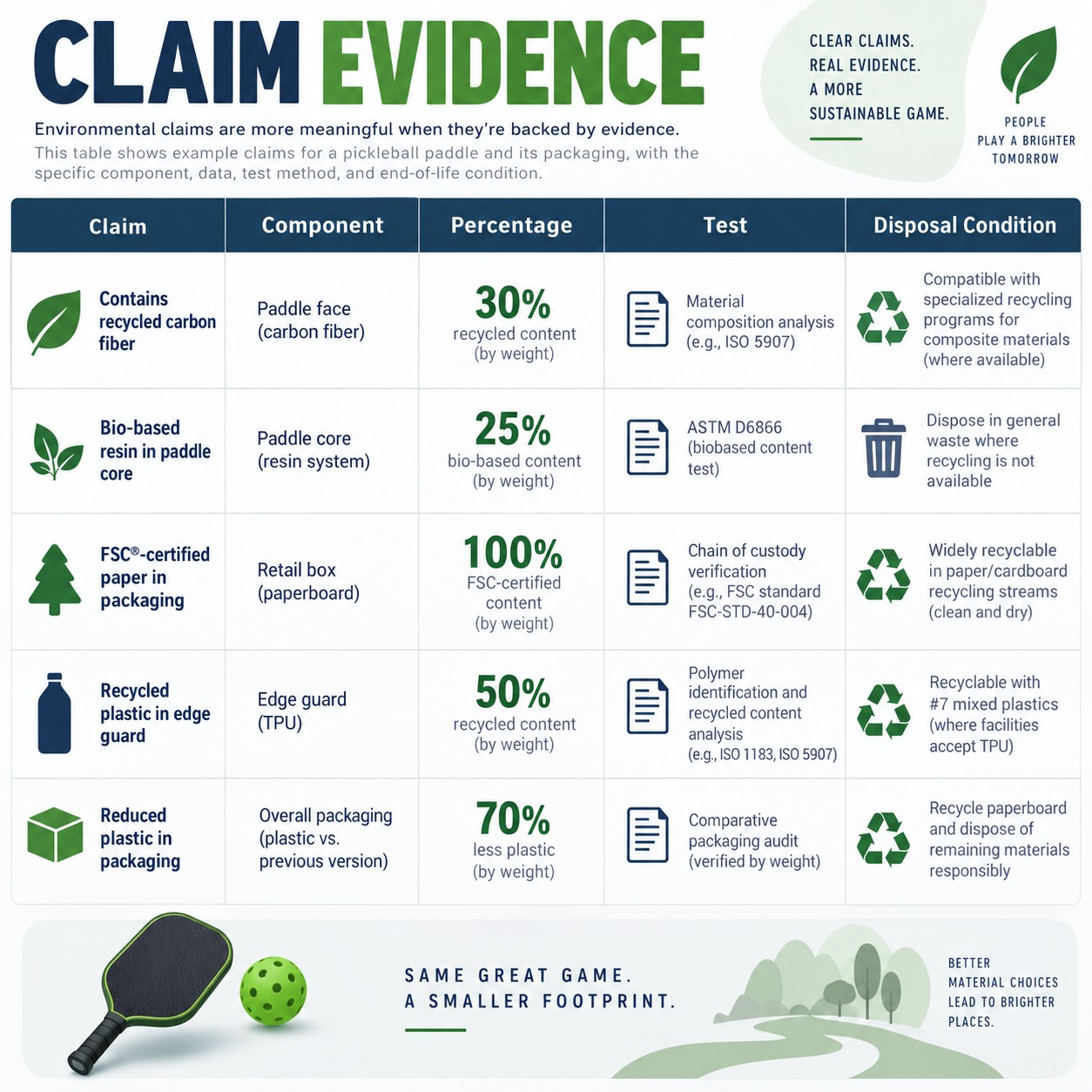
If recycled material is used, state where it is used and the substantiated percentage. FTC guidance recommends qualifying claims when only part of a product or package uses recycled content.
Materials, Durability and Packaging
Recyclability and Degradability
Composite paddles are difficult to recycle through normal municipal streams. FTC guidance also sets a high bar for unqualified degradable claims.
A material that degrades under industrial conditions may not do so in customary disposal.
Packaging
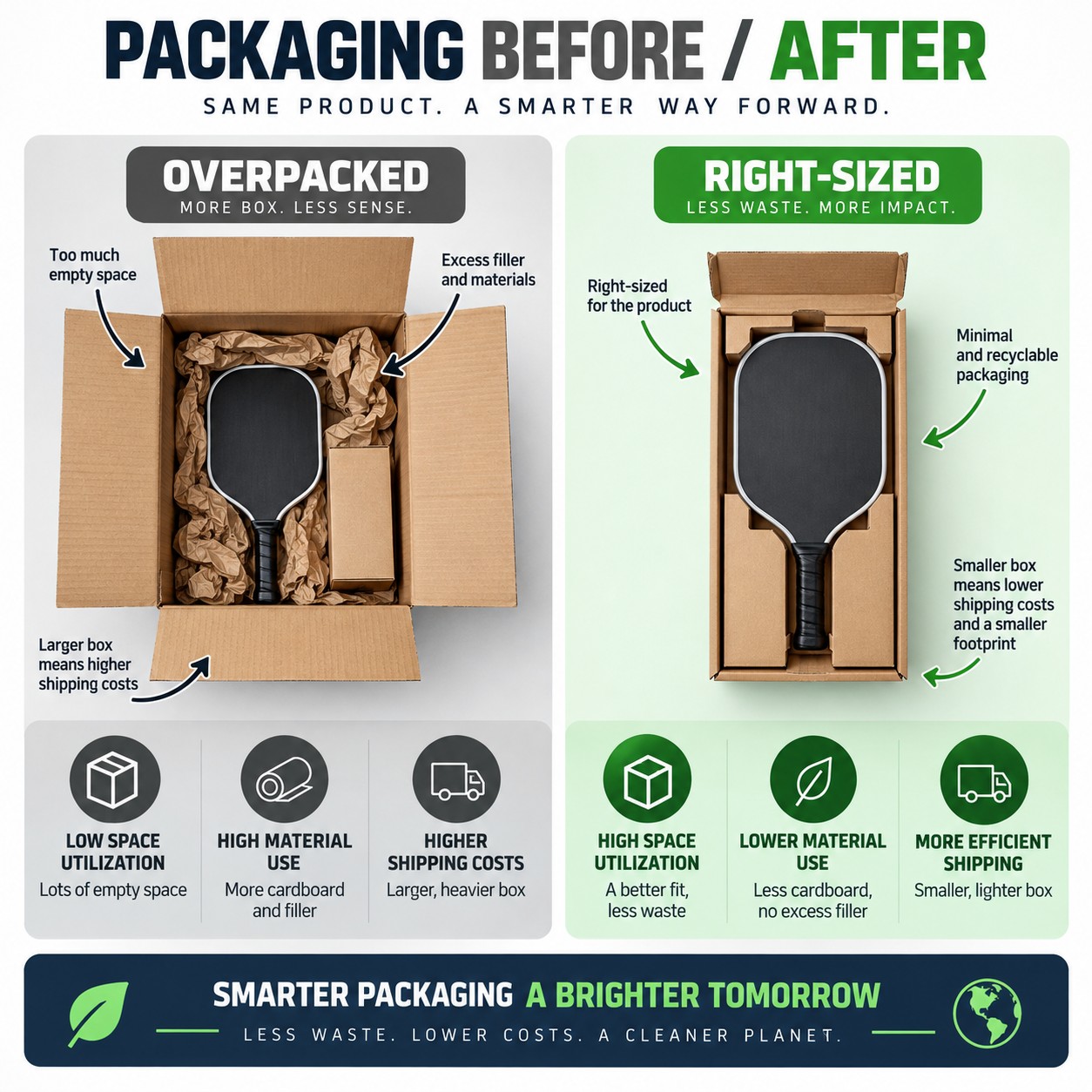
Reduce unnecessary volume, plastic windows, multiple inserts and excessive print layers. Standardized right-sized boxes are often easier to improve than the composite product itself.
Build an Evidence Checklist
For every environmental claim, record the exact attribute, affected component, percentage or comparison baseline, supporting evidence and disposal condition.
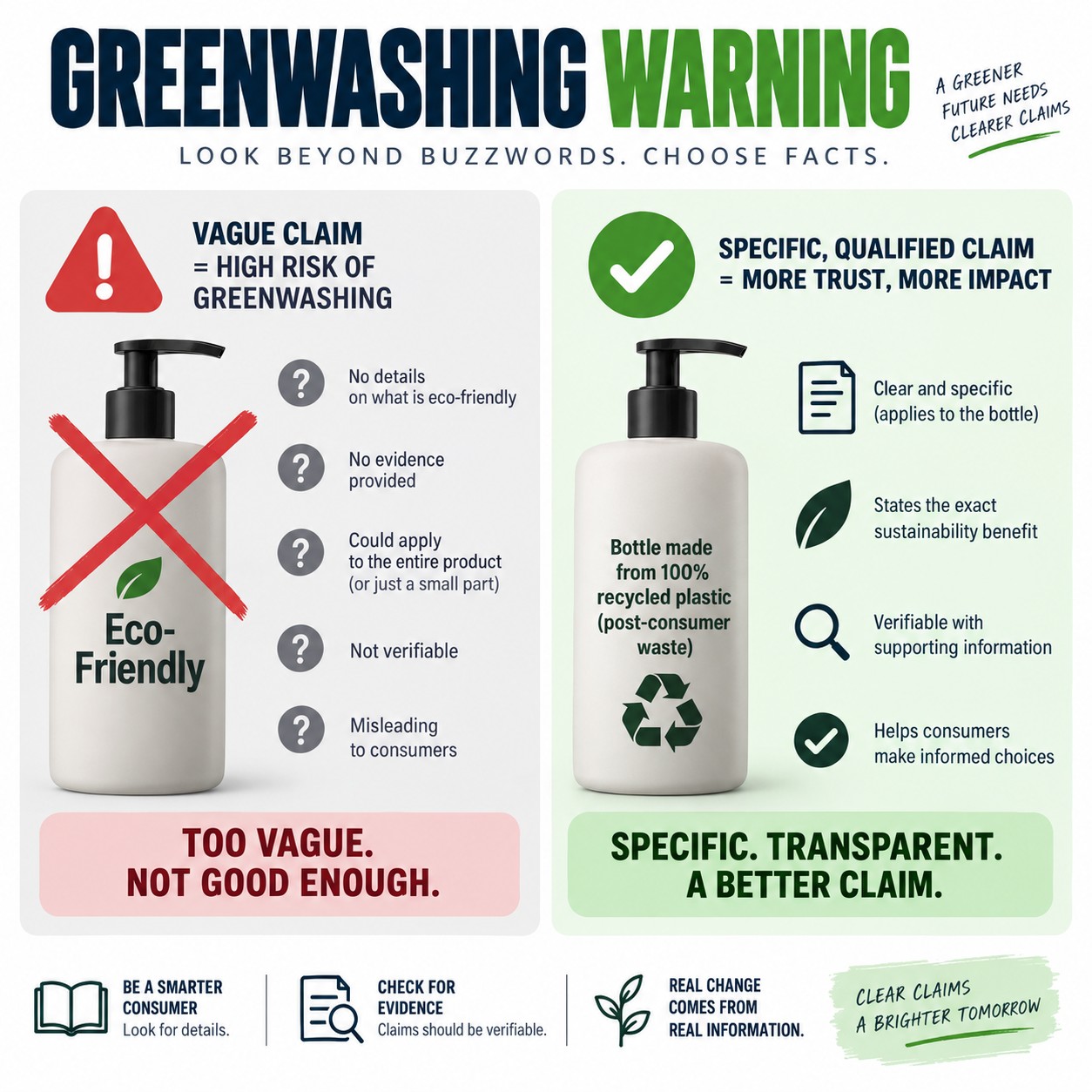
Avoid broad claims such as “green” or “planet safe.”
Material Substitution Can Create Trade-Offs
A recycled or bio-based input may change mechanical properties, appearance, processing yield or durability. Test the finished product before turning the material change into a marketing claim.
If a greener input increases rejects or shortens product life, the total environmental result may be worse. Sustainability development needs the same engineering discipline as performance development.
Substantiate Environmental Claims
Packaging Measurement
Track package weight, volume, material count and percentage of recycled content where applicable. Compare with the previous design using a clear baseline.
Specific statements such as “20% less packaging weight than our 2025 box” are easier to substantiate than “eco packaging,” provided the underlying data is accurate.
Supplier Environmental Data
Ask suppliers for material declarations, recycled-content documentation, process waste data or certifications relevant to the claim you want to make. Keep evidence with the product file.
Do not use a supplier’s vague “green material” description as final marketing proof. The brand remains responsible for what it communicates to customers.
Practical Editorial / Decision Notes
Material substitution can create trade-offs. A recycled or bio-based input may change yield, durability or appearance, so sustainability changes need the same finished-product validation as performance changes.
Keep the evidence file behind each environmental claim: component, percentage or baseline, supplier document, test/measurement and disposal condition.
Build a Green-Claim Evidence File
Environmental Claim Evidence Matrix
| Claim | Evidence Needed | Risk |
|---|---|---|
| Recycled content | Component + percentage + records | Whole-product overclaim |
| Recyclable | Real collection/recycling access | Availability mismatch |
| Degradable / biodegradable | Conditions + substantiation | Landfill assumption |
| Packaging reduction | Measured baseline | Vague 'eco' claim |
| Durability benefit | Lifecycle / warranty evidence | Unproven impact |
Sources / Current-Update Notes
- FTC Green Guides — Use qualified, substantiated environmental claims; avoid broad unsupported ‘eco-friendly’ language. Primary source
Make Environmental Claims as Specific as Technical Claims
A sustainability statement should identify the exact component, improvement and evidence. “Eco-friendly paddle” is too broad when the product combines composite faces, adhesives, polymer core, grip and packaging with different end-of-life routes.
Manufacturing teams can often make faster progress through measurable packaging reduction, yield improvement, durability and component standardization before making ambitious end-of-life claims about the whole paddle.
- Keep evidence behind every recycled/recyclable/degradable claim.
- Measure packaging changes against a defined baseline.
- Validate material substitutions for durability and yield.
Frequently Asked Questions
Can a paddle be called recyclable?
Only when the claim is substantiated and real recycling access supports it.
Is biodegradable plastic automatically better?
No.
Can recycled packaging be promoted?
Yes, with accurate and qualified claims.
What is an easy improvement?
Reduce packaging and improve useful product life.
What is greenwashing?
Environmental marketing that overstates or cannot substantiate the benefit.
Exploring lower-impact product or packaging options?
Mayvoci can help separate material, manufacturing and packaging changes so the final claim matches what the product actually proves.
The End about Mayvoci
1)Design:Over 100 paddle designs and photography service to assist start-up.
2)Professional:Focus on various of paddles manufacturing for 6 years
3)Quality:Strict quality management system to provide safety and satisfaction for customers
4)Amazon:Flexible comprehensive solution to make sure each Amazon seller is well cared.
5)Excellent Team:Experienced paddle experts & dynamic sales team give you 5-star service