A competitor case study should teach readers how to analyze a product, not declare it a “weapon.” The useful questions are what can be verified publicly, what the brand claims, what design choices are visible, what conclusions require testing and what an OEM team can learn without copying the product.
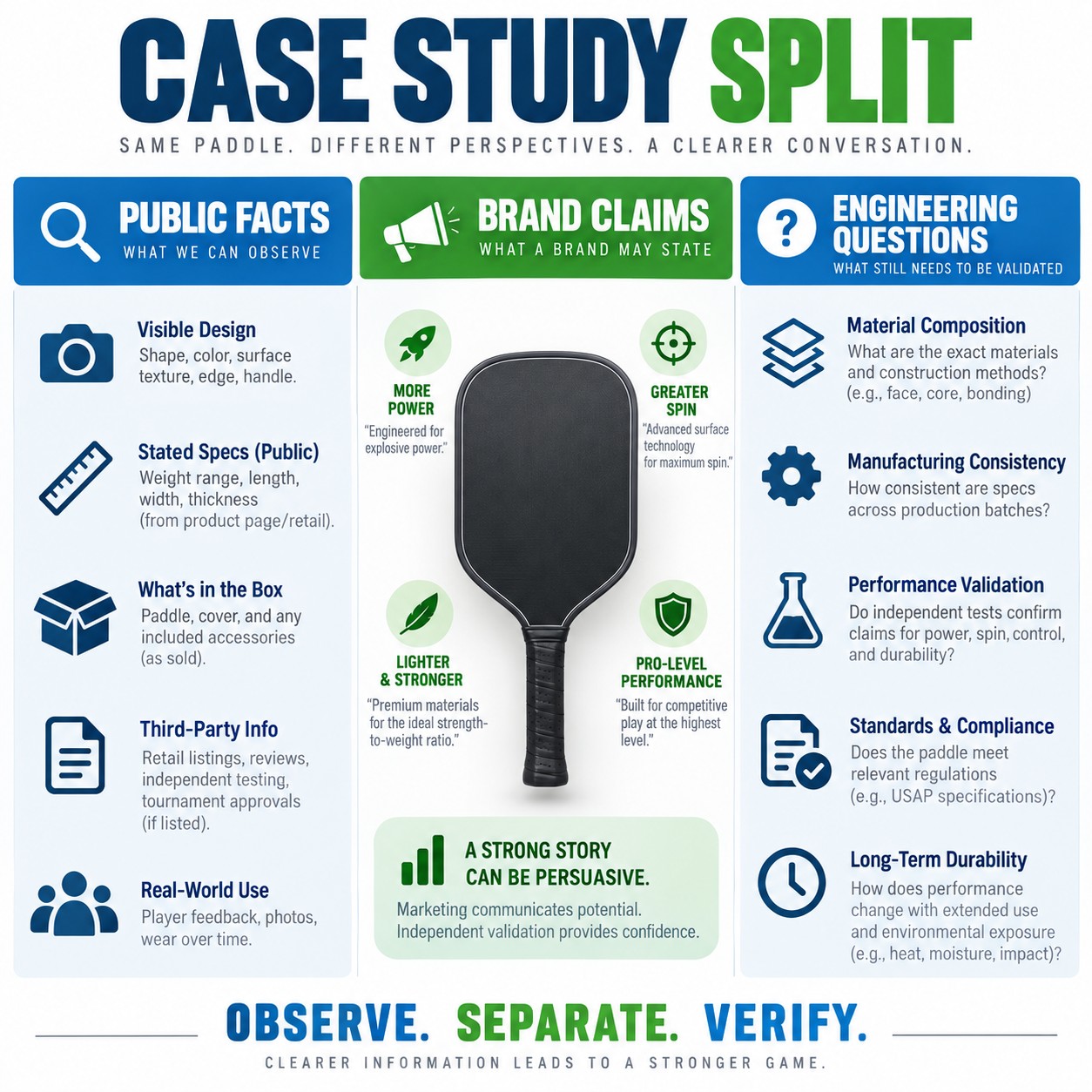
Separate Public Facts From Brand Claims
Public Facts First
Use the current Paddletek product page and approved-equipment listings for specifications, variants and approval status. Record shape, thickness, weight range, face/core claims and handle data exactly as published.
Separate Brand Claims
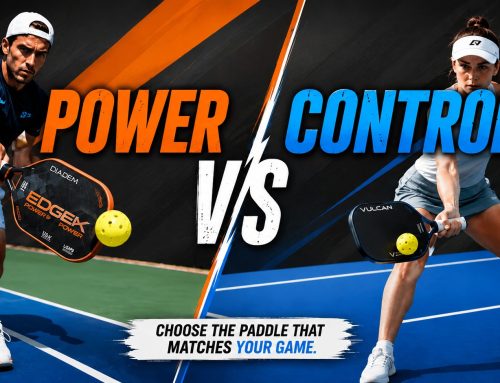
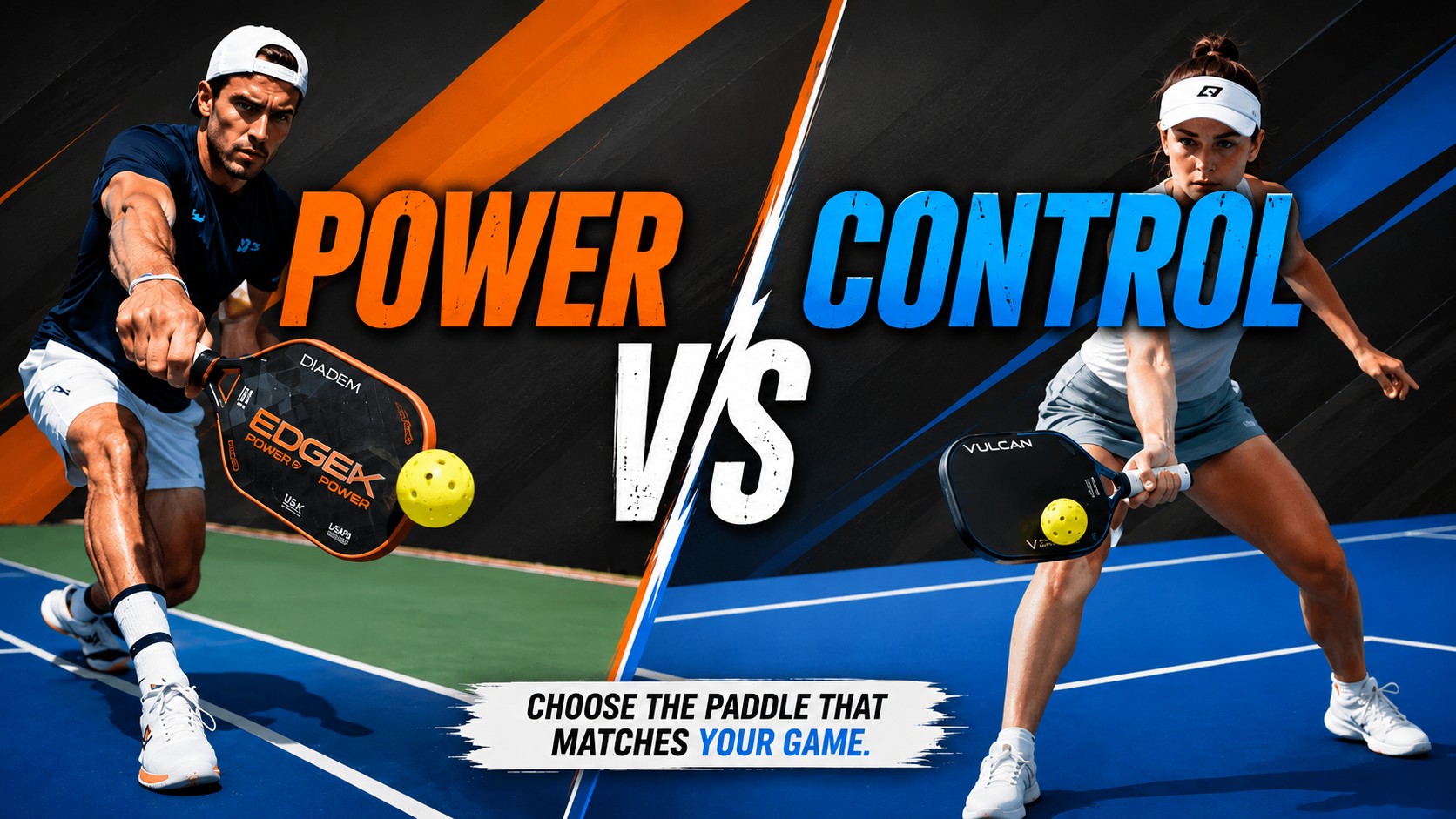
Words such as power, control, forgiveness and sweet spot are commercial positioning. Attribute them to Paddletek unless an independent test method is available.
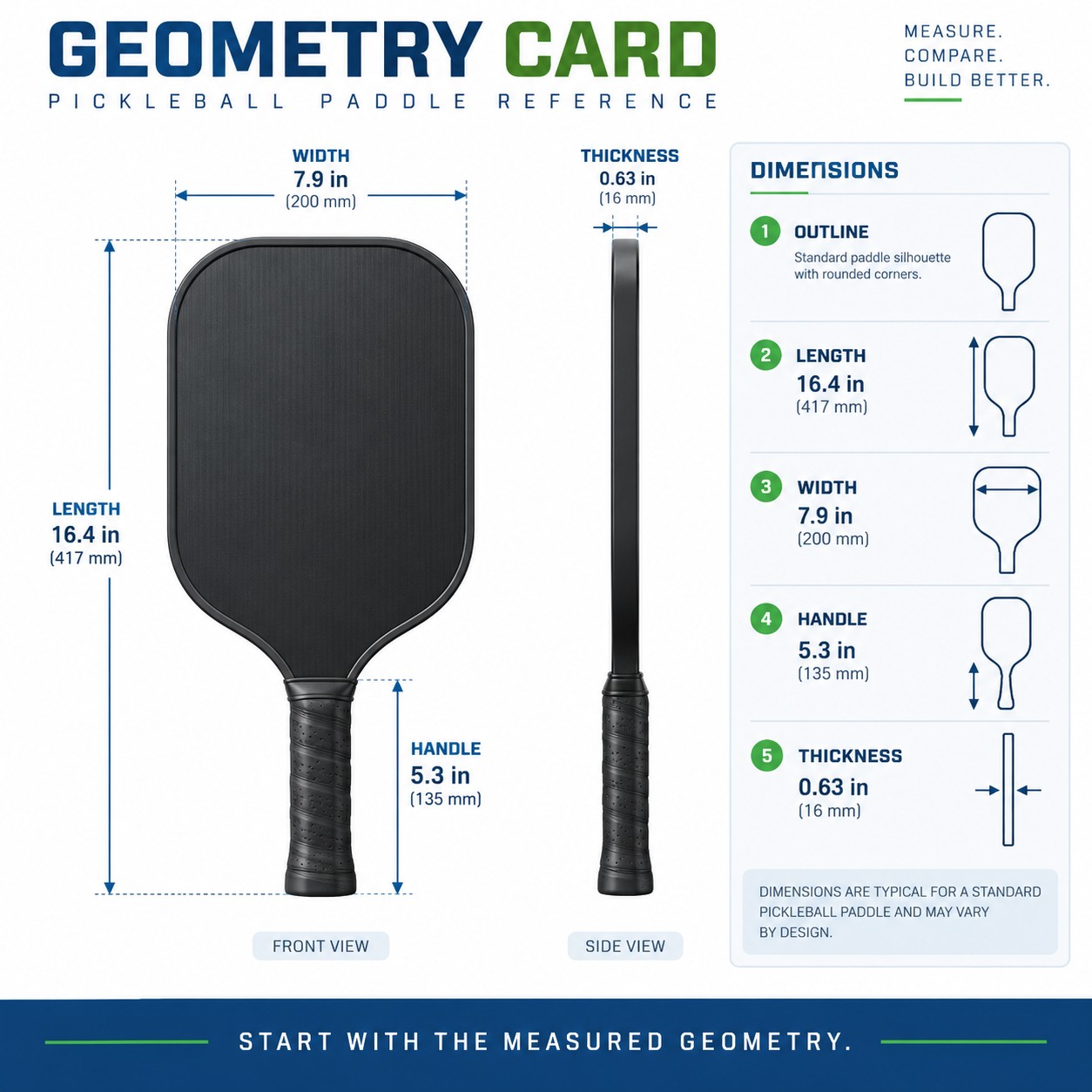
Analyze Geometry
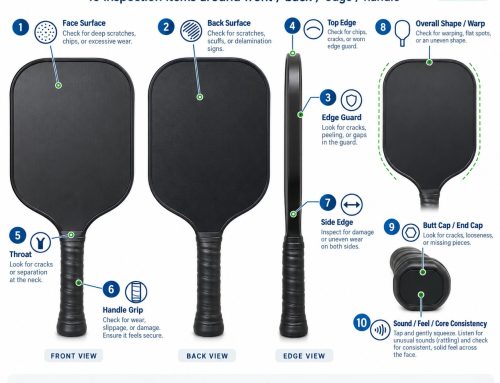
Look at outline, face area, handle and thickness. Ask how they may influence reach, hand speed and mass distribution, but avoid turning geometry into a guaranteed performance statement.
Analyze Geometry and Construction
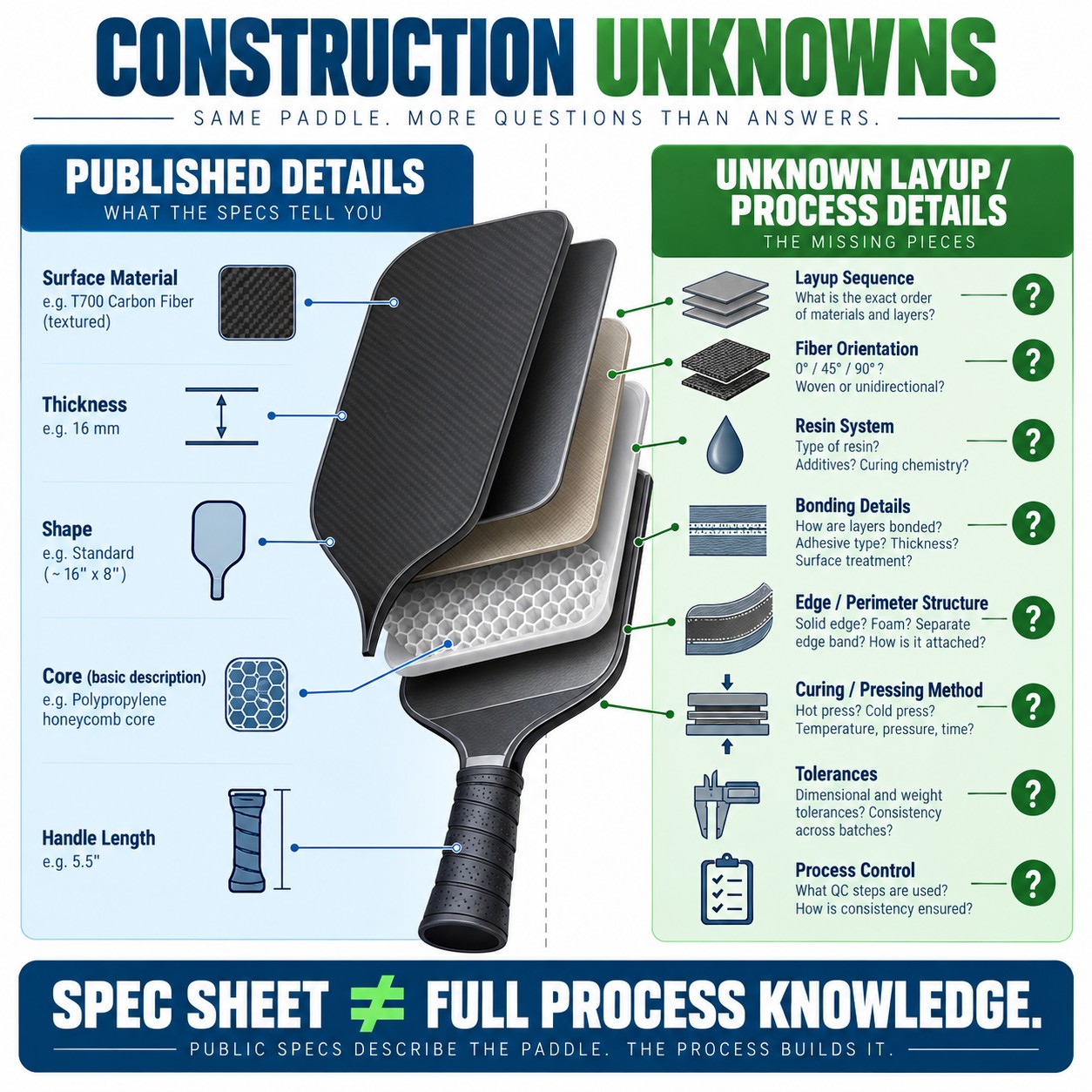
Analyze Construction
Identify the published face, core and forming language, then list what remains unknown: layer stack, foam position, adhesive and process tolerances.
A product page is not a manufacturing drawing.
Approval and Durability
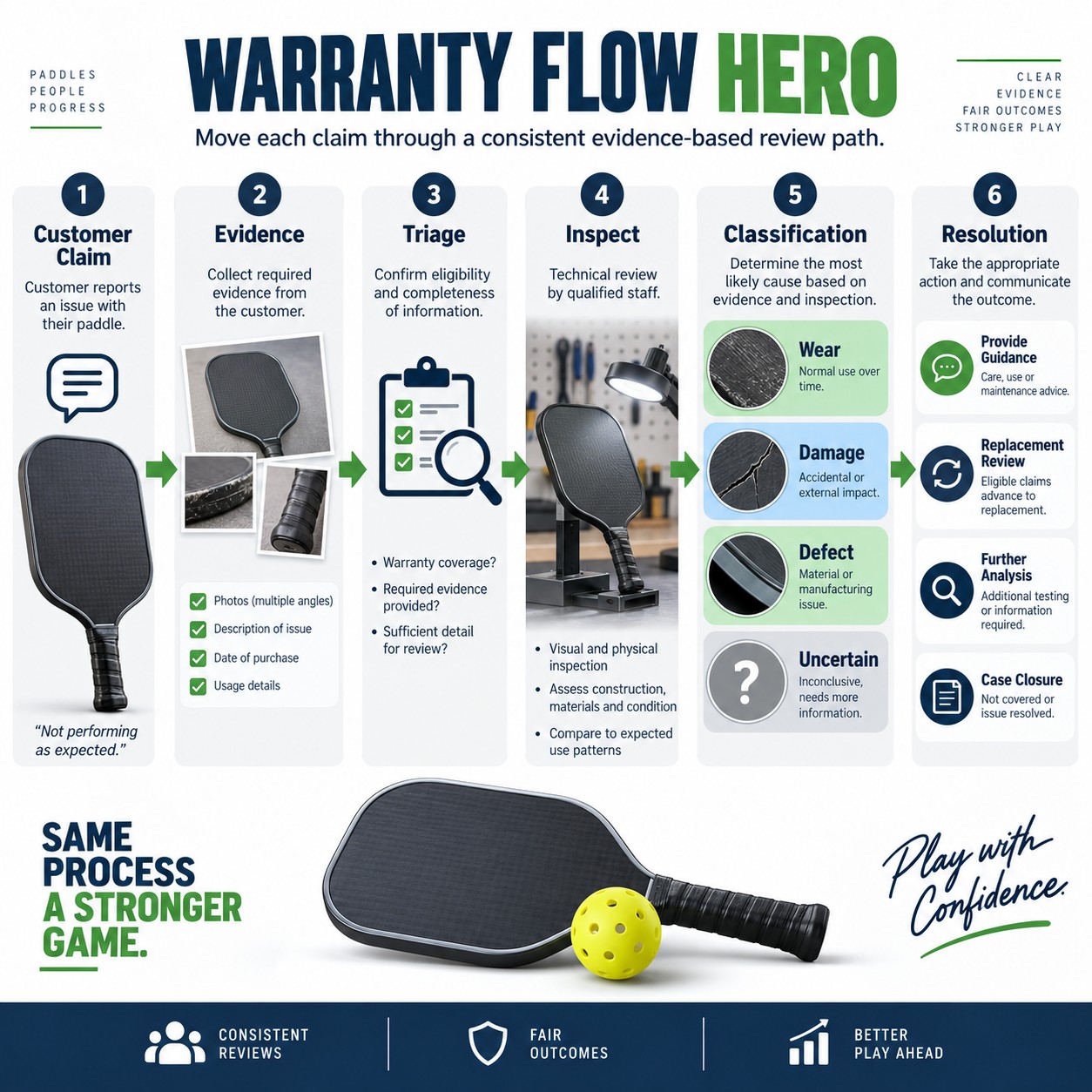
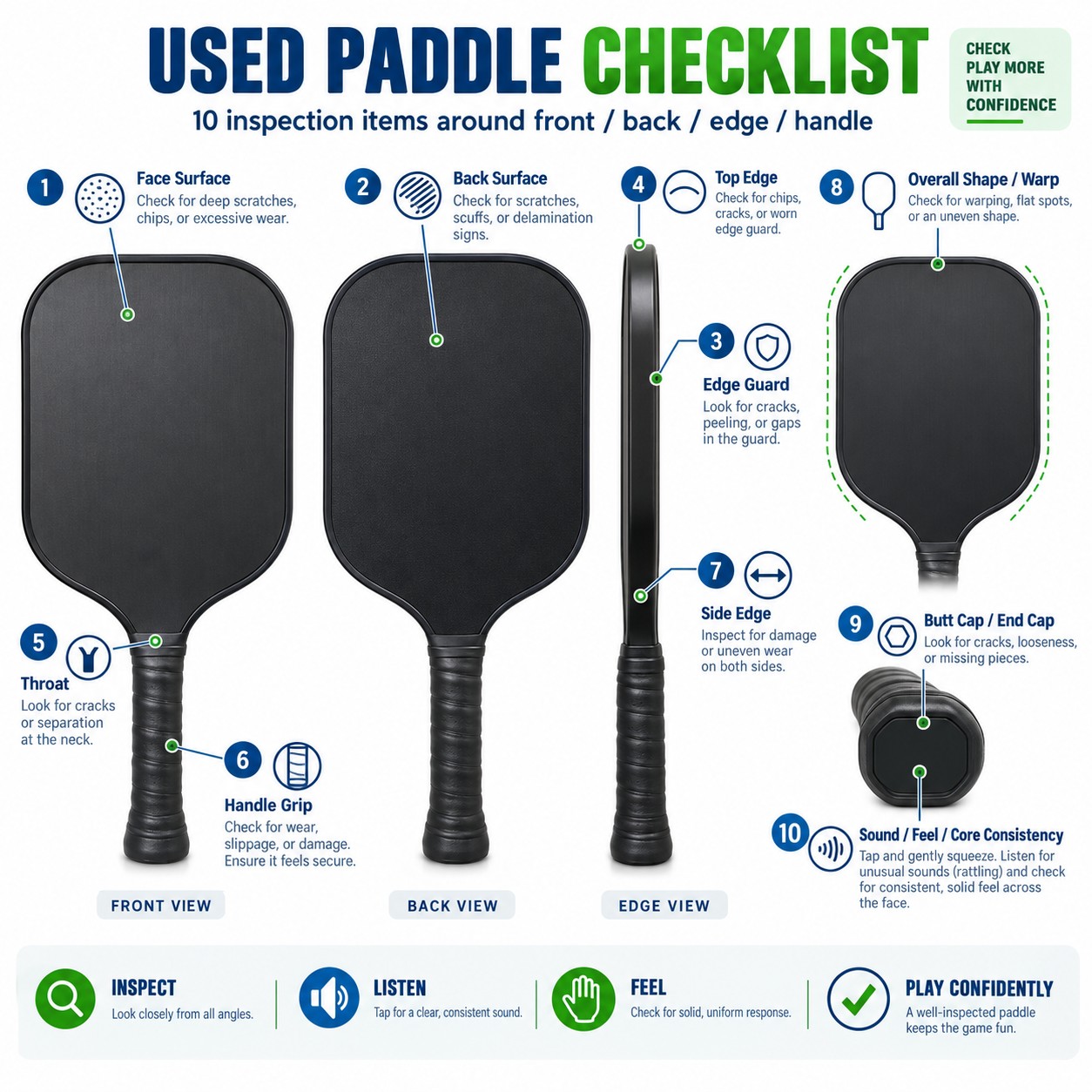
Check current equipment approval and date-stamp the article. Do not infer durability from isolated reviews or launch language; use warranty terms and broader field evidence carefully.
OEM Lessons
Benchmark the clarity of the product job and integration of geometry, construction and positioning. Develop your own controlled prototypes rather than copying artwork, geometry or proprietary technology.
Competitor Case-Study Template
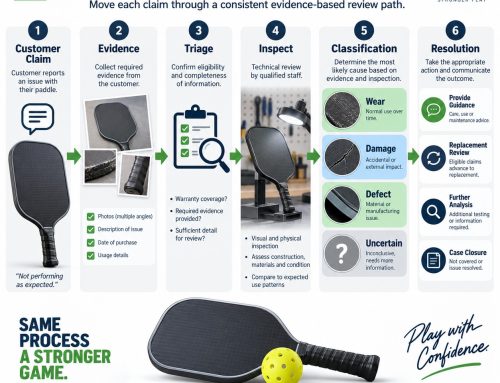
Use the same template for every competitor article: current official specs, official brand claims, observed design choices, unknown construction details, approval status, warranty, and OEM questions.
A consistent framework makes articles more credible and easier to update. It also prevents one brand from receiving harsher or more promotional treatment than another.
Approval, Durability and Unknowns
Avoid Reviewer-Score Aggregation Without Method
Third-party reviews can be useful market signals, but scores often use different samples, test methods and sponsorship relationships. Do not average unrelated review numbers into a pseudo-scientific rating.
If external measurements are cited later, document the source and test condition individually.
Why the Case Study Belongs on an OEM Site
A manufacturer can demonstrate expertise by showing how to deconstruct a public product story into measurable engineering questions. The goal is not to attack the brand.
Readers should finish the article understanding how to write a better product brief and what evidence to request from any supplier.
Practical Editorial / Decision Notes
A consistent competitor template makes case studies more credible: current specs, brand claims, unknown construction details, approval, warranty and OEM questions.
Do not average unrelated reviewer scores into a pseudo-scientific rating. If external measurements are used, record each source and test condition separately.
Extract OEM Lessons Without Copying
Competitor Case-Study Split
| Layer | What Belongs Here |
|---|---|
| Official facts | Specs / approval / current product page |
| Brand claims | Power / control / durability statements |
| Engineering questions | Unknown layup / process / mass distribution |
| Independent evidence | Only documented third-party tests |
| OEM lesson | Product-job / validation insight |
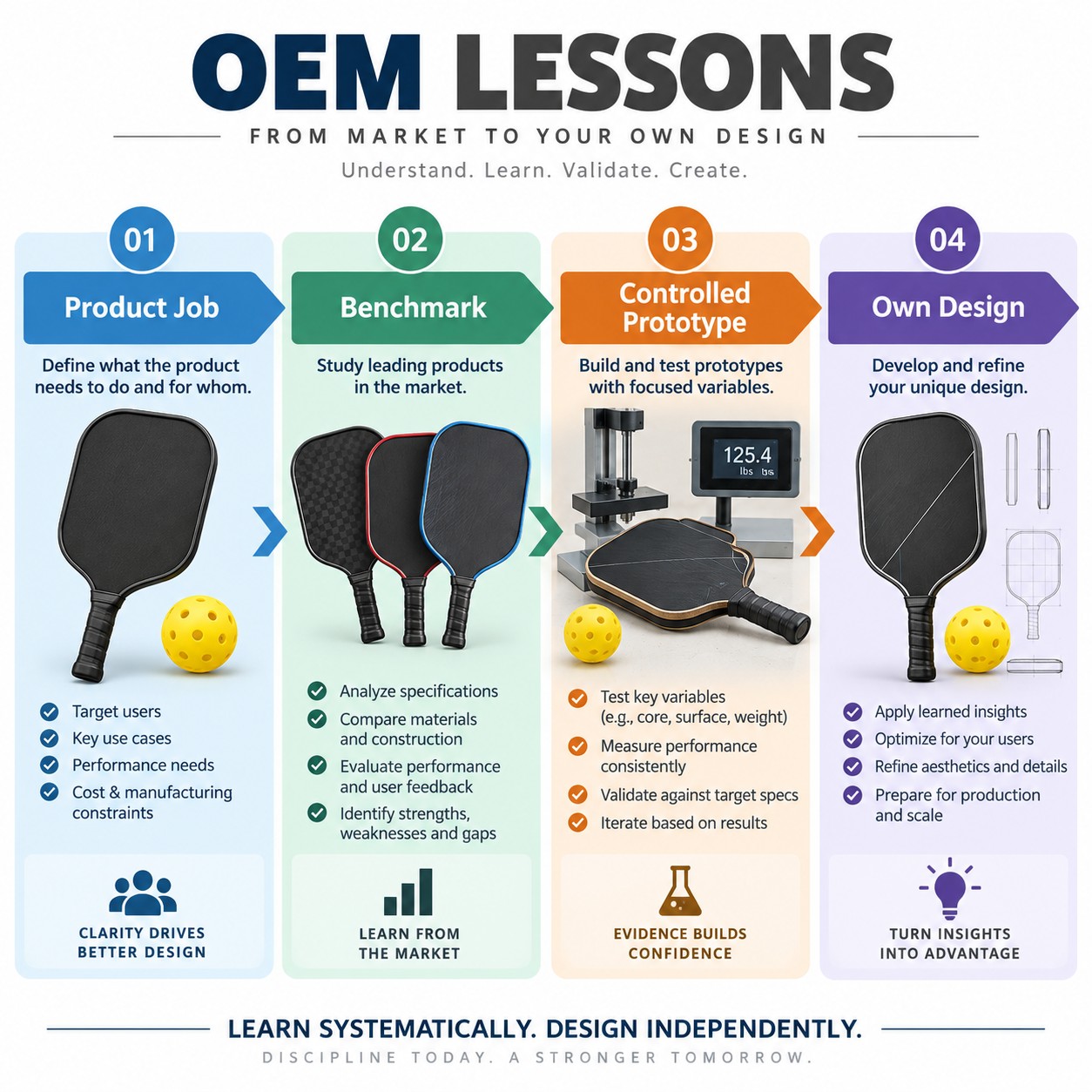
Use Competitor Products to Improve Questions, Not Copy Designs
A strong case study is neutral. It records what the brand publishes, separates those statements from independent evidence and turns unknowns into engineering questions.
For an OEM team, the value is learning how the product job is expressed through geometry, construction and positioning. The next step is an independent brief—not reverse-engineering proprietary details for imitation.
- Keep official facts, brand claims and hypotheses in separate columns.
- Date-stamp specs and approval status.
- Benchmark the user problem, not trade dress or proprietary geometry.
Frequently Asked Questions
Is this an independent laboratory review?
No, unless explicit independent test data is added.
Should competitor claims be repeated as facts?
No.
Can OEM brands copy the design?
No.
What should be verified?
Current specs, approval, warranty and published construction.
Why keep case studies?
They teach readers how to evaluate products and design choices.
Benchmarking a performance paddle category?
Mayvoci can help convert public market products into an independent target brief and controlled prototype plan.
The End about Mayvoci
1)Design:Over 100 paddle designs and photography service to assist start-up.
2)Professional:Focus on various of paddles manufacturing for 6 years
3)Quality:Strict quality management system to provide safety and satisfaction for customers
4)Amazon:Flexible comprehensive solution to make sure each Amazon seller is well cared.
5)Excellent Team:Experienced paddle experts & dynamic sales team give you 5-star service