
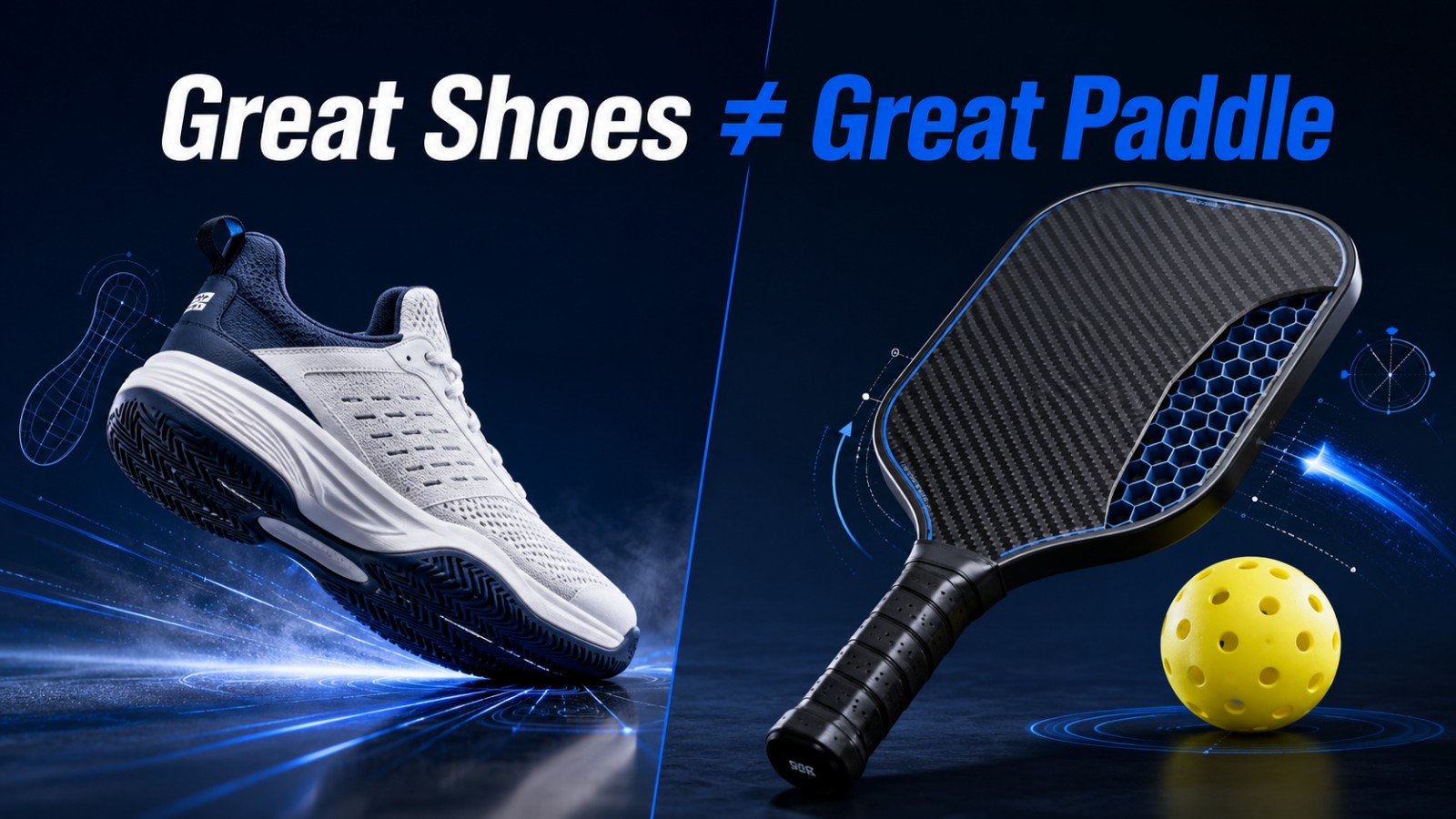
A global sports brand signs one of the best pickleball players in the world. The announcement is big. The message is clear: a legacy athletic company is not just watching pickleball anymore; it wants to help shape the category.
Then something unexpected happens. The player uses the new brand’s paddle at only one professional event, then returns to the paddle he already trusts. A few months later, the partnership ends.
That story is not about one brand failing. It is about a bigger truth in pickleball: making excellent shoes does not automatically mean making an excellent paddle.
Shoes get a player to the ball. A paddle decides what happens when the player gets there.
Pickleball Is Too Big for Brands to Ignore
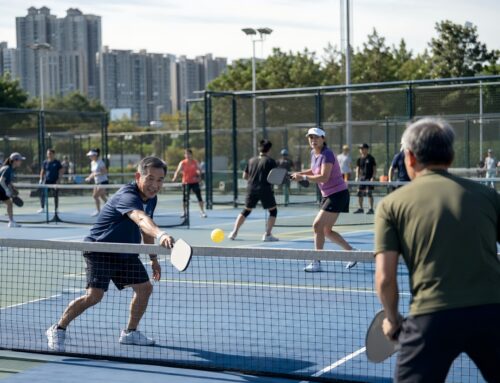
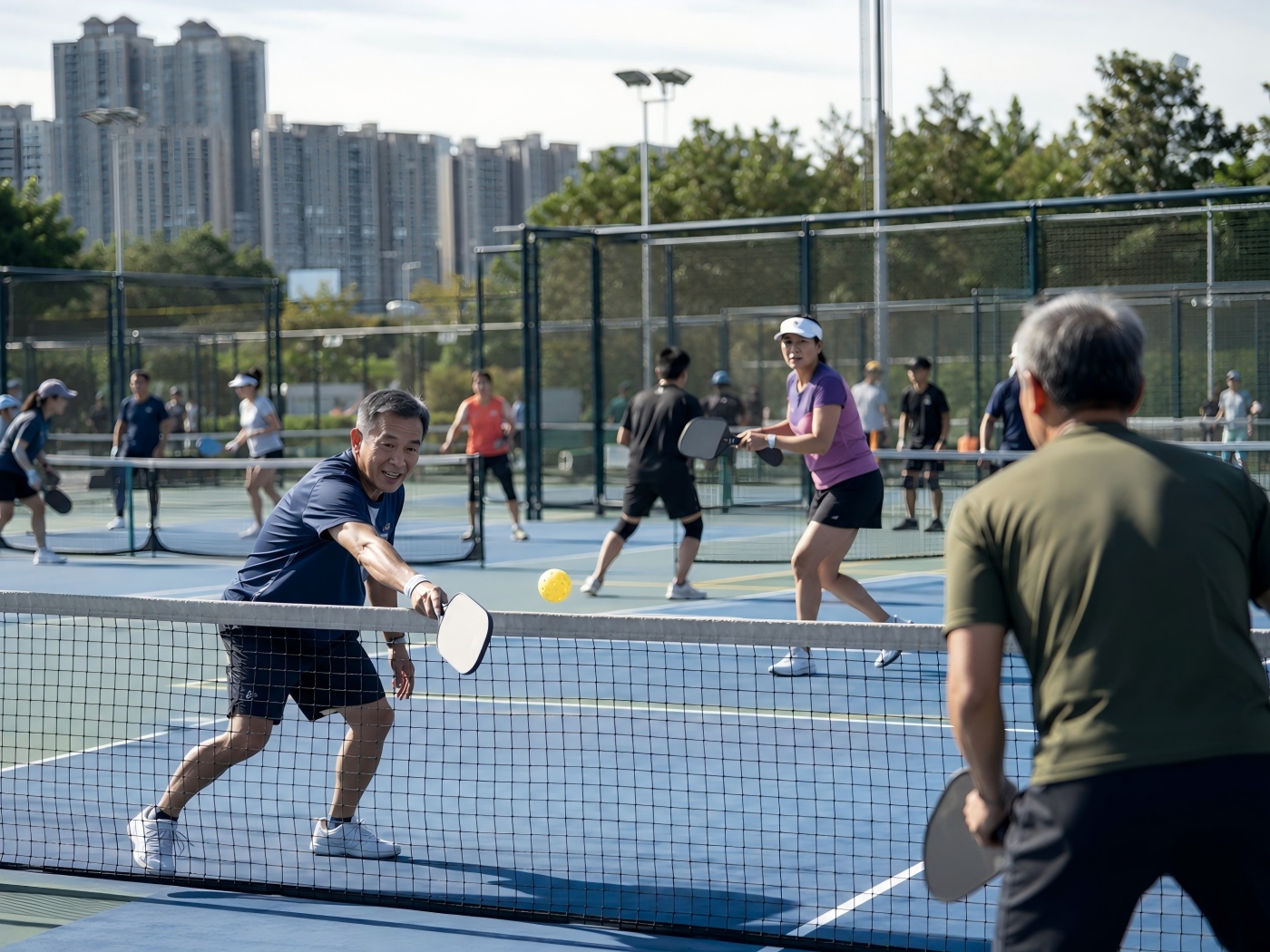
Pickleball is no longer a small community sport. According to SFIA participation data, about 24.3 million Americans played pickleball in 2025, and participation grew 171.8% from 2022 to 2025. That kind of growth attracts money, media, retailers, and new brands.
Footwear companies, tennis companies, golf brands, lifestyle brands, and specialist paddle makers are all trying to win space in the same market. Skechers moved early through shoes and became the official footwear sponsor of the US OPEN Pickleball Championships in 2022. Wilson and HEAD have broad pickleball paddle lines. Mizuno’s U.S. store lists pickleball paddles and shoes. Callaway has also entered with a premium paddle product carrying a USA Pickleball Approved logo.
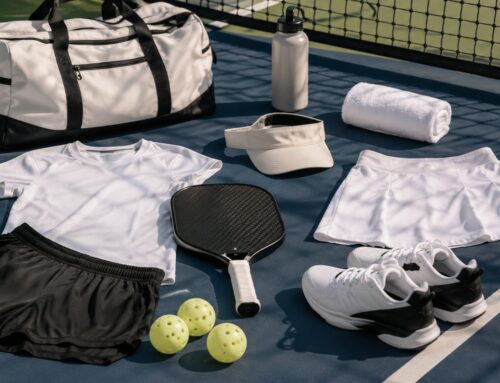
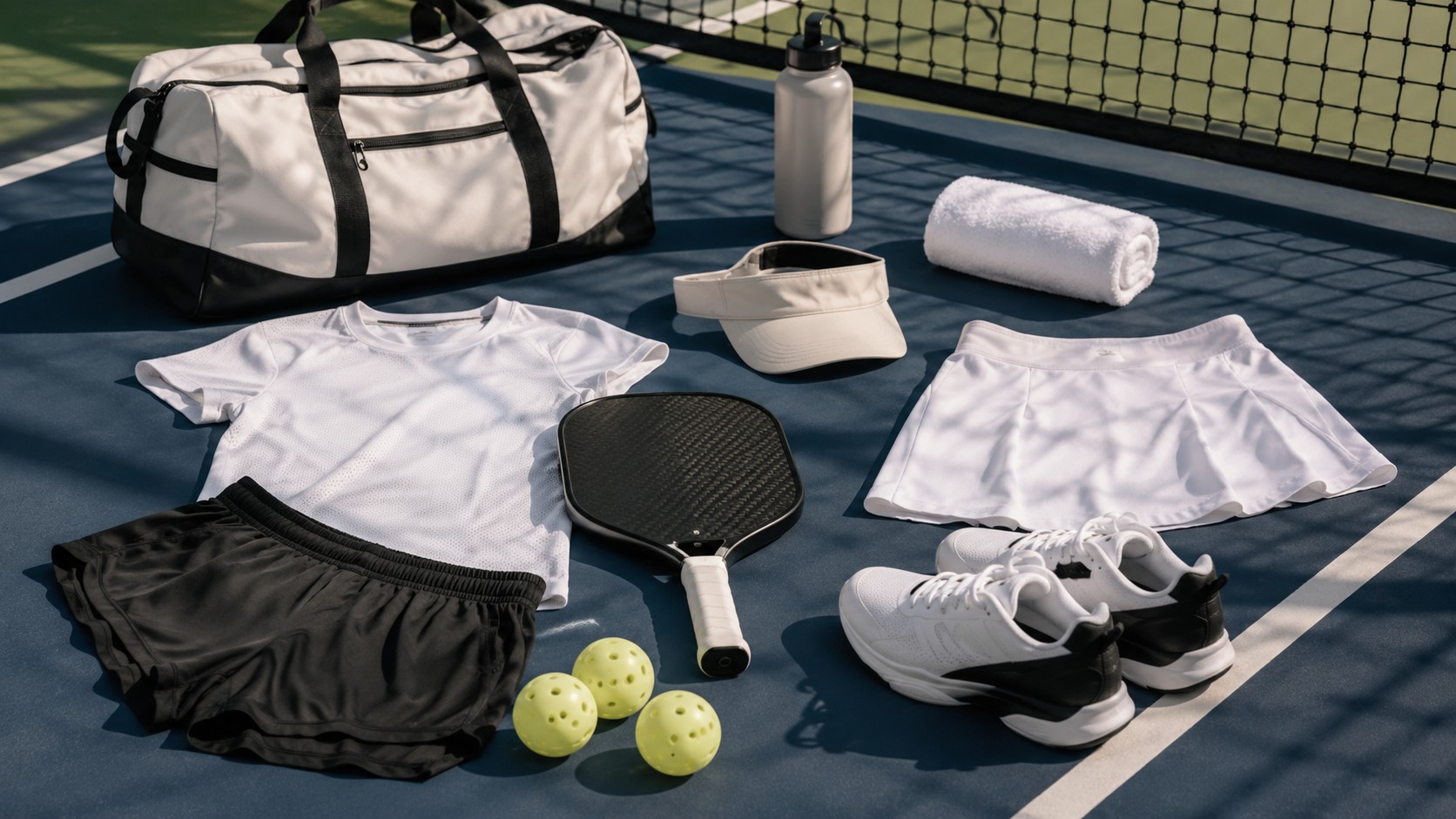
On paper, this makes sense. Pickleball players need shoes, apparel, bags, balls, accessories, and paddles. A strong sports brand already has distribution, trust, design teams, athletes, and marketing power.
But the paddle category has one uncomfortable rule: brand awareness can open the door, but it cannot hit the ball for the player.
The Adidas-Staksrud Case Explains the Category Better Than Any Chart
In January 2025, adidas Pickleball announced a landmark partnership with Federico Staksrud, then one of the top-ranked players in the sport. The partnership included plans for a signature paddle scheduled for launch later that year.
For any sports marketer, it sounded like the perfect formula: a global brand, a top athlete, a rising sport, and a signature product. But the court told a more complicated story.
Public reporting later noted that Staksrud used an adidas paddle in only one PPA event before switching back to a JOOLA paddle, even while still wearing adidas apparel. By June 2025, the two sides had mutually concluded the partnership.
The lesson is not that adidas cannot build paddles. The lesson is that elite players are extremely sensitive to equipment feel. A paddle is not chosen because the logo is famous. It is chosen because the player trusts the contact, the reset, the block, the drive, the spin, the hand speed, and the response under pressure.
Blog Pull Quote
A famous logo can earn attention. A trusted paddle has to earn contact.
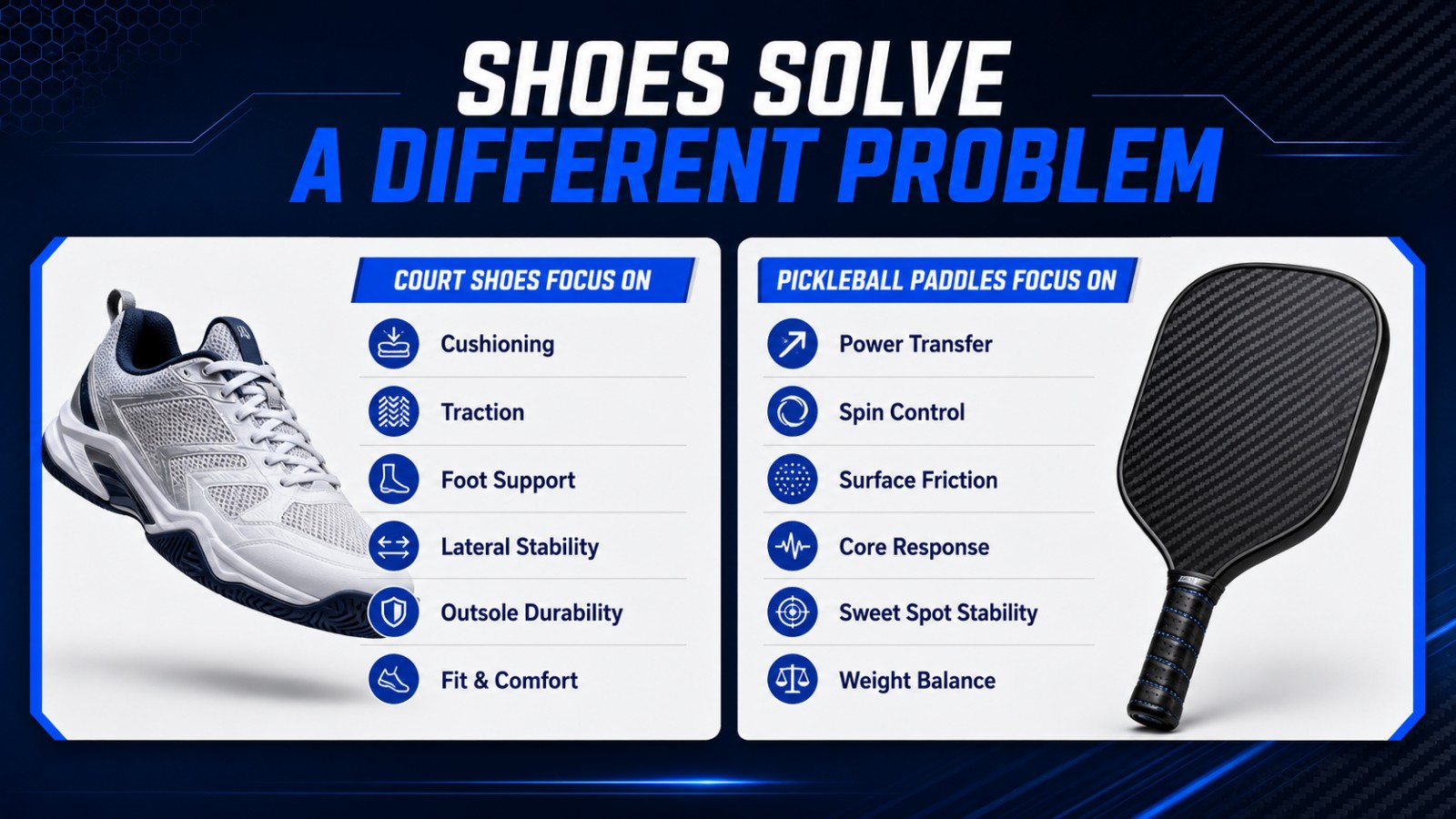
Shoes Solve Movement. Paddles Solve Impact.
A pickleball shoe is engineered around the body. It needs lateral support, grip, cushioning, comfort, toe protection, and durability on hard courts. These are difficult problems, and experienced footwear brands can be very good at solving them.
A paddle is engineered around impact. It has to manage what happens in a fraction of a second when a plastic ball meets the face of a composite structure. That moment involves rebound, vibration, surface friction, dwell time, torsional stability, sweet spot behavior, and energy transfer.
The shoe supports the athlete. The paddle becomes the athlete’s hand. That is why players can tolerate a shirt they do not love, but they will not tolerate a paddle that makes their game feel uncertain.
A Paddle Is Not Just Carbon Fiber Plus Honeycomb Core
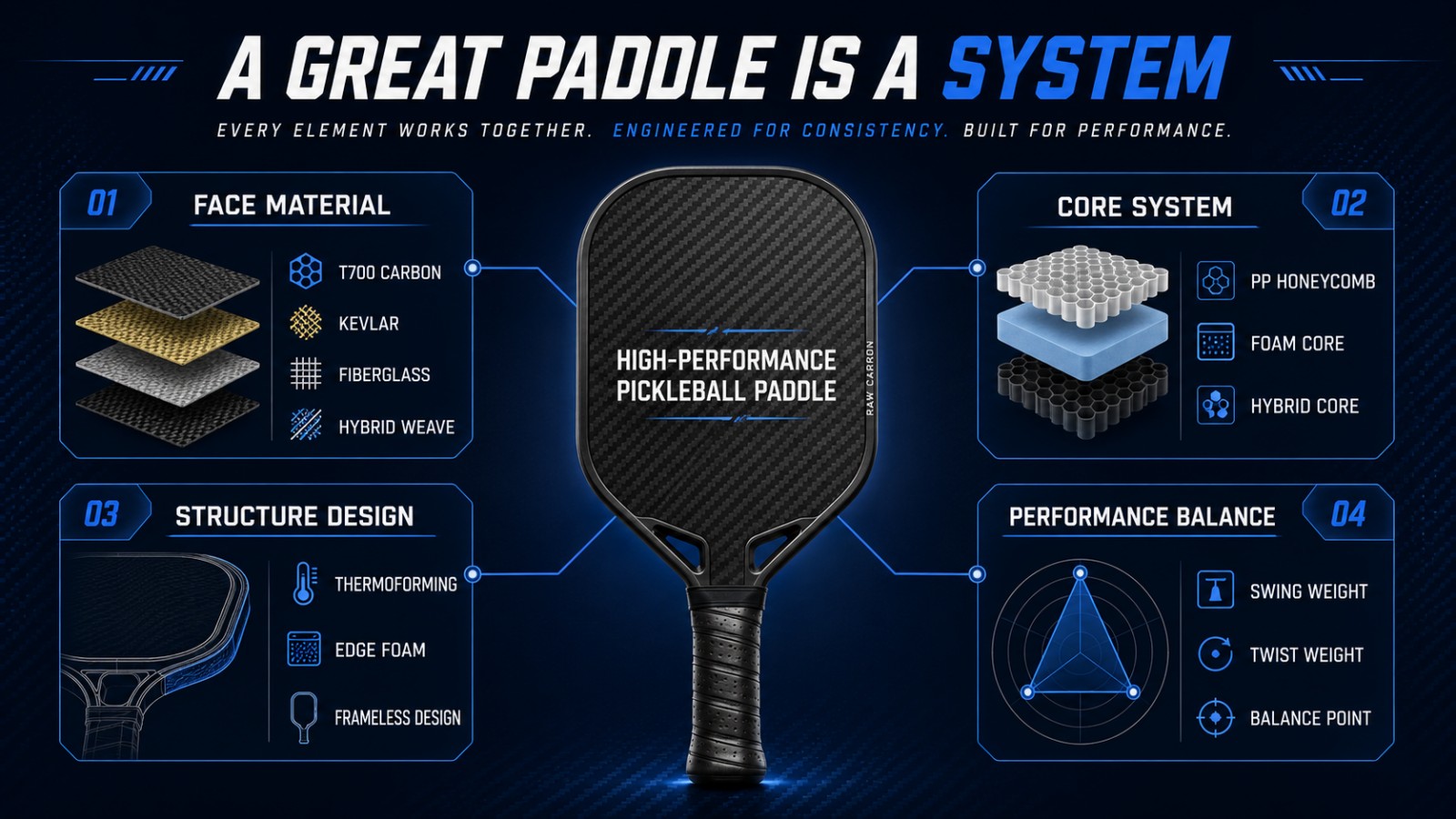
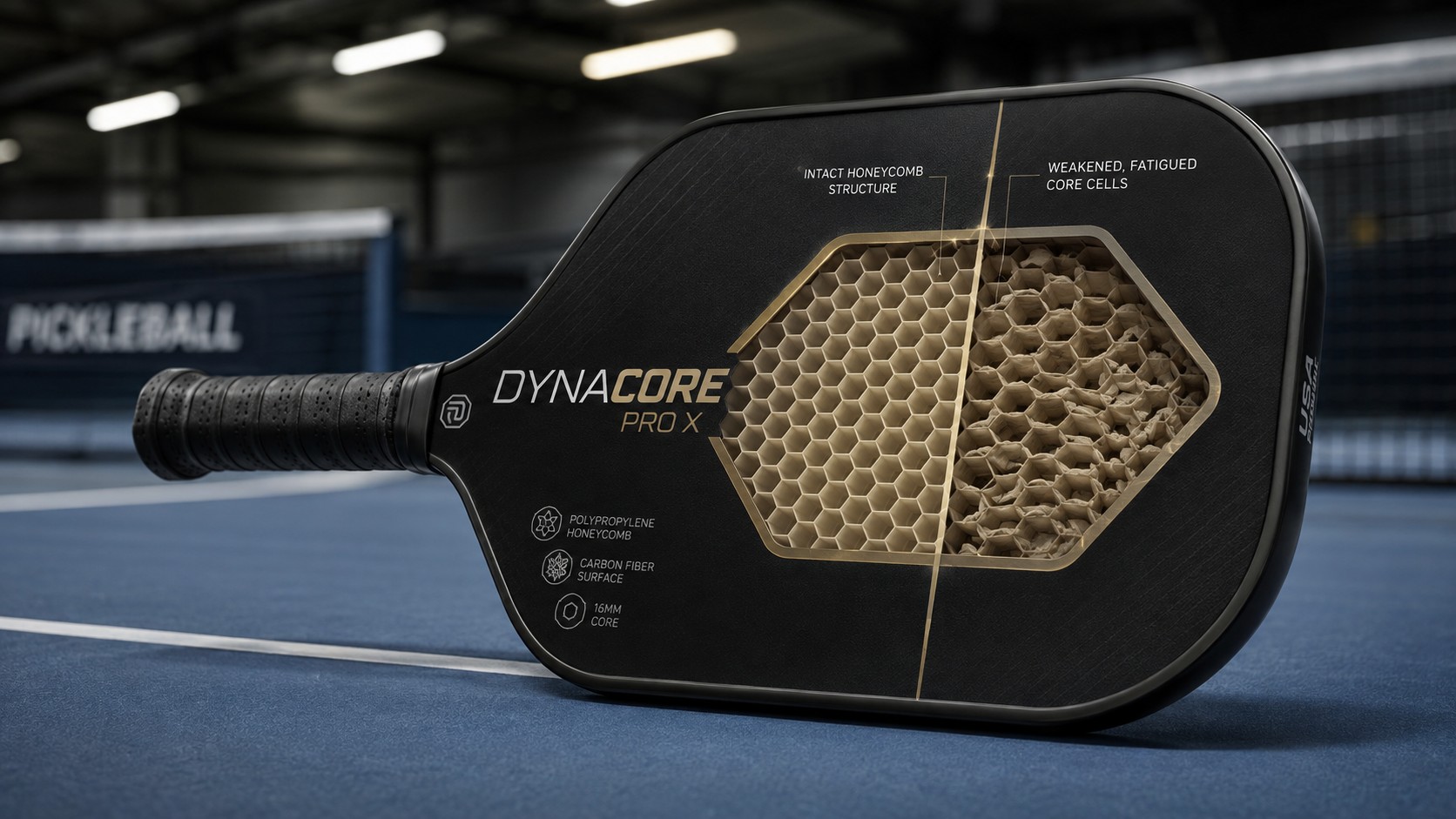
Many buyers still describe paddles too simply: carbon fiber face, honeycomb core, comfortable grip. That description may be true, but it is not enough.
The face system alone can change everything. T700 carbon fiber, T800 carbon fiber, Kevlar, fiberglass, aramid blends, and hybrid weaves all create different combinations of stiffness, feedback, spin potential, durability, and feel. A raw carbon surface may offer control and bite. Fiberglass may add pop. Kevlar or hybrid constructions may change softness and vibration response.
The core system matters just as much. Polypropylene honeycomb remains common, but foam structures, EPP, MPP, hybrid cores, and new internal designs can change sound, power, vibration, and long-term stability.
Then comes the structure: thermoforming, foam-injected edges, edge foam, perimeter weighting, frameless designs, molded throat sections, reinforced handles, and different bonding systems. Two paddles can use similar materials and still play completely differently because the structure and process are different.
This is why a paddle should be developed as a performance system, not as a graphic design project.
Surface Control Is Where Marketing Meets Physics
The paddle face is often the first thing a customer sees. It carries color, texture, branding, and visual identity. But for performance, the face is not decoration. It is the contact zone.
Surface texture affects spin. Surface consistency affects confidence. Coating durability affects how the paddle feels after weeks of play. Even if a new paddle feels good in a product launch video, players will judge how it performs after repeated games, heat, sweat, ball dust, and normal wear.
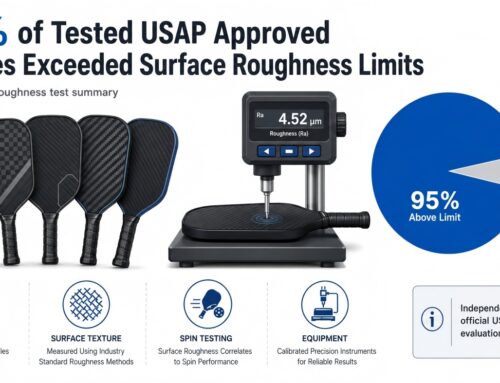
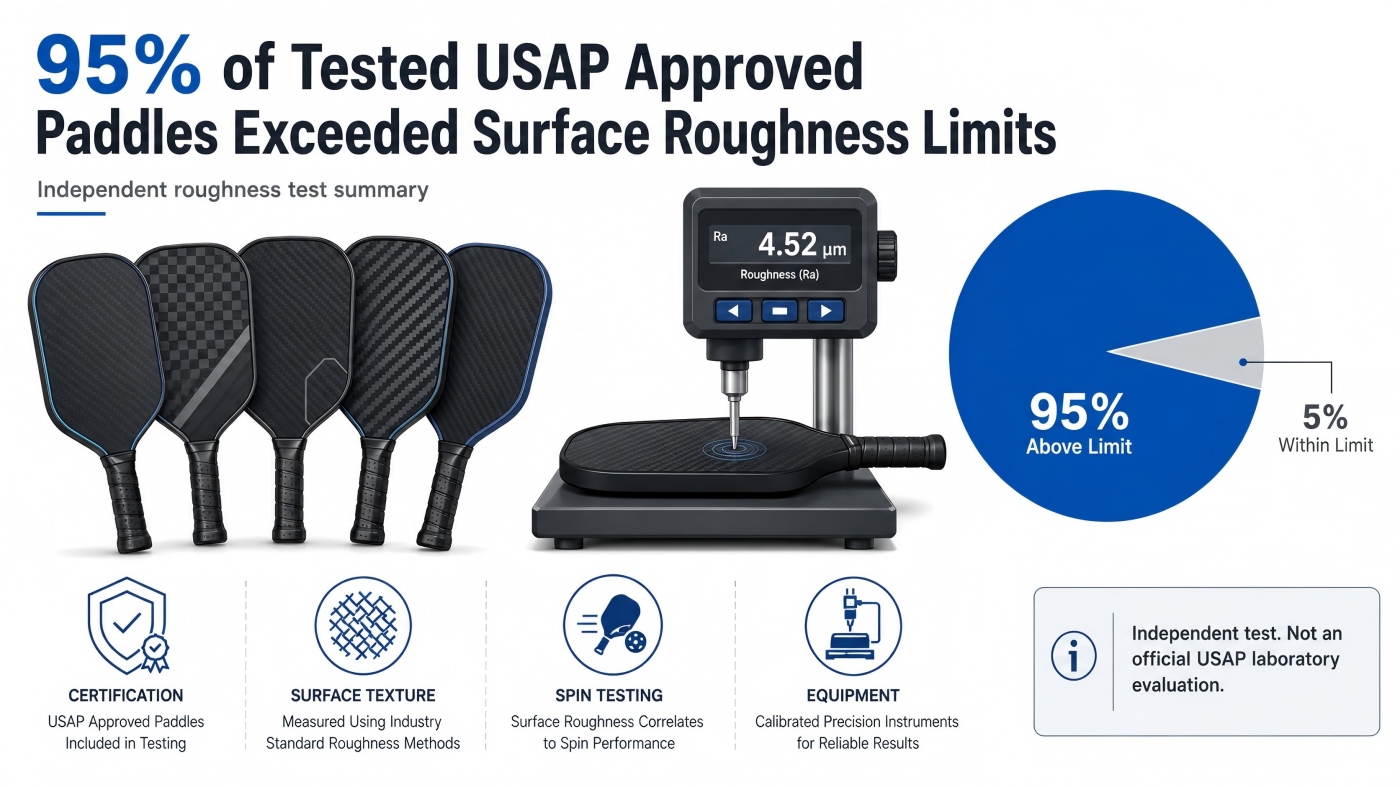
This is also where compliance becomes important. USA Pickleball’s equipment standards include specific limits for surface roughness, friction, reflection, dimensions, and other performance-related characteristics.
In other words, the best paddle face is not simply the roughest or flashiest face. It is a face that performs well, stays consistent, and remains compliant.
USAP Approval Is the Starting Line, Not the Finish Line
For many customers, seeing USA Pickleball Approved on a paddle is reassuring. It means the paddle has been certified for play in USA Pickleball sanctioned tournaments. The official approved paddle database is also the place buyers can verify listed models.
But approval does not automatically mean a paddle is great. It means the model meets the required compliance standards. It does not guarantee that every player will like the feel. It does not guarantee premium control. It does not guarantee better resets, faster hands, more durable surface texture, or stronger buyer loyalty.
The size of the official list also shows how crowded the category has become. At the time of research, the USA Pickleball Approved Paddle List displayed 5,209 entries.
That changes the competitive question. It is no longer: Can we make an approved paddle? The real question is: Why should a player choose our approved paddle over thousands of others?
Passing certification is only the beginning. Winning players’ trust is the real challenge.
Core Message
Passing certification is only the beginning. Winning players’ trust is the real challenge.
The JOOLA Gen3 Dispute Shows Why Compliance Cannot Be Treated as a Sticker
The JOOLA Gen3 controversy is an important reminder for every brand entering pickleball. In May 2024, USA Pickleball said JOOLA had submitted the wrong paddles for certification in November 2023, and the affected paddles were de-listed from the Approved Paddle List.
This matters because certification is not just a logo printed on the face. It depends on the relationship between the approved sample, the production model, and the product that actually reaches the market.
For B2B buyers, this should raise a practical question: how does the supplier control model identity, batch consistency, surface process, material changes, and certification communication?
A paddle that cannot stay aligned with its approved specification can create problems for retailers, players, and brands.
Professional Standards Are Becoming More Technical
At the professional level, paddle regulation is becoming even more performance-driven. UPA-A’s 2026 paddle specifications include limits for combined length and width, maximum weight, maximum thickness, Paddle Efficiency Factor, and spin rate. The rules also address break-in behavior and certification model identity.
This confirms where the market is going. Performance is no longer only a matter of player opinion. It is being measured, limited, retested, and discussed publicly.
For manufacturers, this means R&D cannot stop at a good-looking prototype. For buyers, it means the right supplier must understand not only how to produce paddles, but how to control performance.
The Hardest Product to Build Is the Same One Twice
A brand can create one impressive sample. That is not the hardest part.
The hard part is making the same paddle again and again. Weight range needs to stay stable. Swing weight and balance point need to stay close. Face texture needs to stay controlled. The core must bond correctly. The handle alignment must be clean. The edge guard must not separate. The graphics must match. The grip must feel consistent. The paddle must survive normal play without losing its identity.
This is where real manufacturing capability matters. A paddle brand is not built by one prototype. It is built by a production system that can repeat the same performance across hundreds or thousands of units.
B2B Takeaway
For OEM and ODM buyers, repeatability is the difference between a product launch and a product line.
Why Cross-Over Brands Can Still Win
None of this means shoe brands, golf brands, or large sports companies cannot succeed in pickleball paddles. They absolutely can.
They bring advantages that specialist factories often do not have: brand equity, retail channels, athlete networks, design language, consumer trust, and marketing reach.
But the best path is not to treat the paddle as a branded accessory. The best path is to combine brand power with technical paddle development. That means testing materials, refining core structures, working with serious players, controlling surface behavior, and choosing manufacturing partners who understand compliance and consistency.
The winning formula is not famous logo plus paddle shape. The winning formula is brand story plus engineering discipline.
What Buyers Should Ask Before Choosing a Paddle Supplier
If you are a distributor, retailer, Amazon seller, club buyer, or sports brand developing private-label paddles, do not stop at the surface image. Ask better questions.
What face material is being used? Is it T700 carbon fiber, T800 carbon fiber, fiberglass, Kevlar, or a hybrid weave? What does that choice do for control, pop, spin, and durability?
What is the core material and thickness? Is it a standard polypropylene honeycomb, foam-enhanced core, EPP, MPP, or hybrid construction?
How is the surface texture controlled? Is it created by raw fiber texture, peel ply, coating, grit system, or another process? How does it change after use?
What is the target weight range, swing weight, twist weight, and balance point? Can the factory keep these stable in mass production?
Is the paddle already USAP approved, or can the supplier support certification development? If the product changes, how will the supplier manage re-testing or model updates?
Can the supplier support more than logo printing? Can it help with mold development, performance positioning, packaging, product differentiation, and long-term model planning?
If the only answer is ‘we can put your logo on it,’ that is not enough for the next stage of the market.
Final Thought
The pickleball paddle market is entering a more serious phase. The easy question used to be: can we enter pickleball?
The better question now is: can we build a paddle that players trust after the first game, the tenth game, and the hundredth game?
Great shoes prove a brand understands athletes in motion. Great paddles prove a brand understands impact, materials, compliance, and repeatable manufacturing.
Shoes get players to the ball. Paddles decide the shot.
That is why making great shoes does not guarantee a great pickleball paddle. And that is exactly why the next winners in pickleball will not be the brands that simply follow the trend. They will be the brands that respect the engineering behind every shot.
Suggested B2B Closing CTA
If you are planning a private-label or OEM pickleball paddle line, start with more than graphics. Build around material, core structure, surface control, certification planning, and repeatable production. The right manufacturing partner can help turn a market trend into a product line players trust.
The End about Mayvoci
1)Design:Over 100 paddle designs and photography service to assist start-up.
2)Professional:Focus on various of paddles manufacturing for 6 years
3)Quality:Strict quality management system to provide safety and satisfaction for customers
4)Amazon:Flexible comprehensive solution to make sure each Amazon seller is well cared.
5)Excellent Team:Experienced paddle experts & dynamic sales team give you 5-star service

Great content! Keep up the good work!