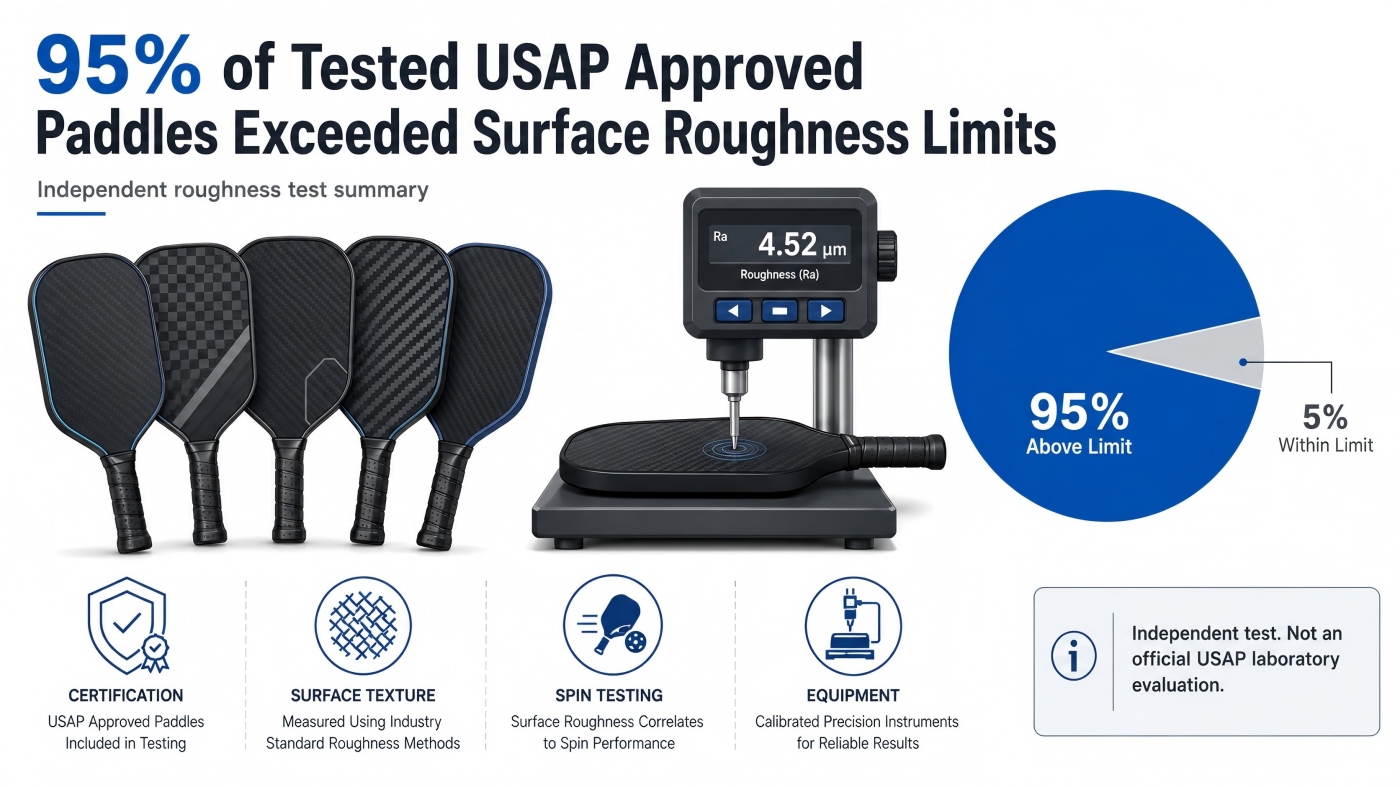
A recent independent surface test of 42 USAP-approved pickleball paddles has sparked debate across the industry. According to the unofficial measurements, nearly 95% of paddles exceeded the USAP surface roughness limit.
At first glance, this sounds alarming—how can certified paddles fail the very standard they were approved under?
But the real question is not whether the paddles are “illegal.”
The real question is:
Has the USAP surface roughness standard become outdated compared to modern paddle technology?
1. What the Test Actually Found (and What It Didn’t)
The test referenced in this discussion used a non-official measurement setup, applying USAP-style surface roughness evaluation across multiple paddle brands.
Key findings:
- 42 paddles tested
- ~40 showed RA values above the nominal threshold
- All paddles were originally listed as USAP-approved models
However, even the tester acknowledged:
- The method was not a certified laboratory procedure
- Results are informational, not regulatory
- Paddle-to-paddle variation may exist even within the same model
Important takeaway:
This is not a certification failure, but a measurement-system conflict.
2. Why “USAP Approved” Does Not Always Mean “Perfectly Within Spec”
USAP certification is based on sampling-based compliance testing, not continuous production monitoring.
This introduces three structural issues:
(1) Manufacturing tolerance variation
Even within the same mold:
- carbon layup variation
- coating thickness differences
- texture process inconsistency
can all slightly affect surface roughness.
(2) Batch-based certification logic
A paddle model is approved based on:
- specific samples
- specific testing conditions
- specific time window
Once approved, production continues under assumed consistency—not continuous re-certification.
(3) Measurement method sensitivity
Surface roughness (often RA / Rz values) is extremely sensitive to:
- probe position
- measurement pressure
- micro texture direction (carbon weave / peel ply patterns)
Small deviations can shift results above or below threshold.
3. The Real Issue: The Standard Has Not Evolved as Fast as Technology
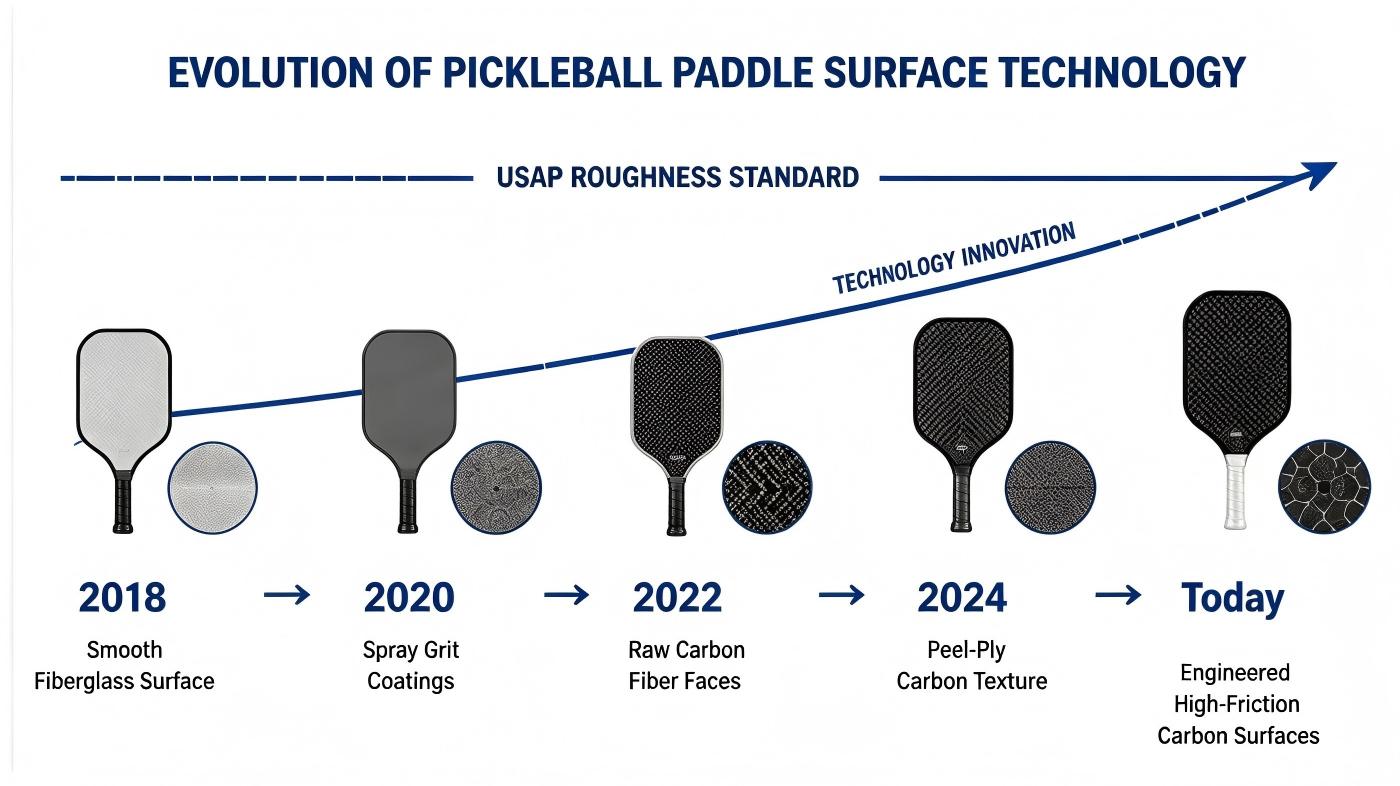
Over the last few years, paddle surface technology has advanced rapidly:
- raw carbon fiber textures
- peel-ply controlled surfaces
- sand-blasted or sprayed grit systems
- multi-layer carbon composites
These innovations are designed specifically to:
- increase ball dwell time
- enhance spin generation
- optimize friction within legal limits
However, the USAP roughness threshold has remained relatively stable, creating a widening gap between:
Modern paddle engineering vs legacy regulatory definitions
This is where the controversy emerges.
4. Why “Out of Spec” Paddles May Still Perform Normally
One of the most important insights from the test discussion is this:
Even paddles that exceed the roughness threshold do not necessarily produce dramatically higher spin in real gameplay.
Why?
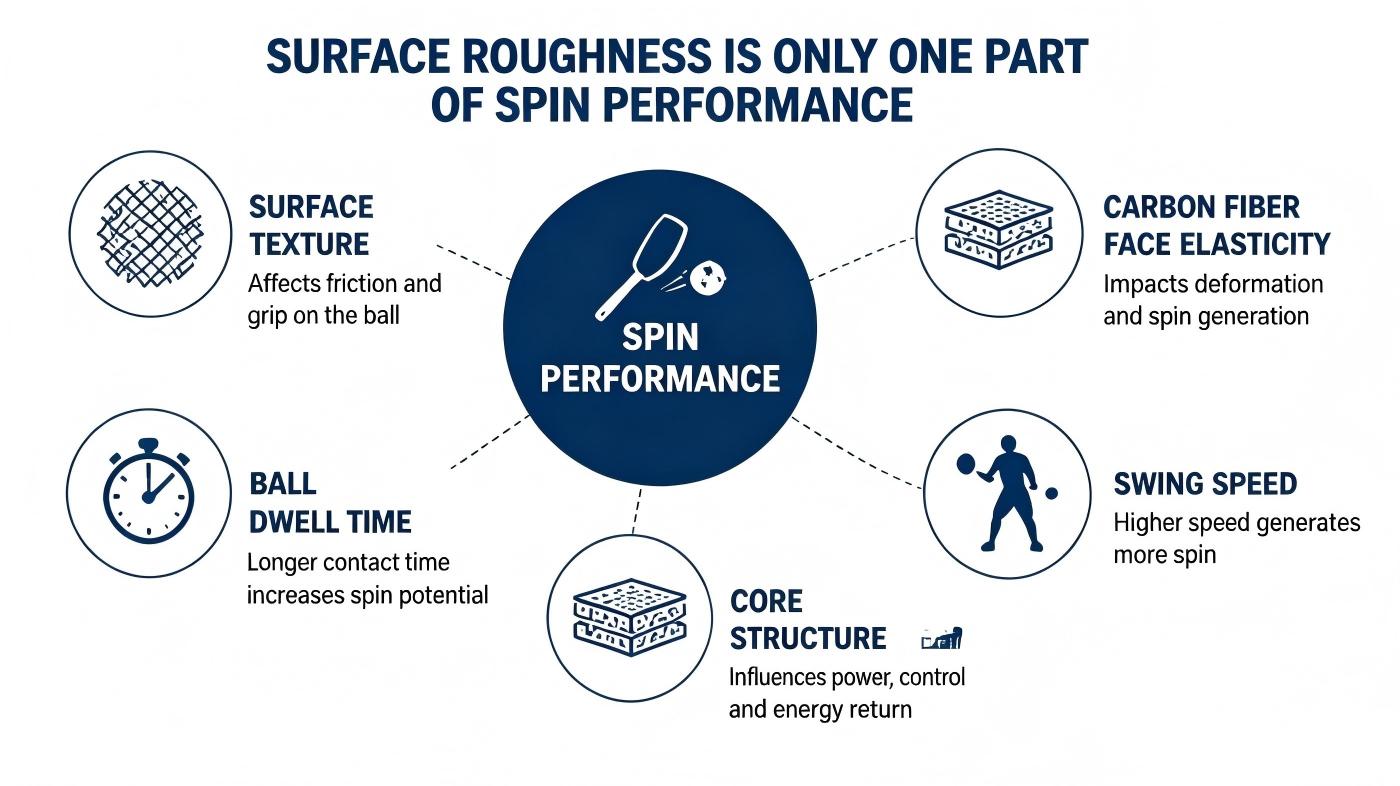
Because spin is not determined by surface roughness alone.
Spin performance depends on:
- surface texture geometry
- dwell time (ball contact duration)
- core stiffness and rebound behavior
- face elasticity and energy return
- swing speed and impact angle
Surface roughness is only one variable in a multi-variable system.
5. The Industry Reality: Everyone Is Optimizing the Edge of the Rule
Modern paddle manufacturers are operating in a narrow design window:
- maximize spin potential
- remain within USAP constraints
- maintain production consistency
- avoid certification risk
This leads to an industry-wide phenomenon:
Many high-performance paddles are designed at the “edge of compliance.”
This is not cheating—it is engineering optimization within regulatory boundaries.
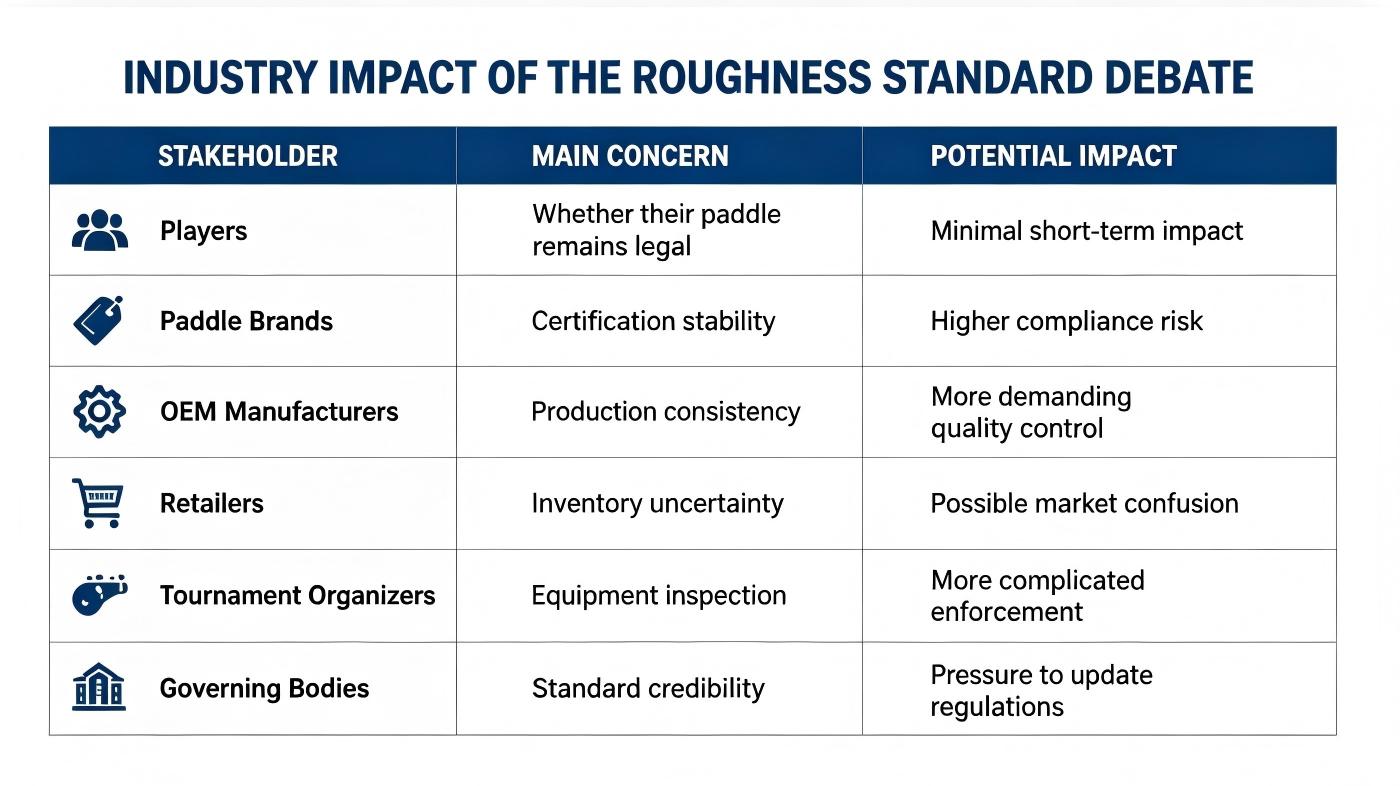
6. What This Means for Brands, OEM Buyers, and Distributors
For manufacturers and OEM buyers, this discussion highlights three critical risks:
(1) Certification instability risk
A paddle model approved today may face:
- stricter interpretation tomorrow
- re-testing under new conditions
- potential delisting
(2) Market perception gap
Players may assume:
- “approved = identical performance consistency”
But in reality:
- production variation exists
- performance variation is inevitable
(3) Design constraint pressure
Brands must balance:
- spin performance
- durability
- compliance margin
- production repeatability
This increases engineering complexity significantly.
7. The Future: Will USAP Adjust the Roughness Standard?
The industry is now debating a key question:
Should the standard be updated to reflect modern carbon surface technology?
There are three possible directions:
Scenario A: Raise the threshold
Align rules with modern paddle performance levels.
Scenario B: Refine measurement method
Introduce more advanced or standardized surface scanning systems.
Scenario C: Multi-metric regulation
Combine roughness with:
- spin potential
- rebound energy
- surface durability metrics
Any of these would significantly reshape the competitive landscape.
8. OEM Strategy: How Manufacturers Are Responding
Leading OEM manufacturers are now focusing on:
Controlled surface engineering
- peel-ply consistency systems
- controlled grit deposition
- carbon weave standardization
Structural performance balancing
- optimizing core stiffness vs face friction
- tuning dwell time instead of only surface roughness
Compliance-safe spin design
- maximizing performance without crossing regulatory risk lines
This is where next-generation technologies like advanced carbon texture systems and engineered surface layering become critical.
Conclusion: The Problem Is Not the Paddles—It’s the Gap Between Standards and Innovation
The so-called “95% out-of-spec paddles” controversy is less about rule-breaking and more about a structural mismatch:
- Technology is evolving rapidly
- Standards are evolving slowly
- Measurement systems sit in between
For players, this has minimal real-world impact.
For manufacturers, however, it signals a deeper truth:
Future competition will not only be about better paddles—but about better alignment between innovation and regulation.
The End about Mayvoci
1)Design:Over 100 paddle designs and photography service to assist start-up.
2)Professional:Focus on various of paddles manufacturing for 6 years
3)Quality:Strict quality management system to provide safety and satisfaction for customers
4)Amazon:Flexible comprehensive solution to make sure each Amazon seller is well cared.
5)Excellent Team:Experienced paddle experts & dynamic sales team give you 5-star service