
A rough pickleball paddle surface is easy to feel with a fingertip. It is much harder to manufacture that surface consistently, keep the particles attached, control how it wears and describe the result without turning texture into an unsupported spin claim.
For engineers and OEM buyers, a particle-based surface should be treated as a system: particle + binder + application method + cure + exposure + wear + inspection.
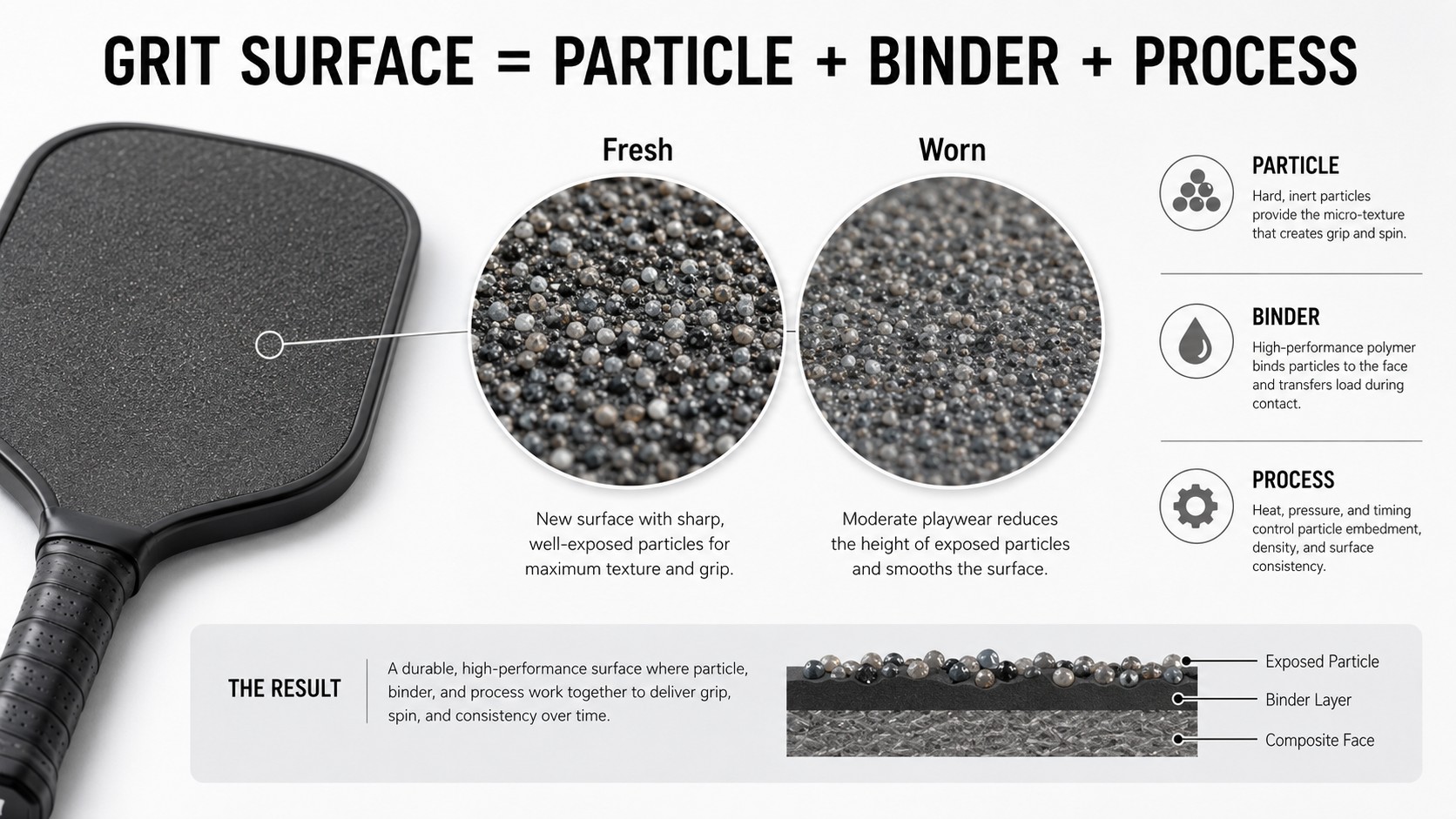
A Grit Surface Is a Particle + Binder + Application System
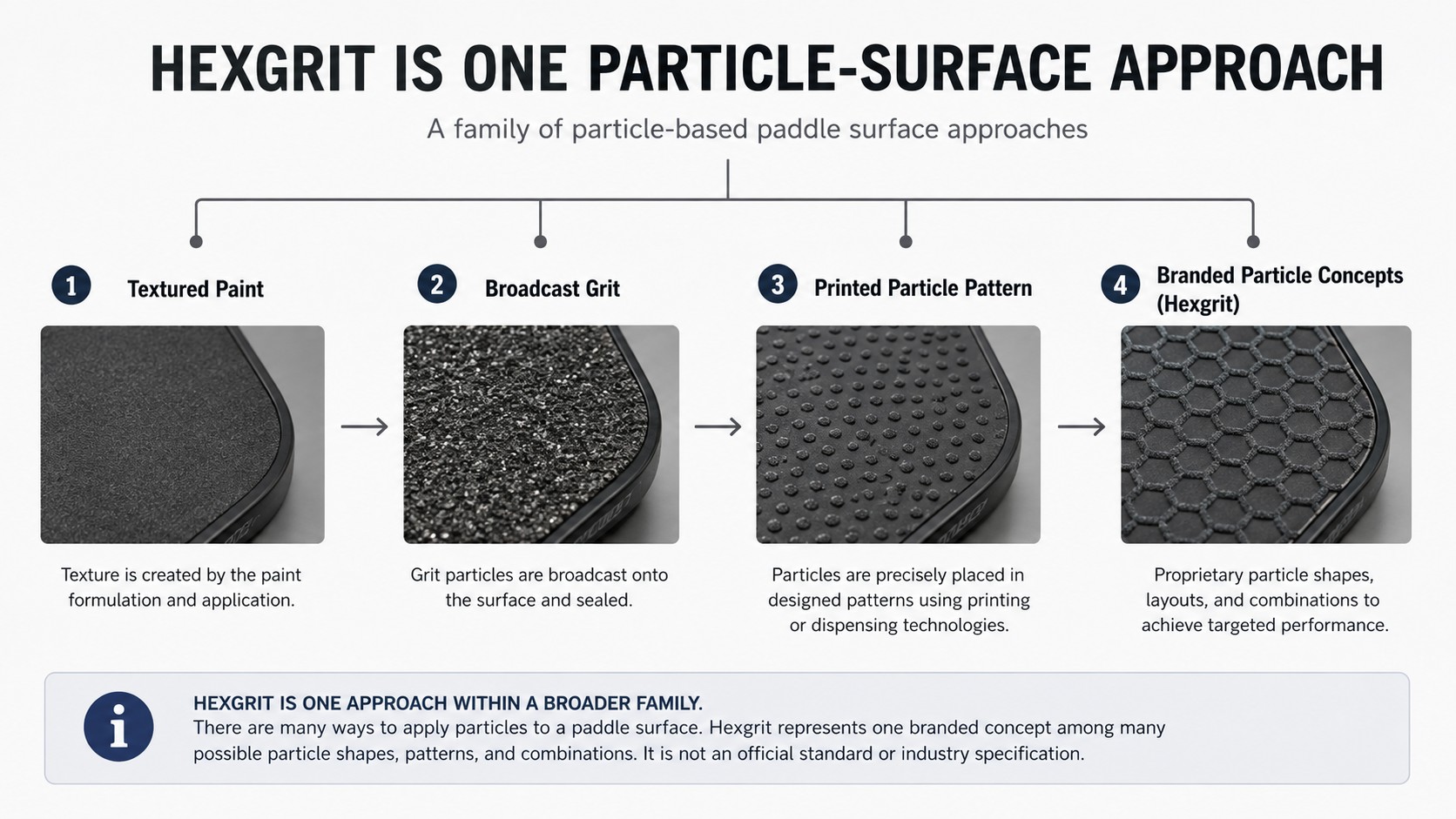
A grit surface uses hard or textured particles in or on a coating layer. Depending on the manufacturing method, particles may be mixed into paint or resin, broadcast onto a wet layer, printed in a controlled pattern or applied through another proprietary process.
The final surface depends on particle chemistry, shape, size distribution, concentration, binder thickness and how much of each particle remains exposed after curing.
“Textured paint” can range from a fine, uniform coating to a much more aggressive particle system. Two surfaces with similar touch roughness can have different particle geometry and wear differently.
Ask the supplier how the texture is created and which parameters are controlled. A marketing name alone is not a production specification.
Names such as “Hexgrit,” “diamond particle” or other branded particle terms should be understood as product-specific surface concepts inside the broader particle-coating family. The engineering questions do not change: what are the particles, how are they distributed, what binder holds them, how do they wear, and how is every lot checked?
A proprietary name can be useful for branding only after the process behind the name is controlled.
Particle Size, Shape, Distribution and Binder Exposure Must Be Controlled Together
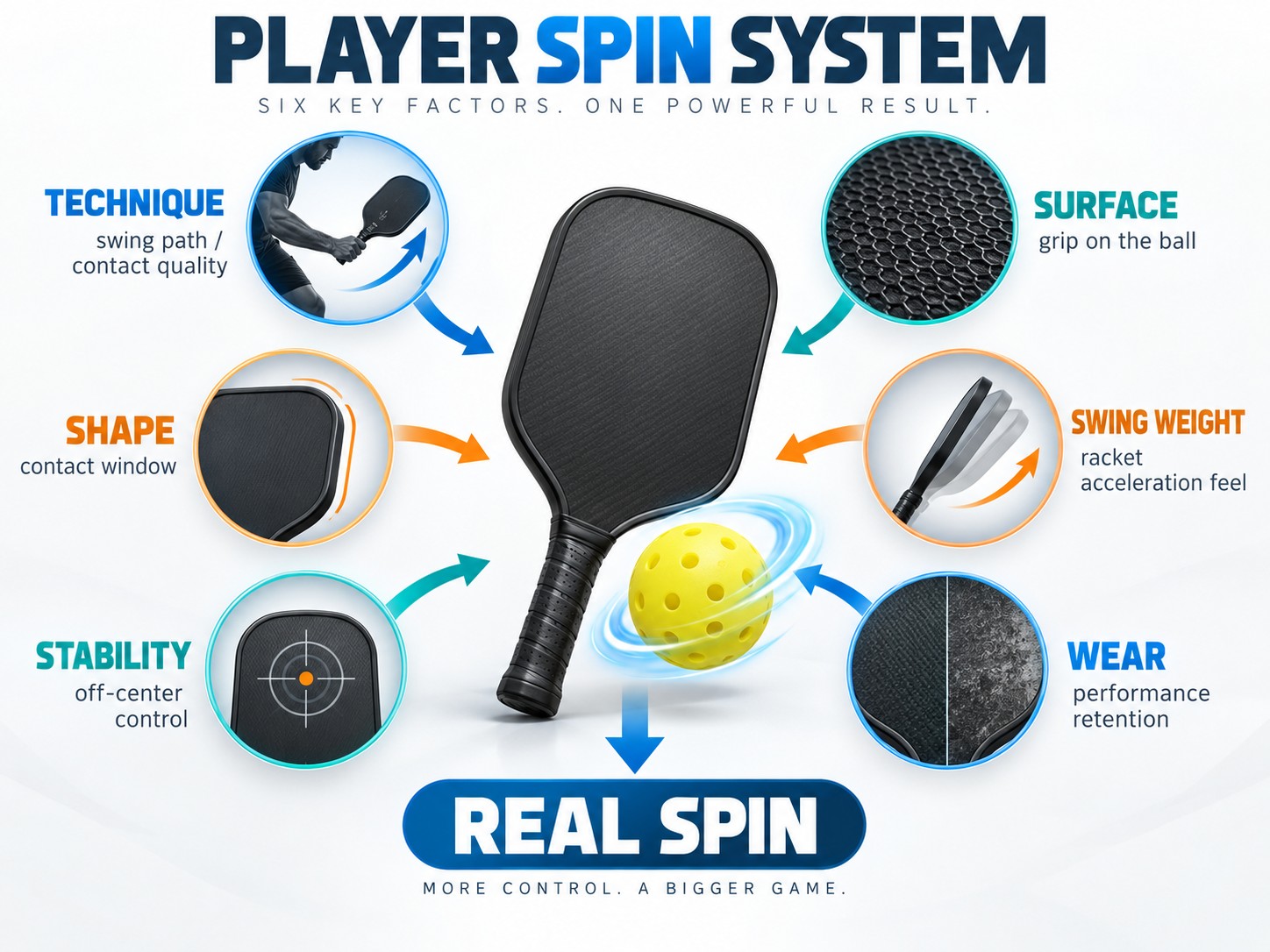
Large or angular particles can create pronounced local features, while smaller particles can create a more uniform field. But performance and durability cannot be predicted from particle size alone.
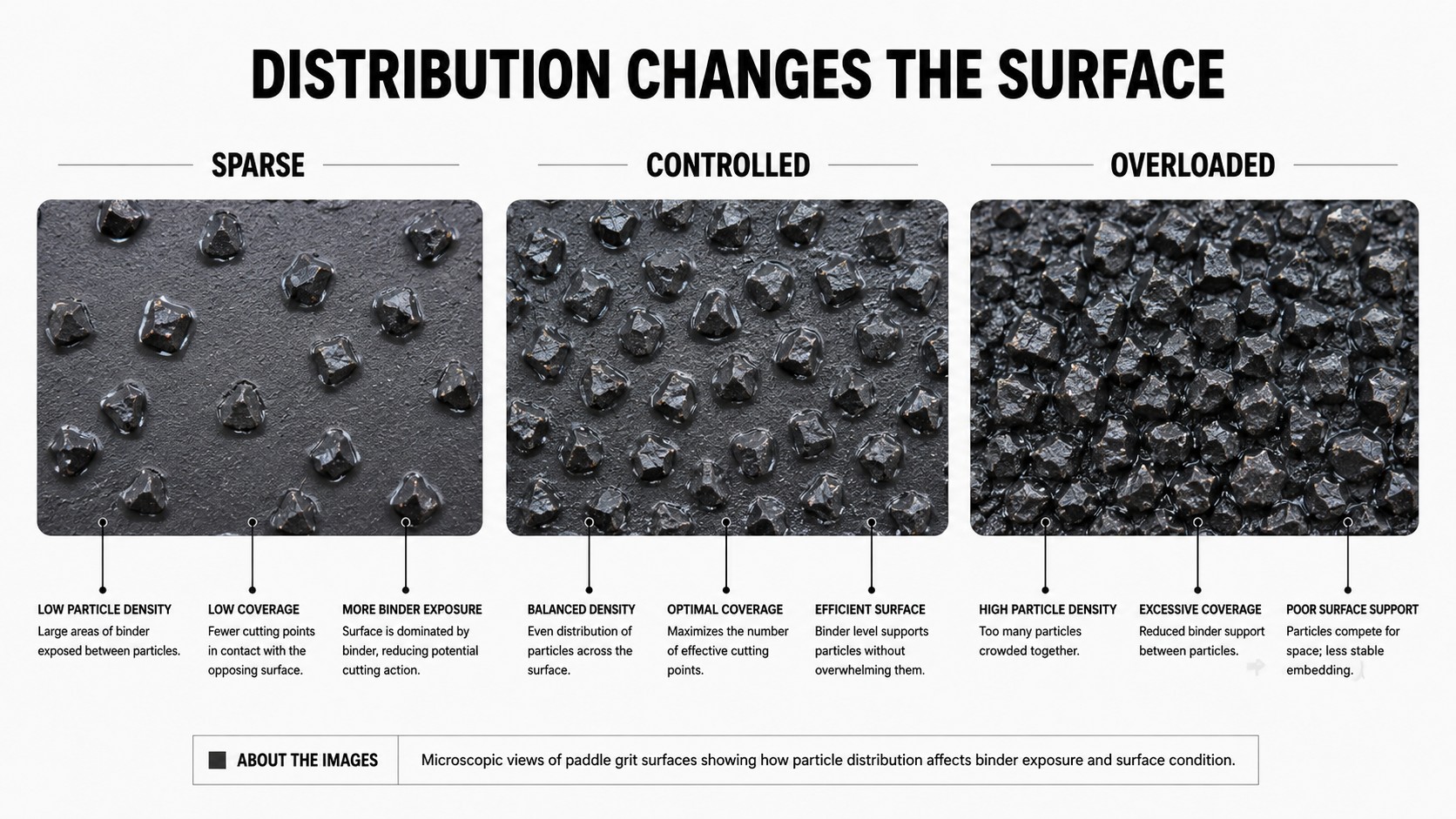
Distribution is equally important. If a surface contains dense clusters in one area and sparse coverage in another, ball contact may vary across the face.
The binder must hold the particle, but it can also bury it. If the coating floods the particles, the final surface may be smoother than intended. If particles stand too far proud of the binder, they may be more vulnerable to shedding or chipping.
A robust process controls coating thickness, particle loading, cure and surface appearance together.
Fresh Texture and Worn Texture Are Different States of the Product
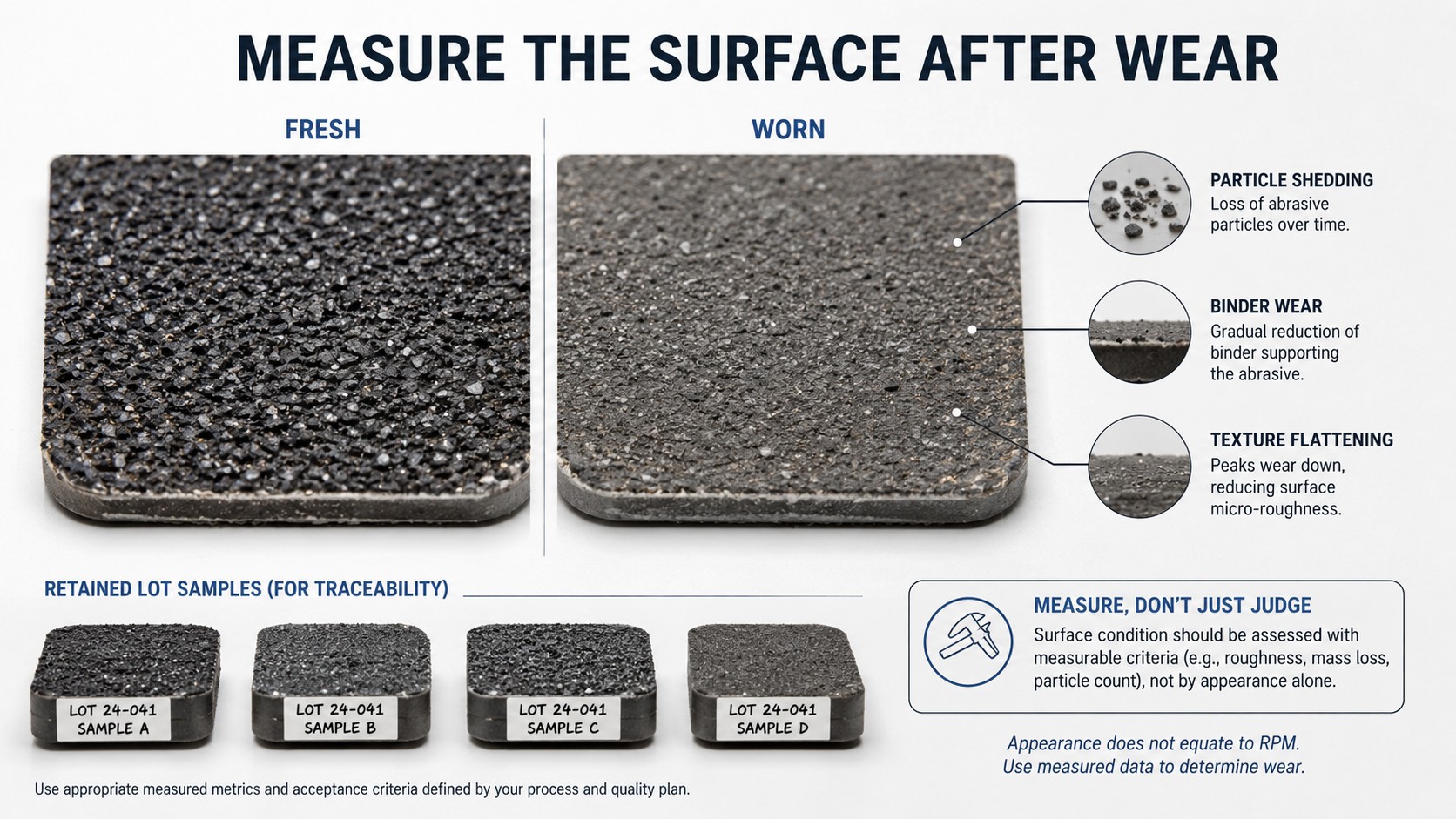
Many surfaces feel strongest when new. With use, particles can polish, loosen, become covered by residue, leave the coating or sit inside a binder that wears differently.
Development should compare the fresh surface with a conditioned or used surface.
- Particle shedding
- Binder abrasion
- Texture flattening
- Local glossy zones
- Print or coating delamination
- Uneven wear between sweet spot and perimeter
Photograph and retain reference samples so QC can distinguish normal cosmetic change from an unacceptable surface failure.
A very rough surface can still have poor adhesion. Test whether the surface remains attached to the underlying laminate through handling, impact and wear conditions appropriate to the product.
Roughness Is Useful—but It Is Not a Direct Spin Number
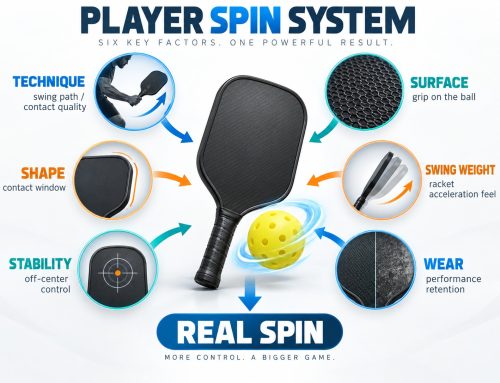
Surface texture affects ball interaction, but spin depends on the complete contact event: ball, impact speed, angle, stroke, paddle motion, face compliance and surface condition.
Do not claim that one particle shape automatically creates a specific RPM improvement unless the claim comes from a defined, repeatable test.
Surface QC & Claim Matrix
| Layer | What to Control | Evidence / Output |
|---|---|---|
| Particle | Chemistry/shape/size distribution where specified | Supplier/process spec |
| Binder | Coating thickness, cure, particle exposure | Process record + visual reference |
| Application | Distribution/uniformity | Multi-location inspection |
| Lifecycle | Fresh vs conditioned/worn state | Retained samples + wear protocol |
| Functional result | Spin or other performance outcome | Defined direct test method |
| Marketing claim | Construction fact vs measured result | Claim wording matched to evidence |
Lot QC Needs Visual, Measured and Lifecycle References
A surface specification can include particle/binder system, application method, visual standard, reference roughness method where used, coating condition, adhesion acceptance, color/print tolerance and retained lot samples.
Inspection should use multiple points and multiple paddles. Surface uniformity is a distribution problem, not a single reading.
A texture standard based only on a roughness number can miss particle loss, binder flooding or localized defects. A visual standard alone can miss meaningful surface changes that are hard to see. Use both when appropriate: reference images, retained samples and a defined measurement or functional test.
For production release, compare new lots with the approved sample under consistent lighting and at defined face locations. The goal is not to make every microscopic particle identical; it is to keep the process inside a controlled window.
If a brand markets spin or texture as a major benefit, ask how long the intended surface condition is expected to remain and how that is evaluated. A claim that is true only on a new paddle may create warranty or trust problems if wear is rapid.
Keep approved new-surface samples, acceptable worn references and rejected examples. Photograph them under consistent lighting and link them to the process lot. This gives production and customer-service teams a shared language for what “normal” and “unacceptable” look like.
For a brand with several surface technologies, maintain a separate reference for each process rather than one generic roughness standard.
Separate Surface QC From Certification Output
Surface roughness, particle distribution and binder exposure are useful manufacturing controls, but they should not be presented as direct substitutes for spin output. Current USA Pickleball equipment resources separately publish surface-related tests and broader certification requirements.
For a manufacturer, the strongest model has two layers. Layer one controls the process: particle/binder system, visual distribution, roughness or other surface measurements and wear. Layer two verifies the finished product through the applicable official spin/certification method.
This prevents an OEM team from optimizing only for a roughness number that may not predict finished-paddle spin or lifecycle behavior.
| Evidence Layer | Question | Suitable Evidence | Do Not Claim |
|---|---|---|---|
| Construction fact | How is texture created? | BOM + process record + macro image | “More spin” from material name alone |
| Process consistency | Is the surface repeatable? | Multi-location visual/measurement map | Certification pass from roughness alone |
| Lifecycle | How does it change? | New vs conditioned/worn samples | Permanent spin from day-one texture |
| Certification output | Is it within the current rule? | Official/current test result | Equivalence from an unrelated internal method |
Write Surface Claims at the Level of Evidence You Actually Have
Construction fact: “Particle-textured coating applied over the paddle face.”
Measured result: “Average spin result under our stated internal test method.”
Unsupported shortcut: “Diamond particles create 30% more spin for every player.”
Do not approve a grit surface because one golden sample feels rough. Approve a measurable application process, verify wear, retain samples and control the production lot.
FAQ
Is Hexgrit a separate scientific category?
Not necessarily. It should be treated as a branded or product-specific particle-surface concept whose actual construction must be defined.
Does a rougher surface always create more spin?
No. Surface condition matters, but spin also depends on the full impact and test setup.
What causes grit to wear out?
Particles can polish or shed, binder can abrade, and the local surface can flatten through repeated contact.
How should a factory inspect grit consistency?
Use multiple samples and multiple face locations, with a defined visual or measurement method and retained references.
Should Peel-Ply be included in this article?
No. Peel-Ply creates texture through a different surface-transfer mechanism and deserves a separate technical page.
The End about Mayvoci
1)Design:Over 100 paddle designs and photography service to assist start-up.
2)Professional:Focus on various of paddles manufacturing for 6 years
3)Quality:Strict quality management system to provide safety and satisfaction for customers
4)Amazon:Flexible comprehensive solution to make sure each Amazon seller is well cared.
5)Excellent Team:Experienced paddle experts & dynamic sales team give you 5-star service

For a spin-focused surface, would you prioritize day-one texture, production consistency or wear resistance?