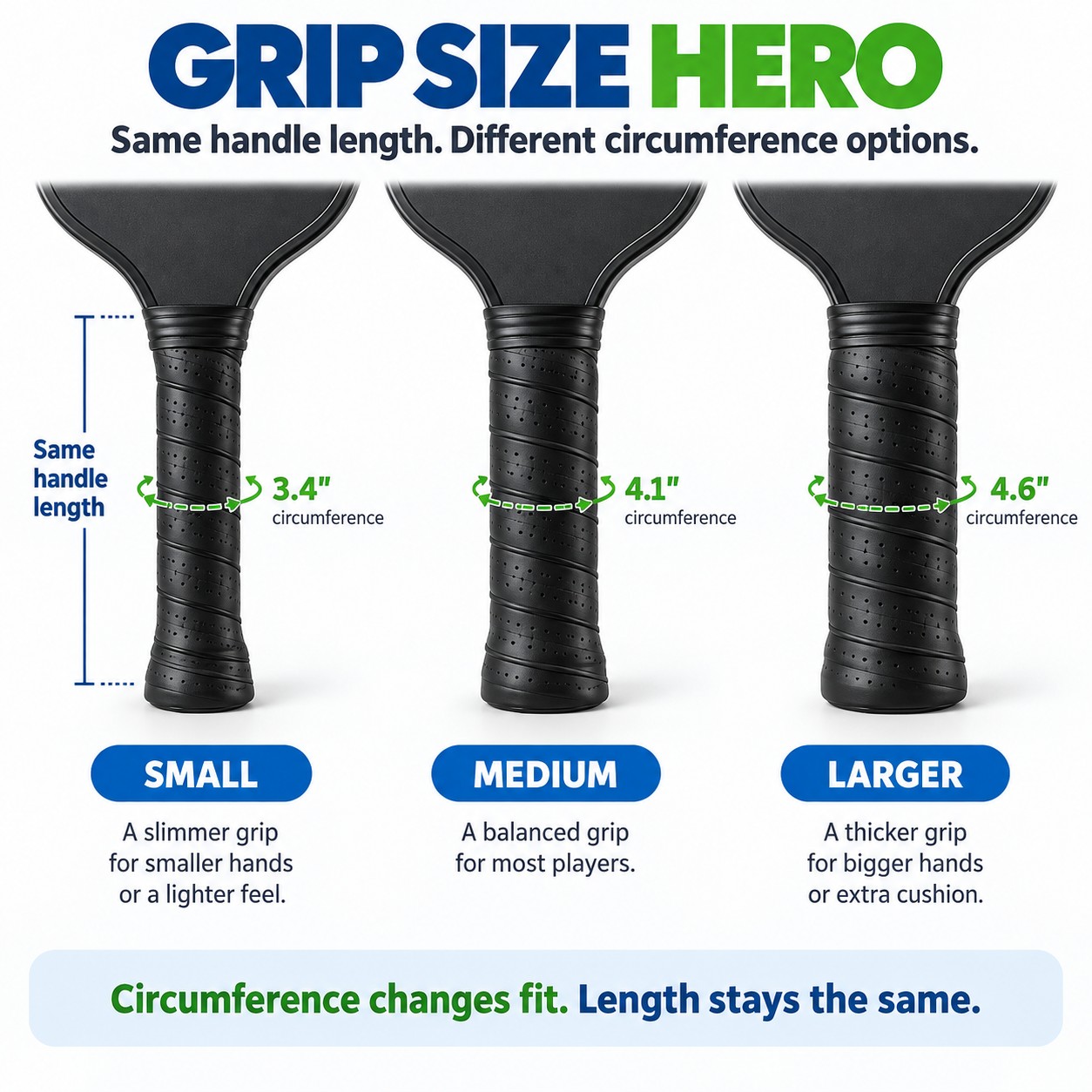
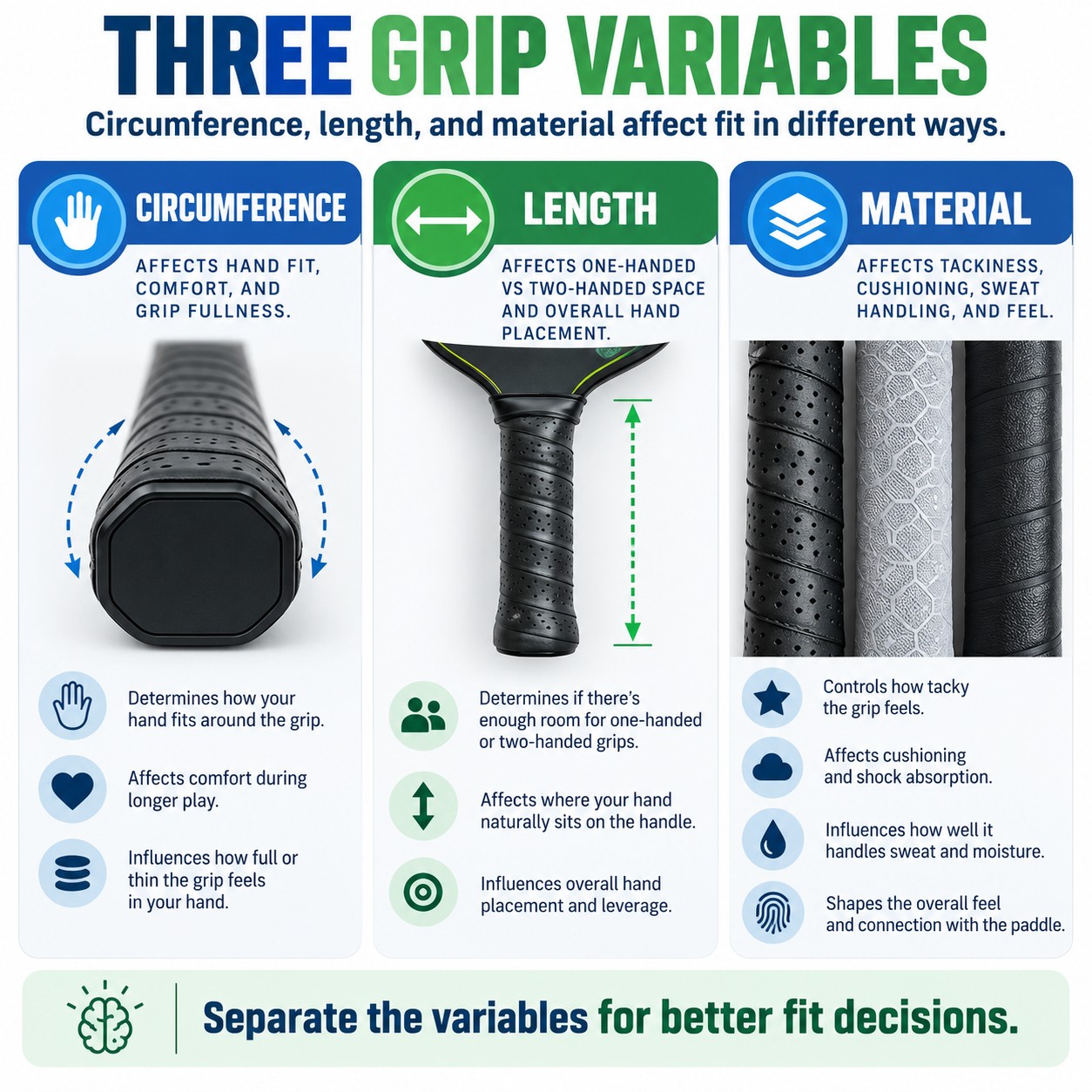
Grip size is the circumference around the finished handle. It is not handle length, and it is not grip material.
Those three variables affect different parts of fit. Circumference determines how much the hand closes around the handle. Length determines usable hand space. Material affects traction, cushioning and feel.
Separating them makes paddle selection much easier.
What Grip Circumference Changes
Why Circumference Matters
A very large grip can limit finger wrap and make quick grip changes harder.
A very small grip may encourage excessive squeezing or create instability for some players.
Comfort and secure control are the practical goals.
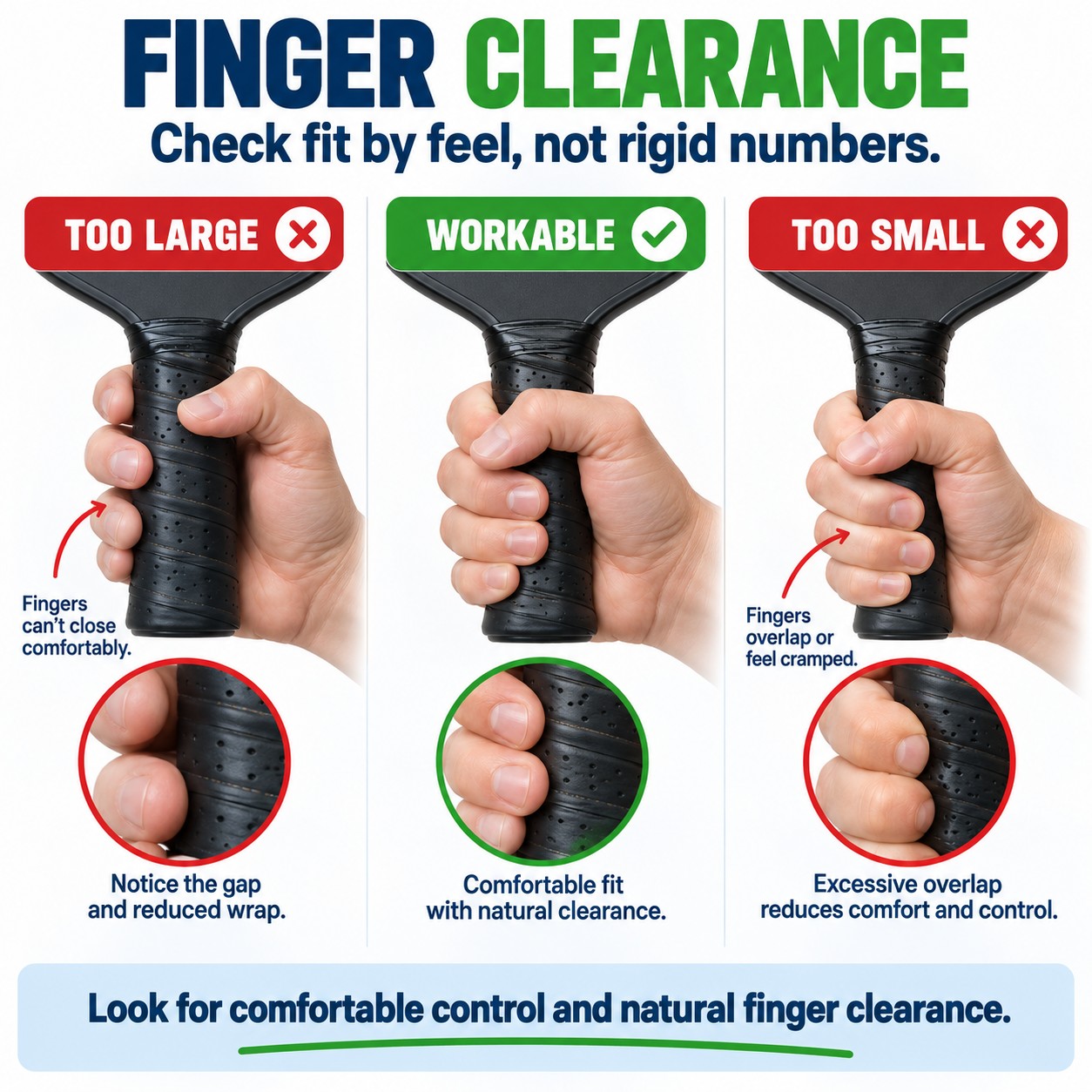
Use Finger Clearance as a Starting Check
When holding the paddle normally, observe how the fingertips relate to the palm/heel of the hand.
Large gaps can indicate a large circumference; deep overlap can indicate a small one.
This is a starting check, not a medical or universal sizing rule.
Measure the Finished Grip
Manufacturers may quote nominal circumference differently depending on grip compression and measurement method.
If fit is important, measure the finished handle with the installed grip.
Compare paddles using the same method.
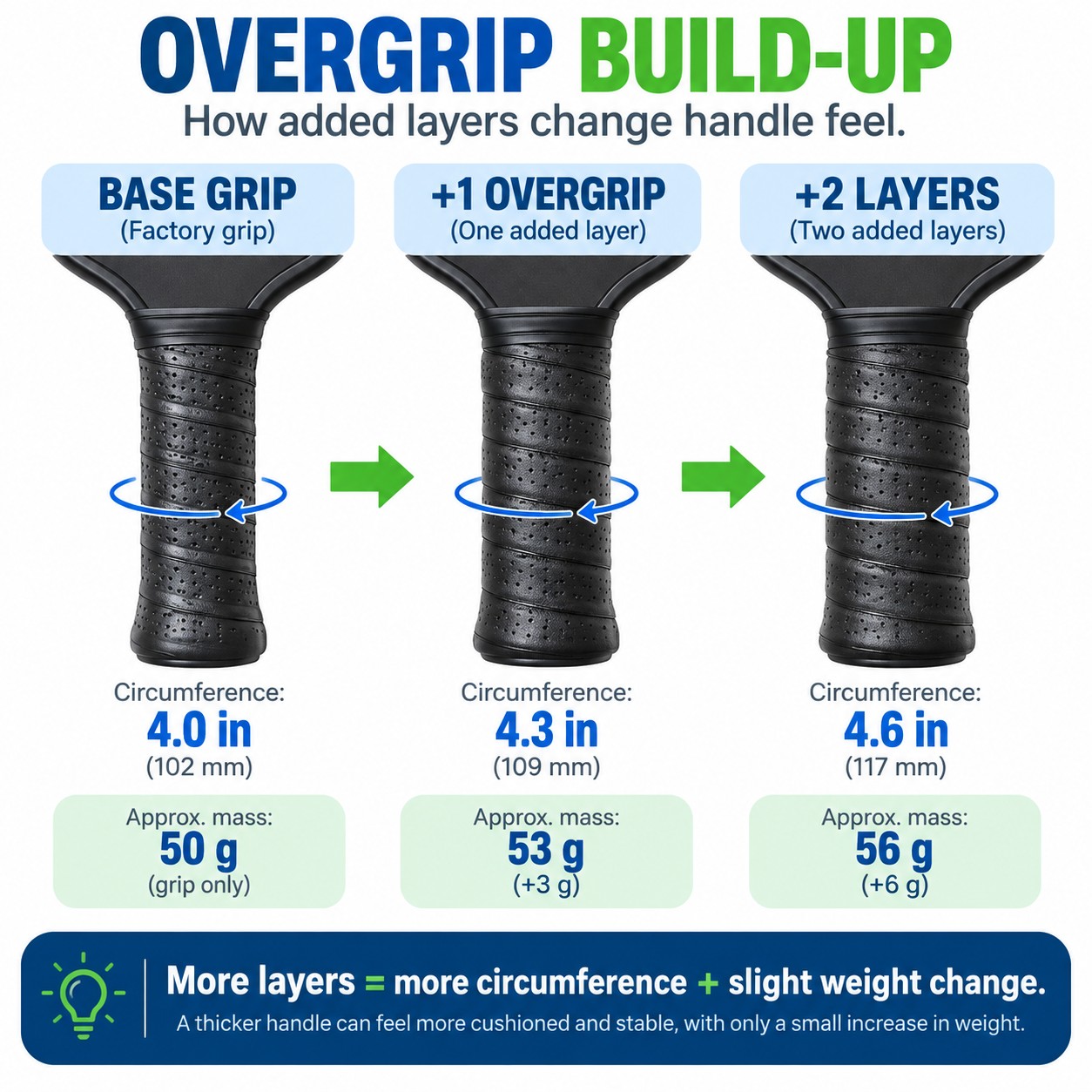
Overgrips Change Circumference
Adding an overgrip increases circumference and can slightly change mass and balance.
Players who like the base handle but want more size can build it gradually.
Record the final setup when comparing paddles.
Fit, Overgrips and Hand Tension
Shape and Bevels Matter Too
Two handles with the same circumference can feel different if one is more rectangular, rounded or strongly beveled.
Grip size is therefore not a complete handle-geometry specification.
Players should demo when possible.
Circumference vs Handle Length
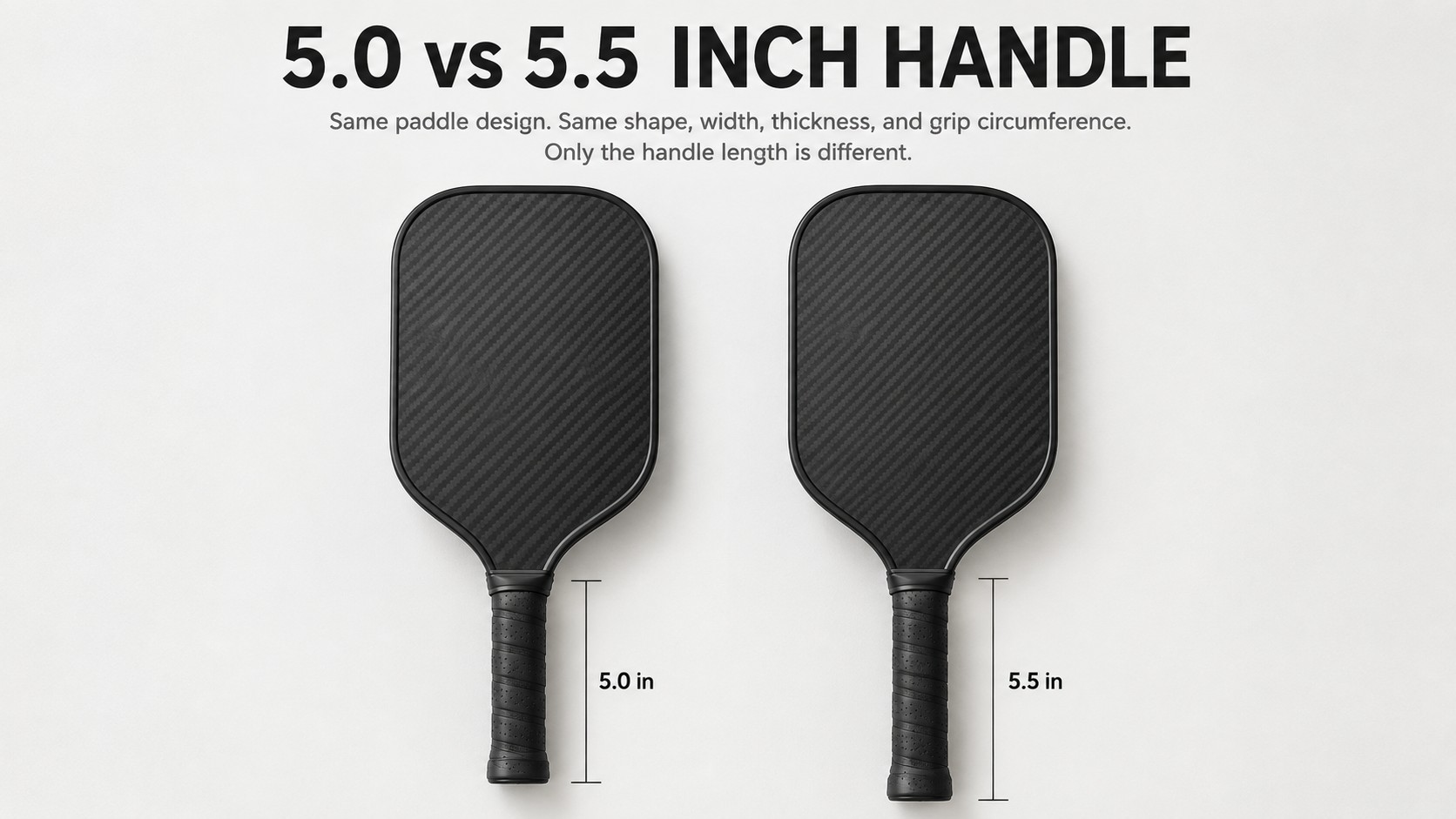
A longer handle does not automatically have a larger grip.
Two-handed players need usable length for the second hand; hand-size fit still depends on circumference.
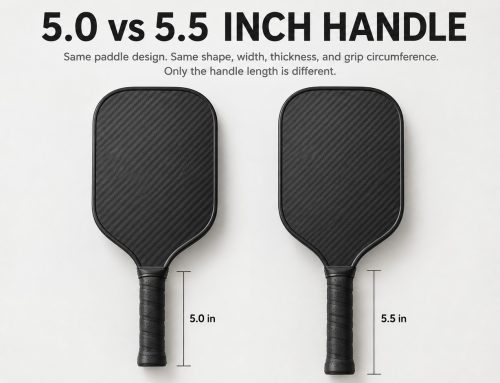
Use the separate 5 vs 5.5-inch guide for length.
Circumference vs Grip Material
Dry, tacky, soft and firm grip materials change traction and compression.
A soft grip can feel larger than the same measured circumference because it deforms differently.
Treat material and circumference as separate test variables.
OEM Fit Strategy
A brand can offer one base circumference plus overgrip customization, or multiple handle molds/sizes.
More sizes improve fit coverage but increase inventory and tooling complexity.
Select the strategy based on customer segment.
Measure the Finished Handle Consistently
How to Build a Brand Size Strategy
For a broad consumer line, choose a base circumference that fits the largest share of target users and make overgrip customization easy. For specialized junior or comfort products, a second base size may be justified.
Every additional mold or handle size creates inventory and forecasting complexity, so fit benefit must exceed SKU cost.
Grip Size and Tension
Players often compensate for poor fit by squeezing harder. That can make the paddle feel less maneuverable and reduce comfort over long sessions.
A better test is whether the player can maintain secure control with relaxed hand pressure and still change grips naturally.
Document the Measurement Method
Measure at a defined point on the finished handle and record whether the tape is compressed. Use the same method across production and product pages.
A nominal size is only useful if the factory and customer-service team mean the same thing by it.
Practical Editorial / Decision Notes
A finished grip size is only useful when the measurement method is consistent. Specify where circumference is measured and whether the grip tape is compressed.
For a broad consumer line, a base size plus overgrip customization may be more efficient than carrying many molded handle sizes. Specialized junior or comfort products can justify a second base size when the fit benefit is meaningful.
Choose a Brand Size Strategy
Grip Fit Matrix
| Observation | Possible Interpretation | Adjustment |
|---|---|---|
| Over-squeezing | Grip may feel too large/slippery | Try size / tack change |
| Finger overlap / instability | Grip may be too small | Base grip or overgrip |
| Hard to change grips | Fit or surface may be wrong | Demo alternate circumference |
| Good relaxed control | Likely workable fit | Keep consistent production measurement |
Control the Finished Grip, Not Only the Mold
Players touch the finished grip, so nominal handle geometry is only part of fit. Base-grip thickness, wrap overlap and compression can make two handles with the same mold feel different.
For OEM production, define where finished circumference is measured and keep one approved wrapped handle as the visual/tactile reference. Overgrips can then be presented as a user adjustment rather than compensation for uncontrolled production.
- Measure at a defined handle location.
- Record the finished grip setup in product comparisons.
- Use a small number of intentional sizes instead of unnecessary SKU proliferation.
Frequently Asked Questions
Is grip size the same as handle length?
No.
Can an overgrip fix a grip that is too small?
It can increase circumference gradually, though it also adds some mass.
Should I choose grip size only by hand length?
No. Hand geometry and preference vary; use fit checks and demo when possible.
Can two 4.25-inch grips feel different?
Yes, because handle shape, bevels, grip material and compression differ.
Does smaller grip create more spin?
Do not treat grip circumference as a direct spin guarantee.
Need to define grip sizing for a product line?
Mayvoci can help convert player-fit goals into finished circumference, handle length and grip specifications.
The End about Mayvoci
1)Design:Over 100 paddle designs and photography service to assist start-up.
2)Professional:Focus on various of paddles manufacturing for 6 years
3)Quality:Strict quality management system to provide safety and satisfaction for customers
4)Amazon:Flexible comprehensive solution to make sure each Amazon seller is well cared.
5)Excellent Team:Experienced paddle experts & dynamic sales team give you 5-star service