“Full foam” and “Gen 3” are often treated as competing generations. That framing is too simple.
A full-foam paddle describes an internal material/architecture direction. “Gen 3” is an industry shorthand often used for honeycomb-based paddles with extensive perimeter foam or other structural reinforcement. Neither term is an official technical standard, and manufacturers do not all use the labels in the same way.
A useful comparison therefore starts with a cross-section, not a generation number.
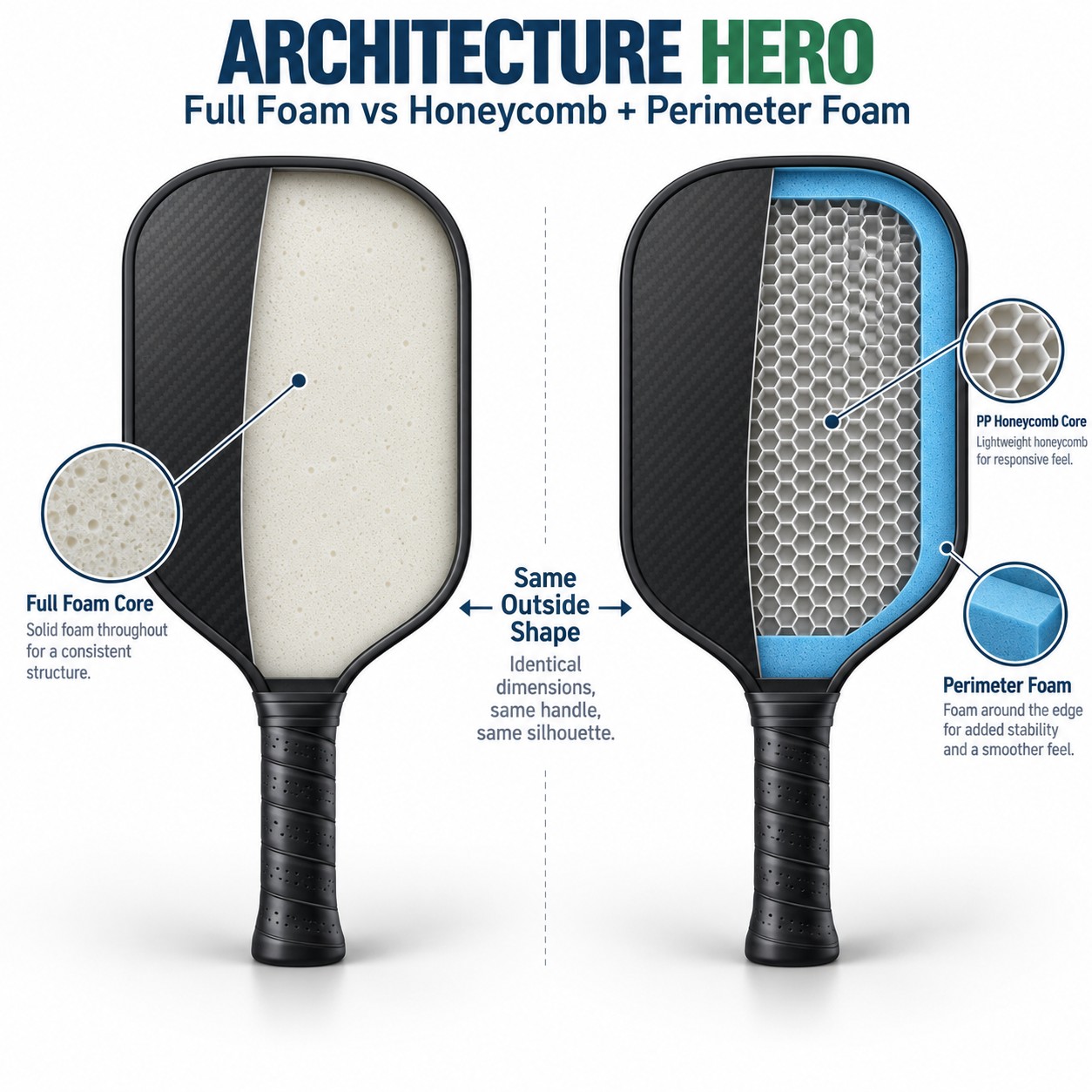
Define the Two Architectures
Define the Two Architectures First
In a full-foam concept, foam occupies the primary core region instead of a large central honeycomb sheet.
In a typical Gen 3-style construction, a polypropylene honeycomb core remains central while foam or structural elements support the perimeter and may influence the handle/throat transition.
There are hybrids between these categories. Always request the actual internal stack.
Mass Distribution
Honeycomb is efficient at creating thickness with relatively low mass. Foam density varies widely.
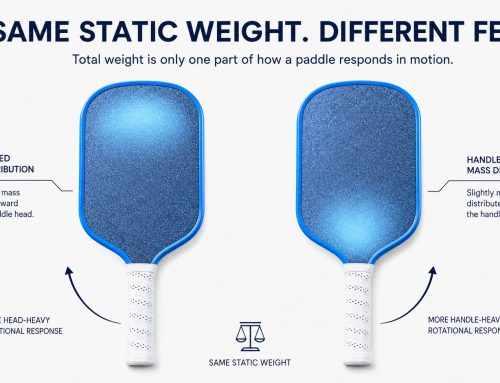
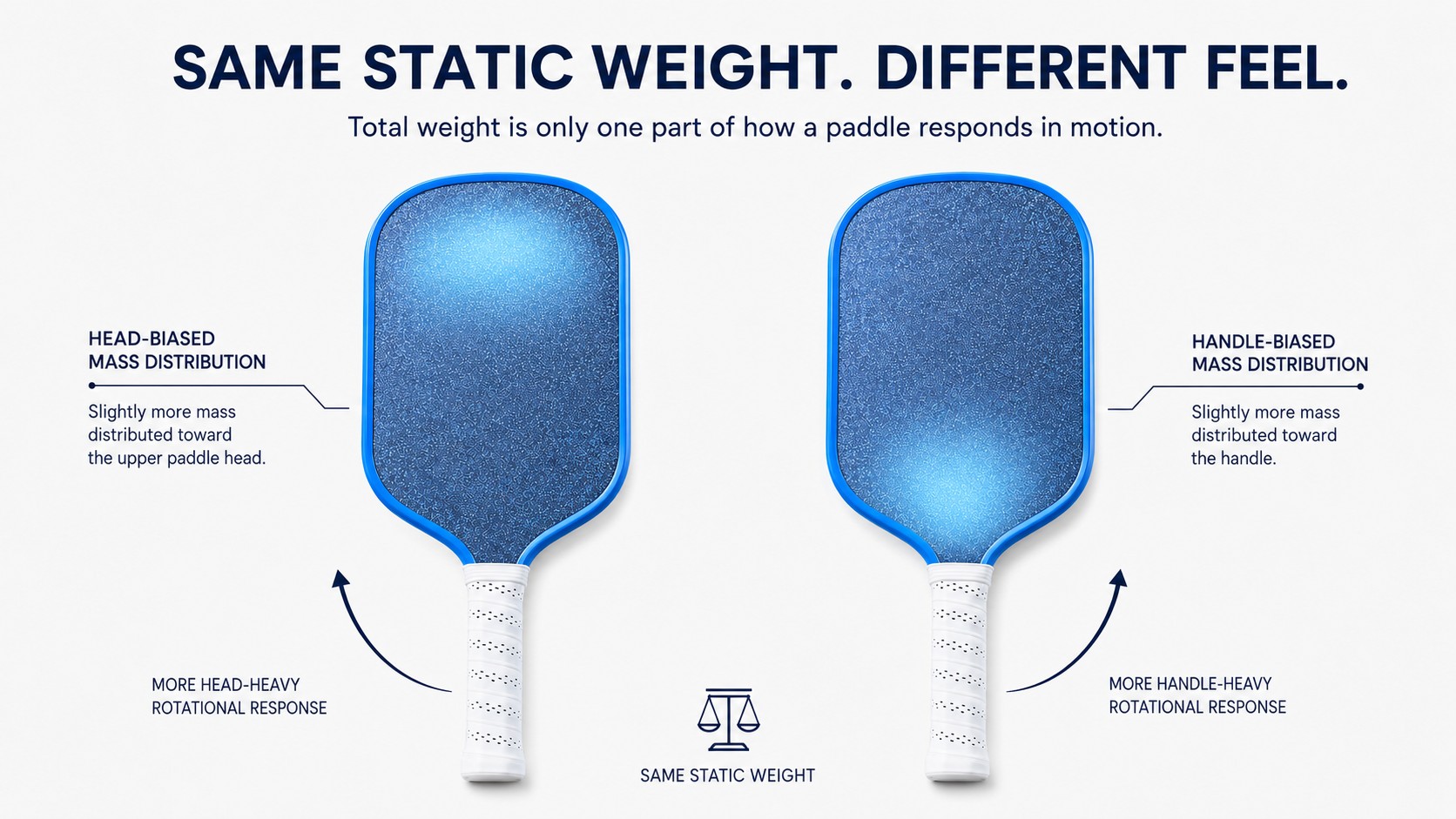
A full-foam developer may need to manage density distribution carefully to hit target static weight and swing weight. A honeycomb-plus-foam construction may concentrate additional mass near the perimeter.
Two paddles at 8 ounces can therefore feel very different.
Impact Response
The face, core and perimeter act together.
A foam core can provide continuous support, while honeycomb creates cellular support with local wall geometry. Perimeter foam can stiffen or support edge regions.
Do not assign “soft,” “powerful” or “control” to one architecture without controlled prototypes.
Break-In Behavior
Both architectures can change through use.
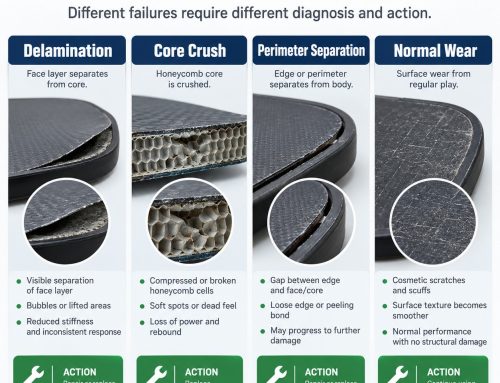
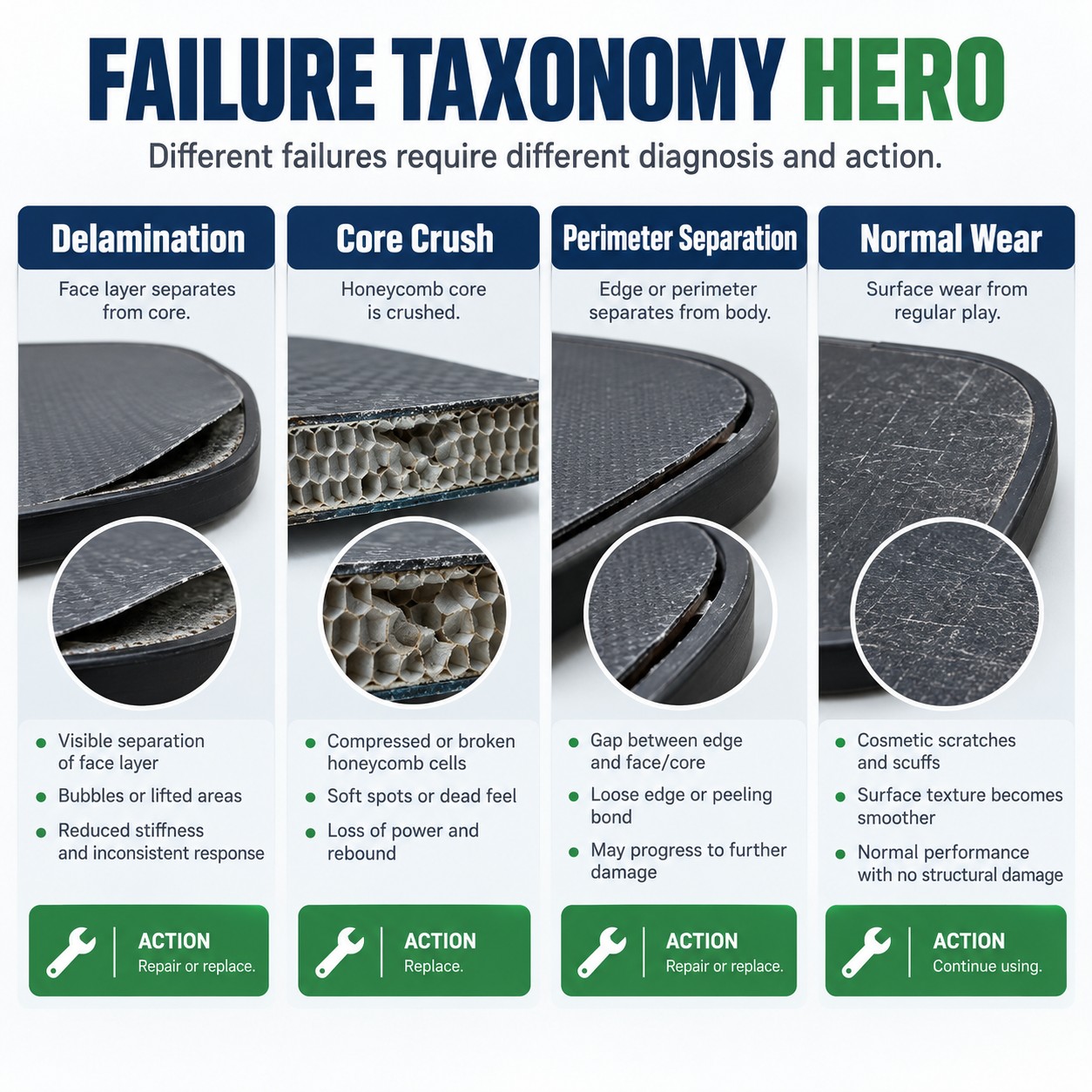
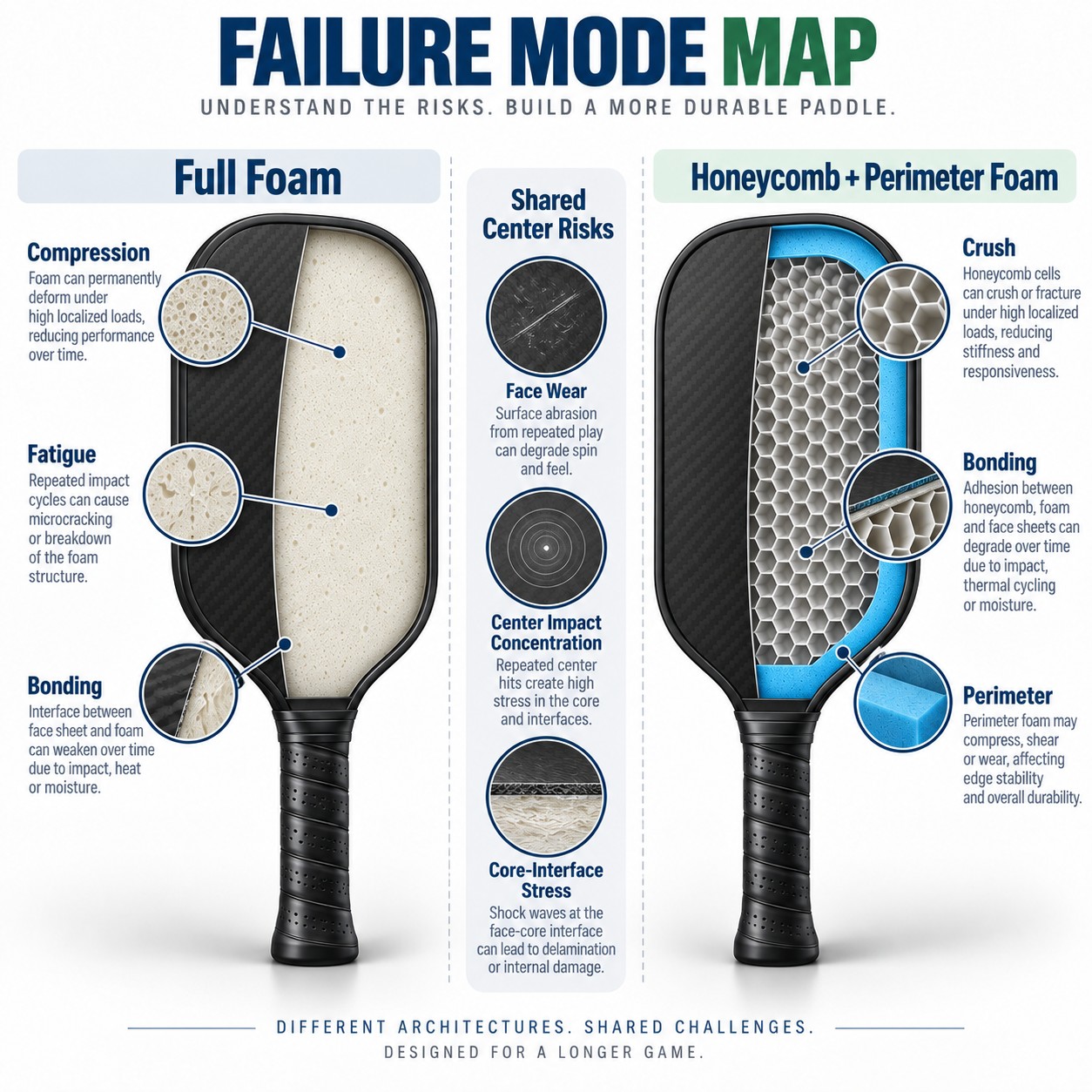
Honeycomb constructions can experience local crush, bond change or perimeter movement. Foam can compress, fatigue or change recovery behavior.
Condition several prototypes and re-test rather than relying on day-one feel.
Compare Feel, Stability and Manufacturing
Durability Failure Modes
Honeycomb-specific concerns include cell crushing and face/core interface problems. Foam-specific concerns include compression set, fatigue, voids and bond integrity.
Both can experience face delamination, edge impact and handle failures.
Architecture changes the risk map; it does not eliminate risk.
Manufacturing Complexity
Gen 3-style honeycomb/foam constructions require accurate foam placement, adhesive coverage and consolidation around multiple materials.
Full-foam designs require tight incoming foam control, dimensional accuracy, bonding and density consistency.
The easier system is the one the factory can control repeatedly with the required tolerance.
Cost Structure
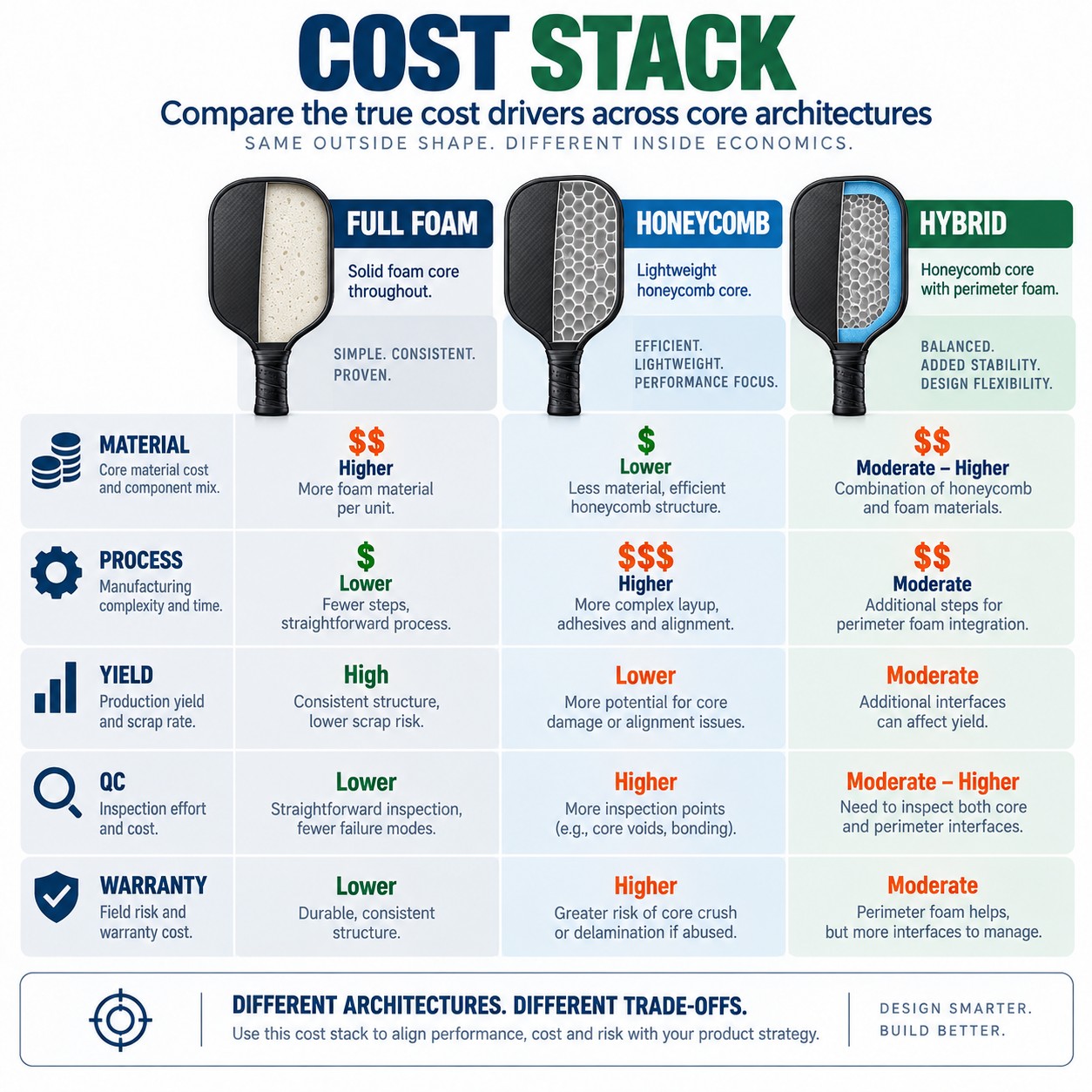
Compare raw material, cutting/molding, assembly, cure, yield, inspection and warranty exposure.
A more expensive core can still produce a rational finished cost if it simplifies other steps or reduces rejects. The reverse is also possible.
Use process-level costing rather than material-price comparisons.
How to Run an OEM Comparison
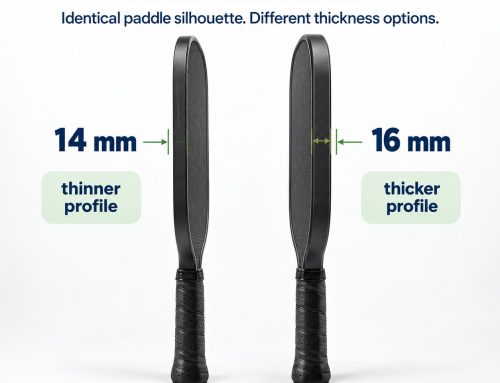
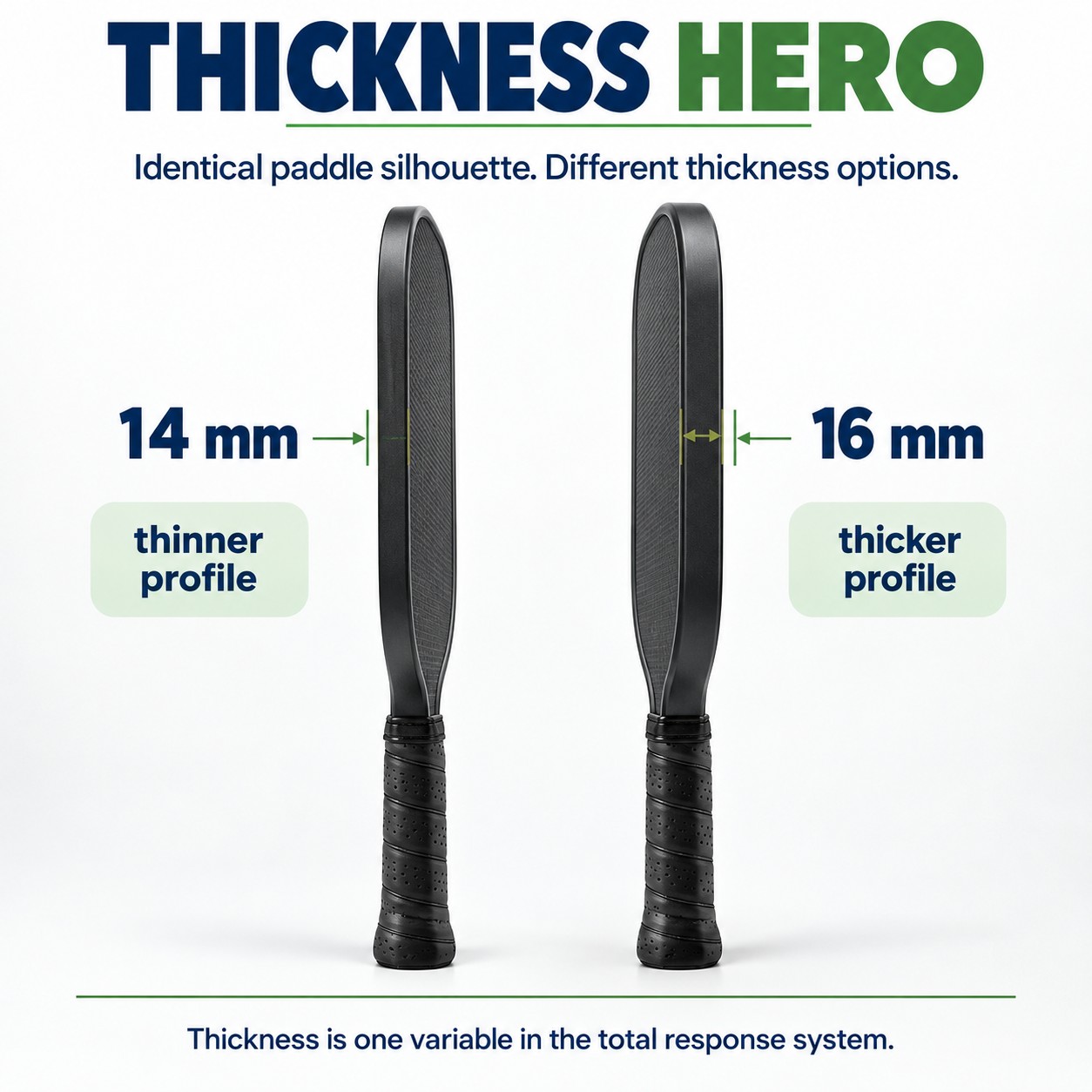
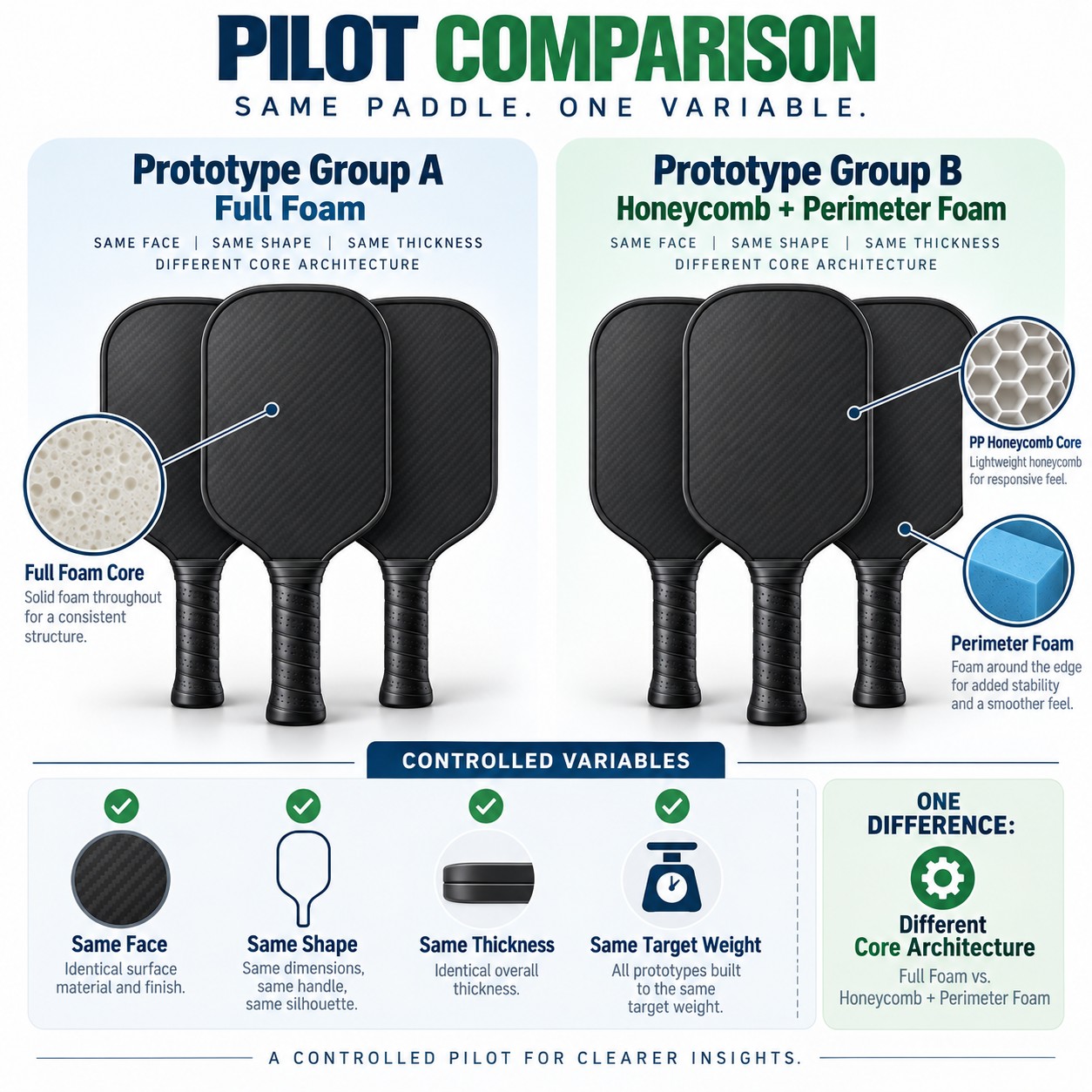
Freeze shape, thickness, face laminate, surface and target mass distribution. Build multiple full-foam and honeycomb/foam prototypes.
Test new and conditioned units, inspect cross-sections and compare pilot spread.
Then choose based on the product brief rather than the generation label.
Test Durability and Production Variation
Player Experience: Separate Touch, Stability and Rebound
Players often compress several sensations into one word such as “control.” A full-foam paddle may feel stable because the internal support is continuous, while a honeycomb/perimeter-foam paddle may feel lively because of its face/core interaction. Neither sensation proves that one architecture has more control.
During play testing, score touch on drops, stability on blocks, rebound on drives, hand speed in exchanges and fatigue after a session. This creates a more useful comparison than one overall rating.
Durability Test Plan
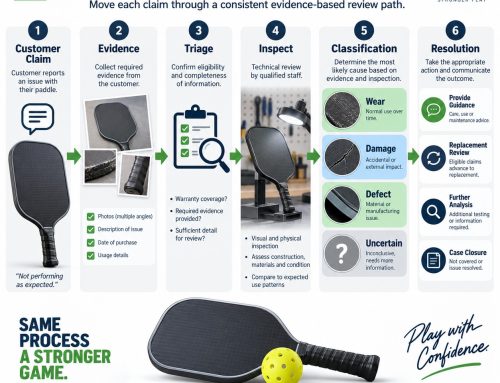
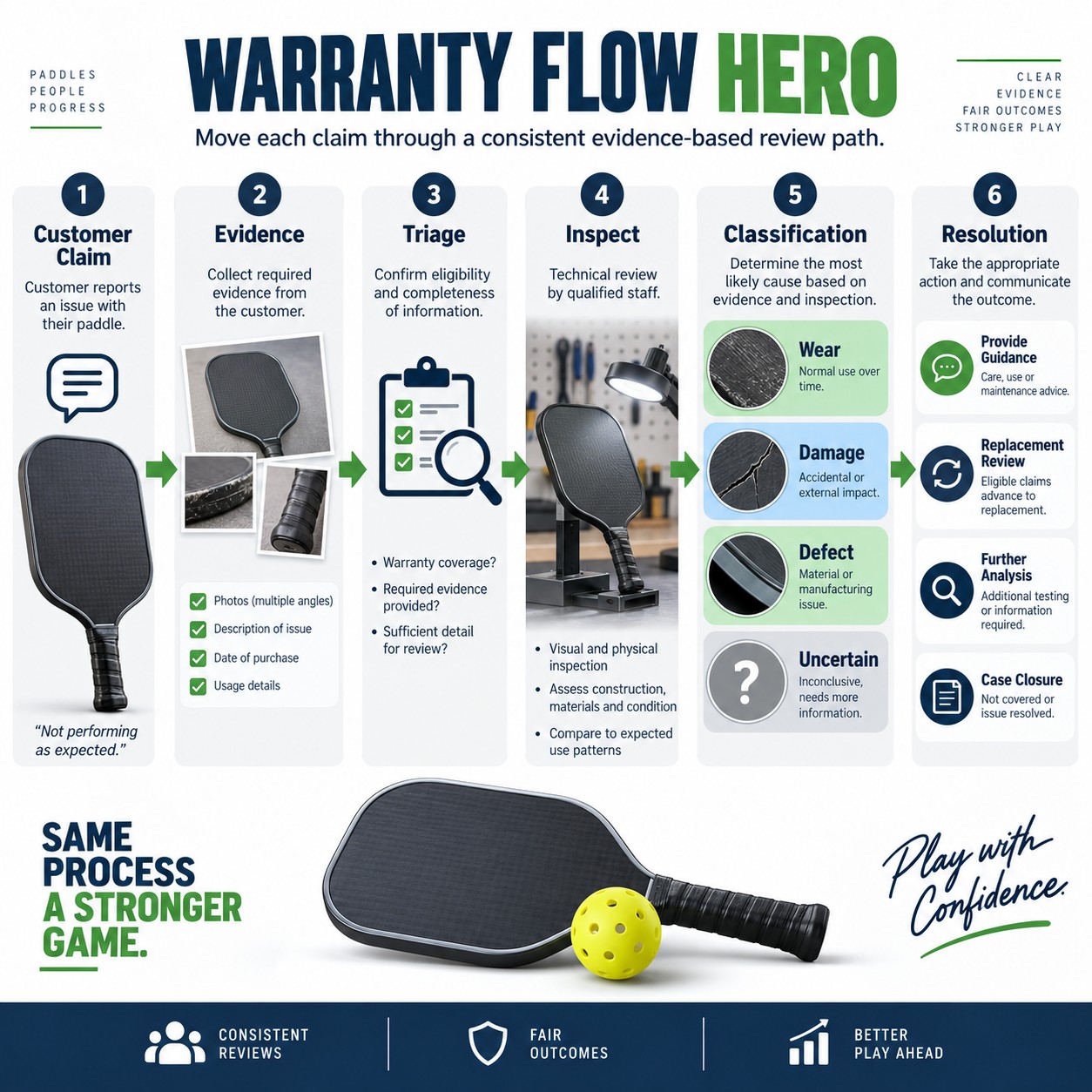
Condition several units using the same protocol, then repeat the measurements. Track any change in sound, local softness, structural response, weight and visible surface condition. If a unit changes, inspect the internal structure and determine whether the mechanism is foam compression, bond movement, core crush or another issue.
The important metric is not only average durability. It is consistency across samples.
Decision Matrix for OEM Buyers
Choose full foam when continuous internal support and a differentiated architecture serve the brief and the factory can control foam properties. Choose honeycomb/perimeter foam when lower-density cellular structure, mature supply and known processing are advantages. Choose hybrid architecture when the design needs local support without replacing the entire core.
Then validate the selected route through pilot production before committing to a large order.
Practical Editorial / Decision Notes
The commercial decision should include warranty exposure and manufacturing maturity. A more complex architecture can justify premium positioning only when the factory can reproduce density, bonding, mass and surface consistently across normal production.
When two architectures feel different, document which variable changed. If the full-foam sample also changes face, shape and mass distribution, it is not a clean core comparison.
Choose by Product Job
Full Foam vs Gen 3 Decision Matrix
| Factor | Full Foam | Honeycomb + Perimeter Foam | Validate |
|---|---|---|---|
| Internal support | Continuous foam architecture | Cellular core + local support | Cross-section |
| Mass | Can increase depending density | Often lighter core route | Static + balance |
| Durability risk | Foam fatigue / bonds | Core crush / bonds | Conditioned samples |
| Manufacturing | Foam properties/process critical | Honeycomb + perimeter process | Pilot lot |
Choose Architecture by Product Job, Not ‘Generation’
Full foam and honeycomb-plus-foam can both produce strong products, but they create different manufacturing and failure-mode questions. The correct choice depends on target mass, support, feel, process maturity, cost and warranty exposure.
Brands should prototype architecture before locking marketing language. If one route needs tighter foam-density control or a more complex bonding sequence, that manufacturing cost belongs in the product decision just as much as on-court feel.
- Keep face, shape and target mass controlled during core comparisons.
- Condition several units before durability conclusions.
- Compare cost per acceptable finished paddle, not raw material cost.
Frequently Asked Questions
Is full foam automatically Gen 4?
No. Generation terminology is informal and not universally standardized.
Is Gen 3 always honeycomb with perimeter foam?
That is a common industry use, but actual internal construction should be verified.
Which architecture is more durable?
There is no universal answer; each has different failure modes.
Which is easier to manufacture?
It depends on factory process control, materials and design.
What should an OEM buyer request?
Internal construction drawing/cross-section, material specifications, validation data and pilot-lot variation.
Comparing full-foam and honeycomb platforms?
Mayvoci can help structure a controlled prototype matrix and pilot-lot validation plan.
The End about Mayvoci
1)Design:Over 100 paddle designs and photography service to assist start-up.
2)Professional:Focus on various of paddles manufacturing for 6 years
3)Quality:Strict quality management system to provide safety and satisfaction for customers
4)Amazon:Flexible comprehensive solution to make sure each Amazon seller is well cared.
5)Excellent Team:Experienced paddle experts & dynamic sales team give you 5-star service