The safest cleaning method depends on the paddle surface.
A carbon paddle with a peel-ply resin texture is not the same as a painted grit coating. A rubber cleaning block designed for one carbon surface should not automatically be used on every coating. A grip absorbs sweat and oils differently from the paddle face.
The first rule is therefore to identify the manufacturer’s care guidance before using solvents, abrasives or specialty erasers.
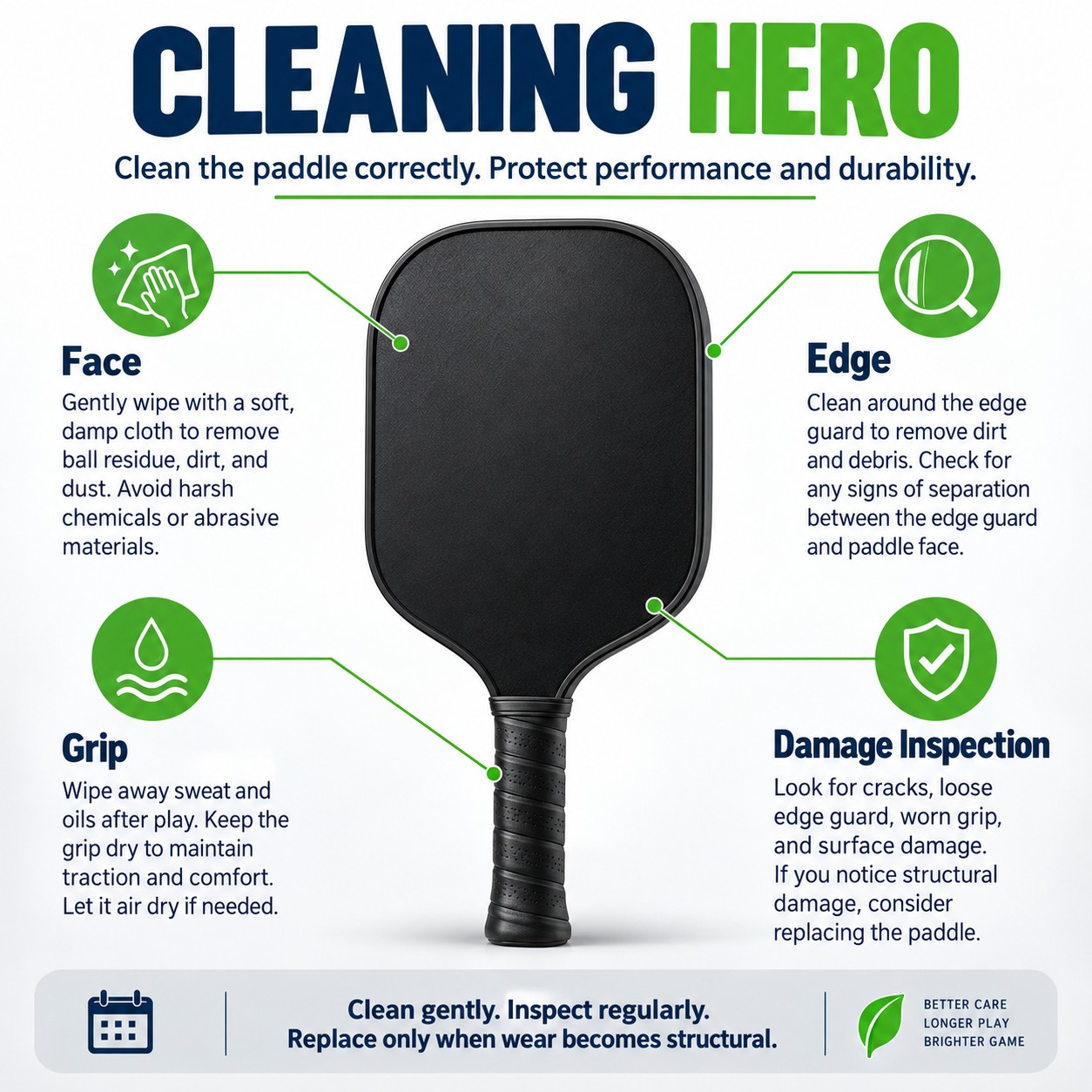
Identify the Surface Before Cleaning
Start With Dry Debris
After play, remove loose dust and ball residue with a clean, soft microfiber cloth.
Dry cleaning is low risk and prevents dirt from being rubbed deeper into the surface.
Inspect the face before applying anything wet.
Carbon / Peel-Ply-Type Surfaces
Some carbon-paddle manufacturers sell rubber-style erasers specifically for debris on carbon-fiber faces. CRBN, for example, markets its paddle eraser for carbon-fiber paddles.
That does not make the tool universal.
Follow the paddle brand’s guidance, especially if the surface uses a coating rather than exposed/texture-transferred resin.
Grit-Coated or Painted Surfaces
Particle coatings rely on binder and surface particles.
Aggressive rubbing, solvents or abrasive pads can remove or polish the surface rather than clean it.
Use gentle dry cleaning or a lightly damp microfiber cloth unless the manufacturer specifies another method.
Kevlar / Aramid Faces
Aramid fiber may be part of the structural laminate while the final surface is still resin texture, coating or another finish.
Clean according to the final surface system, not the fiber marketing name.
Avoid assuming Kevlar needs a unique chemical cleaner.
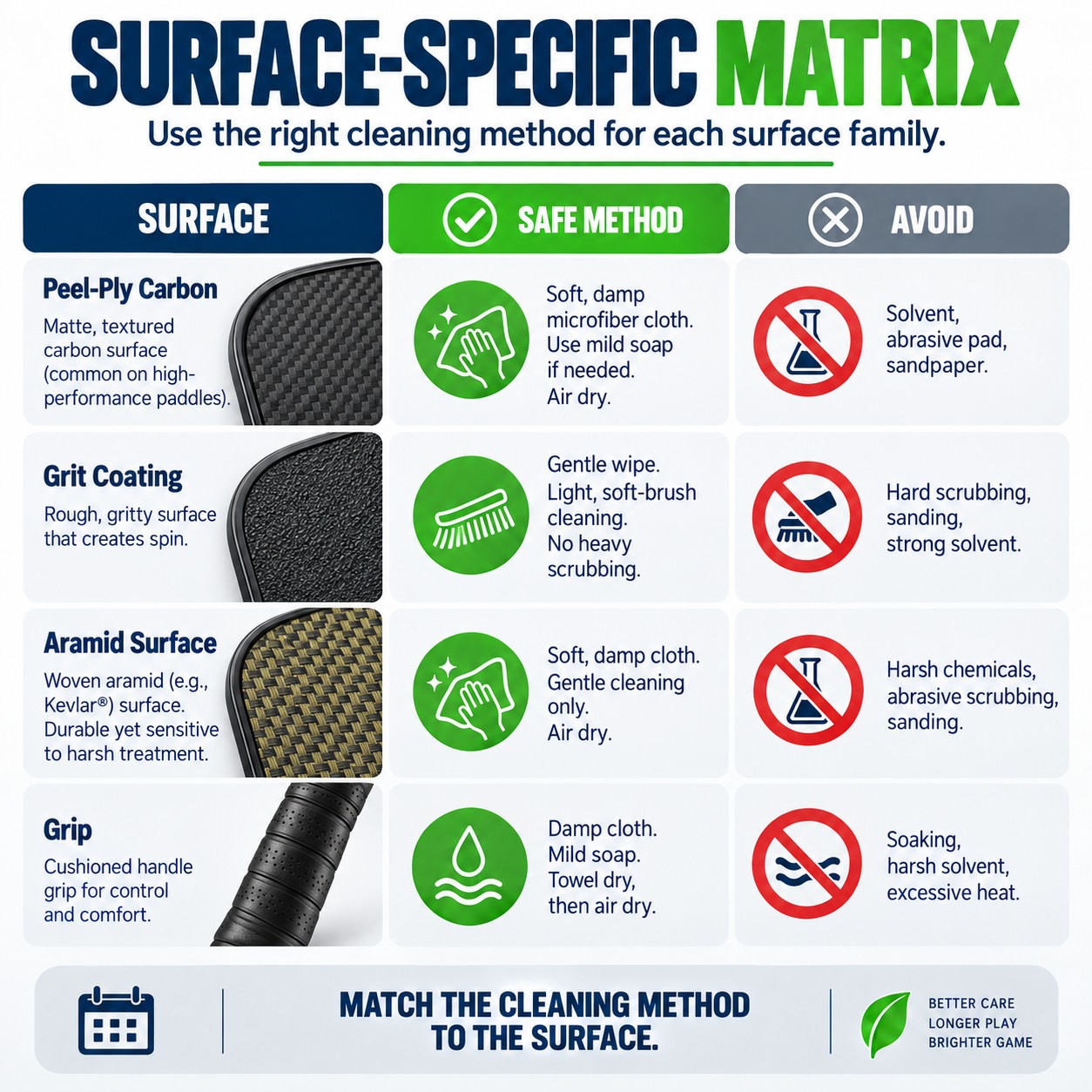
Clean Face, Grip and Edge Differently
When to Use Water
For general cosmetic dirt, use a lightly damp—not soaking—microfiber cloth when permitted by the manufacturer.
Do not saturate edge gaps, handle joints or damaged areas.
Dry the paddle fully before storage.
Grip Care
Sweat, skin oils and dirt accumulate in the grip.
An overgrip is usually a replaceable wear item. When traction, hygiene or compression is poor, replacement is often better than aggressive washing.
Avoid soaking the handle assembly.
Edge Guard and Tape
Wipe the edge with a soft damp cloth and inspect for separation.
If protective tape traps moisture or debris, remove and replace it rather than forcing liquid underneath.
Cleaning is also a chance to spot cracks or loose edges.
What to Avoid
Avoid strong solvents, acetone, harsh household degreasers, sandpaper, wire brushes, magic-eraser-style abrasives and high heat unless the manufacturer explicitly approves them.
These can attack coatings, resin, adhesive, printing or grip materials.
Do not chase a “like-new” appearance at the cost of the playing surface.
Know What Cleaning Cannot Repair
Cleaning Cannot Restore Wear
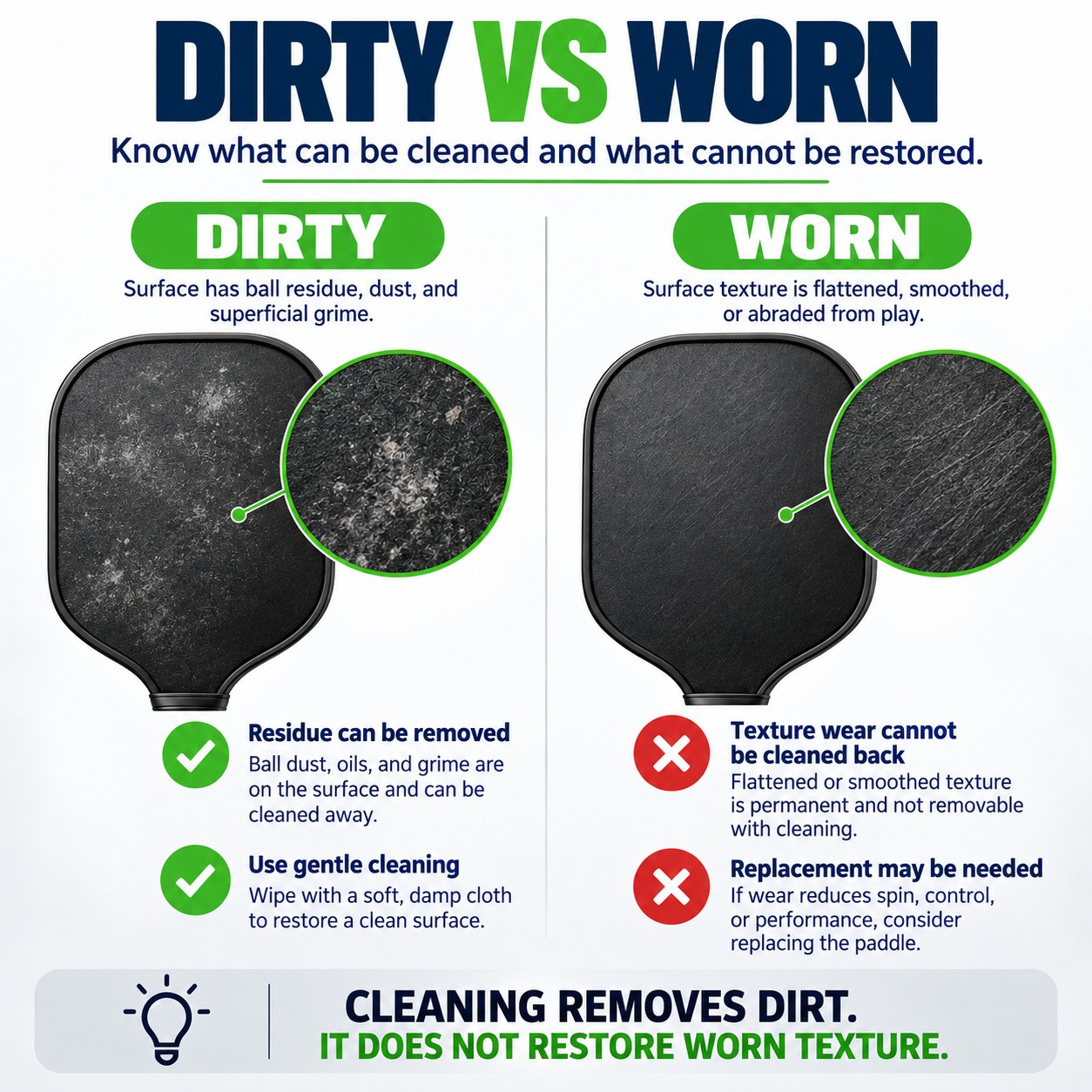
A worn or polished surface is not the same as a dirty surface.
Cleaning can remove residue; it cannot rebuild missing grit, flattened texture or damaged resin.
If performance changes after the surface is clean, evaluate wear rather than cleaning harder.
Surface-Specific Care Card for Product Pages
Brands should publish a short care card that names the actual surface: peel-ply/resin texture, particle coating, painted finish or another system. State the approved cleaning tool, whether water is allowed and which chemicals are prohibited.
This reduces support questions and prevents customers from applying a popular cleaning method to an incompatible surface.
Storage After Cleaning
Store the paddle dry, away from excessive heat and prolonged moisture. Do not leave a wet grip sealed inside a bag for long periods if odor or material degradation is a concern.
Cleaning and storage should be presented together because residue removal is only part of care.
When Cleaning Reveals a Warranty Issue
If dirt is removed and the player finds bubbling, loose edge material, unusual soft spots or cracking, stop treating the problem as cosmetic. Photograph the condition and follow the brand’s warranty process.
Cleaning should never be used to disguise structural damage or aggressively “repair” a surface.
Practical Editorial / Decision Notes
Care content should distinguish removable contamination from irreversible wear. A cleaner may remove ball residue while leaving a polished or particle-worn surface unchanged.
Brands should publish a short care card for the actual surface system and connect unusual soft spots, bubbling, edge movement or cracks to the warranty/inspection process rather than aggressive cleaning.
Build a Surface-Specific Care Card
Surface-Specific Cleaning Matrix
| Surface / Part | Safer Starting Point | Avoid |
|---|---|---|
| Peel-ply / resin texture | Brand-approved gentle method | Aggressive abrasion |
| Particle / grit coating | Light cleaning per brand | Scrubbing that removes particles |
| Painted / printed face | Soft cloth / approved cleaner | Solvents |
| Grip | Dry / brand-approved care | Soaking / harsh chemicals |
| Edge guard | Wipe clean | Using cleaning to hide damage |
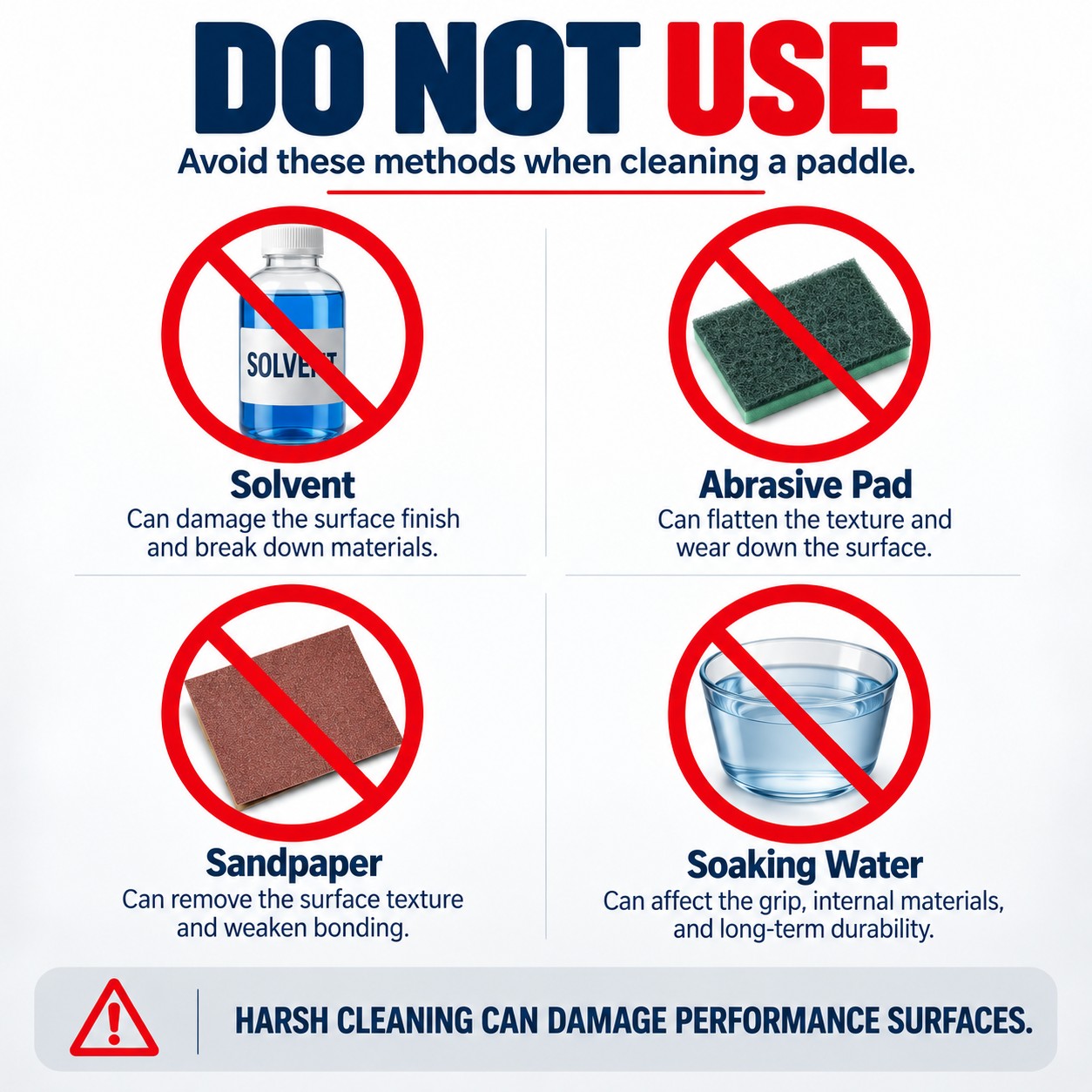
Cleaning Should Protect the Surface System
A useful care guide first identifies how the playing surface is made. A method suitable for one carbon/resin texture may damage a particle coating, print layer or adhesive system on another paddle.
Brands should also separate dirt from wear. Cleaning can remove contamination; it cannot rebuild flattened texture, missing particles or structural damage. That distinction reduces both customer frustration and inappropriate warranty claims.
- Publish surface-specific care instructions with each model.
- Use cleaning as an inspection opportunity.
- Escalate cracks, bubbles or soft spots instead of scrubbing harder.
Frequently Asked Questions
Can I use a paddle eraser on any paddle?
No. Use one only when the paddle manufacturer approves it for that surface.
Can I use alcohol?
Do not assume it is safe. Solvents can affect coatings, printing, resin or adhesives.
Can I wash the grip?
Light care may be possible, but replacement is often better for worn overgrips. Avoid soaking the handle.
Does cleaning restore lost spin?
Only if contamination was the cause. It cannot restore physically worn texture.
How often should I clean my paddle?
Clean when residue builds up; there is no universal fixed schedule.
Need a care guide for your own paddle line?
Mayvoci can help turn the actual surface construction into clear cleaning, grip and warranty instructions for customers.
The End about Mayvoci
1)Design:Over 100 paddle designs and photography service to assist start-up.
2)Professional:Focus on various of paddles manufacturing for 6 years
3)Quality:Strict quality management system to provide safety and satisfaction for customers
4)Amazon:Flexible comprehensive solution to make sure each Amazon seller is well cared.
5)Excellent Team:Experienced paddle experts & dynamic sales team give you 5-star service