Pickleball inventory risk comes from SKU proliferation as much as demand uncertainty. A brand can have multiple shapes, thicknesses, colors, grip options, packaging versions and certification states. Each variation consumes cash and forecast accuracy.
The inventory system should therefore begin by deciding which differences deserve their own stocked SKU.
Segment the SKU Portfolio
Classify SKUs
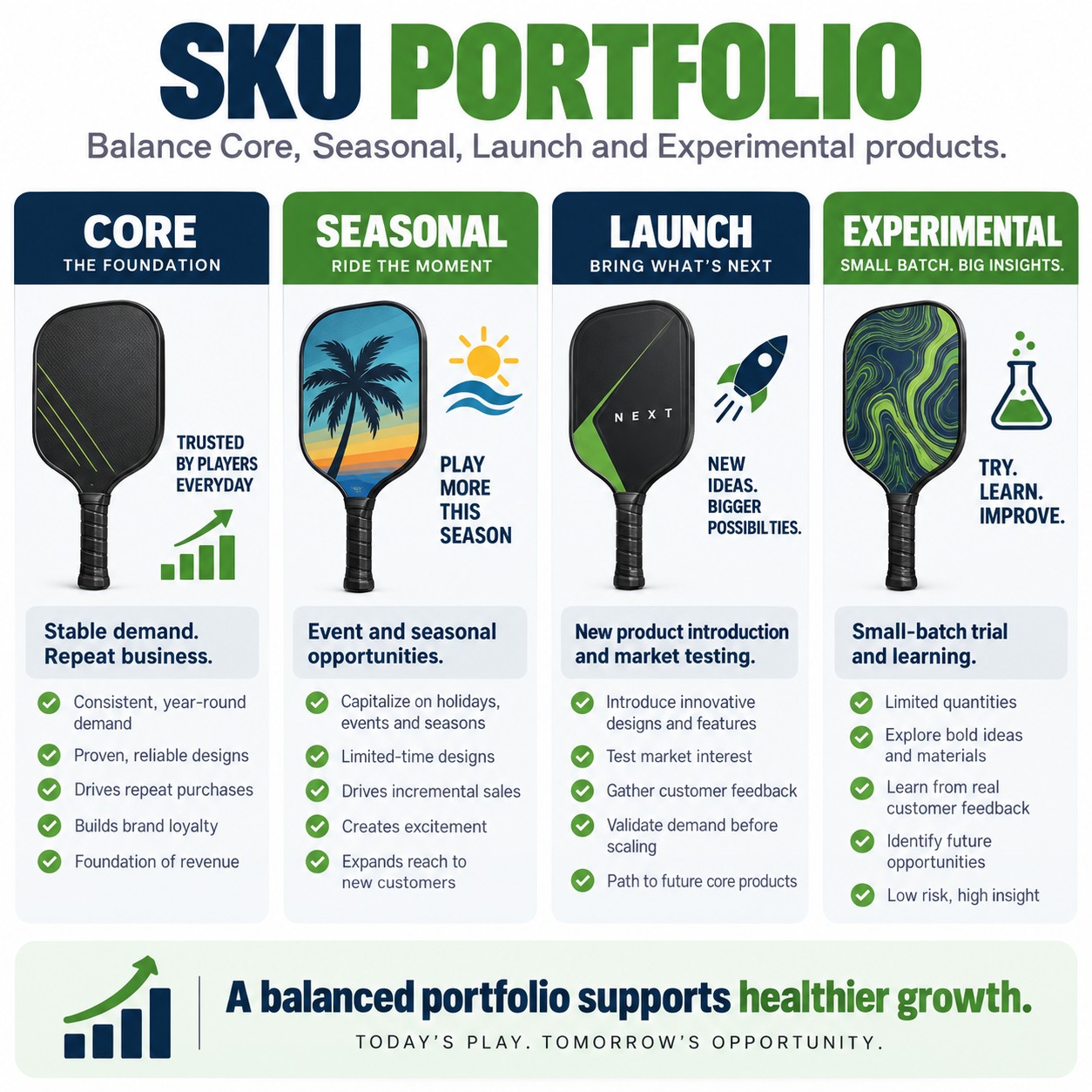
Separate core volume SKUs, seasonal/graphic SKUs, launch SKUs and experimental SKUs. Core products justify more stock. New technology should carry less inventory until demand, quality and compliance are proven.
Use Real Replenishment Lead Time
Include material booking, production, inspection, freight and customs, not only factory days. Repeat orders and new/custom products should use different planning assumptions.
Safety Stock and Reorder Points
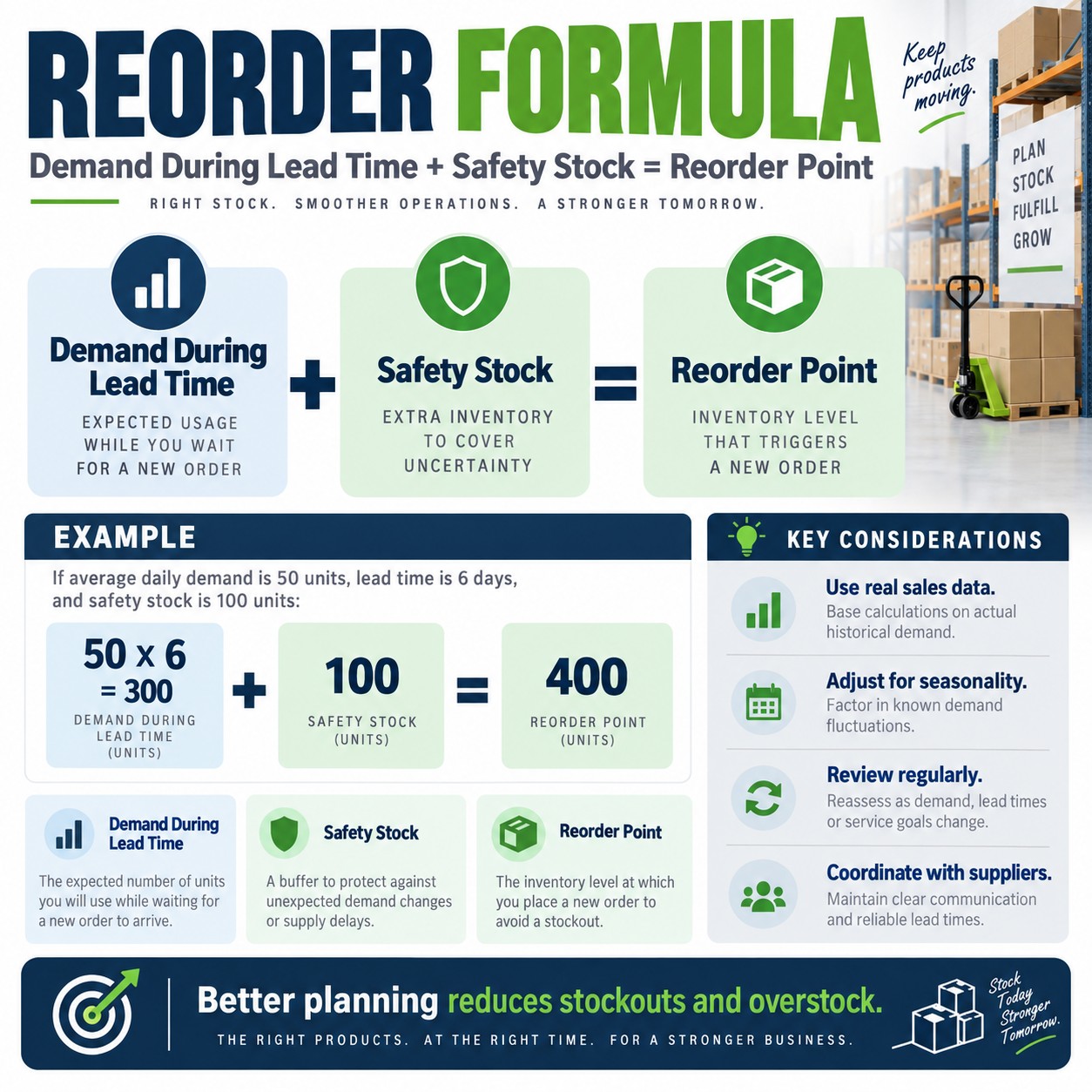
Safety stock protects against demand and lead-time variation. Use different buffers by SKU. A practical reorder point is expected demand during replenishment time plus safety stock.
Review the assumptions instead of treating the formula as permanent.
Lead Time, Safety Stock and Reorder
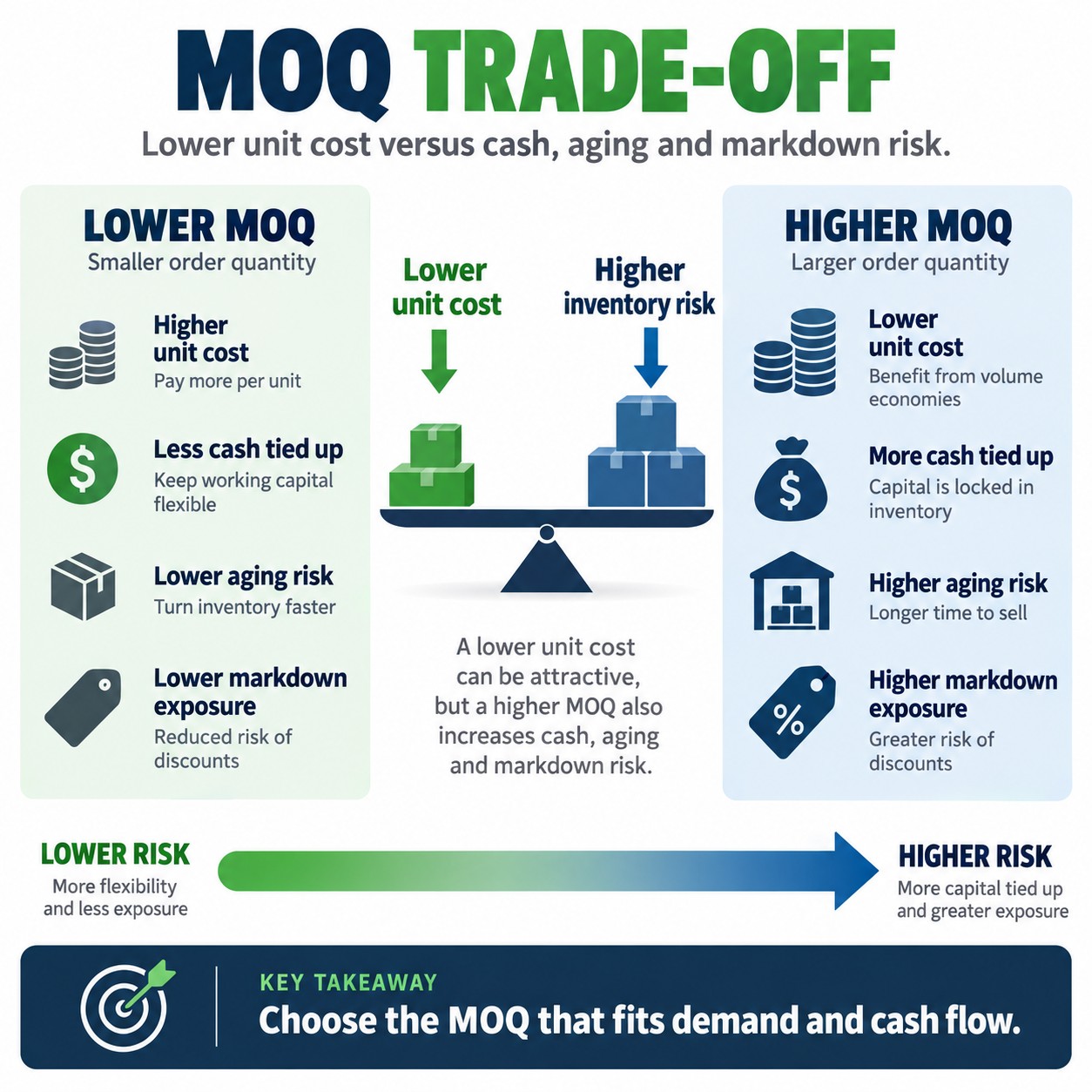
MOQ and Cash Risk
A higher MOQ can reduce unit price while increasing aging, storage and markdown risk. Compare the unit saving with cash tied up.
Standard components and shared packaging can reduce MOQ pressure.
Launch Inventory
Do not build deep stock before certification, product validation or retailer feedback. Use pilot quantities and staged production.
Launch inventory should buy learning as well as sales.
Aging and Monthly Review
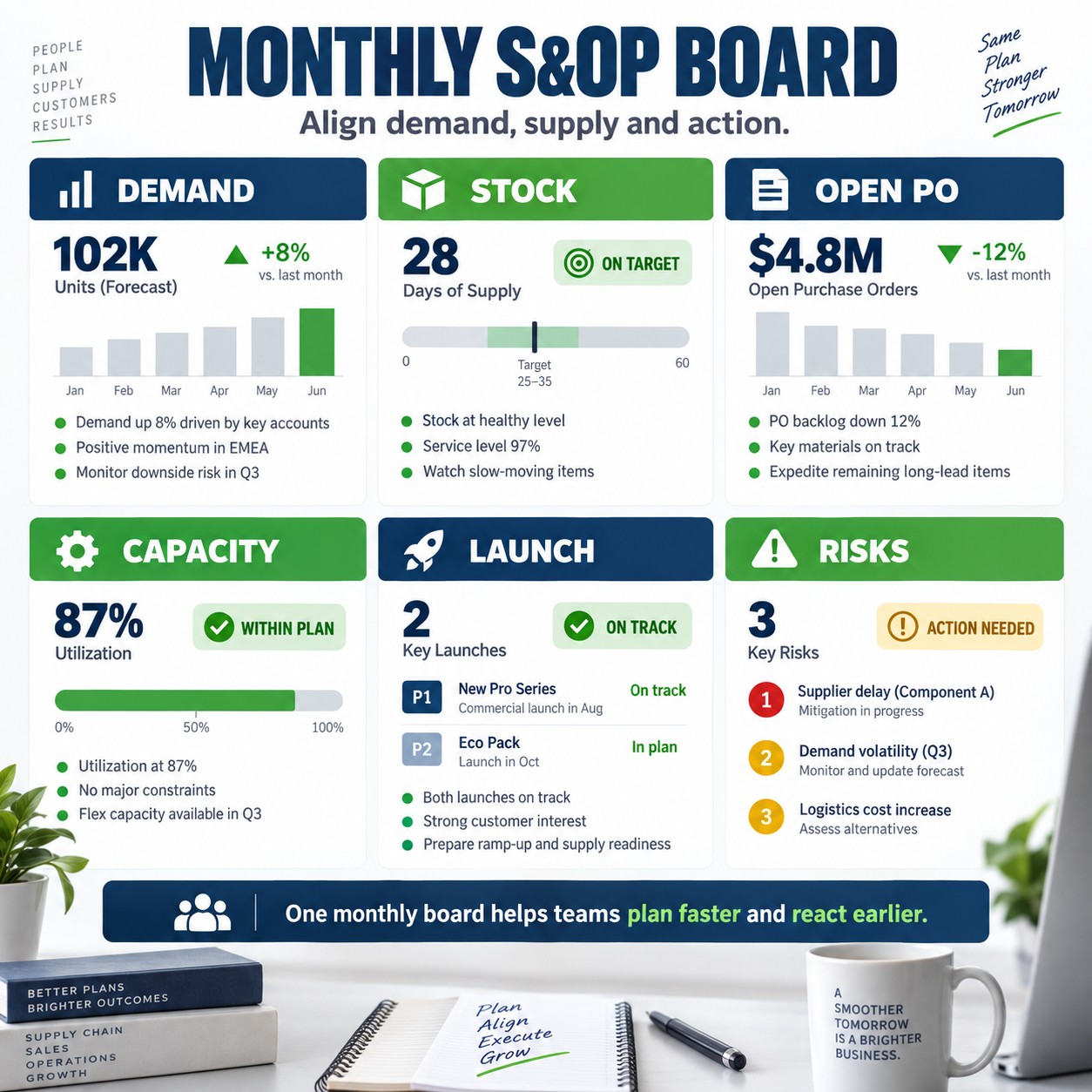
Track inventory age and create early actions such as bundles, channel transfer, promotion or discontinuation. A simple monthly review of demand, stock, open POs, supplier capacity and launches can function as lightweight S&OP.
ABC/XYZ Segmentation
Inventory teams can combine value and demand stability. High-value/high-volume core SKUs deserve the closest planning attention. Low-volume experimental graphics should carry minimal stock. Stable accessories can often use simpler reorder logic.
The purpose is to stop spending the same planning effort and cash buffer on every item.
MOQ, Launch and Aging Risk
Inventory Risk by Product Stage
Development, launch, growth and mature SKUs need different inventory policies. Development inventory should be tiny. Launch inventory should be staged. Growth SKUs need faster forecast updates. Mature SKUs can use more stable reorder rules.
Product stage is often more useful than applying one company-wide weeks-of-cover target.
Supplier Collaboration
Share rolling demand signals for critical materials without turning every forecast into a purchase commitment. Ask suppliers for material lead times, MOQ changes and capacity warnings.
This can allow the supplier to reserve critical inputs while the brand keeps flexibility on finished-goods orders.
Practical Editorial / Decision Notes
Inventory policy should change by product stage. Development inventory should be minimal, launch inventory staged, growth SKUs reviewed frequently and mature products managed with more stable reorder logic.
Supplier collaboration can reserve critical materials without converting every rolling forecast into a finished-goods commitment.
Run a Monthly Inventory Review
Inventory Control Matrix
| SKU Type | Stock Policy | Main Risk |
|---|---|---|
| Core volume | Higher service level | Stockout |
| Seasonal / graphic | Limited depth | Aging |
| Launch | Staged build | Forecast error |
| Experimental | Minimal stock | Dead inventory |
| Accessories | Simpler replenishment | Fragmentation |
Inventory Policy Should Change With Product Stage
A launch SKU should not be stocked like a mature bestseller. Experimental construction, certification uncertainty and unproven graphics need staged quantities, while stable core products can justify higher service levels.
Inventory review should also include product-change risk. A material or certification update can strand finished stock even when demand forecast was correct.
- Classify SKUs by stage and demand stability.
- Include certification/change risk in inventory exposure.
- Use component commonality to reduce MOQ pressure.
Frequently Asked Questions
What is a reorder point?
Expected demand during replenishment lead time plus the chosen safety-stock buffer.
Should every SKU have the same safety stock?
No.
How does MOQ create risk?
It can force excess inventory and cash exposure.
How should new products be stocked?
Use staged quantities until demand, quality and compliance are proven.
What should I watch?
Stock cover, aging, sell-through, forecast error and open supply risk.
Planning inventory for a growing paddle line?
Mayvoci can help connect SKU architecture, MOQ and production lead time to a staged launch plan.
The End about Mayvoci
1)Design:Over 100 paddle designs and photography service to assist start-up.
2)Professional:Focus on various of paddles manufacturing for 6 years
3)Quality:Strict quality management system to provide safety and satisfaction for customers
4)Amazon:Flexible comprehensive solution to make sure each Amazon seller is well cared.
5)Excellent Team:Experienced paddle experts & dynamic sales team give you 5-star service